 Semiahmoo Exterior
 Point Roberts Decks Take a Different Kind of Beating
Point Roberts sits on its own peninsula, surrounded on three sides by water and exposed to wind and moisture in a way that a lot of inland Whatcom County homes never deal with. Salt-laden air off the strait works on fasteners, flashing, and finishes year-round. Driving rain off the water doesn't just fall straight down — it gets pushed sideways into ledger boards, under railings, and into any gap a builder left for it. And the long stretch of grey, damp weather that defines this part of Washington State means moss and algae get a real foothold on any deck surface that doesn't drain and dry properly. A deck built to a generic spec sheet, without those conditions in mind, tends to show its age fast here.
That's the backdrop for this page: what deck replacement actually needs to account for in Point Roberts specifically, what a correct rebuild involves, and why the details matter more here than they would somewhere drier and more sheltered.
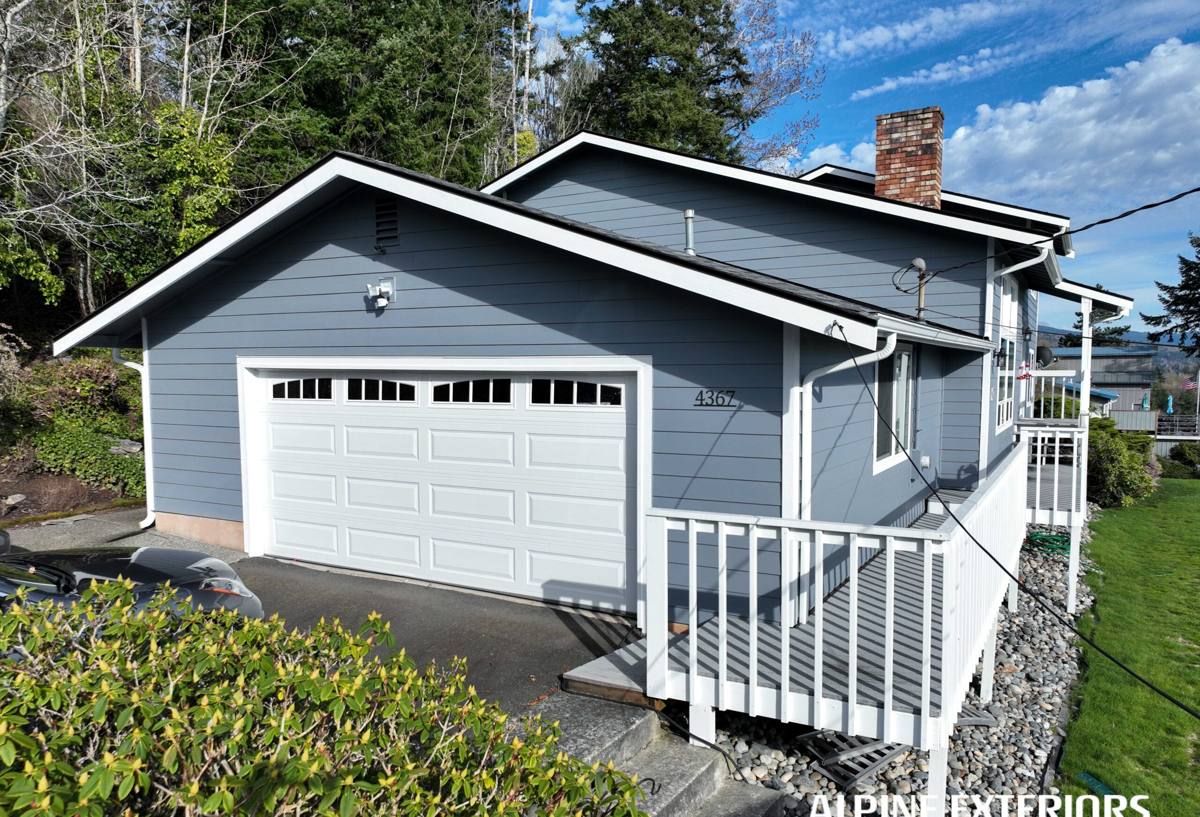
Signs a Deck Needs Replacing, Not Just Patching
Homeowners often call us wanting a repair, and sometimes that's the right call. But on a coastal property, certain signs mean the deck has moved past the point where patching boards makes sense.
- Soft, spongy, or bouncy spots in the decking, especially near the house or along the perimeter
- Visible rot or dark staining where the deck ledger meets the house wall
- Rusted, corroded, or backed-out fasteners, particularly on older decks built with standard hardware instead of coastal-rated fasteners
- Posts or footings that feel loose, or a railing that flexes more than it used to
- Persistent moss or algae growth that comes back within weeks of cleaning, no matter how it's treated
- Gaps between boards that have widened unevenly, or boards that cup and hold standing water
Any one of these on its own might be a repair. Several together, especially structural ones like ledger rot or loose footings, usually mean the deck's underlying structure has been compromised and a full replacement is the more honest recommendation.
What a Correct Replacement Looks Like Here
Ledger Flashing Comes First
The single most common failure point on any deck, and especially one exposed to driving rain, is the ledger board — the piece that attaches the deck to the house. If that connection isn't properly flashed with the right layering of flashing tape and metal flashing, water works its way behind it and rots both the ledger and the house's rim joist from the inside out, often long before it's visible from outside. A correct replacement means the old ledger connection gets opened up, inspected, and re-flashed properly, not just re-bolted to the same worn wood.
Fasteners and Hardware Rated for Salt Air
Standard galvanized fasteners corrode faster in a coastal, salt-air environment than they will inland. We spec fasteners and structural hardware rated for the exposure the deck will actually see, whether that's hot-dip galvanized or stainless steel, so the connections holding the deck together aren't the first thing to fail.
Drainage and Airflow Underneath
A deck that can't shed water and dry out between rains is the one that grows moss, rots joists, and needs replacing again in a fraction of the time it should last. Correct board spacing, joist protection tape, and keeping the underside of the deck ventilated all matter more in a climate with this much sustained damp weather than they would somewhere drier.
Footings Set for the Site
Footing depth and bearing need to match the soil and frost conditions of the specific site, not just a minimum code number. On a replacement, this is also the point where we can catch and correct undersized or shifted footings from the original build, which is common on older decks in this area.
Choosing Decking Material for This Climate
There's no universally "best" decking material — the right choice depends on how much maintenance a homeowner wants to take on, budget, and how the deck sits relative to sun, shade, and wind. Here's how the common options stack up specifically against Point Roberts conditions.
| Material | Moisture & Moss Behavior | Maintenance | Typical Cost Range |
|---|---|---|---|
| Pressure-treated lumber | Resists rot when sealed regularly; shaded/damp spots still grow moss without upkeep | Needs cleaning and re-sealing every 1-2 years | Lowest upfront cost |
| Cedar | Naturally rot-resistant, but needs consistent finish maintenance in this much moisture | Regular staining/sealing to hold color and resist graying | Mid-range |
| Composite decking | Doesn't absorb water like wood; still needs cleaning to stay ahead of surface moss/algae in shaded areas | Low — periodic washing, no sealing or staining | Higher upfront cost |
| Tropical hardwoods (e.g., ipe) | Very dense and rot-resistant, but installation-sensitive and can be unforgiving if fastening isn't done correctly | Occasional oiling if color retention matters to the owner | Highest upfront cost |
Our standard is to walk homeowners through this trade-off honestly rather than pushing one product. Composite decking has become popular here for a reason — the reduced maintenance burden matters when a deck sits in near-constant damp air — but it's not automatically the right call for every budget or every home's style. Wood, done with the right fasteners and drainage details, still holds up fine when it's maintained.
Our Deck Replacement Process
- On-site assessment — we look at the ledger connection, framing, footings, and existing decking to determine what's actually driving the failure, not just what's visible on the surface.
- Scope and material discussion — we walk through decking material options, hardware, and railing choices against the homeowner's budget and maintenance preferences.
- Permitting — where the scope of work requires it, we handle the permit process with Whatcom County so the homeowner isn't left navigating that alone.
- Demo — full removal of the old decking, and inspection of the ledger, rim joist, and framing underneath once it's exposed.
- Structural correction — any rotted framing, undersized footings, or improperly flashed ledger connections get corrected before new decking goes down. This step is where a lot of the deck's real lifespan gets decided.
- Installation — decking, railing, and stairs installed with fasteners and flashing rated for the site's exposure.
- Final walkthrough — we go over care and maintenance expectations specific to the material installed.
Why It Matters That a Crew Already Works Point Roberts
Point Roberts is a peninsula that's part of Washington State but physically separated from the rest of the mainland U.S. — getting there and back means crossing the border twice in a day for most crews. That logistics reality shapes who's realistically available to take on a deck project here and how reliably materials and crews show up on schedule. A contractor who already routes work through Point Roberts regularly has that built into how they plan a job — material orders timed correctly, crew scheduling that accounts for crossing times, and a working knowledge of the specific wind and moisture exposure a given lot has based on its position relative to the water. A crew unfamiliar with the area is more likely to treat those as afterthoughts, which shows up later as delays or as a deck that wasn't actually built for the site it's sitting on.
Keeping a New Deck Ahead of Moss and Salt
A correctly built deck still needs some seasonal attention in this climate. The goal isn't zero maintenance — it's maintenance that's proportional to the material and doesn't fight a losing battle against moss and moisture.
- Sweep debris off the deck surface regularly, especially in fall and winter — trapped leaves and needles hold moisture against boards and accelerate moss growth
- Rinse or lightly scrub shaded, damp areas of the deck periodically rather than waiting for visible moss buildup
- Check the ledger board area annually for any signs of staining or moisture, even on a newer deck
- Re-seal or re-stain wood decking on the schedule the finish manufacturer recommends — don't stretch it because the deck "still looks fine"
- Inspect fasteners and railing connections yearly for early corrosion, particularly after a stretch of stormy weather
- Keep gutters and downspouts near the deck clear so runoff isn't being directed onto or under it
Permits and Working Within Whatcom County Requirements
Deck replacement scope can range from a straightforward like-for-like rebuild to a project that changes footprint, height, or structural attachment — and that range determines whether permitting applies. Rather than guess, we confirm what Whatcom County requires for the specific scope of a given project before work starts, and we handle that process as part of the job rather than leaving it to the homeowner to sort out separately.
Getting an Honest Look at Your Deck
If a deck is showing soft spots, moss that won't quit, or a ledger connection that looks questionable, it's worth having someone look at it before those small problems become a structural one. We offer a free, no-pressure estimate — no obligation, just a straight assessment of what's going on and what it would take to fix it right. The form below gets that started.