 Semiahmoo Exterior
 Building a Deck That Can Actually Handle Point Roberts
Point Roberts sits on its own peninsula, exposed to marine air off the Salish Sea in a way that most of Whatcom County's inland neighborhoods never see. Salt-laden wind, near-constant winter rain, and long stretches of gray, damp weather put real stress on any outdoor structure, and decks take the worst of it because they're horizontal, walked on, and in constant contact with moisture. A deck built the same way you'd build one forty miles inland will show problems here years sooner — fastener corrosion, moss buildup in board grooves, soft spots where water sits, and finishes that fail early.
Composite decking, installed correctly, holds up to this environment far better than untreated wood, but "composite" isn't a single product with one set of properties. Board quality, substructure design, and installation details matter as much as the material itself. This page covers what a Point Roberts composite deck actually needs, what a correct installation looks like, and why local experience on this specific stretch of coastline changes the outcome.
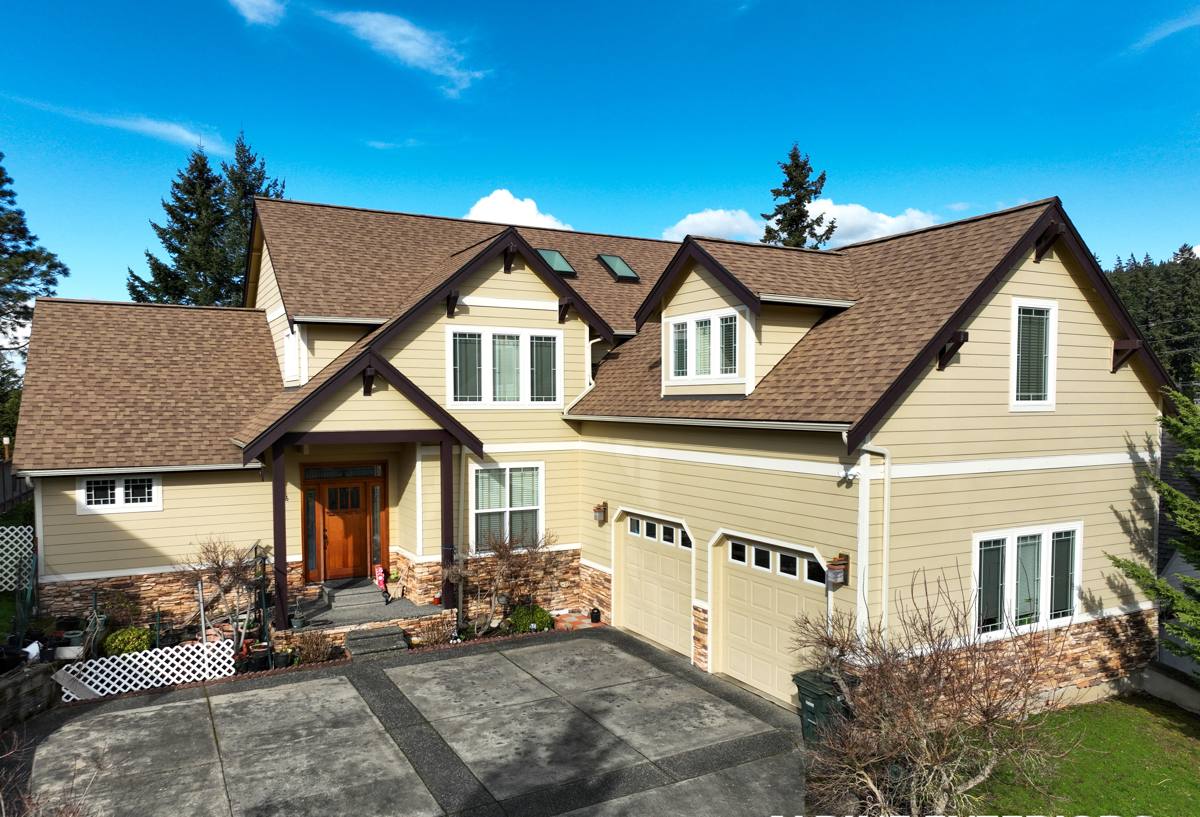
What Salt Air and a Long Moss Season Do to a Deck
Salt and Corrosion
Airborne salt accelerates corrosion on anything metal — fasteners, joist hangers, railing brackets, flashing. Standard galvanized hardware can start showing rust streaks and pitting within a few seasons this close to the water. Once a fastener starts corroding, it weakens the connection it's holding and can stain the decking around it.
Moisture and Moss
Point Roberts gets the same driving rain and overcast winters as the rest of the region, but with less sun exposure to dry surfaces out between storms. Board seams, screw heads, and shaded areas under railings or near fences stay damp longer, which is exactly the environment moss and mildew need to establish. Once moss gets into the grain or grooves of a deck board, it holds moisture against the surface and becomes a slip hazard.
Freeze-Thaw and Movement
Coastal freeze-thaw cycles here are milder than inland Whatcom County, but they still happen. Water that gets trapped under boards or in end-grain can freeze, expand, and slowly work fasteners loose or crack poorly-sealed cuts over several winters.
Comparing Composite Board Types for This Climate
Not all composite decking performs the same way in salt air and constant moisture. The table below covers the main categories we work with and how they hold up here.
| Board Type | Moisture & Salt Performance | Maintenance | Typical Warranty Structure |
|---|---|---|---|
| Capped composite (wood-plastic core, polymer shell) | Strong — the cap resists staining and moisture absorption at the surface | Occasional wash-down; grooves need periodic cleaning | Limited fade/stain coverage, longer structural coverage |
| Uncapped composite | Weaker — more prone to surface moisture absorption and mildew over time | More frequent cleaning and sealing | Shorter, more limited coverage |
| Capped PVC/polymer decking | Very strong — minimal organic content for moisture or mildew to feed on | Low; wash-down keeps it clean | Often longer coverage, higher upfront cost |
| Mineral-based composite | Strong dimensional stability in wet-dry cycling | Low to moderate | Varies by manufacturer |
Our standard for Point Roberts homes is capped composite or capped PVC decking for anything within reach of salt spray or heavy shade. We steer away from uncapped boards in this location as a matter of professional judgment — not because they're unusable everywhere, but because the moisture load and reduced drying time here work against their long-term appearance and maintenance burden.
The Substructure Matters More Than the Boards
A high-end composite board on a poorly built frame will still fail early. The substructure is where most of the long-term durability decisions actually get made:
- Joists spaced and sized correctly for the board span and any furniture or hot tub loads
- Corrosion-resistant fasteners and hardware rated for coastal or treated-lumber contact, not standard-grade galvanized
- Proper ledger flashing where the deck attaches to the house, so water is directed away from the wall assembly rather than into it
- Joist tape or a moisture barrier on top of framing members to slow water absorption into the wood substructure
- Airflow underneath the deck so the frame can dry out between rain events instead of staying damp
On a low-clearance deck or one built close to grade, ventilation is especially important — Point Roberts' damp winters give trapped moisture very little chance to evaporate on its own.
Drainage, Gaps, and Preventing Moss Before It Starts
Moss doesn't need much to get started — a shaded corner, a board gap that's collecting debris, or a low spot where water pools after a storm. Correct board spacing lets water drain through rather than sit on the surface, and it also lets air move underneath to dry the joists. During install, we grade fastening and gapping to account for board expansion in wet weather, and we pay attention to drainage paths so water is actually leaving the deck, not just moving to the next low spot.
Where a deck sits under overhanging trees or in a permanently shaded side yard, we'll flag that during the estimate. It doesn't rule out composite decking, but it does affect board choice and how often the surface will need a simple wash-down to stay ahead of moss.
Our Process, Start to Finish
- On-site assessment — we look at sun exposure, drainage, existing structure (if replacing a deck), and how close the deck sits to salt spray or shaded, damp areas.
- Board and structure recommendation — based on that assessment, not a one-size-fits-all package.
- Straightforward estimate — scope, materials, and timeline explained in plain terms before any work starts.
- Demo and substructure work — including flashing, hardware upgrades, and ventilation fixes if we're rebuilding on an existing frame.
- Composite decking installation — board layout, fastening, and gapping set for long-term drainage and airflow.
- Final walkthrough — we go over basic care so the deck stays looking right through its first wet season and beyond.
What Affects the Cost of a Composite Deck Here
We don't post fixed prices because every deck is different, but these are the factors that move the number up or down:
| Factor | Why It Matters |
|---|---|
| Board tier (capped composite vs. capped PVC vs. mineral-based) | Higher-performing caps and denser cores generally cost more per square foot |
| Substructure condition | A full rebuild with corrosion-resistant hardware and new flashing costs more than resurfacing sound framing |
| Deck size and height | Taller decks need railing systems and stair work that add labor and material |
| Site access | Tight lots or limited equipment access can add labor time |
| Railing and trim choices | Composite or aluminum railing systems vary widely in cost compared to basic options |
We'll walk through these factors specifically for your property during the estimate rather than quoting off a generic price list.
Why a Crew That Already Works Point Roberts Matters
Point Roberts is geographically separated from the rest of Whatcom County — getting equipment, materials, and crews there by land means crossing the Canadian border twice each way. A contractor who doesn't already build that into their scheduling and logistics can turn a straightforward decking job into a headache of delays and surprise costs. We factor border crossing time, material staging, and equipment logistics into our Point Roberts scheduling from the start, because we've done it before, not because we're guessing at it for the first time on your project.
Just as important is knowing the microclimate. A crew that only sees Point Roberts occasionally may not adjust their fastener specs, board choice, or drainage detailing for the salt exposure and extended damp season the way a crew based in Semiahmoo and working this coastline regularly will.
Keeping a Composite Deck Looking Right in This Climate
Composite decking is lower-maintenance than wood, but "low-maintenance" doesn't mean "no maintenance," especially with salt air and a long wet season working against it. A simple seasonal routine goes a long way:
- Rinse or wash the surface periodically to remove salt residue and organic debris before it can feed moss growth
- Clear leaves and debris out of board gaps and grooves so water and air can keep moving through
- Check railing posts, stair connections, and fastener heads once or twice a year for early corrosion or looseness
- Trim back overhanging branches where shade is keeping sections of the deck damp longer than the rest
- Confirm gutters and downspouts near the deck are directing water away rather than onto the deck surface
A few minutes of upkeep a couple times a year is usually all a well-installed composite deck needs to stay ahead of Point Roberts' weather.
Get a Straightforward Estimate
If you're planning a new composite deck or replacing an aging one in Point Roberts, we're glad to take a look and give you an honest read on what your property needs. There's no pressure and no obligation — just a straightforward assessment from a crew that already works this stretch of the coastline. Use the form below to request a free estimate.