 Semiahmoo Exterior
 Semiahmoo Resort Roofs Work Harder Than Most
Homes in and around Semiahmoo Resort sit close to Semiahmoo Bay, which means they take on a combination most inland Whatcom County homes never deal with: near-constant salt-laden air, wind-driven rain coming off the water, and shaded, damp conditions that keep moss and moisture active for most of the year. A roof here isn't just shedding water — it's fighting corrosion on fasteners and flashing, resisting wind uplift on an exposed shoreline lot, and staying dry through months where things simply don't get a chance to fully dry out.
That combination shortens the useful life of a roof that was installed without those conditions in mind. A shingle, underlayment, or flashing detail that would be perfectly fine in a drier, inland part of Whatcom County can fail early at Semiahmoo Resort. New roof installation here isn't harder in a dramatic way — it just has less margin for error, and the details matter more.
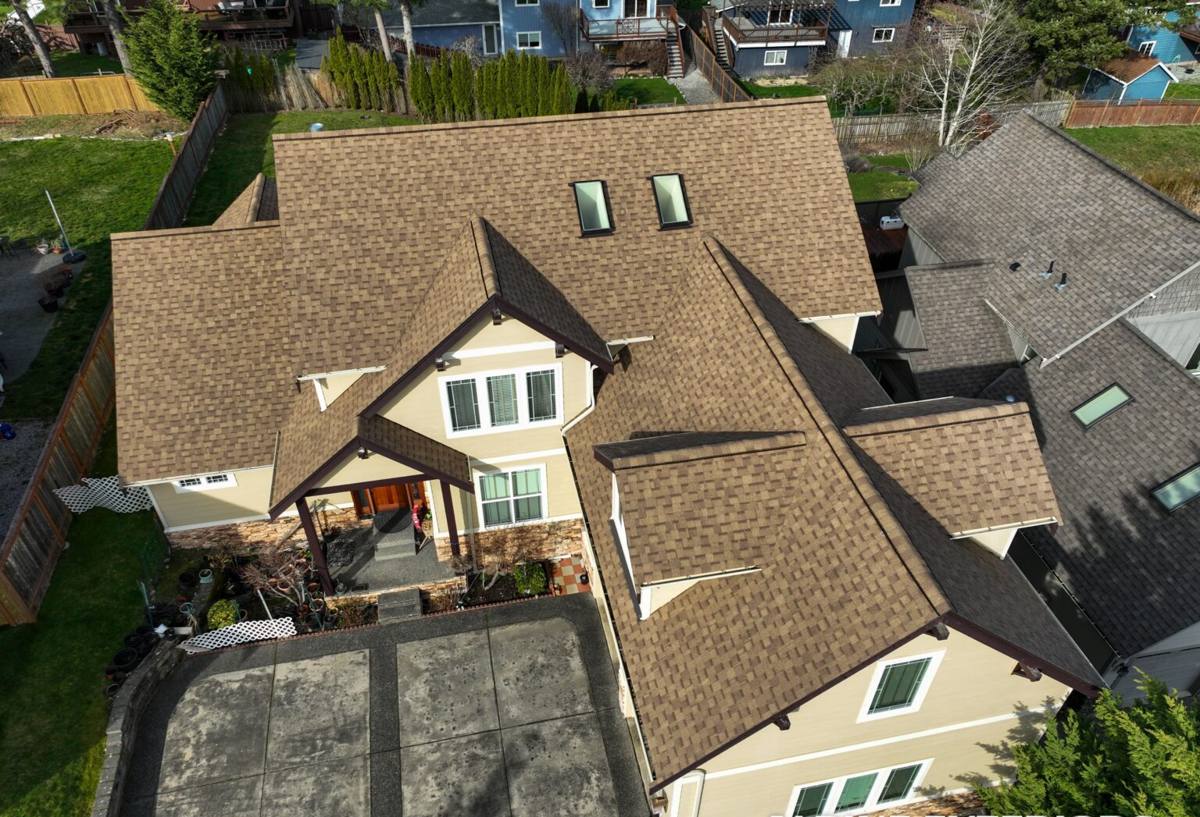
What a Correct Installation Actually Involves
A new roof is more than laying down shingles. On a Semiahmoo Resort home, we treat every layer as part of a system that has to work together for decades, not just look right on installation day.
Tear-Off and Deck Inspection
We remove the old roofing down to the deck rather than layering over it. This is the only way to actually see what's underneath — soft spots, rot around old flashing, or decking that's absorbed moisture over the years from a marginal underlayment. Salt air and driving rain don't just affect the surface; they find their way into any weak point in the deck over time, so this step isn't optional if you want the new roof to last.
Underlayment
Underlayment is the layer that protects your home if wind-driven rain ever gets under the surface roofing — which, on an exposed shoreline lot, it eventually will during a hard storm. We use synthetic underlayment as standard and add self-adhered ice-and-water membrane at valleys, eaves, and any low-slope transitions, since those are the spots where wind-blown rain concentrates.
Flashing
Flashing failure is the single most common cause of roof leaks we see, and salt air accelerates corrosion on lower-grade metal flashing faster than most homeowners expect. We install corrosion-resistant flashing at every penetration, chimney, and wall intersection, and we don't reuse old flashing on a new roof installation — it's a small cost relative to the labor already involved, and it's the part most likely to fail first if skipped.
Ventilation
Proper intake and exhaust ventilation keeps the attic temperature and moisture level balanced, which matters for shingle life, moss growth on the underside of the deck, and preventing condensation in our damp shoulder seasons. We check and correct ventilation as part of every install rather than treating it as a separate add-on.
Choosing Materials for Salt Air and Moss Season
There's no single "best" roofing material for every home — the right choice depends on your roof's exposure, slope, budget, and how much long-term maintenance you want to take on. Here's how the common options actually perform in Semiahmoo Resort's conditions.
| Material | Salt Air / Corrosion | Moss Resistance | Typical Lifespan Here |
|---|---|---|---|
| Architectural asphalt shingle | Good, with corrosion-resistant fasteners and flashing | Moderate — benefits from zinc/copper strips and periodic cleaning | 25–30 years |
| Standing seam metal | Very good with a marine-grade coated panel and stainless fasteners | Very good — moss struggles to hold on smooth metal | 40–50+ years |
| Synthetic/composite shake | Good | Good | 30–40 years |
| Cedar shake | Requires more upkeep near salt air | Poor without regular treatment | 20–25 years, shorter without maintenance |
We're honest about trade-offs rather than pushing one product. Cedar shake, for example, has real appeal for its look, but it holds moisture and needs consistent treatment to resist moss and rot — in a shaded, damp, salt-exposed setting like Semiahmoo Resort, that upkeep burden is significant, and we'll tell you that upfront rather than let you find out later. Metal costs more initially but asks the least of you over time. Architectural asphalt remains the most common choice because it balances upfront cost, appearance, and durability reasonably well when installed with the right underlayment and flashing details.
Moss: Prevention Built Into the Install
Moss doesn't just look bad — it holds moisture against the roofing surface, works into shingle edges, and can lift material over time, which is exactly the kind of slow damage that's easy to miss until it's a leak. Semiahmoo Resort's tree cover and shoreline humidity make it a near year-round concern rather than a seasonal one.
We address this at installation, not just as an aftercare recommendation:
- Zinc or copper strips installed near the ridge on shingle and composite roofs, so rain naturally carries trace metal down the roof surface and inhibits regrowth
- Attention to any low-slope or shaded sections during design, since these hold moisture longest and grow moss fastest
- Proper ventilation to reduce the damp, cool conditions moss favors on the underside of the decking
- A clear explanation of what seasonal maintenance (gutter clearing, occasional soft washing) your specific roof will need going forward
Our Process, Start to Finish
- On-site assessment — we inspect the existing roof, decking condition, ventilation, and any problem areas specific to your home's exposure and slope.
- Material and scope discussion — we walk through options honestly, including what each one asks of you in upkeep, and give you a clear, itemized estimate.
- Scheduling around weather — we plan installation for drier stretches where possible, since a roof deck needs to stay dry during tear-off and underlayment installation.
- Tear-off and deck repair — old roofing removed, deck inspected, any soft or damaged sections replaced before anything new goes down.
- Underlayment, flashing, and ventilation installed — the layers that determine whether the roof actually performs in wind-driven rain, not just how it looks.
- Roofing material installation — installed to manufacturer specification, with attention to fastening patterns appropriate for shoreline wind exposure.
- Final walkthrough — we go over the finished roof with you, including what maintenance to expect and when to check on it.
Why Local Experience at Semiahmoo Resort Matters
A roofing crew that hasn't worked shoreline properties in Whatcom County will treat your home like any other inland job — same materials, same fastening schedule, same assumptions about how much rain protection is enough. That approach misses the details that actually matter here: the added corrosion resistance flashing and fasteners need, the extra attention valleys and low-slope sections require against wind-driven rain, and the realistic maintenance moss season demands.
Access and site conditions around Semiahmoo Resort properties — narrower lots, mature trees, proximity to the water — also affect how a job gets staged and scheduled. A crew that's worked the area knows what to expect and plans for it rather than discovering it mid-project.
What Drives the Cost
Every roof is priced based on its own specifics, but these are the factors that move the number most on a Semiahmoo Resort project:
| Factor | Why It Matters |
|---|---|
| Roof size and slope | More square footage and steeper pitches mean more material and labor time |
| Material choice | Asphalt, composite, and metal carry different material and installation costs |
| Deck condition | Rotted or soft decking found during tear-off adds repair cost but is essential to fix |
| Number of valleys, penetrations, and flashing points | Each one needs individual attention and adds labor |
| Ventilation upgrades | Correcting inadequate intake/exhaust ventilation adds modest cost but extends roof life |
| Site access | Tree cover, tight lot lines, or difficult staging can affect labor time |
We provide a detailed, itemized estimate before any work begins, so you know exactly what you're paying for and why — no vague lump sums.
Signs It's Time to Replace, Not Repair
- Shingles that are curling, cracking, or missing granules in multiple areas rather than one isolated spot
- Persistent moss growth that returns quickly after cleaning
- Daylight visible through the roof deck from the attic, or damp insulation
- Flashing that's visibly corroded or separating from the roof surface
- A roof already past 20–25 years old with multiple prior repairs
- Granules collecting in gutters in noticeable amounts each season
If you're only seeing one or two of these and the roof is otherwise sound, a targeted repair may be the more sensible move — we'll tell you that if it's true rather than push a full replacement you don't need yet.
Get a Straight Answer About Your Roof
If you're weighing repair versus replacement, or just want an honest read on how much life your current roof has left, we're happy to take a look. We offer free, no-pressure estimates for Semiahmoo Resort homeowners — come away with a clear picture of your options and real numbers, not a sales pitch.