 Semiahmoo Exterior
 Custer Roofs Work Harder Than People Expect
Custer sits in the part of Whatcom County that gets the full weather package: storm systems rolling in off the Salish Sea, wind-driven rain that doesn't just fall but gets pushed sideways into every seam and lap, and enough tree cover and cloudy, damp stretches to keep moss growing nearly year-round. Add the salt-laden air that drifts inland from Semiahmoo Bay and Drayton Harbor, and you've got a climate that's genuinely rougher on a roof than most manufacturers' warranty testing accounts for.
None of that means Custer homes need anything exotic. It means the installation has to be done correctly, with the right materials and details, by people who understand what this specific climate does to a roof over ten, twenty, and thirty years. That's the difference between a roof that just looks finished on installation day and one that actually performs here.
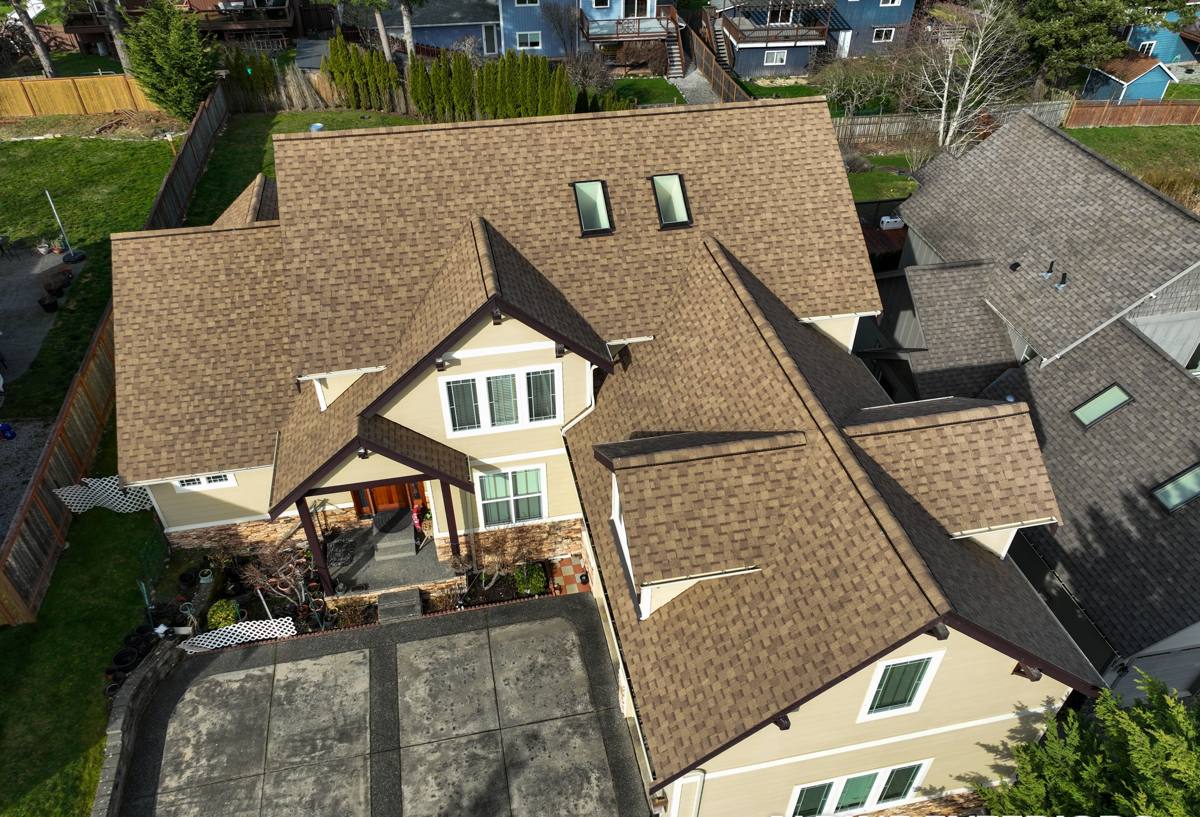
What Salt Air, Rain, and Moss Actually Do to a Roof
Salt Air and Metal Components
Every roof has metal in it somewhere — flashing, fasteners, vent caps, gutter hardware, sometimes the roofing material itself. Salt air accelerates corrosion on unprotected or poorly coated metal, and it doesn't take a beachfront lot to feel it. Custer is close enough to Semiahmoo Bay that airborne salt is a real factor, especially on the west- and southwest-facing slopes that catch the prevailing weather.
Wind-Driven Rain
Straight-down rain is easy for almost any roof to shed. Rain that's being pushed horizontally by wind is a different problem — it works its way under shingle tabs, around poorly lapped flashing, and into any nail that wasn't seated correctly. Over years, this is how attics get water stains that have nothing to do with a visible leak point on the surface.
Moss and Organic Growth
Custer's mix of shade, moisture, and mild temperatures is close to ideal for moss. Moss isn't just a cosmetic issue — its root structure holds moisture against the roofing surface and lifts shingle edges, and on wood or aging composition roofs it can shorten the life of the material by years if it's never addressed.
Signs a Custer Home Needs a New Roof — Not Another Repair
Repairs make sense when a roof has isolated damage and years of life left. A full replacement makes sense once the underlying material and structure are wearing out broadly. Watch for:
- Granule loss heavy enough that you can see bare, shiny patches on asphalt shingles
- Shingles that are curling, cupping, or cracking across multiple areas of the roof, not just one spot
- Moss buildup that returns within months of cleaning, even after treatment
- Soft or spongy decking felt underfoot during inspection, a sign moisture has reached the plywood or boards
- Daylight visible through the roof deck from inside the attic
- Recurring leaks in different locations after each storm season, rather than one consistent spot
- A roof approaching or past its material's expected service life, especially if it was installed with minimal underlayment or ventilation
If you're only seeing one or two of these, a repair may still be the right call. If several show up together, patching individual spots usually ends up costing more over a few years than doing the job right once.
Roofing Materials for This Climate
There's no single "best" roofing material for every Custer home — it depends on the roof's slope, the home's style, budget, and how much maintenance the homeowner wants to take on. Here's how the common options compare against the salt air, rain, and moss conditions specific to this area:
| Material | Wind-Driven Rain Performance | Moss Resistance | Salt Air Durability | Typical Maintenance |
|---|---|---|---|---|
| Architectural asphalt shingles | Very good with correct underlayment | Moderate; algae-resistant granules help | Good if flashing/fasteners are corrosion-resistant | Periodic moss treatment, gutter clearing |
| Standard 3-tab shingles | Adequate | Lower; wears faster under organic growth | Fair | More frequent moss and granule monitoring |
| Metal (standing seam or panel) | Excellent | High; sheds moss more readily on steeper pitches | Depends heavily on coating and fastener quality | Low, but coastal-grade fasteners matter |
| Cedar shake | Good when installed with proper spacing/ventilation | Lower without regular treatment | Fair; needs upkeep near salt exposure | Higher; regular cleaning and treatment needed |
For most Custer homes, a mid- to high-grade architectural asphalt shingle with algae-resistant granules offers the best balance of cost, appearance, and performance. Metal roofing is a strong option for homes with simpler rooflines or owners who want to minimize long-term maintenance, provided the fasteners and flashing are specified for coastal-adjacent exposure rather than generic inland use.
What a Correct New Roof Installation Actually Involves
A roof is a system, not just a layer of shingles. Skipping or shortcutting any of these steps is where premature failures come from — especially in a climate that punishes shortcuts faster than most:
Tear-Off and Deck Inspection
Full tear-off to the deck lets us see what's actually underneath — soft spots, old leak damage, or decking that needs replacement before anything new goes on. Roofing over existing layers hides these problems instead of fixing them.
Underlayment and Ice-and-Water Protection
Given how much wind-driven rain this area sees, a synthetic underlayment rated for high-wind, high-moisture conditions matters more here than in drier climates. Self-adhering ice-and-water membrane at eaves, valleys, and roof penetrations adds a second line of defense exactly where water is most likely to find a way in.
Flashing
Chimneys, skylights, sidewalls, and valleys are where the majority of leaks start over a roof's life. Correctly formed and lapped flashing — installed with corrosion-resistant fasteners appropriate for coastal-influenced air — is not an area to cut corners on.
Ventilation
Balanced intake and exhaust ventilation keeps the attic temperature and moisture level in check. Without it, condensation builds up on the underside of the deck, which shortens the life of the roofing material from below — a failure mode that has nothing to do with the visible surface and everything to do with what's happening in the attic.
Final Details
Ridge caps, drip edge, and proper nailing patterns finish the job. These are small line items on an estimate but they're often where a rushed installation shows itself first.
Our Process for a Custer Roof Replacement
- On-site inspection and estimate. We look at the deck, ventilation, flashing points, and overall roof condition, not just the shingles, and give you a written estimate with material options.
- Material selection. We walk through the tradeoffs for your specific roof — slope, sun/shade exposure, and how much maintenance you want going forward.
- Scheduling around weather. Roofing in Whatcom County means working with realistic dry-weather windows, not against them. We plan installation timing to avoid tearing off more roof than can be safely covered before rain moves in.
- Installation. Tear-off, deck repair as needed, underlayment, flashing, ventilation, and final roofing material, installed in sequence with each layer inspected before the next goes on.
- Cleanup and walkthrough. Full site cleanup, magnetic sweep for stray fasteners, and a walkthrough so you know exactly what was done and what to expect going forward.
Why Local Experience Matters Here
A crew that mainly works drier inland climates will often spec a roof the same way regardless of where it sits. A crew that works Custer and the rest of Whatcom County regularly knows which slopes take the worst of the southwest storms, where moss tends to establish first on a given roof style, and which flashing and fastener grades hold up against the salt air coming off Semiahmoo Bay rather than just meeting the minimum building code. That local pattern recognition is what keeps small details from turning into callbacks two winters later.
Keeping a New Roof Performing Long-Term
A correctly installed roof still benefits from basic upkeep in this climate:
- Clear gutters and downspouts each fall so water has somewhere to go during heavy rain events
- Trim back overhanging branches to reduce shade and debris that encourage moss
- Schedule moss treatment on a regular cycle rather than waiting until growth is heavy
- Have the roof looked at after any major windstorm, even if nothing looks obviously wrong from the ground
- Check attic ventilation isn't blocked by insulation or debris, since that's invisible from outside but affects roof life directly
If you're weighing a repair against a full replacement, or just want an honest read on what your Custer roof actually needs, we're glad to take a look. The estimate is free, there's no pressure attached to it, and you'll get a straight answer either way — just fill out the form below to get started.