 Semiahmoo Exterior
 Building New in Cherry Point? Windows Are the First Line of Defense
If you're framing a new home or a major addition out toward Cherry Point, the windows you choose and how they're installed will do more to determine your long-term maintenance headaches than almost any other single decision on the project. Cherry Point sits close to the water along the Whatcom County coastline, which means every window opening on that house is going to spend the next few decades absorbing salt-laden air, wind-driven rain, and the kind of persistent damp that grows moss on anything that holds still long enough. New-construction framing gives you one real shot to get the window openings right before siding, trim, and interior finishes close everything up. We've been doing this work in and around Semiahmoo and the Whatcom County coastline long enough to know exactly where new builds out here tend to go wrong, and this page is about that one job, in that one area, done correctly.
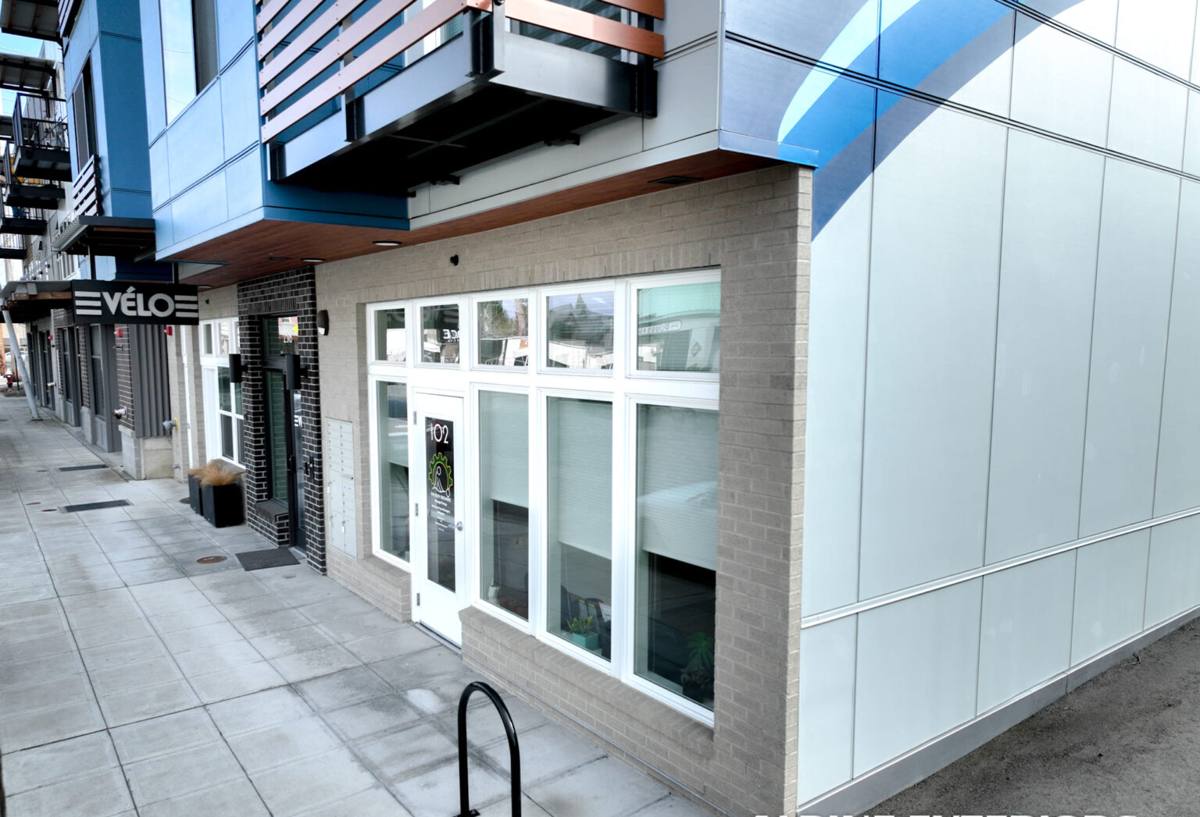
What Cherry Point's Climate Demands From New-Construction Windows
Cherry Point isn't a generic Pacific Northwest building site. It sits directly on Whatcom County's marine coastline, and that proximity to saltwater shapes almost every decision about window selection and installation detail.
Salt Air and Coastal Corrosion
Airborne salt doesn't stay at the shoreline — it travels on wind and settles on every exterior surface within reach, including window hardware, fasteners, and flashing. Untreated or mismatched metals corrode faster here than they would even a few miles inland. Hinges, cranks, and screen frames that would last decades in Bellingham's inland neighborhoods can start showing pitting and staining within a few years on a Cherry Point home if the wrong materials were specified.
Driving Rain and Wind-Driven Moisture
Storms coming off the Strait of Georgia and the Salish Sea don't just drop rain straight down — they push it sideways into wall assemblies. New-construction windows rely on a layered flashing system to shed that water before it ever reaches the framing. On an exposed Cherry Point lot, a flashing detail that would be "good enough" in a sheltered inland subdivision simply isn't good enough here. Wind-driven rain finds every shortcut in a sill pan or head flashing lap.
Long Moss and Mildew Season
Whatcom County's damp season runs long, and Cherry Point's coastal humidity stretches it further. Anywhere water sits — a poorly sloped sill, a caulk joint instead of proper flashing, a window trim board without a drip edge — moss and mildew will eventually take hold. On a new build, this is entirely preventable with the right details from day one, but it's very hard to fix after siding and trim are already painted and finished.
New-Construction vs. Replacement Windows — Why the Install Method Matters
Because you're building new, you have access to full nail-fin, new-construction window units installed directly into open framing — a very different (and more weathertight) approach than the pocket-replacement method used on remodels. It's worth understanding the difference, because the method drives what protection the window actually gets.
| Factor | New-Construction (Nail Fin) Install | Pocket / Replacement Install |
|---|---|---|
| Access to rough opening | Fully open — sill pan, tape, and flashing installed directly on framing | Limited — window fits inside existing frame, some details covered |
| Water management | Continuous flashing integrated with the weather-resistive barrier | Relies heavily on existing frame condition and sealant |
| Best suited for | New builds, additions, full wall reconstruction | Existing homes where the frame is sound and opening won't be resized |
| Long-term coastal performance | Strongest option for salt-air, high-exposure sites like Cherry Point | Adequate for sheltered sites; weaker on exposed coastal lots |
Since you're at the framing stage, you have the better option available. The job is to not waste that advantage with a rushed or generic install.
What a Correct New-Construction Window Install Involves
A window that "looks installed" and a window that's actually installed correctly can be indistinguishable from the outside for years — until the framing behind it starts to rot. The steps below are the ones we won't skip, especially on an exposed Whatcom County coastal lot.
- Rough opening check. Confirm the opening is square, level, and sized correctly before the window ever shows up on site. A racked opening stresses the frame and compromises the seal for the life of the window.
- Sill pan flashing. A sloped, sealed sill pan under the window unit so any water that does get past the glazing or frame drains back outside instead of into the wall cavity.
- Weather-resistive barrier integration. The house wrap or building paper has to be cut, lapped, and taped in the correct shingle-style sequence around the opening — jambs first, then head, so water is always directed outward and downward, never trapped.
- Nail-fin fastening. Fasteners set correctly around the entire perimeter, without over-driving or under-driving, which affects both structural performance and the window's warranty.
- Head flashing. Installed last, lapping over the side flashing and integrated with the WRB above the window — this is the detail most responsible for stopping wind-driven rain on an exposed elevation.
- Air sealing at the interior. Low-expansion foam or backer rod and sealant between the frame and rough opening, keeping the assembly airtight without over-filling and bowing the frame.
- Exterior trim and drip cap. Trim details that shed water away from the window rather than channeling it toward the joints — small detail, big difference in a place with Cherry Point's rainfall exposure.
Skip or rush any one of these steps and the window may perform fine for a season or two before problems start showing up as staining, soft trim, or drafts.
Choosing Frame Materials for a Coastal Whatcom County Build
Frame material matters more on a salt-exposed lot than it does a few miles inland. Every material has real trade-offs — there's no single "best" choice for every home, but there are choices that make more sense for Cherry Point's conditions than others.
| Frame Material | Coastal / Salt-Air Performance | Maintenance |
|---|---|---|
| Vinyl | Good — won't corrode, but check gasket and hardware quality | Low — occasional cleaning |
| Fiberglass | Very good — dimensionally stable, resists salt and moisture cycling well | Low |
| Wood-clad | Fair — attractive, but exposed end-grain and joints need vigilant sealing near salt air | Moderate to high |
| Aluminum | Weaker without marine-grade coatings — prone to corrosion and condensation near saltwater | Moderate, coating-dependent |
We'll walk through the trade-offs with you based on your budget, the home's design, and how exposed your specific lot is to prevailing wind and salt spray — some Cherry Point sites are more sheltered than others depending on tree cover and elevation.
Our Process for Cherry Point New Builds
Working directly with your builder or general contractor, our process on a new-construction job typically runs like this:
- Review the plans and window schedule before framing is finalized, flagging any openings that need adjustment for flashing clearance or structural headers.
- Walk the framed openings on site to verify square, level, and correct rough opening dimensions before ordering.
- Help you select frame material, glazing package, and hardware suited to the home's exposure and your budget.
- Install using the full flashing and WRB integration sequence described above — not a shortcut version.
- Coordinate timing with siding and trim crews so flashing laps are done in the right order, not patched around finished work.
- Final walkthrough on operation, hardware, and weatherstripping before the home is closed up.
Common Mistakes We Catch Before They Become Problems
Because we work new-construction sites throughout Whatcom County's coastal areas, there's a short list of issues that show up again and again on builds where window installation wasn't treated as its own trade. Watch for these on any crew's work, including ours:
- Sill pan skipped or improvised with sealant instead of a proper sloped pan
- WRB flashing lapped in the wrong order, directing water into the wall instead of away from it
- Head flashing installed before the WRB above it, instead of after
- Over-foaming the perimeter gap, bowing the frame and causing the window to bind or leak
- Mismatched or uncoated fasteners that corrode quickly in salt air
- Trim details without a drip edge, letting water sit against the casing
Why a Crew That Already Works Cherry Point Matters
Window installation guidance in general building codes and manufacturer instructions is written for average conditions across a wide range of climates. Cherry Point's combination of salt exposure, wind-driven rain, and a long damp season means "average" details are often not enough. A crew that regularly works this stretch of the Whatcom County coastline has already seen which flashing details hold up here and which ones fail early, which frame materials are worth the extra cost on an exposed lot, and how local wind patterns affect where rain actually hits a wall. That's the kind of judgment that doesn't come from a spec sheet — it comes from having done the work in this specific place, on homes exposed to the same weather yours will face.
Cost Factors for New-Construction Windows in This Area
Pricing on a new-construction window package depends on several variables that are worth discussing early, ideally while the window schedule is still being finalized:
| Factor | Why It Affects Cost |
|---|---|
| Frame material | Fiberglass and premium vinyl cost more up front than basic vinyl or standard aluminum |
| Glazing package | Higher-performance glass for energy efficiency and condensation control adds cost but reduces long-term utility bills |
| Number and size of openings | Larger openings and specialty shapes (bays, transoms) require custom units and more complex flashing |
| Site exposure | Highly exposed lots may justify upgraded corrosion-resistant hardware and flashing materials |
| Coordination complexity | Tight scheduling with framing, siding, and trim crews affects labor efficiency |
Broad-strokes budgeting for a full new-construction window package on a typical home usually runs from the low thousands into five figures depending on the size of the home, the number of openings, and the frame material and glazing chosen — we'll give you a real number once we've seen your plans, not a guess.
Get a Straight Answer for Your Cherry Point Build
If you're framing a new home or addition near Cherry Point and want windows installed the way this coastline actually requires — proper flashing, the right frame material for salt exposure, and a crew that coordinates cleanly with the rest of your build — we're glad to take a look at your plans. Reach out for a free, no-pressure estimate using the form below.