 Semiahmoo Exterior
 Roofing in Laurel Has to Answer to Whatcom County Weather
Laurel sits in a part of Whatcom County where the roof over your head does real work most of the year. Moisture rolls in off the water and settles into tree cover for months at a stretch, salt-laden air moves through with the marine wind off the Semiahmoo area, and winter storms bring driving rain that finds every weak seam a roof has. A roof here isn't just shedding water in a quick afternoon shower and drying out by evening — it's staying wet, staying shaded, and staying under load for long stretches at a time. That combination is exactly what wears out a roofing system that wasn't detailed correctly, and it's exactly what a well-installed metal roof is built to handle.
Metal roofing has earned its reputation in this region because it doesn't absorb water the way organic shingle mats do, it sheds moss and debris more readily than a rough-textured surface, and a properly finished panel system resists the kind of granule loss and edge curling that shows up on asphalt roofs exposed to constant damp. But "metal roof" isn't one product, and installing one wrong can create the very problems homeowners are trying to avoid — trapped condensation, fastener backout, and premature coating failure. The details matter more here than in a drier climate, because there's less margin for a mistake to dry out before it becomes a leak.
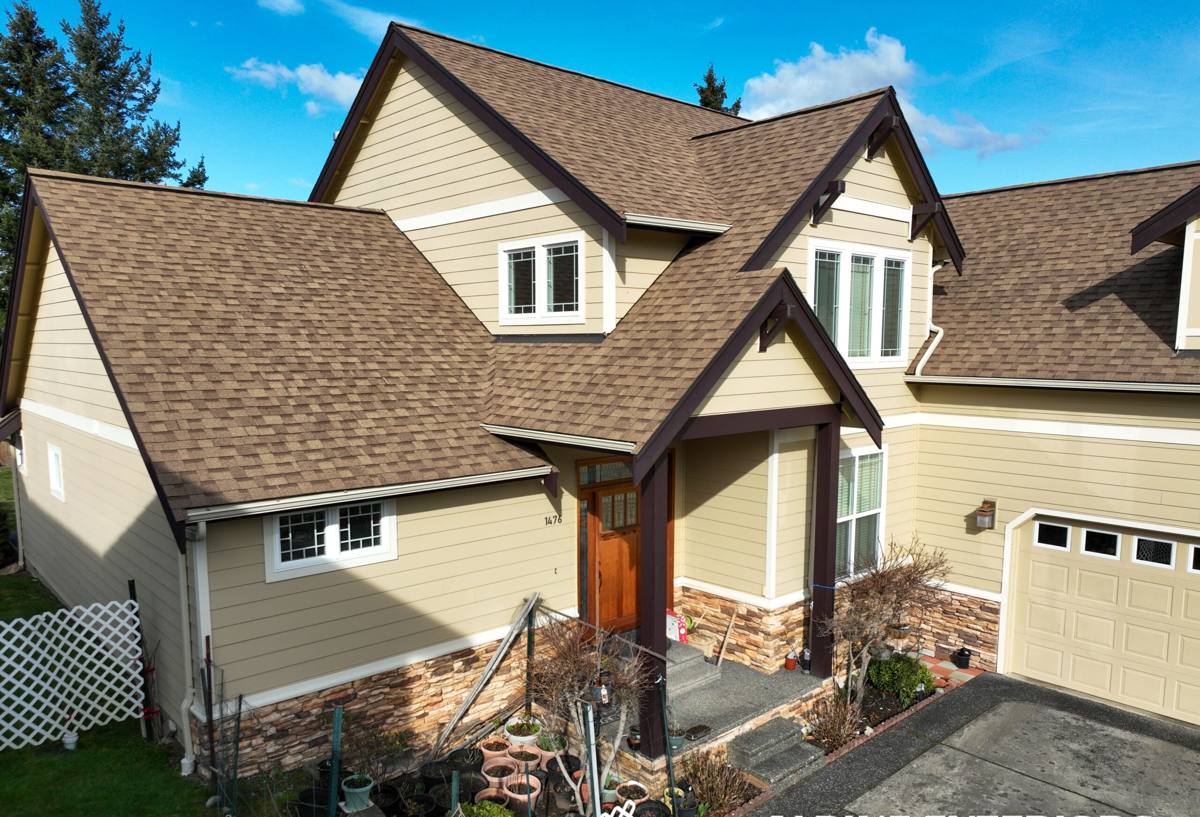
What a Correct Metal Roof Installation Actually Involves
Underlayment and Moisture Management
Under every metal panel there should be a underlayment system rated for the exposure it's going to see — not the cheapest felt available. In a climate with a long wet season, a synthetic or self-adhered underlayment at vulnerable areas (eaves, valleys, penetrations) gives the roof a second line of defense if wind-driven rain ever gets past the panel seams. This layer also matters for condensation control: metal is a poor insulator, and without the right underlayment and airflow behind it, moisture can form on the underside of the panels themselves.
Fastening and Panel Attachment
Exposed-fastener systems rely on screws with rubber washers that compress the panel to the roof deck. Those washers age, and in a climate with constant UV-to-rain cycling, they age faster than homeowners expect. Concealed-fastener systems, like standing seam, avoid this entirely by clipping panels together so no screw ever penetrates the visible roof surface. Whichever system goes on a Laurel roof, the fastening pattern needs to account for wind uplift and for how the panels expand and contract with temperature swings — metal moves more than shingles do, and panels fastened without room to move will oil-can, buckle, or eventually tear at the fastener.
Flashing at Every Transition
Most metal roof failures aren't in the field of the roof — they're at the edges: valleys, chimneys, skylights, sidewalls, and roof-to-wall transitions. Flashing has to be formed to match the panel profile, properly lapped with the underlayment, and sealed with materials rated for long-term outdoor exposure, not general-purpose caulk that chalks and cracks within a couple of seasons.
Choosing a Metal Roofing System for a Laurel Home
Not every metal roofing product performs the same way in a wet, shaded, salt-exposed climate. The table below breaks down the systems we install most often and how each one holds up under Whatcom County conditions.
| System | How It's Fastened | Moss & Moisture Behavior | Best Fit |
|---|---|---|---|
| Standing seam steel | Concealed clips, no field penetrations | Steep, smooth panels shed moss and debris well; fewer failure points | Homes wanting the longest maintenance-free stretch |
| Exposed-fastener steel panel | Screws with rubber washers through the panel face | Solid performance if washers are inspected and replaced over time | Budget-conscious reroofs, secondary structures |
| Stone-coated steel | Interlocking panels, nailed like traditional roofing | Textured surface can hold moisture and moss longer than smooth panel | Homeowners wanting a shake or tile look with steel's durability |
Panel material matters too. Painted or galvanized steel is the standard for durability and cost. Aluminum resists corrosion inherently and is worth discussing for homes closer to open water where salt exposure is heaviest, since it won't rust even if a coating gets scratched. The trade-off is aluminum is softer and can dent more easily than steel, which is a fair trade-off to weigh honestly rather than a reason to avoid it outright.
Moss, Algae, and Salt Air: What Actually Slows Them Down
Moss doesn't grow on bare metal the way it colonizes an asphalt shingle mat, but it can still take hold in accumulated debris, in valleys that don't drain cleanly, or on textured panel profiles that trap organic material. The fix isn't a chemical treatment plan — it's installation choices that give moss less to grip in the first place: smooth panel profiles where the roof design allows it, properly pitched valleys, and gutter and flashing details that keep water and leaf litter moving off the roof instead of pooling.
Salt air is a slower, quieter threat. It doesn't rot a roof the way trapped moisture does, but it accelerates corrosion at any point where a coating is compromised — a scratch, an exposed cut edge, an improperly sealed fastener. That's why panel edges should be finished (not left as raw cut steel), why fasteners should match the panel's coating system, and why touch-up paint matters more here than it would on a roof twenty miles inland.
Our Process, Start to Finish
A metal reroof isn't a one-visit job, and homeowners in Laurel deserve to know what each stage actually involves before work starts.
- On-site evaluation: We walk the existing roof, check deck condition, ventilation, and note every transition point — chimneys, skylights, valleys — that will need custom flashing.
- System selection: Based on roof pitch, exposure, and what you want the roof to look like, we go over panel type, gauge, and finish so the choice fits the house and the budget, not just a catalog default.
- Deck prep: Any soft or water-damaged decking gets addressed before a single panel goes on. Installing over a compromised deck is how a good roofing system fails early.
- Underlayment and flashing installation: This is where most of the roof's actual leak resistance comes from, and it happens before the panels are even visible.
- Panel installation: Panels go on with attention to expansion allowance, correct fastening pattern, and clean, square lines.
- Final walk-through: We go over the finished roof with you, point out anything you should know for maintenance, and make sure penetrations, edges, and trim are sealed and finished.
What Ongoing Care Looks Like
Metal roofing is low-maintenance, not no-maintenance. A short annual routine keeps a correctly installed system performing for decades:
- Clear valleys, gutters, and downspouts of needles and leaf litter before the fall rains set in
- Look for overhanging branches that drop debris or hold shade and moisture directly on the roof
- Check exposed fasteners (if applicable) every few years for washer wear or backout
- Rinse off any visible moss or algae buildup with plain water and a soft approach — no pressure washing directly against seams or fastener heads
- Have flashing and sealant at penetrations inspected periodically rather than waiting for a visible leak
Why a Crew That Already Works in Laurel Matters
A roofing crew that works this part of Whatcom County regularly already knows how local moisture patterns, tree cover, and wind exposure tend to play out on a roof — which valleys collect debris, which orientations hold moss longest, which flashing details matter most given how weather actually moves through the area. That's different from applying a generic install specification and hoping it holds up. It also means warranty and service calls aren't a logistics problem — we're not driving in from out of the region to look at a flashing detail that's underperforming.
Being based near Semiahmoo also means we're working in this same climate on our own crew's schedule, season after season, which keeps our process honest: we see what holds up and what doesn't, and we adjust rather than repeating a detail that causes callbacks.
Get a Straight Answer for Your Roof
Every roof in Laurel is a little different — pitch, tree cover, existing roof condition, and what you actually want out of the next several decades all factor into the right system for your home. If you're weighing metal roofing or just want an honest read on what your current roof needs, we're glad to take a look and walk through the options with you. Use the form below to request a free, no-pressure estimate.