 Semiahmoo Exterior
 Wiser Lake Roofs Work Harder Than Most
Homes around Wiser Lake sit in a stretch of Whatcom County where the roof rarely gets a break. You've got the damp, mineral-heavy air that drifts inland off the Salish Sea, long stretches of driving rain that comes in sideways more often than straight down, and tree cover dense enough that shade and moisture linger on the roof deck for months at a time. None of that is unusual for this part of Washington. But it does mean a roof here ages differently than a roof in a drier inland climate, and it means repairs need to account for more than just the spot that's leaking.
We work on roofs in this area regularly, and the calls we get are rarely about something exotic. They're about the ordinary wear this climate produces faster than most homeowners expect: lifted shingles at a ridge, a slow drip near a chimney, moss creeping up from the eaves, or a flashing detail that was never quite right to begin with. This page is about that one job — roof repair — done correctly for the conditions Wiser Lake homes actually face.
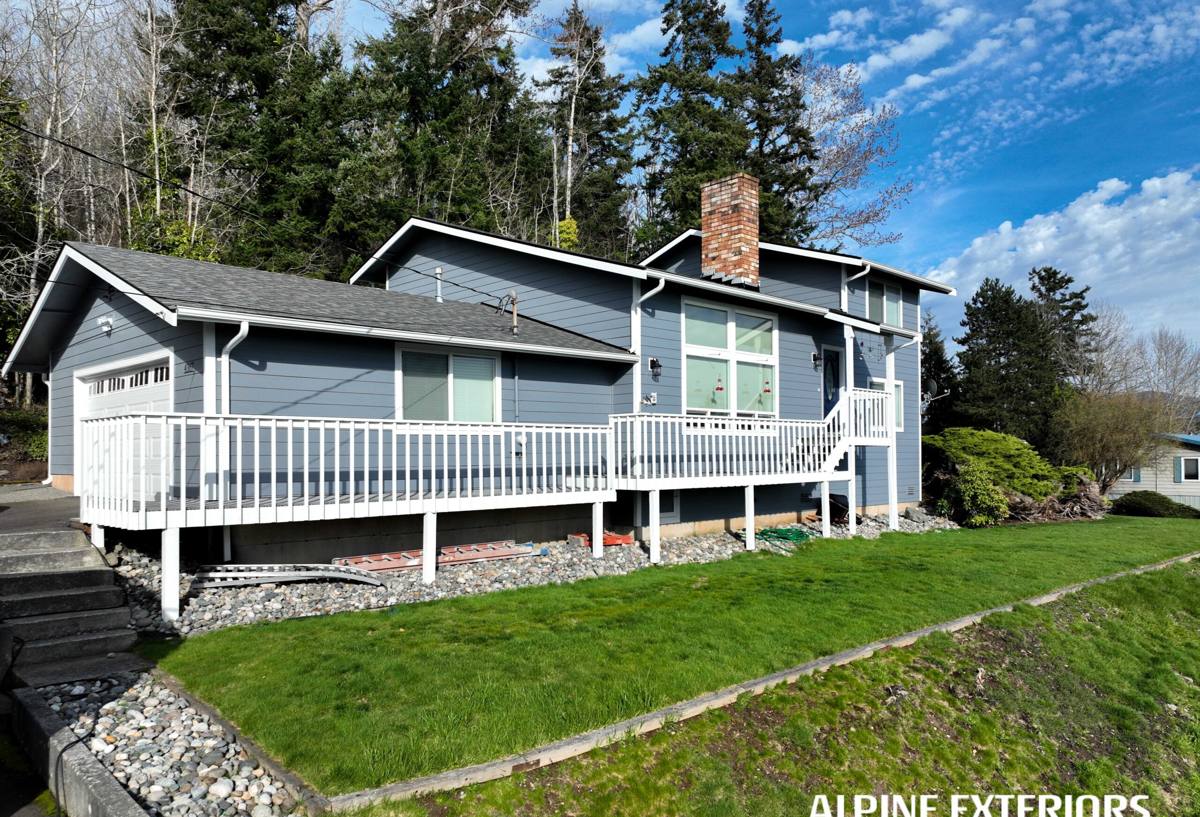
What Salt Air, Rain, and Moss Actually Do to a Roof
Salt-Laden Air and Metal Components
Even well inland from open water, salt-carrying air can accelerate corrosion on exposed metal — nails, flashing, vent caps, gutter fasteners. Galvanized coatings that hold up fine in a dry climate wear thin faster here. Once a fastener or flashing edge starts to corrode, it stops sealing the way it should, and that's often where a small leak starts. A repair that reuses corroded metal instead of replacing it is a repair that fails again within a year or two.
Driving Rain and Wind-Driven Intrusion
A lot of roof leaks in this area aren't caused by rain falling straight down — they're caused by rain being pushed sideways and upward under shingle edges, around vents, and behind flashing that's just slightly short or improperly lapped. A roof can pass a visual inspection on a calm day and still leak every time a windstorm rolls through. Repairs here need to be evaluated with wind-driven rain in mind, not just standard drainage.
Moss, Moisture Retention, and Deck Damage
The long moss season is probably the single biggest difference between roofs here and roofs in drier climates. Moss and algae hold moisture against the shingle or shake surface far longer than open sun and dry air would allow. Over time that moisture works its way under tabs, into fastener holes, and eventually into the roof deck itself. By the time moss is visibly thick, there's a good chance it's already doing damage you can't see from the ground.
Signs a Wiser Lake Roof Needs Repair
Most roof problems give some warning before they turn into an interior leak. Worth checking for, or having us check for, on a regular basis:
- Moss or dark algae streaking concentrated on north-facing or shaded slopes
- Granules collecting in gutters or at downspout outlets
- Shingles that look cupped, curled, or lifted at the edges
- Rust staining below metal flashing, vents, or valleys
- Soft or spongy-feeling spots when walked (only by a professional — never test this yourself)
- Daylight visible through the roof deck from inside the attic
- Water stains on interior ceilings, especially near chimneys, skylights, or valleys
- Sagging along a ridge line or between rafters
Any one of these on its own might mean a small, straightforward repair. Several at once usually means it's worth a full inspection before deciding how to proceed.
What a Correct Roof Repair Actually Involves
Diagnosing the Real Source, Not Just the Symptom
Water travels before it shows up. A stain on a bedroom ceiling might trace back to a flashing gap several feet away, higher up the slope. A rushed repair patches where the water appeared; a correct one traces where it's actually getting in. That usually means getting on the roof, checking the attic side of the deck, and looking at flashing, valleys, and penetrations together rather than in isolation.
Matching Materials and Method
Whether the roof is asphalt composition, cedar shake, or metal, a repair needs to match the existing material's behavior, not just its appearance. Mismatched materials expand and contract differently, shed water differently, and can actually accelerate wear at the seam between old and new. On an older roof, matching shingle color exactly usually isn't possible — we'll tell you that honestly up front rather than promise a seamless blend we can't deliver.
Flashing and Underlayment First
Given how much of this region's roof damage traces back to wind-driven rain finding a gap, flashing and underlayment detail matters as much as the shingles themselves. A repair that replaces shingles but reuses old, undersized, or improperly lapped flashing is treating half the problem.
Moss and Growth Removal Done Without Damage
Moss should be removed gently — low-pressure methods and the right treatment, not a pressure washer blasting granules off in the process. Aggressive cleaning can do more damage to a roof than the moss itself. Where moss has been established a while, we'll also check the deck underneath for softness before calling the repair complete.
Repair or Replace: How to Tell the Difference
Not every roof problem calls for a full replacement, and not every leak can be permanently solved with a patch. Here's generally how we think about it:
| Factor | Leans Toward Repair | Leans Toward Replacement |
|---|---|---|
| Age of roof | Well under expected lifespan for the material | At or past expected lifespan |
| Extent of damage | Isolated to one area, flashing, or a few shingles | Widespread across multiple slopes |
| Deck condition | Solid, no soft spots found | Soft, spongy, or visibly rotted decking |
| Moss/algae history | Recent, surface-level growth | Long-term growth with granule loss and staining |
| Number of past repairs | First or second repair on this roof | Long history of recurring patch jobs |
When a roof falls in the middle — say, it's aging but the deck is still sound — we'll walk you through the honest trade-offs rather than push either direction. A repair costs less today; a replacement resets the clock and often carries a stronger warranty. Which makes sense depends on how much longer you plan to be in the home and what condition the rest of the roof is in.
Our Process for a Wiser Lake Roof Repair
- Inspection. We walk the roof and check the attic side where accessible, looking at flashing, valleys, penetrations, and deck condition — not just the spot you called about.
- Honest assessment. You get a plain explanation of what's actually wrong, what caused it, and whether repair or replacement makes more sense for your situation.
- Written estimate. Scope and cost in writing before any work starts. No surprise add-ons once we're up there.
- The repair itself. Correct materials matched to what's already on the roof, proper flashing and underlayment work, and cleanup of debris and old material.
- Final check. We verify the fix from both the roof and the attic side before we consider the job done.
Materials We Use and Why
Our default is to match what performs well in this specific climate rather than whatever's cheapest or trendiest. That generally means:
| Material | Where It Fits Well Here | What to Watch |
|---|---|---|
| Asphalt composition | Most common, cost-effective, wide range of grades | Granule loss accelerates under prolonged moss/moisture exposure |
| Cedar shake | Traditional look, breathes well when maintained | Needs regular moss control; higher maintenance burden in this climate |
| Metal roofing/flashing | Sheds wind-driven rain well, long service life | Fasteners and cut edges need corrosion-resistant coatings given salt-air exposure |
We're upfront when a material isn't a good fit for a given roof's exposure or slope — that's a judgment based on how these products actually hold up around here, not a knock on any manufacturer.
Why Hiring Local Experience Matters for This Job
A roof repair crew that mainly works drier inland regions will diagnose a Wiser Lake roof the way they'd diagnose any other roof — and miss the parts that are specific to this climate. Knowing that moss damage here tends to hide under the surface, that flashing needs to be sized for wind-driven rain rather than straight-down rain, and that salt-air corrosion shows up on fasteners before it shows up anywhere visible — that comes from working roofs in Whatcom County repeatedly, not from a general roofing background. It's also why we're comfortable telling you when a repair will hold and when it won't; we've seen how this specific climate treats a rushed fix.
Keeping a Repaired Roof in Good Shape
A correct repair should last, but a little upkeep between visits stretches that further, especially given the moss season here:
- Keep gutters and downspouts clear so water doesn't back up under shingle edges
- Trim back overhanging branches to cut down on shade and debris buildup
- Have moss treated at the first sign of growth rather than waiting for it to spread
- Schedule a roof check after any major windstorm, even if nothing looks wrong from the ground
- Don't ignore small interior stains — they're almost always cheaper to address early
If you're noticing moss buildup, a slow drip, or you just haven't had your roof looked at in a while, we're happy to come take a look. Reach out for a free, no-pressure estimate — the form below will get you started.