 Semiahmoo Exterior
 Why Decks in Marietta Wear Out Faster Than the Manuals Say
Every deck manufacturer publishes a lifespan number, and almost none of those numbers were tested a few hundred yards from saltwater under a Pacific Northwest sky. Marietta sits close enough to Semiahmoo Bay and Drayton Harbor that salt-laden air is a daily fact of life, not an occasional event. Combine that with Whatcom County's long wet season and the moss that comes with it, and a deck built to a generic national spec starts showing its age well before the warranty period is over.
This isn't a reason to avoid decks — it's a reason to build and replace them with local conditions in mind from the start. A deck that's engineered and fastened correctly for this stretch of coast will outlast one that was installed the same way a crew would build in a dry inland climate.
Salt Air and Metal Fasteners
Salt air accelerates corrosion in fasteners, brackets, and hardware — even hardware labeled "exterior rated." Once a fastener starts to corrode, it loses holding strength quietly, often years before any visible rust shows up on the surface. On a structural connection like a ledger board or a joist hanger, that's not a cosmetic problem — it's a safety one. Replacement decks near the water need hardware rated specifically for coastal or marine-grade exposure, not just general outdoor use.
Moss, Shade, and Moisture Retention
Many Marietta lots carry mature trees and partial shade, which is great for privacy and terrible for a deck surface's ability to dry out. Moss and algae hold moisture against wood and composite boards alike, and that constant damp cycle is what drives rot in framing, softens fastener connections, and makes surfaces slick and dangerous underfoot. A deck replacement here has to plan for airflow and drainage, not just aesthetics — those decisions matter more in a shaded, moss-prone yard than almost anywhere else in the build.
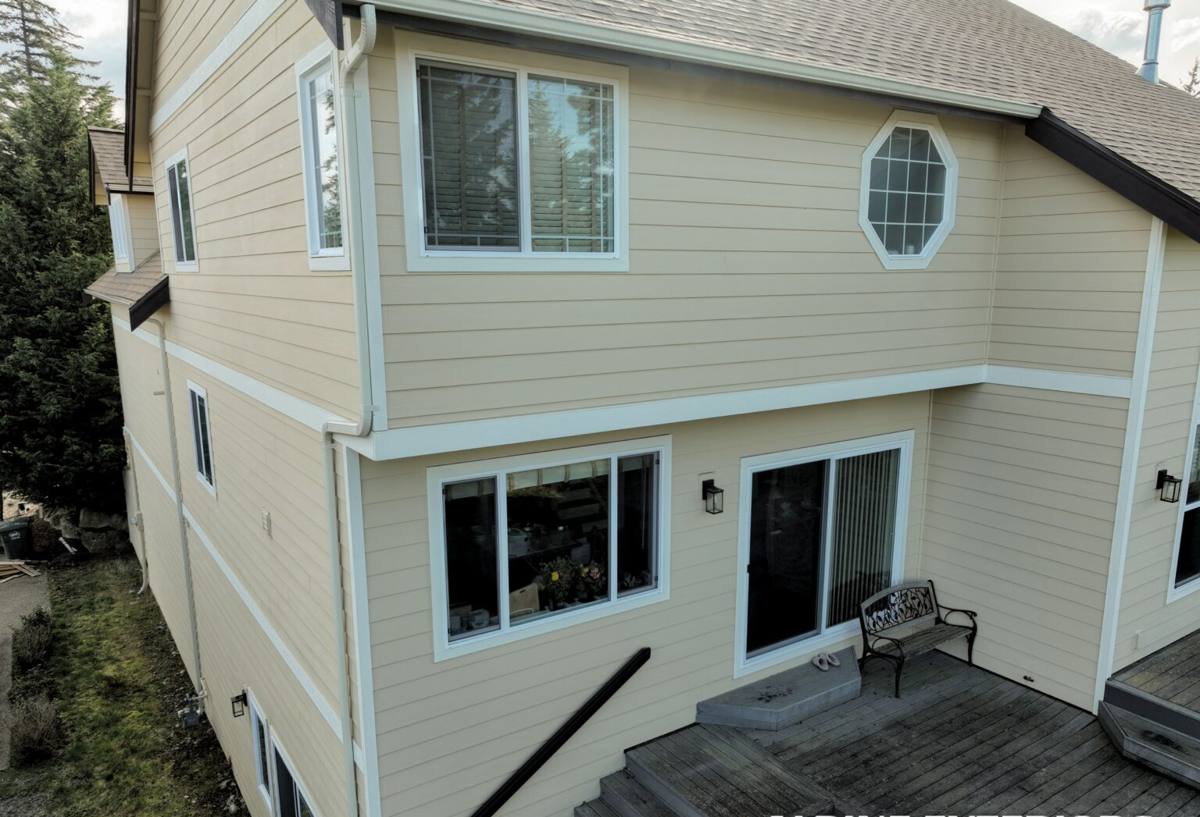
Repair or Replace? Signs Your Deck Has Reached the End
Homeowners often ask us to "fix a few boards" and end up needing a full replacement once we're underneath the deck. Surface boards are the most visible part of a deck, but they're rarely the part that determines whether a repair is realistic. The framing, ledger connection, and footings are what actually decide that question.
- Soft or spongy spots when you walk across the deck, especially near the house or stair landings
- Visible rot, splitting, or crumbling wood at the ledger board where the deck attaches to the house
- Rust streaks running down from joist hangers, bolts, or post bases
- Persistent moss or black staining that returns within weeks of cleaning
- Railings or posts that flex or wiggle under normal pressure
- A deck more than 15-20 years old that has never had the ledger flashing inspected
- Gaps or separation where the deck meets the house siding or trim
If you're seeing two or more of these, a patch job is usually a short-term fix on a structure that needs to come out. A honest assessment upfront saves you from paying for repairs on a deck you'll be replacing within a couple of years anyway.
What a Correct Deck Replacement Actually Involves
A deck replacement is a structural project first and a finish-carpentry project second. The parts nobody sees — flashing, framing, footings — determine how long the parts everybody sees will last.
Ledger Board and Flashing
The ledger board is where the deck bolts to the house, and it's the single most common failure point we find on older decks in this area. Correct flashing detail keeps water from running behind the ledger and into the house framing — a detail that matters even more here given how much rain this region sees over a typical winter. Any deck replacement worth doing includes proper ledger flashing, not just a fresh coat of sealant over the old connection.
Framing, Joists, and Footings
Joist spacing and sizing need to match the actual span and load, not just match whatever was there before. Footings need to sit below frost depth and bear on solid, undisturbed soil — on some Marietta lots that means digging deeper or wider than the original builder did decades ago. We also check post bases and connections for the coastal hardware upgrade mentioned above, since this is the layer of the deck that's hardest and most expensive to access once decking boards are back on top.
Decking Surface and Railings
Once the structure is sound, the surface material and railings are where you get to make choices about maintenance, appearance, and budget — covered in the material comparison below. Railings also need to meet current code height and baluster spacing requirements, which is worth checking even if you're only replacing the walking surface, since older railings often predate current standards.
Choosing a Decking Material for This Climate
There's no single "best" decking material — there's a best material for your budget, your maintenance tolerance, and how much sun or shade your specific deck gets. Here's how the common options actually perform in a salt-air, high-moss environment like Marietta.
| Material | Moisture & Moss Behavior | Maintenance | Typical Lifespan |
|---|---|---|---|
| Pressure-treated lumber | Absorbs moisture readily; needs good airflow underneath to resist rot and moss growth | Annual cleaning and re-staining or sealing recommended | 10-15 years, less in heavy shade |
| Cedar | Naturally rot-resistant but still needs sealing to fight moss staining and graying | Sealing every 1-2 years to maintain appearance and protection | 15-20 years with upkeep |
| Capped composite | Doesn't absorb moisture into the core; surface sheds moss more easily than wood | Periodic washing; no staining or sealing required | 25-30 years, per manufacturer warranties |
| Uncapped composite | More moisture-resistant than wood but the exposed core can still take on staining over time in shaded, damp spots | Occasional cleaning; less forgiving of neglect than capped composite | 15-25 years |
For heavily shaded Marietta lots with real moss pressure, we generally steer homeowners toward capped composite or a well-detailed cedar deck with a firm maintenance commitment. Pressure-treated framing underneath any of these is still standard — the material choice really matters most for the walking surface and railings, where moisture sits the longest.
Our Deck Replacement Process
We keep the process straightforward because a deck replacement disrupts your yard and routine enough without added confusion about what happens next.
- On-site assessment. We inspect the existing deck from the ground up — ledger, framing, footings, and surface — and tell you honestly whether repair is realistic or replacement is the better investment.
- Design and material selection. We walk through material options based on your budget, sun exposure, and how much maintenance you actually want to do, not just what's trendy.
- Permitting. We handle the permit application with the local jurisdiction where required, based on your deck's size, height, and attachment to the home.
- Demo and disposal. The old deck comes out, including checking the ledger connection and framing underneath for any hidden rot or water damage before we build back.
- Structural rebuild. New footings, framing, ledger flashing, and coastal-rated hardware go in to code, sized for your deck's actual span and use.
- Surface and railings. Decking boards and railings are installed per manufacturer specifications, with attention to gapping and airflow for proper drainage.
- Final walkthrough. We go over the finished deck with you, including basic care guidance specific to the material you chose.
Permits and Code in Whatcom County
Most deck replacements that involve rebuilding structure — not just swapping boards on an existing frame — require a permit from the local building jurisdiction. Requirements typically cover footing depth, guardrail height, baluster spacing, and ledger attachment method. Because we work regularly in and around Semiahmoo and greater Whatcom County, we're familiar with what inspectors here are looking for, which keeps the permitting and inspection steps from becoming a source of delay on your project.
If your existing deck was built years ago under older code, a full replacement is also a chance to bring railings and stairs up to current safety standards — something worth doing regardless of what material you choose for the decking surface.
Why a Crew That Already Works Marietta Matters
A deck replacement crew that's only worked drier, inland projects will make reasonable-sounding decisions that don't hold up here — standard hardware instead of coastal-rated fasteners, framing details that don't account for moss and shade, or a build schedule that ignores how many good weather windows this region actually gets. None of those choices show up as problems on installation day. They show up two or three winters later.
Working this area regularly means we've already seen how salt air, shade, and driving rain affect decks specific to Whatcom County properties near the water — and we build accordingly from the first footing, not after a callback.
If your deck is showing its age or you're just not sure whether it needs repair or full replacement, we're happy to take a look. Fill out the form below for a free, no-pressure estimate on your Marietta deck replacement.