 Semiahmoo Exterior
 Custom Windows Built for This Corner of Whatcom County
Lynden sits inland from Semiahmoo Bay, but the same weather system that batters the coastline reaches every farmhouse, rambler, and newer build in the area. Homes here deal with a mix of salt-tinged air pushed in off the water, long stretches of driving rain through fall and winter, and a moss season that seems to stretch a little longer every year. Windows take the brunt of that. A window that performs fine in a dry inland climate can fail years early once it's exposed to Whatcom County's version of "normal" weather.
Custom windows aren't about upgrading to something fancier than your neighbor has. They're about matching the window — frame material, glazing, flashing detail, and installation method — to the specific exposure your home actually gets. A south-facing wall that catches wind-driven rain needs different attention than a sheltered north wall. A house near open fields needs different sealing than one tucked behind a windbreak of trees. That's the whole idea behind doing this job right in this area: nothing off a generic spec sheet, everything sized to the wall it's going into.
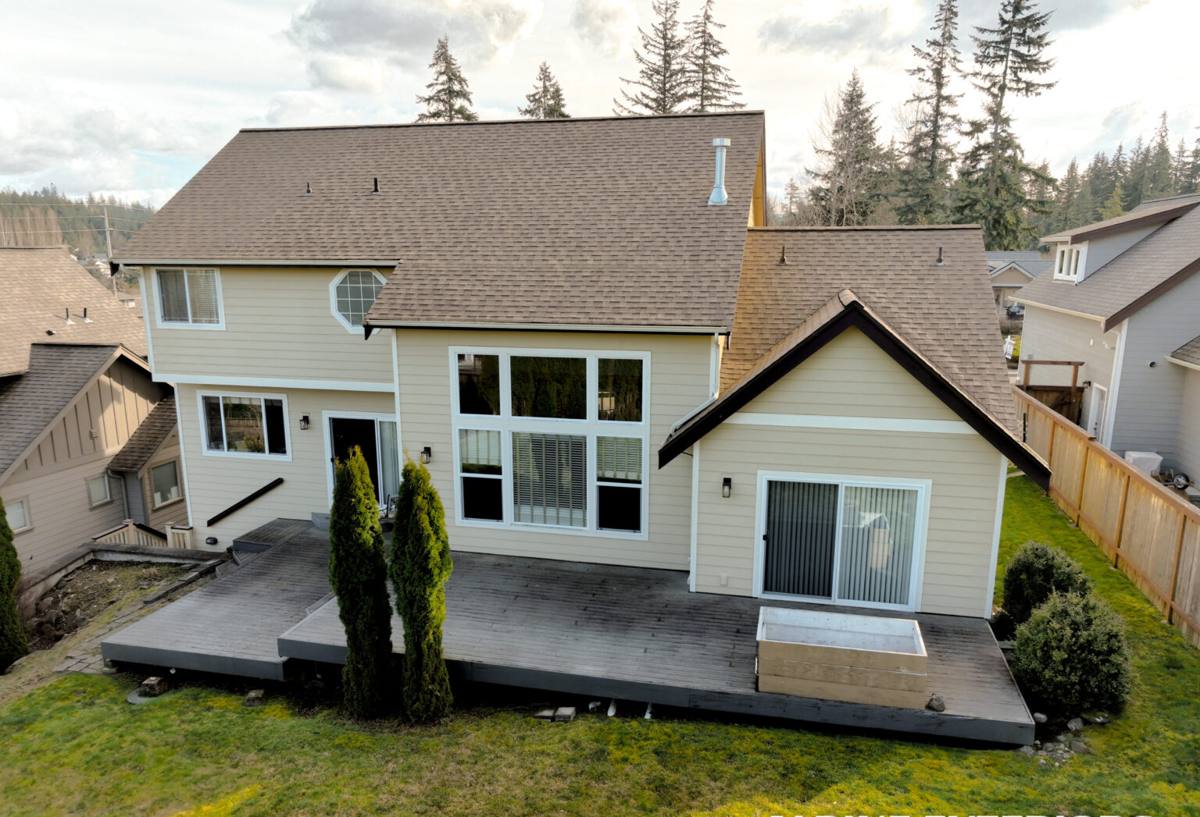
What Local Weather Actually Does to a Window
Salt Air
Even well inland from the bay, salt-laden air carries and settles on exterior surfaces. Over years, it accelerates corrosion on unprotected metal hardware, hinges, and cheaper aluminum components. It also breaks down certain sealants and finishes faster than a dry climate would, which shows up as chalky paint, pitted hardware, or seals that give out years before they should.
Driving Rain
Rain that falls straight down is easy for any window to handle. Rain that gets pushed sideways by wind is a different problem — it tests every seam, every flashing lap, and every bead of sealant around the frame. Most window failures we find in this area aren't glass failures at all. They're water finding a path in through a flashing detail that was installed wrong, or a sill that was never sloped to shed water away from the house.
Moss and Sustained Moisture
A long moss season means prolonged dampness against exterior surfaces for months at a time, not just after a storm. Wood trim and sills that sit wet for extended periods are where rot gets started, especially if the finish has already started to fail. Moss holding moisture against a sill or trim board is a slow, quiet way to lose wood that looks fine from a distance.
Signs Your Windows Are Already Losing the Fight
- Fogging or a hazy film between panes of double-glazed units — a sign the seal has failed and the gas fill is gone
- Soft or spongy wood at the sill or lower frame corners
- Paint that's bubbling, peeling, or chalking on window trim faster than on the rest of the siding
- Visible moss or dark streaking building up on sills, trim, or the wall directly below a window
- Drafts or a noticeable temperature difference near the window on a windy day
- Hardware (locks, cranks, hinges) that's stiff, corroded, or has visible pitting
- Condensation forming on the inside of the glass regularly, even with normal ventilation
Any one of these on its own might just mean a repair. Several at once, especially on the same wall or exposure, usually means the window assembly itself is done and replacement is the honest recommendation.
What "Custom" Means in Practice
Custom doesn't mean unusual shapes or high-end trim packages, though we do that work too. For most Lynden-area homes it means:
- Windows sized to the actual rough opening rather than forcing a nearest-standard-size unit into place with shims and extra sealant
- Frame material chosen for the specific wall's sun and rain exposure, not a one-size-fits-all default
- Flashing and drainage details matched to your wall assembly (siding type, house wrap condition, sheathing) instead of a generic install
- Glazing package chosen based on which direction the window faces and how much wind-driven rain that wall typically takes
None of that shows up on a brochure. It shows up five and ten years later, in whether the window is still sealing properly or whether water has already found its way behind the trim.
Frame Material Comparison for This Climate
| Material | How It Handles Salt Air & Rain | Maintenance | Typical Fit |
|---|---|---|---|
| Vinyl | Won't corrode; performs well against salt exposure; can flex slightly in temperature swings | Low — occasional cleaning, no repainting | Most budget-to-mid replacements; good all-around choice |
| Fiberglass | Very stable in wet, salty conditions; holds paint and seals well over time | Low to moderate | Higher-exposure walls, larger openings, longer-term investment |
| Wood-clad | Good look and insulating value, but the wood core is vulnerable if the cladding seal ever fails | Higher — finish and seals need monitoring | Homes prioritizing appearance where upkeep isn't a concern |
| Aluminum | Prone to corrosion pitting from salt air unless well-finished; conducts heat and cold readily | Moderate to high | Limited use — we typically steer clients toward other materials for this climate |
We don't push one material on every job. We do steer clients away from bare aluminum on exposed walls in this area, because the corrosion and thermal performance trade-offs tend to show up sooner than homeowners expect. That's a professional judgment call based on how these materials age here, not a knock on any manufacturer.
How the Job Actually Works
1. Walk-Through and Exposure Assessment
We look at each opening individually — which direction it faces, how exposed it is to wind-driven rain, what condition the existing flashing and sill are in, and whether there's any hidden water damage around the frame. This is also when we check for soft wood, failed caulk lines, and moss buildup that points to a bigger moisture problem than what's visible.
2. Measuring and Ordering
Openings get measured precisely rather than assumed to match a standard size. Older homes especially tend to have openings that have shifted slightly over decades, and forcing a standard-size window into a non-standard opening is one of the more common causes of early seal failure.
3. Removal and Opening Prep
Old windows come out carefully so we can inspect the sheathing and framing underneath before anything new goes in. Any rot, soft wood, or failed house wrap gets addressed at this stage — covering it up with a new window doesn't fix a moisture problem, it just hides it for a few years.
4. Flashing and Drainage Detail
This is the step that matters most in a driving-rain climate. Proper flashing tape, correctly lapped house wrap, and a sill pan that actually drains water back out are what keep water from working its way into the wall cavity over time. This detail work is exactly what tends to get skipped on rushed installs, and it's exactly what fails first here.
5. Setting, Shimming, and Sealing
The window gets set level and plumb, shimmed correctly so it's not under stress, and sealed with materials rated for the exposure — not just whatever caulk is on the truck.
6. Trim, Finish, and Final Check
Interior and exterior trim goes back on, everything gets a final water-test check where practical, and we walk the job with you before calling it done.
Local Considerations Around Lynden and Semiahmoo
Whatcom County's mix of older farmhouses, mid-century ramblers, and newer construction means we run into a wide range of existing window conditions. Older single-pane wood windows in original farmhouses are often structurally fine but thermally poor and prone to the wood rot issues described above. Homes built in the vinyl-window boom of the 80s and 90s are frequently hitting the point where original seals are failing. Whatever the age of your house, wind exposure varies a lot from lot to lot around here depending on how open the surrounding land is and which way the prevailing weather comes from — that's part of why a walk-through matters more than a phone-quoted price.
What Affects the Cost
| Factor | Why It Matters |
|---|---|
| Frame material | Vinyl is typically the most affordable; fiberglass and wood-clad cost more upfront but shift the maintenance and lifespan equation |
| Number and size of openings | Larger openings and specialty shapes take more material and labor |
| Condition of the existing opening | Rot repair or reframing adds time and material beyond the window itself |
| Glazing package | Higher-performance glass for sun or wind exposure costs more than a standard package |
| Exterior finish work | Trim, siding tie-in, and paint matching add labor depending on your home's exterior |
We don't quote a per-window number until we've actually looked at the openings — anything given over the phone before that is a rough range at best, and this climate has too much variation from wall to wall for a flat number to mean much.
Questions Worth Asking Before You Hire Anyone
- Do you inspect the sheathing and framing before installing, or just swap the window in place?
- What flashing and sill pan method do you use, and why?
- Are you licensed and insured to do this work in Washington State?
- What's the warranty on both the window itself and on your installation labor?
- Can you show me examples of work you've done on homes with a similar age or wall type to mine?
- How do you handle it if you find rot or moisture damage once the old window is out?
A contractor who's worked this area for a while should have straightforward answers to all of these without hesitation. If the answers are vague, especially around flashing and moisture handling, that's worth taking seriously before signing anything.
Why a Crew That Already Works Lynden Matters
There's a real difference between a company that installs windows everywhere and a crew that's spent real time on homes in this specific area. We already know which walls tend to take the worst of the wind-driven rain, what kind of rot patterns show up in older Whatcom County framing, and how long moss season here actually runs compared to what a install crew from a drier region might assume. That local pattern recognition is what keeps small problems from turning into callbacks two winters later.
If your windows are fogging, drafting, showing soft wood, or just aging out after years of salt air and driving rain, we're happy to take a look and give you a straight, no-pressure assessment. Use the form below to request a free estimate — we'll walk your specific openings and tell you honestly what they need.