 Semiahmoo Exterior
 Window Installation Built for Laurel's Coastal Climate
Laurel sits close enough to the water and open farmland that its homes take a different kind of weather beating than houses further inland. Salt-laden air drifts in off Semiahmoo Bay and the Strait, wind-driven rain comes in sideways during fall and winter storms, and the region's long gray, damp season keeps moss and algae growing on anything that stays wet too long. Windows are one of the first places that combination shows up as a problem — failed seals, soft trim, drafts, and fogged glass are all downstream of the same root cause: water and salt finding their way past a window that wasn't installed, or flashed, correctly the first time.
Replacing or installing windows here isn't just a matter of picking a product out of a catalog. It's about how that window gets tied into the wall assembly so water has nowhere to go but back outside.
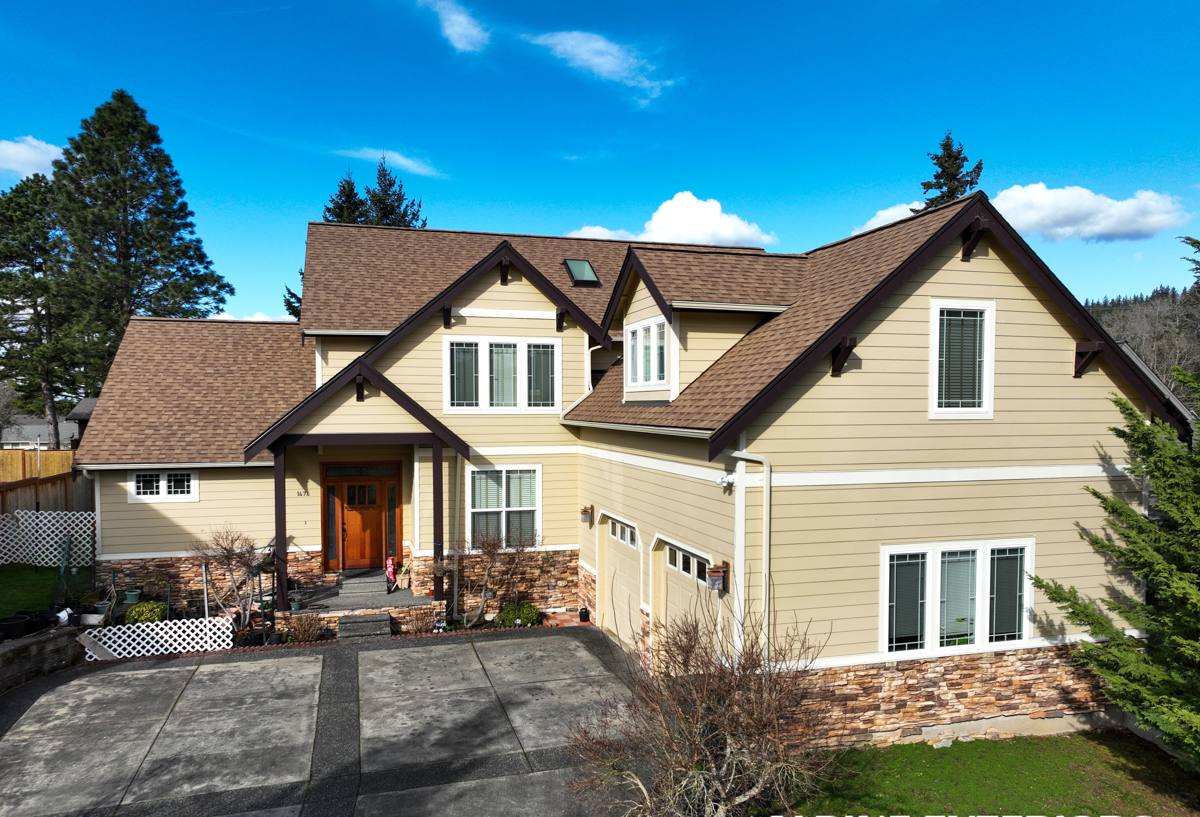
What Laurel's Weather Actually Does to Windows
Salt Air and Metal Fatigue
Salt in the air accelerates corrosion on window hardware, screen frames, and lower-quality cladding. Locks stiffen, hinges pit, and aluminum components can pit or streak years before they would in a drier inland climate. Windows with corrosion-resistant hardware and finishes hold up noticeably better this close to the water.
Driving Rain and Wind Pressure
Storms off the water don't just fall straight down — they push rain sideways into wall assemblies and window frames under real pressure. A window that's a good product but poorly flashed will still leak, because wind-driven rain finds any gap in the water-resistive barrier around the rough opening. This is the single biggest cause of window-related water damage we see in this area, and it has almost nothing to do with the window brand.
Moss, Algae, and Prolonged Dampness
Whatcom County's long wet season means anything shaded or slow to dry — sills, trim, the bottom corners of frames — stays damp for extended stretches. That's exactly the environment moss and mildew need to take hold, and sustained moisture against wood trim or an improperly sealed frame is what eventually leads to rot.
Signs a Laurel Home's Windows Need Attention
- Fogging or a hazy film between the panes of double-pane glass (a sign the seal has failed)
- Drafts you can feel near the frame on windy days, even with the window latched
- Soft, discolored, or spongy trim or sill material
- Windows that are difficult to open, close, or lock — often a sign the frame has shifted or swollen
- Visible moss or persistent green staining on sills or exterior trim
- Paint that's peeling or bubbling specifically around window edges, while the rest of the wall looks fine
- Interior condensation on cold mornings that wasn't there a few years ago
Any one of these on its own isn't an emergency. Several together, especially on the same window or the same side of the house, usually means water is getting behind the frame.
What a Correct Installation Actually Involves
The window itself is only part of the job. What separates an installation that holds up in Whatcom County weather from one that fails in a few years is almost entirely in the details around the window opening:
Proper Flashing and Sequencing
Flashing tape and building paper have to be layered so water is shingled downward and outward — never trapped behind the window. This includes sill pan flashing at the bottom of the opening, which gives any water that does get past the window a way to drain back out instead of soaking into the wall framing.
Air and Water Sealing at the Frame
Sealant and backer rod around the perimeter need to be applied correctly, not just caulked over gaps as an afterthought. Done right, this stops both air infiltration and wind-driven rain intrusion.
Correct Shimming and Fastening
A window that isn't shimmed level and plumb will operate poorly and stress the seals over time, which shortens the life of the glass unit itself. Fastening has to follow the manufacturer's pattern to keep the frame square under wind load.
Interior and Exterior Trim Work
Trim isn't just cosmetic — it's part of the water management system and the final air seal. Trim work that ignores this ends up looking fine for a season or two before problems show up underneath.
Our Process for a Laurel Window Project
- On-site assessment: We look at the existing windows, the condition of the surrounding wall and trim, and any signs of past water intrusion before recommending anything.
- Product and glass recommendation: Based on the home's exposure — direct wind and rain off the water versus a more sheltered spot — we recommend materials and glazing that make sense for that specific location, not a one-size-fits-all package.
- Removal and opening inspection: Once old windows come out, we check the rough opening and framing for hidden rot or moisture damage before anything new goes in. This is often where problems from a prior installation surface.
- Flashing and installation: Sill pan flashing, water-resistive barrier integration, and correct shimming and fastening, in that order.
- Sealing and trim: Interior and exterior sealing and trim finished to match the home.
- Final check: Every window is opened, closed, and locked to confirm proper operation before we consider the job done.
Choosing Materials for This Climate
There's no single "best" window material — the right choice depends on exposure, budget, and how much upkeep a homeowner wants to take on. Here's how the common options compare for a coastal Whatcom County home:
| Frame Material | Salt Air Resistance | Maintenance | Typical Lifespan Here |
|---|---|---|---|
| Vinyl | Good — won't corrode | Low | Long, with quality hardware |
| Fiberglass | Very good — stable and corrosion-resistant | Low | Long |
| Aluminum (uncoated) | Fair to poor — prone to pitting near salt air | Moderate to high | Shorter unless well-coated |
| Wood (unclad) | Poor without diligent upkeep | High — regular repainting/sealing needed | Depends heavily on maintenance |
| Wood-clad (vinyl or fiberglass exterior) | Good on the exterior face | Low to moderate | Long, interior wood look retained |
We don't push any single material as the automatic right answer. A shaded, more sheltered home a few blocks from the water can get by with options that would struggle on an exposed, wind-facing lot. We'll tell you honestly which trade-offs matter for your specific house.
What Affects the Cost of a Window Project
| Factor | Why It Matters |
|---|---|
| Number of windows and sizes | Larger openings and more units mean more material and labor |
| Frame material and glass package | Fiberglass and multi-pane, coated glass cost more upfront than basic vinyl |
| Condition of the existing opening | Hidden rot or old flashing failures add repair work before new windows go in |
| Full-frame vs. insert replacement | Full-frame replacement addresses flashing and structure but takes more labor than an insert into a sound existing frame |
| Trim and finish work | Matching existing interior trim or exterior siding detail adds time |
We give straightforward, itemized estimates so you know what you're paying for and why — no vague lump-sum numbers.
Why a Crew That Already Works in Laurel Matters
A window installer who works Whatcom County's coastal edge regularly already knows how exposed a given stretch of Laurel tends to be to wind and rain, what kind of flashing detail holds up here versus a drier climate, and what moss and salt damage looks like in its early stages before it becomes a bigger repair. That local pattern recognition is the difference between a window that's installed correctly on paper and one that's installed correctly for this specific place. We stand behind our installation work and use manufacturer-backed product warranties, so you're covered on both the labor and the materials.
Keeping New Windows Performing Long-Term
- Rinse salt residue off frames and glass periodically, especially after storms
- Clear moss or algae from sills and trim promptly rather than letting it establish
- Check and clean weep holes on the exterior so water can drain away from the frame
- Inspect exterior caulking annually and have gaps resealed before they widen
- Operate locks and hardware a few times through the year to keep them from seizing
None of this is difficult, but it's the kind of small, regular upkeep that adds years to a window's service life in a climate like this one.
If you're seeing drafts, fogged glass, or trim trouble around your windows, or you're just ready to plan a replacement before the next storm season, we're happy to take a look and give you a straightforward, no-pressure estimate. Use the form below to get started.