 Semiahmoo Exterior
 Storm Damage Roof Repair for Drayton Harbor Homes
Drayton Harbor sits right on the water in Semiahmoo, and that location is part of what makes it a beautiful place to live — and part of what makes roofs here wear differently than roofs ten miles inland. Salt-laden wind, driving rain off the harbor, and a moss season that runs most of the year all put steady stress on shingles, flashing, and fasteners. When a storm comes through and does visible or hidden damage, the fix needs to account for all of that, not just patch the obvious spot and move on.
We work on homes along this stretch of Whatcom County regularly, so we're not guessing at what Drayton Harbor roofs deal with — we're up on them.
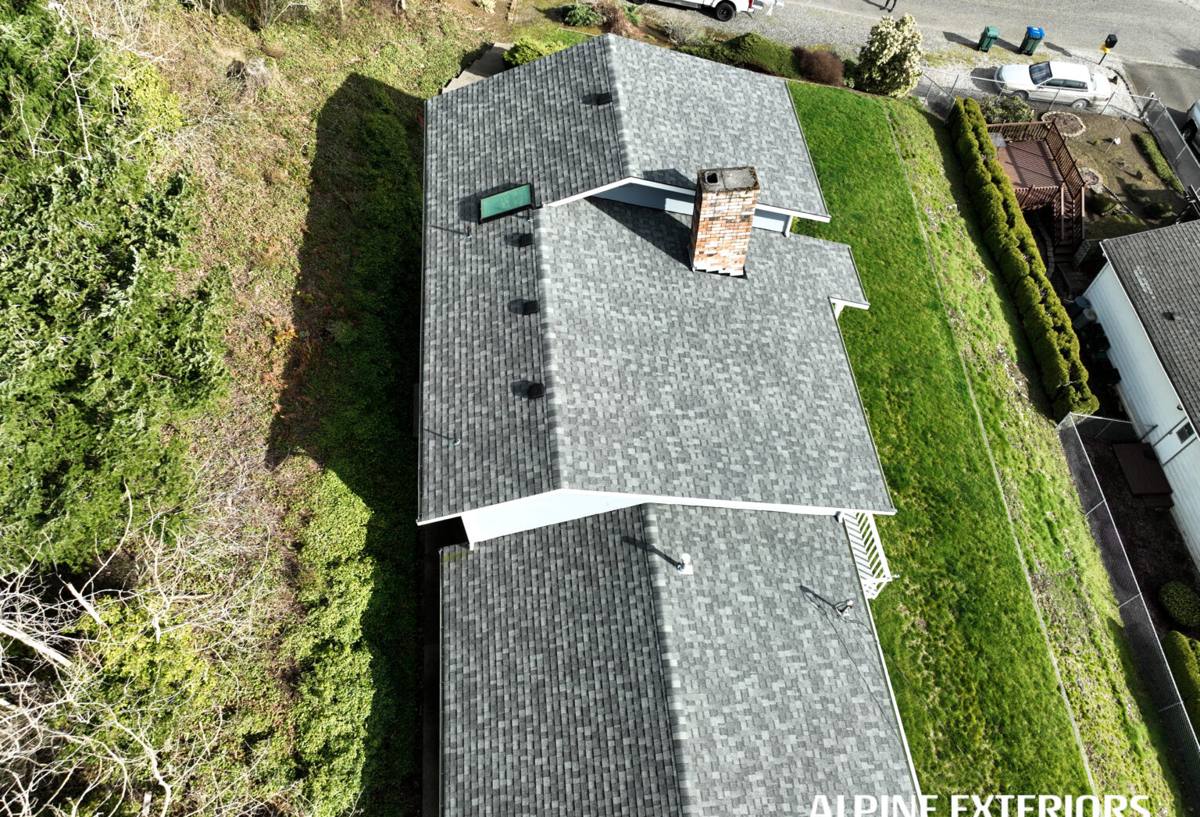
What This Climate Does to a Roof Over Time
Salt Air and Wind-Driven Rain
Homes close to Drayton Harbor and the open water get a steady dose of salt-carrying air. Salt is corrosive to exposed metal — flashing, drip edge, fasteners, and vent caps take the brunt of it. A storm that would be a minor event on a dry-air roof can be enough to finish off flashing that was already thinned by years of salt exposure. Wind off the water also drives rain sideways during storms, which pushes water into laps and seams that were never designed to shed rain from that angle. That's a big part of why storm damage here so often shows up as a leak somewhere other than the obvious point of impact.
A Long Moss Season
Whatcom County's damp, mild climate means moss has a long growing window, and roofs with any shade or north-facing exposure build up moss and moisture-holding debris fast. Moss doesn't just look bad — it holds water against the shingle surface and lifts shingle edges over time, weakening the seal. A storm hitting a roof that already has moss-lifted shingles does far more damage than the same storm would on a clean, well-sealed roof, because the wind has something to grab onto.
Common Storm Damage We Find on Drayton Harbor Roofs
- Wind-lifted or torn shingles — especially along ridges, edges, and any spot where moss had already loosened the seal strip.
- Flashing failures — around chimneys, skylights, and roof-to-wall transitions, often corroded from salt exposure before the storm even hit.
- Granule loss — from hail or heavy wind-blown debris, which shortens the life of the shingle even when there's no immediate leak.
- Punctures and impact damage — from tree limbs and wind-carried debris, common given the tree cover in many Semiahmoo neighborhoods.
- Valley and gutter damage — debris and moss buildup that back water up under shingles during heavy rain.
- Loosened or missing fasteners — corroded nails or staples that let go under wind load.
The tricky part with coastal storm damage is that a lot of it isn't visible from the ground, and some of it isn't even visible from the roof surface right away — a compromised seal or a stressed flashing joint can look fine until the next hard rain finds it.
What a Correct Storm Damage Repair Involves
A rushed storm repair is one of the most common reasons homeowners end up calling a roofer twice for the same storm. Doing it right means:
A Full Inspection, Not Just the Damaged Spot
We check the whole roof plane, not just where the damage is obvious, because wind and water don't limit themselves to one section. That includes flashing, valleys, vents, and any area with existing moss or granule wear that made it more vulnerable.
Matching Materials Correctly
Patch repairs need to match the existing shingle profile, color, and exposure as closely as possible, and flashing repairs need metal that will hold up to the same salt exposure as the rest of the roof — not a lower-grade fix that fails again in a season or two.
Fixing the Cause, Not Just the Symptom
If moss buildup or a marginal seal contributed to the damage, we address that as part of the repair. Replacing a torn shingle without dealing with the moss around it just sets up the same failure again next storm season.
Proper Flashing and Fastening for Wind-Driven Rain
Given how often rain here comes in sideways, flashing laps and fastener patterns matter more than they would in a calmer climate. We install to standards that account for wind-driven rain, not just straight-down rainfall.
Our Process
1. Inspection and Documentation
We assess the roof, document the damage with photos, and give you a straightforward explanation of what happened and what it will take to fix it — no scare tactics, no upselling a full replacement when a repair is the honest answer.
2. Temporary Protection When Needed
If there's an active leak or exposed decking, we get it covered to stop further water intrusion before the full repair is scheduled, especially important during Whatcom County's wetter stretches of the year.
3. Insurance Coordination
If you're filing a homeowner's insurance claim for storm damage, our documentation and estimate are built to match what adjusters need. We're happy to walk the roof with an adjuster if that's useful.
4. The Repair
We complete the repair with materials matched to your existing roof and installation methods suited to this coastline's wind and salt exposure, then clean up debris and haul away the old materials.
5. Follow-Up Check
For larger repairs, we're glad to do a follow-up look after the next significant rain to confirm everything is sealing and draining as it should.
Repair or Replacement? What We Weigh
Not every storm-damaged roof needs to be replaced, and not every roof should just be patched. The right call depends on a few honest factors:
| Factor | Leans Toward Repair | Leans Toward Replacement |
|---|---|---|
| Age of roof | Under 10-12 years, still within useful life | Nearing or past expected lifespan for the material |
| Extent of damage | Isolated to one area or a few sections | Widespread across multiple roof planes |
| Condition of surrounding shingles | Still sealed, minimal granule loss elsewhere | Significant moss damage or brittleness beyond the storm-hit area |
| Flashing and metal condition | Flashing sound, just needs local repair | Flashing corroded or failing in multiple spots from salt exposure |
| History of repeat leaks | First significant issue on this roof | Pattern of recurring leaks or repairs in recent years |
We'll tell you plainly which category your roof falls into. If a repair is the right, honest answer, that's what we'll recommend.
Working With Your Insurance Claim
Storm damage claims move faster and go smoother when the documentation is thorough from the start. We take clear photos of the damage, note the likely cause, and provide a written estimate that itemizes materials and labor the way most adjusters expect to see it. We're not a public adjuster and won't promise a claim outcome, but we'll give you an accurate, defensible assessment of what actually needs to be repaired — nothing added just to pad a claim, nothing left off that will come back as a leak later.
Why Local Experience Matters for This Kind of Repair
A roofer who mostly works drier, inland areas can still do competent repair work, but they're not necessarily thinking about the specific combination of salt air, wind-driven rain, and moss that defines roofing on this part of the Whatcom County coastline. We work in Semiahmoo and the surrounding communities, including Drayton Harbor, regularly enough to know which flashing details tend to fail first here, which shingle exposures hold up against the wind off the harbor, and where moss builds up fastest on the roof types common in this area. That familiarity shows up in repairs that hold — not ones that need a second visit next storm season.
After a Storm: A Practical Checklist
- Check for granules collecting in gutters or at downspout outlets — a sign of hail or wind abrasion.
- Look inside the attic or top-floor ceilings for new water stains or damp insulation after heavy rain.
- Scan the roofline from the ground for lifted, torn, or missing shingles — don't climb up yourself.
- Note any tree limbs or debris that came down near or on the roof during the storm.
- Check gutters and valleys for debris blocking water flow, which can cause backup damage separate from the storm itself.
- If you see active dripping or a stain that's spreading, get it looked at promptly rather than waiting for the next dry stretch.
- Take dated photos of any visible exterior damage for your records, even before a contractor arrives.
If you're in Drayton Harbor and dealing with storm damage, or just want a roof checked over after a rough weekend of wind and rain, we're glad to come take a look. Reach out for a free, no-pressure estimate using the form below.