 Semiahmoo Exterior
 Custer's Coastal Climate and What It Does to Windows
Custer sits close enough to Semiahmoo Bay and the Strait of Georgia that homes here deal with a different set of pressures than houses further inland in Whatcom County. Salt-laden air moves off the water and settles on everything it touches, including window frames, hardware, and glazing seals. Add in the region's driving, wind-pushed rain — the kind that hits windows at an angle instead of falling straight down — and you get moisture intrusion patterns that a lot of standard window installs weren't detailed to handle.
Then there's moss. Whatcom County's long wet season keeps humidity high for months at a stretch, and that same moisture that grows moss on a roof or a north-facing fence line also feeds mildew and wood rot around window frames and sills that aren't sealed and flashed correctly. Old wood-frame windows, older aluminum units, and even some vinyl windows installed without proper flashing detail show the damage first at the corners and bottom sill — the places water actually sits.
None of this means Custer homes need exotic materials or a different product line than the rest of the region. It means the installation details matter more here than they would somewhere dry, and the window itself needs a frame material and glazing spec that can handle salt exposure without degrading early.
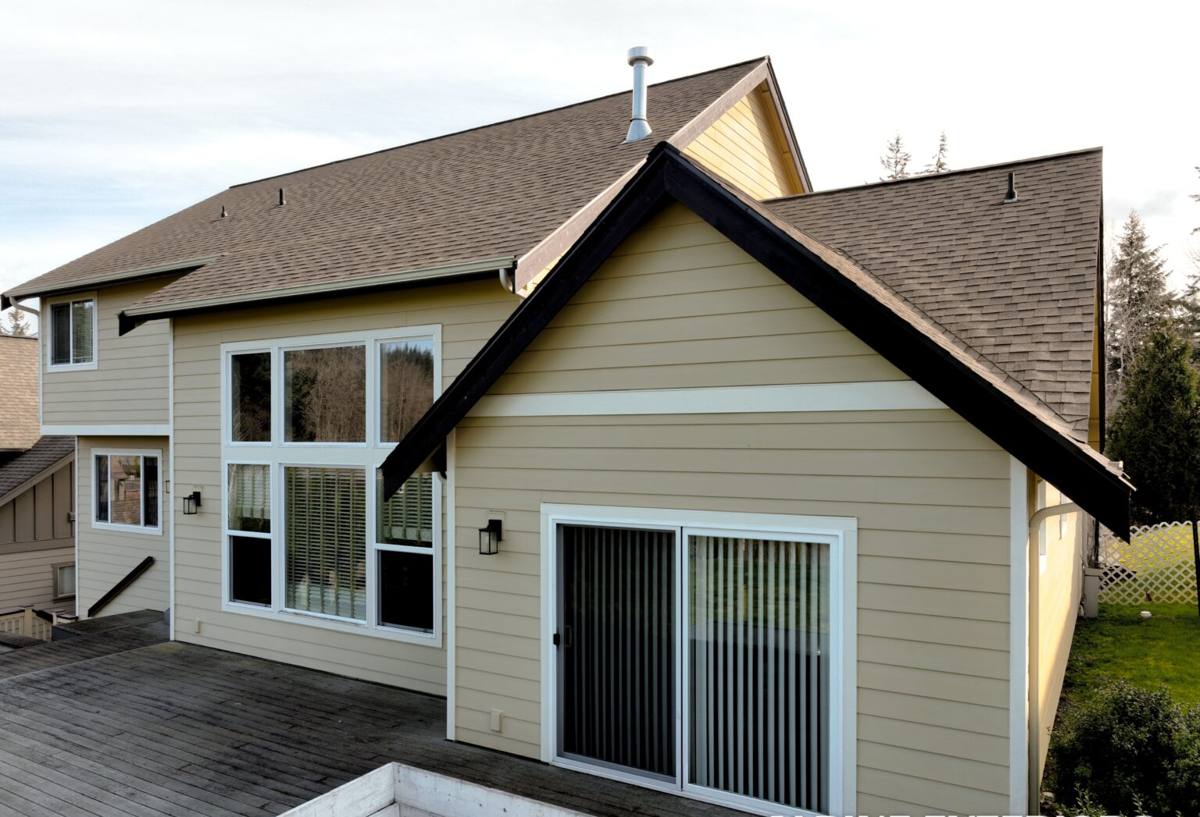
Signs Your Custer Home's Windows Need Attention
Because moisture damage builds slowly, a lot of homeowners don't notice a failing window until it's already let water into the wall cavity. Here's what we look for during a walk-around, and what you can check yourself before calling anyone:
- Soft or discolored wood at the sill or bottom corners of the frame, inside or out
- Condensation or fogging between panes on double- or triple-glazed units (a sign the seal has failed)
- Visible pitting, chalking, or corrosion on aluminum frames or hardware
- Drafts you can feel with your hand near the frame edge on a windy day
- Paint or caulk that's cracked, peeling, or missing around the exterior trim
- Green or black staining on siding directly below a window — often a sign water is running down from a failed seal above
- Windows that are hard to open, close, or lock — frames can swell or warp with repeated wetting
Any one of these on its own isn't necessarily an emergency, but two or three together usually means the window has been letting moisture in for a while and the surrounding framing deserves a closer look, not just a new window dropped into the same opening.
What a Correct Window Replacement Actually Involves
A window is only as good as the opening it goes into. In a climate that pushes rain sideways, the flashing and sealing details around the window do more work than the window itself over the long run. A correct install includes:
- Removing the old unit and inspecting the framing, sheathing, and sill for hidden rot before anything new goes in
- Replacing or repairing any damaged framing rather than sealing over it
- Installing sill pan flashing so any water that does get past the exterior seal drains back out instead of pooling
- Properly lapped window flashing tape integrated with the house's weather-resistive barrier, not just caulk alone
- Correct shimming and squaring so the window operates smoothly and seals evenly on all four sides
- Exterior sealant and interior air-sealing appropriate for the siding type and substrate
Skipping the sill pan or flashing integration is the single most common shortcut we see on window jobs that fail early in coastal exposure. The window can be a good product and still let water into the wall if the opening wasn't detailed correctly — that's a labor and process problem, not a materials problem.
Choosing a Frame Material for Salt Air Exposure
Frame material matters more in Custer than it would 20 miles inland. Salt air accelerates corrosion on metal components and can degrade some finishes faster than the manufacturer's general-climate warranty accounts for. Here's how the common options hold up:
| Frame Material | Salt Air Behavior | Maintenance Needs | Typical Lifespan Here |
|---|---|---|---|
| Vinyl | Good resistance; won't corrode; UV-stable finishes hold color | Low — occasional cleaning | 20–30 years |
| Fiberglass | Excellent — dimensionally stable, doesn't corrode or rot | Low | 30+ years |
| Aluminum | Prone to pitting and corrosion near the coast without marine-grade coatings | Moderate to high | Varies widely; shorter without proper coating |
| Wood (uncladded) | Susceptible to rot in high-humidity, high-rain exposure | High — regular repainting/sealing | Shorter without diligent upkeep |
| Wood-clad (vinyl or aluminum exterior) | Good — cladding shields the wood core from moisture and salt | Low exterior, some interior wood care | 25–35 years |
We steer most Custer homeowners toward vinyl or fiberglass for straightforward performance, or wood-clad when they want a wood interior look with the exterior protected. Bare wood and uncoated aluminum aren't off the table if that's what matches the home's style or era, but we're upfront that they carry a higher maintenance burden in this specific exposure — that's a trade-off to go in with eyes open, not a reason to avoid them outright.
Glass Packages: Why the Spec Matters as Much as the Frame
The glass unit itself is where a lot of the weather performance actually happens. In this climate, three factors matter most:
- Seal quality — a failed edge seal lets moisture between the panes, causing permanent fogging that no amount of cleaning fixes
- Low-E coatings — help with year-round comfort and reduce condensation risk on the interior pane during cold, damp stretches
- Gas fill (argon/krypton) — improves insulation value, which matters when a home sees a lot of grey, damp days with the heat running
Double-pane with a quality Low-E coating covers most homes well. Triple-pane adds insulation and sound dampening — worth considering on a home closer to wind exposure or road noise — but it's a real cost increase, and we'll tell you honestly whether it's worth it for your specific situation rather than upselling by default.
Our Process, Start to Finish
Every job starts with an on-site visit — we look at each opening individually rather than quoting off a floor plan, because condition varies window to window even on the same house. From there:
- We measure and inspect framing at each opening, flagging anything that needs repair before install
- We walk you through frame material, glass package, and style options with straight talk about trade-offs and cost, not just upsells
- We schedule the work around weather — install day matters in a climate this wet, and we won't open up a wall in the middle of a storm
- We remove, inspect, repair as needed, flash, and install correctly per opening
- We seal, trim, and clean up, then walk the finished work with you before we consider the job done
We don't install more openings per day than we can do correctly. On a rainy-season job, that sometimes means fewer windows finished in a day than a crew rushing through it — that's intentional.
Why a Crew That Already Works Custer Matters
A lot of window problems in this area trace back to installs done by out-of-area crews using details that work fine in a drier climate but weren't built for wind-driven rain and salt exposure. A crew that regularly works Custer and the broader Semiahmoo area already knows which detailing holds up here and which shortcuts show up as callbacks two or three winters later.
That local familiarity also means we're not guessing at permit requirements or typical construction in homes of this area's common vintages — older single-pane originals, early-generation vinyl replacements now reaching end of life, and newer builds that still deserve correct flashing even with modern materials. Knowing what we're likely to find behind the trim before we start saves time and surprises for everyone.
Living With a Long Moss Season
Moss and mildew growth around window trim isn't just cosmetic — sustained dampness against wood trim or under-sealed frames feeds rot over time. A few habits help between professional maintenance checks:
- Keep gutters and downspouts clear so runoff isn't sheeting down over window heads
- Trim back vegetation that keeps foliage and shade — and moisture — pressed against exterior walls near windows
- Check exterior caulk lines each fall before the wet season sets in, and recaulk hairline gaps before they widen
- Wipe down sills periodically if you notice standing moisture after storms
None of this replaces a correctly flashed and sealed window, but it extends the life of whatever you have and gives us less to find when we do come out for a look.
Cost Factors to Expect
Every home is different, but the main variables that move price on a Custer window job are consistent:
| Factor | Effect on Cost |
|---|---|
| Frame material chosen | Vinyl typically lowest, fiberglass and wood-clad higher, aluminum varies |
| Number and size of openings | More or larger openings scale cost proportionally |
| Framing repair needed | Hidden rot found during removal adds labor and material |
| Glass package (double vs. triple pane) | Triple-pane adds meaningful cost per unit |
| Access and site conditions | Second-story or hard-to-access openings add labor time |
We give a firm, itemized quote after the on-site inspection — not a phone estimate — because framing condition is the biggest wildcard and we'd rather surprise you with good news than bad news mid-project.
If your Custer home has windows that are fogging, drafting, sticking, or just showing their age against the salt air and rain, we're glad to take a look. Use the form below to request a free, no-pressure estimate — we'll walk the openings, tell you honestly what we find, and give you real options.