 Semiahmoo Exterior
 Why Cherry Point Roofs Wear Differently Than Roofs Inland
Cherry Point sits right on the water along the Strait of Georgia, and that location shapes almost every decision that goes into a new roof here. Homes in this part of Whatcom County deal with three things at once: salt-laden air blowing in off the strait, long stretches of driving rain that comes in sideways as much as straight down, and a moss season that can run eight or nine months out of the year in shaded, north-facing areas. Any one of those on its own is manageable. Together, over years, they find every weak point in a roofing system faster than they would twenty or thirty miles inland.
Salt air is corrosive to exposed metal fasteners, flashing, and drip edge if the wrong alloys or coatings are used. Driving rain doesn't just test the shingles or panels themselves — it tests every seam, valley, and penetration where water can get pushed sideways instead of running straight off. And moss doesn't just look bad; it holds moisture against the roof surface, works its way under shingle tabs, and lifts material over time in ways that aren't always obvious from the ground. A new roof installation in Cherry Point has to be built with all three of these in mind from day one, not patched around later.
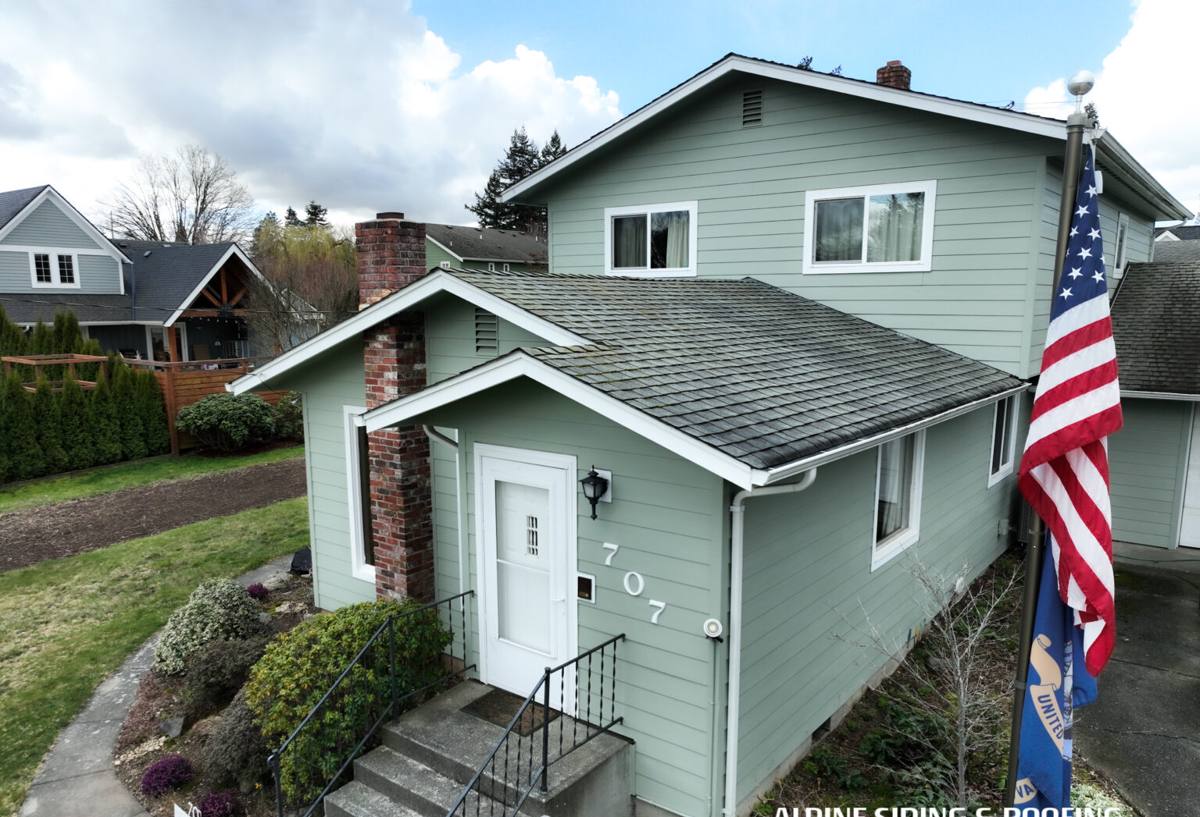
What "Correct" Looks Like for a New Roof Here
A roof that's installed correctly for this stretch of coastline isn't just about picking a good shingle or panel. It's a system, and every layer has to do its job for the roof to actually perform the way it's rated to.
The Layers That Matter Most in a Marine Climate
- Decking condition — any soft, delaminated, or water-stained sheathing gets replaced before anything else goes down. Installing new roofing over compromised decking just hides a problem that will resurface.
- Underlayment — a synthetic or self-adhered underlayment with real water resistance, not the thinnest option available, especially in valleys and eave lines where wind-driven rain concentrates.
- Ice and water barrier — installed at eaves, valleys, and around penetrations, since these are the spots where wind-driven rain most often finds a way in.
- Flashing — corrosion-resistant metal at chimneys, walls, skylights, and roof-to-wall transitions, sealed and lapped correctly rather than relying on caulk to do the work.
- Fasteners — corrosion-resistant nails or screws rated for coastal exposure, since standard fasteners can rust and stain or fail years before the roofing material itself wears out.
- Ventilation — balanced intake and exhaust so the attic can dry out between rain events instead of staying damp, which both protects the decking and slows moss and moisture-driven algae growth.
Choosing a Roofing Material That Fits This Environment
There's no single "best" roofing material for every home — it depends on the roof's exposure, the home's style, and the homeowner's budget and maintenance expectations. What matters is understanding the honest trade-offs for a salt-air, high-moisture setting like Cherry Point.
| Material | Salt Air Performance | Moss/Moisture Behavior | Maintenance | Typical Lifespan |
|---|---|---|---|---|
| Architectural asphalt shingle | Good with proper flashing/fasteners | Needs periodic moss treatment on shaded slopes | Low to moderate | 25–30 years |
| Standing seam metal | Excellent with coastal-rated coatings and fasteners | Sheds moisture fast, resists moss buildup | Low | 40–50+ years |
| Synthetic/composite shingle | Good, doesn't corrode | Resists moisture absorption better than wood | Low | 30–50 years |
| Cedar shake | Requires diligent maintenance near salt exposure | Prone to moss and moisture retention without upkeep | High | 20–30 years with upkeep |
We don't install every product on this list on every home. Cedar shake, for example, can look great, but in a shaded, moisture-heavy environment like parts of Cherry Point it demands a level of ongoing maintenance — cleaning, treating, monitoring for moss intrusion — that most homeowners don't want to sign up for. That's a maintenance-burden conversation we have honestly up front, not something we discover for you five years in.
Ventilation and Moisture: The Part Homeowners Don't See
A new roof can look perfect from the curb and still fail early if the attic underneath it can't breathe. In a climate as wet as this one, an under-ventilated attic traps warm, moist air against the underside of the decking. Over time that moisture cycle causes the decking to soften, encourages mold and mildew, and can quietly rot the roof structure from the inside while the shingles above look fine.
Balanced ventilation — intake at the eaves, exhaust at or near the ridge — lets the attic dry out between storms instead of staying damp all winter. On a new install, this is the point where we correct whatever ventilation shortfalls the old roof had, since it's far easier to fix during a full replacement than to retrofit later.
Flashing and Detail Work: Where Most Roof Failures Actually Start
Ask any experienced roofer where leaks come from, and the honest answer is almost never "the shingles wore out." It's a valley that wasn't lined correctly, a chimney flashing that was caulked instead of properly stepped and counter-flashed, or a vent boot that cracked and was never resealed. Wind-driven rain off the strait makes this even more true here — water gets pushed uphill and sideways under conditions that a calmer inland roof rarely sees.
On every new roof installation, we treat flashing and penetration details as the part of the job that determines whether the roof lasts twenty-five years or five. That means proper step flashing at walls, correctly lapped valley metal, sealed and mechanically fastened vent boots, and chimney flashing built in layers rather than relying on sealant alone.
Our Installation Process
- On-site inspection and estimate — we walk the existing roof, check attic ventilation and any visible decking issues, and talk through material options based on your home's exposure.
- Tear-off — full removal of old roofing material down to the decking, with the property protected and debris hauled off site.
- Decking assessment and repair — any soft or damaged sheathing is identified and replaced before underlayment goes down.
- Underlayment and ice/water barrier installation — installed per manufacturer specification, with extra attention at eaves and valleys.
- Flashing installation — new flashing at all walls, chimneys, skylights, and penetrations.
- Roofing material installation — installed to manufacturer spec using corrosion-resistant fasteners appropriate for coastal exposure.
- Ventilation check and correction — intake and exhaust ventilation confirmed balanced for the attic space.
- Final walk-through — cleanup, magnetic sweep for stray fasteners, and a review of the finished roof with the homeowner.
Signs a Cherry Point Home May Need a New Roof, Not a Repair
Not every roof problem calls for full replacement, but there's a point where repeated repairs stop making financial sense. Watch for these signs, especially on roofs that have gone fifteen-plus years without significant work:
- Granule loss showing bald patches on asphalt shingles, especially on south- and west-facing slopes
- Curling, cracked, or missing shingles after wind events
- Persistent moss growth that returns quickly after cleaning
- Dark streaking or staining that doesn't wash off, suggesting trapped moisture
- Soft spots when walking the roof, or sagging visible from the ground
- Water stains on interior ceilings or in the attic after heavy rain
- Daylight visible through the roof deck from inside the attic
- Rusted or deteriorating flashing around chimneys and vents
If you're seeing two or more of these at once, it's usually a sign the roofing system as a whole is at the end of its useful life rather than needing another spot repair.
Why Local Experience in This Area Matters
Cherry Point isn't a typical suburban roofing job. Properties here range from waterfront homes taking the full force of wind and salt spray off the strait to more sheltered, tree-covered lots where moss and moisture are the bigger concern. A crew that already works this stretch of Whatcom County knows which slopes on a given property tend to hold moss, which fastener and flashing specs actually hold up to salt exposure over time, and how local permitting and inspection work. That local knowledge shows up in fewer callbacks and a roof that's built for the conditions it's actually going to face, not a generic install pulled from a manual written for a drier climate.
Permits and Timeline
Most residential roof replacements in this area require a building permit, which we handle as part of the job. Timeline depends on roof size, material, and weather windows — a straightforward asphalt shingle replacement on an average-size home can often be completed in one to a few days once material is on site, while metal roofing or larger, more complex rooflines take longer. Given the rain here, we plan installation around dry weather windows rather than rushing a roof on in marginal conditions, since a roof installed dry performs better long term than one installed under time pressure.
If your roof is showing its age or you're planning ahead for a replacement, we're happy to take a look and walk you through honest options for your home. Reach out for a free, no-pressure estimate using the form below.