 Semiahmoo Exterior
 Why Birch Bay Decks Wear Differently Than Inland Decks
A deck in Birch Bay lives a harder life than the same deck built twenty miles inland. The combination that defines this stretch of Whatcom County — salt-laden air off the Strait of Georgia, long stretches of driving rain, and a moss season that can run from late fall well into spring — attacks wood, fasteners, and hardware in ways a lot of standard deck-building practice doesn't fully account for. Salt air accelerates corrosion on anything less than fully rated fasteners and connectors. Driving rain finds its way into end grain, fastener holes, and ledger connections faster than a light inland drizzle ever would. And moss doesn't just grow on the surface — left alone, it holds moisture against boards and framing long after a dry spell has started, which is where rot actually gets its foothold.
None of this means a deck in Birch Bay can't last decades. It means the build has to be specified for this coastline from the footings up, not adapted after the fact with extra sealant or a quick moss wash every spring. We build decks for this exact climate, and the choices we make — material, fastener grade, drainage detailing — are made with Birch Bay's weather in mind, not a generic Pacific Northwest average.
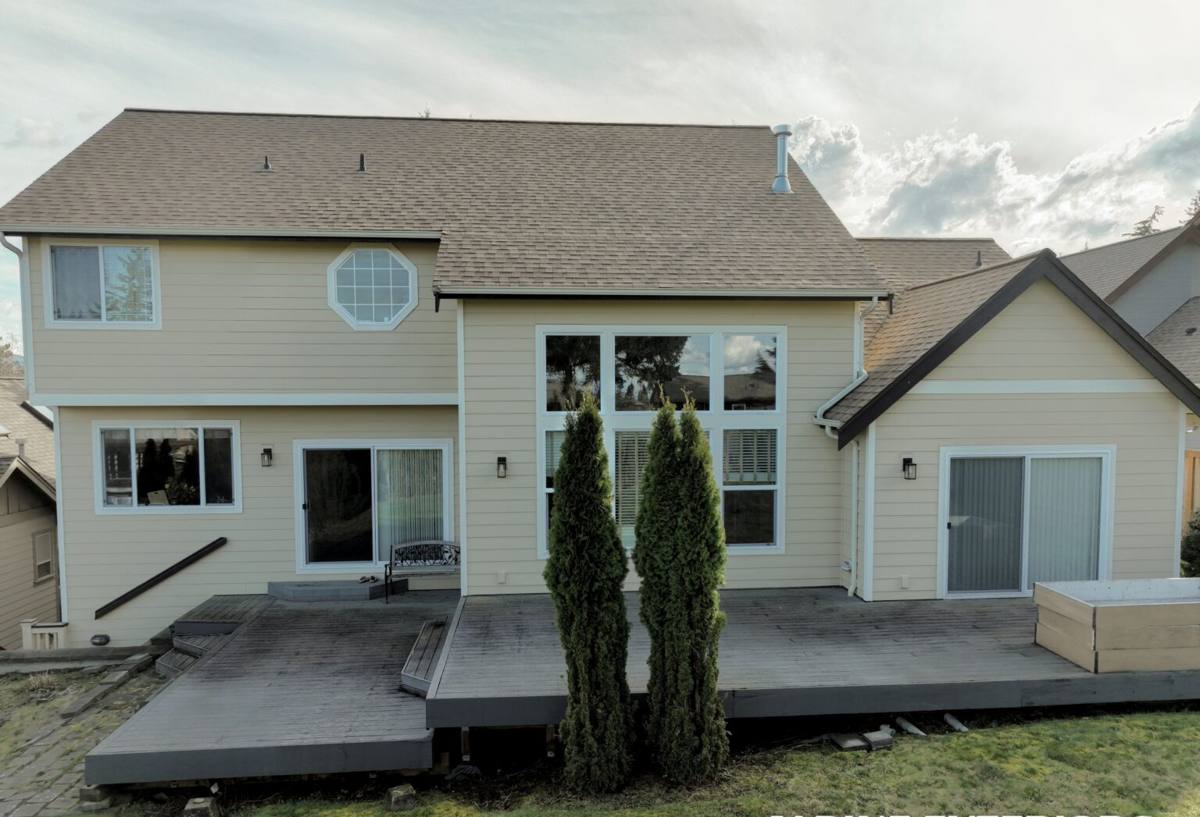
What a Correctly Built Deck Involves Here
A deck is a system, not a stack of boards. Every piece of that system has to hold up to the same coastal exposure, or the weakest link decides how long the whole structure lasts.
Framing and Structure
Pressure-treated framing lumber rated for ground contact where it's warranted, proper joist spacing for the decking material chosen, and structural connectors sized to the actual load — not the minimum the span table allows. In a wet climate, undersized or corner-cut framing is usually the first thing to fail, and it's the hardest thing to fix later without tearing into finished decking.
Fasteners and Hardware
This is where salt air punishes cheap choices fastest. Standard galvanized fasteners can start showing rust streaks within a couple of seasons this close to the water. We use stainless steel or high-grade coated fasteners and connectors rated for coastal and treated-lumber exposure, because replacing corroded screws under finished decking is a job nobody wants to pay for twice.
Decking Surface
Whether it's wood, composite, or PVA-capped composite, the surface material has to shed water fast and resist the surface staining that comes with constant damp and organic buildup (moss, algae, pollen). Board spacing and orientation both affect how quickly a deck dries out after rain — get that wrong and you're fighting moss year-round instead of a few months.
Choosing a Decking Material for This Coastline
There's no single right answer for every homeowner — budget, maintenance appetite, and how the deck will actually be used all matter. Here's how the common options stack up specifically for a Birch Bay exposure.
| Material | How It Handles Salt Air & Moisture | Moss/Algae Behavior | Maintenance |
|---|---|---|---|
| Pressure-treated wood | Good if properly sealed and re-sealed; end grain is the weak point | Textured grain holds moss unless cleaned regularly | Annual cleaning and re-sealing every 1-2 years |
| Cedar | Naturally rot-resistant but still needs sealing near the water | Softer surface can hold moss if shaded or under trees | Sealing every 1-2 years, more if heavily shaded |
| Composite (capped) | Excellent — won't rot, resists salt corrosion | Can still grow surface moss/algae in shaded, damp spots | Periodic washing, no sealing needed |
| PVC decking | Excellent — fully synthetic, no wood fiber to absorb moisture | Smoothest surfaces resist moss buildup best | Lowest — occasional washing |
For a lot of Birch Bay properties, especially anything close to the water or shaded by mature trees, we steer conversations toward capped composite or PVC decking not because wood is a bad product, but because the maintenance cadence wood demands in this climate is honest work most homeowners underestimate until year three. If a homeowner wants real wood for the look and feel, that's a legitimate choice too — it just means being clear up front about the sealing schedule it actually needs to last.
Footings, Ledger Attachment, and Flashing — Where Decks Actually Fail
Most deck failures in this region don't start with the decking boards — they start below and behind them.
Footings
Frost depth and soil drainage both matter here. Footings poured too shallow or without adequate drainage around them can shift over time, especially through a wet Whatcom County winter. We size and place footings based on the actual soil conditions on site, not a one-size assumption.
Ledger Board Attachment
Where a deck attaches to the house is the single most common source of hidden rot on older decks. Proper flashing between the ledger and the house sheathing — installed correctly, not just caulked over — keeps water from tracking behind the ledger and into the rim joist. This detail is invisible once the deck is finished, which is exactly why it has to be done right the first time.
Drainage Beneath the Deck
Standing water or trapped moisture under a low deck is a moss and rot generator. Grading, gapping, and sometimes an under-deck drainage system all factor into keeping that space dry enough to not become a problem.
Our Deck Building Process
We keep this straightforward and transparent, start to finish:
- On-site assessment — we look at sun/shade exposure, wind and rain direction, soil, existing structure (if replacing a deck), and how the space will actually be used.
- Design and material selection — sized to the space and budget, with honest tradeoffs laid out for each decking option.
- Permitting — we handle the local permit and inspection requirements so the structure is code-compliant, not just built to look right.
- Demolition/prep — removal of any existing deck, footing layout, and site prep.
- Framing and structural work — footings, posts, beams, joists, and ledger flashing, inspected before decking goes down.
- Decking, railing, and finish work — installation, fastening, and any sealing or capping required by the material.
- Final walkthrough — we go over care and maintenance specific to the material chosen, so there are no surprises the first wet winter.
Living With a Deck Through Birch Bay's Moss Season
Even a well-built deck needs some seasonal attention in this climate — the goal of a correct build is to make that attention minimal, not eliminate it entirely. A simple seasonal routine keeps most decks looking and performing well for years:
- Sweep debris (leaves, needles, pollen) off the deck regularly — trapped organic matter is what moss actually feeds on
- Rinse or gently wash the surface a few times through fall and winter, especially in shaded areas
- Check that gaps between boards stay clear so water keeps draining instead of pooling
- Inspect railing posts and stair connections once a year for movement or corrosion at fasteners
- Re-seal wood decking on the schedule the product actually requires — skipping a cycle is when moisture gets in
- Trim back overhanging branches or vegetation that keeps a section of deck shaded and damp longer than the rest
Permits and Local Requirements
Deck permitting requirements vary by height, size, and attachment to the structure, and Whatcom County's process is specific about footing depth, guardrail height, and stair geometry for decks above a certain elevation. We pull the required permits and coordinate inspections as part of the build, so the finished deck is documented and compliant — which also matters when the home is eventually sold, since an unpermitted deck can become a negotiating problem for the seller.
What Decking Actually Costs — and What Drives the Range
Exact pricing depends on size, material, height off grade, and site access, but here's what generally moves the number:
| Cost Factor | Why It Matters |
|---|---|
| Decking material | Pressure-treated wood is the lowest upfront cost; composite and PVC cost more upfront but less over the deck's life |
| Deck height and footing depth | Taller decks need larger footings, more structural framing, and often guardrails |
| Site access and grading | Sloped or hard-to-access lots add labor for footings and material handling |
| Railing style | Cable, glass, and composite railing systems cost more than standard wood or metal balusters |
| Stairs and landings | Multiple stair runs or landings add framing, decking, and railing length |
We give a written estimate that breaks these factors out clearly, so a homeowner can see exactly where the budget is going and where there's room to adjust — trimming railing style or footprint, for instance, without cutting corners on the structural and fastener specs that actually determine how long the deck lasts.
Why a Crew That Works Birch Bay Regularly Makes a Difference
A contractor who mostly builds decks in drier inland climates can still build a structurally sound deck — but they're often making material and fastener choices based on conditions this coastline doesn't have. We work this stretch of Whatcom County regularly, which means we've seen how different materials and details actually hold up here over years, not just on paper. That shows up in small decisions — fastener grade, ledger flashing detail, board spacing for drainage — that don't cost much more at build time but matter enormously five and ten years in, once the salt air and moss season have had time to find every weak point.
If you're planning a new deck or replacing one that's showing its age, we're happy to take a look and talk through what makes sense for your property. The estimate is free, there's no pressure, and you'll get a clear breakdown of material options and cost before deciding anything — just fill out the form below to get started.