 Semiahmoo Exterior
 Why Drayton Harbor Homes Need a Different Approach to Windows
Drayton Harbor sits right where the water meets the land, and that location shapes everything about how windows perform there. Homes facing the harbor take on salt-laden air almost daily, along with driving rain that comes in sideways during winter storms off the Strait of Georgia. Add in Whatcom County's long gray season, when moisture sits against the building envelope for weeks at a time, and you have a set of conditions that ordinary window installations weren't built to handle. A window that works fine forty miles inland in a drier microclimate can fail early here — not because the glass or frame is bad, but because the installation and materials weren't matched to a marine environment.
Energy efficiency in this setting isn't just about lower heating bills, though that matters. It's about keeping moisture out of the wall cavity, keeping salt air from corroding hardware and fasteners, and keeping the seal intact through repeated wet-dry cycles. When we talk about "energy-efficient windows" for a Drayton Harbor home, we're really talking about a system: glass performance, frame material, flashing detail, and sealant chemistry all working together against a specific set of local stresses.
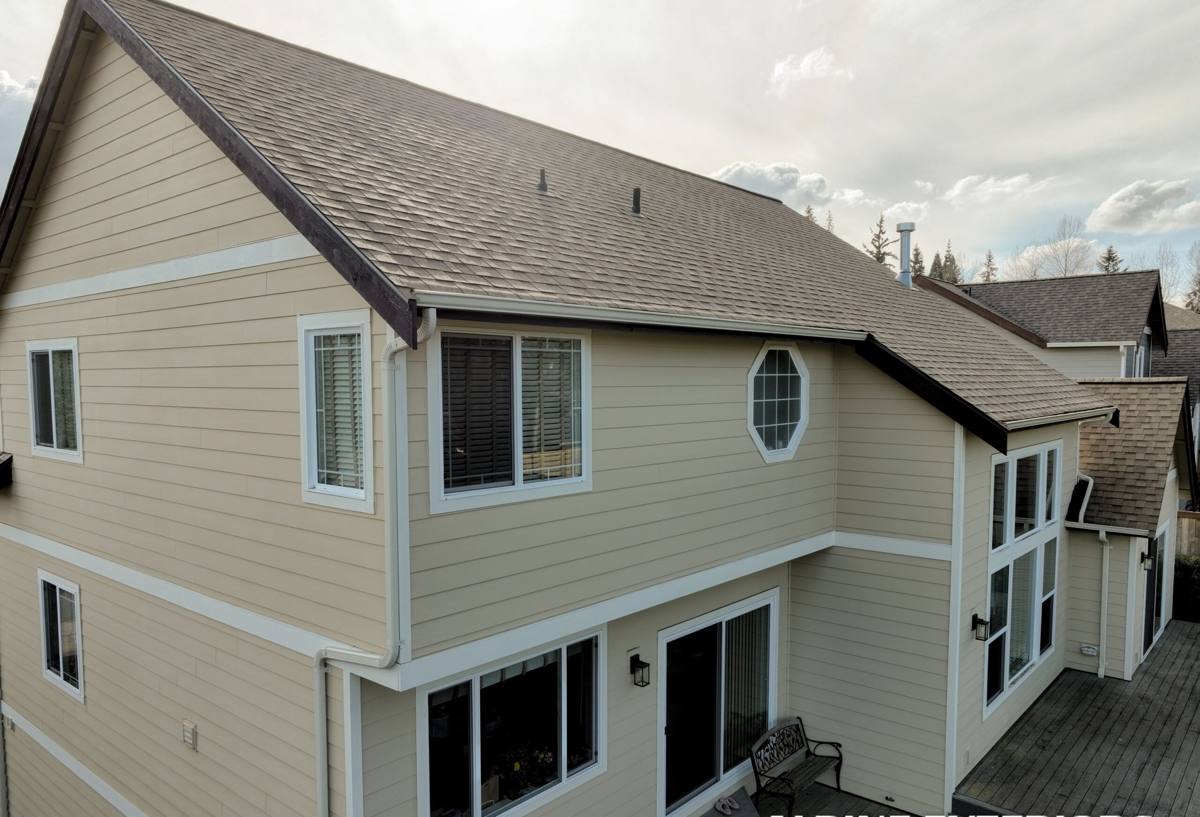
What Salt Air and Driving Rain Actually Do to Windows
Corrosion and Hardware Wear
Salt air accelerates corrosion on exposed metal — hinges, locks, cranks, and even some low-grade aluminum cladding. Over a few seasons, this shows up as stiff or sticking hardware, pitting on finishes, and in worst cases, fasteners that weaken at the point where the window is anchored to the frame. Homes closer to the water see this faster than homes even a few blocks inland.
Water Intrusion Under Wind-Driven Rain
Driving rain doesn't just fall — it pushes horizontally against the building envelope during a storm, testing every seam, flange, and sealant joint. A window that would pass a light-rain test elsewhere can still leak here if the flashing wasn't lapped correctly or the sill pan wasn't sloped to shed water outward. Once water gets behind the exterior finish, it doesn't dry out quickly in our climate, and that's when rot and mold set in.
Moss, Mildew, and Prolonged Dampness
The long moss season in this part of Washington isn't limited to roofs. Moss and mildew can take hold on north-facing trim, sills, and shaded window surrounds where moisture lingers. This doesn't damage the glass unit itself, but it does point to areas where airflow and drainage around the window need attention, since sustained dampness against wood trim or sheathing is what eventually causes rot.
What a Correctly Installed Energy-Efficient Window Involves
The window unit is only part of the job. In a coastal, high-rain environment like Drayton Harbor, the installation details matter as much as the product specification.
- A sloped sill pan that directs any incidental water back outside rather than into the wall cavity
- Properly lapped flashing tape, integrated with the house wrap or weather-resistive barrier in the correct shingle-style order
- Marine-grade or corrosion-resistant fasteners and hardware, not standard-grade components
- A backer rod and sealant joint sized and applied correctly at the exterior, not just a bead of caulk over a gap
- Insulation in the gap between the window frame and rough opening — done without over-packing, which can bow the frame and affect the seal
- Interior air sealing so warm, moist indoor air doesn't migrate into the wall cavity and condense
Skipping any one of these steps is often invisible on installation day and only shows up as a problem one, three, or five winters later — usually as a stain on the drywall below the window or a soft spot in the sill.
Glass and Frame Choices That Make Sense for This Climate
Glass Packages
Double-pane, low-E glass with argon fill is the standard baseline for energy performance in our region, and it's a sound choice for most Drayton Harbor homes. For west- or water-facing rooms that take the brunt of wind and glare off the harbor, a higher-performance low-E coating or triple-pane option can be worth the added cost — it depends on the room's exposure and how the homeowner uses the space.
Frame Materials
Vinyl and fiberglass frames generally hold up well in salt-air conditions because they don't corrode the way bare metal can. Wood-clad frames can look excellent but need more attention to how the cladding is sealed at joints, since trapped moisture behind cladding is a slower, harder-to-spot failure mode. Aluminum frames conduct heat and cold efficiently, which works against energy performance unless they're thermally broken, and they're more exposed to corrosion near the water without a good marine-grade finish.
Why We're Selective About What We Install
We don't push every product line on the market. Some window systems are engineered for drier, milder climates and simply aren't built with the sealant chemistry, drainage paths, or hardware finishes that hold up under sustained coastal exposure. Our standard is to spec products and installation details that are proven in wet, salt-influenced environments — even when that means recommending a step up from a builder-grade option a homeowner may have seen advertised elsewhere.
Comparing Frame Options for Drayton Harbor Conditions
| Frame Type | Salt Air Resistance | Energy Performance | Maintenance |
|---|---|---|---|
| Vinyl | Strong — won't corrode | Good with quality glass package | Low; occasional cleaning |
| Fiberglass | Strong — dimensionally stable | Very good; low thermal transfer | Low; durable finish |
| Wood-clad | Moderate — depends on cladding seal quality | Good | Higher; monitor cladding joints |
| Aluminum (thermally broken) | Fair to moderate near water | Fair unless well thermally broken | Moderate; watch for pitting |
Our Process for a Drayton Harbor Window Project
We approach every window job here the same structured way, because skipping steps is exactly what causes callbacks two winters later.
- On-site assessment — we look at exposure direction, existing signs of moisture or corrosion, and the condition of the rough openings before recommending anything
- Product recommendation — matched to the room's exposure, not a one-size-fits-all package
- Removal and opening inspection — old windows come out carefully so we can check the sheathing and framing underneath for hidden rot before it's covered back up
- Correct flashing and sill pan installation — following manufacturer instructions and best practice for our rain exposure, not just what's fastest
- Interior and exterior sealing — air sealed inside, weather sealed outside, with the right materials for each
- Final check and walkthrough — operation, locking, and a look at the finished exterior detail with the homeowner
Signs a Drayton Harbor Home May Need New Windows Soon
- Condensation forming between the glass panes, which means the seal has failed
- Drafts you can feel near the frame even when the window is fully latched
- Wood trim or sills that feel soft, discolored, or have visible moss/mildew growth
- Hardware that's stiff, corroded, or difficult to lock
- Noticeably higher heating costs compared to similar-sized homes nearby
- Visible gaps or failing caulk lines around the exterior frame
Why a Crew That Already Works This Area Matters
There's a real difference between a contractor who installs windows across a wide, varied service area and one who regularly works Semiahmoo and the Drayton Harbor waterfront specifically. A crew familiar with this stretch of Whatcom County knows what wind-driven rain does to a west-facing installation here, knows which flashing details actually hold up through a full wet season, and doesn't need to relearn those lessons on your house. That local familiarity translates into fewer surprises during installation and fewer callbacks after the first real storm.
It also means we're not guessing about permitting, typical framing conditions in older versus newer Drayton Harbor homes, or how a particular exposure — harbor-facing versus set back among trees — should change the installation approach. That's knowledge built from doing this work repeatedly in this specific place, not from a general product manual.
A Straightforward Look at Cost Factors
Every home is different, so we won't quote a number without seeing the project, but the main factors that drive cost on a Drayton Harbor window job are worth knowing upfront.
| Factor | How It Affects Cost |
|---|---|
| Number and size of openings | More or larger windows increase material and labor |
| Frame material chosen | Vinyl is typically most economical; fiberglass and wood-clad cost more |
| Glass package | Standard low-E vs. upgraded coatings or triple-pane changes unit cost |
| Condition of existing openings | Rot repair or reframing adds labor beyond the window itself |
| Exposure and access | Harbor-facing or hard-to-access openings can require more careful, slower work |
If you're weighing new windows for a Drayton Harbor property, we're happy to walk the exterior with you, look at what's there now, and give you an honest read on what your home actually needs — no pressure, no sales script. Fill out the short form below and we'll set up a free estimate.