 Semiahmoo Exterior
 Decks in Point Roberts Take a Different Kind of Beating
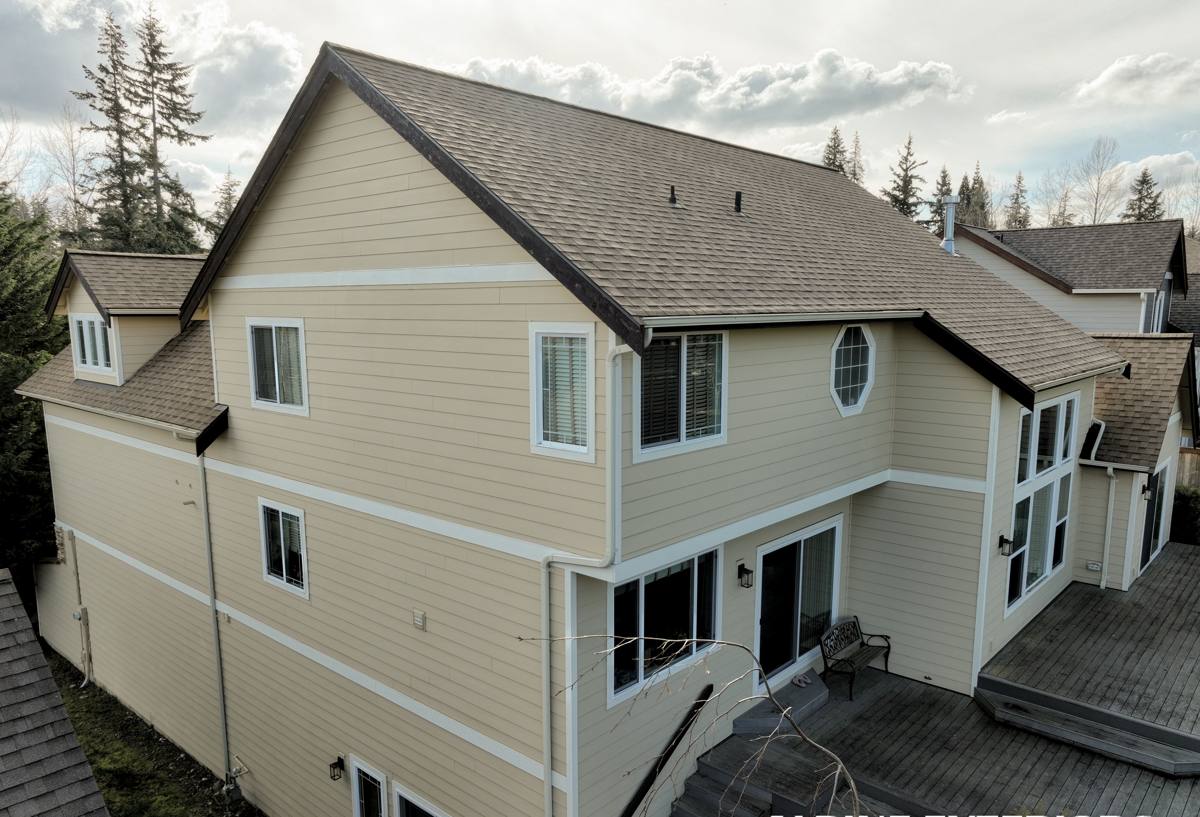
Point Roberts sits in a spot most homeowners never plan for: a small peninsula hanging off Whatcom County, surrounded by water on three sides, cut off from the rest of Washington by the Canadian border. That geography means decks here don't just deal with the general wet-side-of-the-Cascades climate that the rest of Semiahmoo and Whatcom County get. They deal with it plus salt air rolling in off the water, plus wind-driven rain that gets under flashing and railings that a more sheltered deck would never see, plus a moss and algae season that runs longer than most people expect.
We've repaired decks all over this area, and the pattern is consistent. A deck built with good lumber and decent hardware, sited a quarter mile inland, might go a decade before it needs real attention. The same deck facing open water in Point Roberts often shows fastener corrosion, ledger board softening, and slick moss buildup years sooner. That's not a knock on any particular builder — it's just what salt-laden marine air does to wood, metal, and coatings over time. Repair work out here has to account for that from the start, not just patch what's visible and hope.
What Salt Air and Driving Rain Actually Do to a Deck
It helps to understand the mechanics, because it changes how a repair should be done, not just what gets replaced.
Salt Air and Fasteners
Airborne salt accelerates corrosion on screws, nails, joist hangers, and bolts — especially any hardware that isn't rated for coastal or treated-lumber exposure. Corroding fasteners lose holding strength quietly. A deck board can look fine on top while the screws underneath are rusted down to almost nothing. This is one of the most common things we find during a repair inspection: hardware that's failed well before the wood around it shows obvious damage.
Driving Rain and Water Intrusion
Wind off the water doesn't let rain fall straight down — it drives it sideways, up under railings, behind fascia boards, and into any gap in flashing or ledger connections. Over time that means water gets into places a standard rain event wouldn't reach: the ledger-to-house connection, the tops of posts, end grain on stair stringers. Once water is inside a joint instead of running off a surface, rot and hardware failure follow.
Moss, Algae, and the Long Wet Season
Point Roberts and the surrounding Whatcom County coastline stay damp for a long stretch of the year, and shaded or north-facing decks can stay wet for days after a storm passes. That's ideal for moss and algae growth, which does two things: it holds moisture against the wood surface longer than bare boards would, and it makes the deck surface genuinely slippery — a real safety issue on stairs and ramps, not just a cosmetic one.
Signs Your Point Roberts Deck Needs Repair, Not Just Cleaning
Homeowners often assume a deck just needs a power wash when the real issue is structural. Here's how to tell the difference before calling anyone out.
- Boards that flex, bounce, or feel spongy underfoot, especially near the house or around posts
- Rust streaks running down from screw heads or joist hangers
- A screwdriver or awl sinks easily into wood at the ledger board, post bases, or stair stringers — a sign of soft, rotting wood underneath a sound-looking surface
- Railings that wiggle side to side when pushed, not just up and down
- Persistent green or black film that returns within weeks of cleaning, even in dry stretches
- Gaps opening up between the ledger board and the house siding
- Stair treads that feel uneven or have visible cupping
- Nails backing out or popping up above the board surface
Any one of these on its own might be minor. Several together, especially involving the ledger board or support posts, usually means the deck needs a structural look, not a cosmetic one.
What a Correct Deck Repair Actually Involves
A repair done right starts with figuring out why the damage happened, not just replacing what's broken and reassembling it the same way.
Inspection First
We check the ledger board connection to the house, the condition of support posts and footings, joist hanger hardware, railing post attachment, and the deck surface itself. In a place like Point Roberts, we're specifically looking for corrosion patterns tied to wind exposure and moisture trapped by moss or debris — problem areas that a generic inspection checklist might miss.
Matching the Fix to the Cause
If fastener corrosion is the root issue, swapping in the same grade of hardware just resets the clock on the same failure. We use hardware rated for the exposure the deck actually gets, not the minimum a builder might use inland. If water intrusion at the ledger is the cause, the fix includes correcting flashing and drainage, not just replacing the affected board.
Structural Repairs
This covers sistering or replacing weakened joists, resetting or reinforcing posts and footings that have shifted, re-securing ledger boards with proper flashing, and replacing any framing lumber that's gone soft. Structural work is not optional when it's needed — a deck surface can look fine while sitting on a frame that's no longer doing its job.
Surface and Railing Repairs
Individual board replacement, stair tread repair, railing tightening or rebuilding, and fastener replacement where corrosion is surface-level rather than structural. We also address moss and algae buildup as part of the repair, since leaving it means the same moisture problem returns.
Comparing Repair Approaches
| Approach | What It Addresses | Best For | Trade-Off |
|---|---|---|---|
| Spot repair | Individual boards, isolated hardware, minor railing looseness | Decks with one or two clearly localized issues, otherwise sound | Doesn't catch hidden ledger or hardware issues elsewhere |
| Structural repair | Ledger, posts, footings, joists, hangers | Decks with flex, sponginess, or visible framing damage | More labor and cost than surface work, but addresses the actual cause |
| Full resurface | Widespread board wear across an otherwise sound frame | Older decks where the frame checks out but the deck surface is worn out | Doesn't fix underlying framing issues if any exist — inspection matters first |
| Replace and rebuild | Decks with extensive rot, multiple failed structural members, or age beyond reasonable repair | Decks where repair costs start approaching rebuild costs | Highest upfront cost, but resets the clock with current materials and hardware |
We'll tell you honestly which category your deck falls into. Sometimes what looks like a full rebuild situation is actually a contained repair, and sometimes the reverse is true — a deck that looks fine on the surface has framing problems that make patch repairs a waste of money.
Materials and Hardware Choices for This Exposure
For decks facing driving rain and salt air, we lean toward hardware and fasteners rated for coastal or high-moisture exposure rather than standard-grade options, even where the standard grade would technically pass code inland. It costs a bit more up front and holds up substantially longer in this specific environment, which matters more here than it would a few miles inland.
On decking material itself, we'll talk through what you currently have — whether it's wood, composite, or a mix — and what makes sense for repair versus replacement in your specific case. Composite materials handle moisture and moss growth differently than wood, with different maintenance patterns and different repair approaches when damage does occur. Neither is inherently wrong; the right call depends on your existing deck, your budget, and how much upkeep you want to do going forward. We'll give you the honest trade-offs rather than pushing one material because it's easier for us to install.
Our Repair Process
- On-site inspection: We walk the full deck, check the ledger connection, probe for soft wood at key points, and assess hardware condition.
- Honest assessment: We tell you what's actually wrong, what's cosmetic versus structural, and what your realistic options are — including if a repair isn't the right call.
- Written estimate: Clear scope of work and pricing before anything starts, so there are no surprises partway through.
- Repair work: Structural fixes first, then surface and railing repairs, using hardware suited to the exposure this deck actually gets.
- Final check: We walk the deck with you at the end so you can see and feel the difference, not just take our word for it.
Maintenance That Actually Extends the Life of the Repair
A repair is only as good as what happens after. In a climate like this, a few habits make a real difference in how long the work lasts.
- Sweep debris and organic buildup off the deck regularly, especially in shaded areas where moss takes hold fastest
- Clean moss and algae off the surface before it builds up thick enough to trap moisture underneath
- Check railings and stair treads periodically for looseness rather than waiting for a visible problem
- Keep gutters and downspouts clear so runoff isn't dumping extra water directly onto or near the deck
- Watch for early rust staining around fasteners — it's much cheaper to address early than after it's spread
Why Local Experience with Point Roberts Decks Matters
Point Roberts is a bit of an odd corner of Whatcom County — geographically separated from the rest of Semiahmoo and the mainland by the border crossing, which means not every contractor is set up to work out here regularly. A crew that already knows the area understands the specific exposure these decks deal with: how wind comes off the water, which orientations hold moisture longest, and which hardware actually holds up here versus what fails within a few years. That local pattern recognition means a faster, more accurate inspection and a repair that's built for the conditions your deck actually faces, not a generic checklist applied the same way it would be fifty miles inland.
If your deck in Point Roberts is showing soft spots, rust, persistent moss, or just doesn't feel as solid as it used to, we're happy to come take an honest look. We'll tell you straight what's going on and what it would take to fix it — no pressure, no upsell, just a clear assessment. Reach out below for a free estimate.