 Semiahmoo Exterior
 Windows Built for Drayton Harbor's Marine Climate
Drayton Harbor sits right where Semiahmoo's shoreline meets the open water, and that location shapes everything about how windows perform here. Salt-laden air moves through the neighborhood daily, driving rain comes in sideways off the harbor during winter storms, and the long, damp Whatcom County moss season keeps exterior surfaces wet for months at a stretch. Standard windows sold at big box stores are built to a national average climate. Drayton Harbor isn't average, and homes here show the difference within a few years if the wrong product or installation goes in.
We install custom windows sized and specified for this exact environment — homes close enough to the water to take on salt spray, older houses with settled or non-standard openings, and roofs and siding that already carry a moss and moisture load. Getting windows right here isn't about picking a brand off a shelf. It's about matching frame material, glazing, and installation detail to what this specific stretch of coastline does to a house.
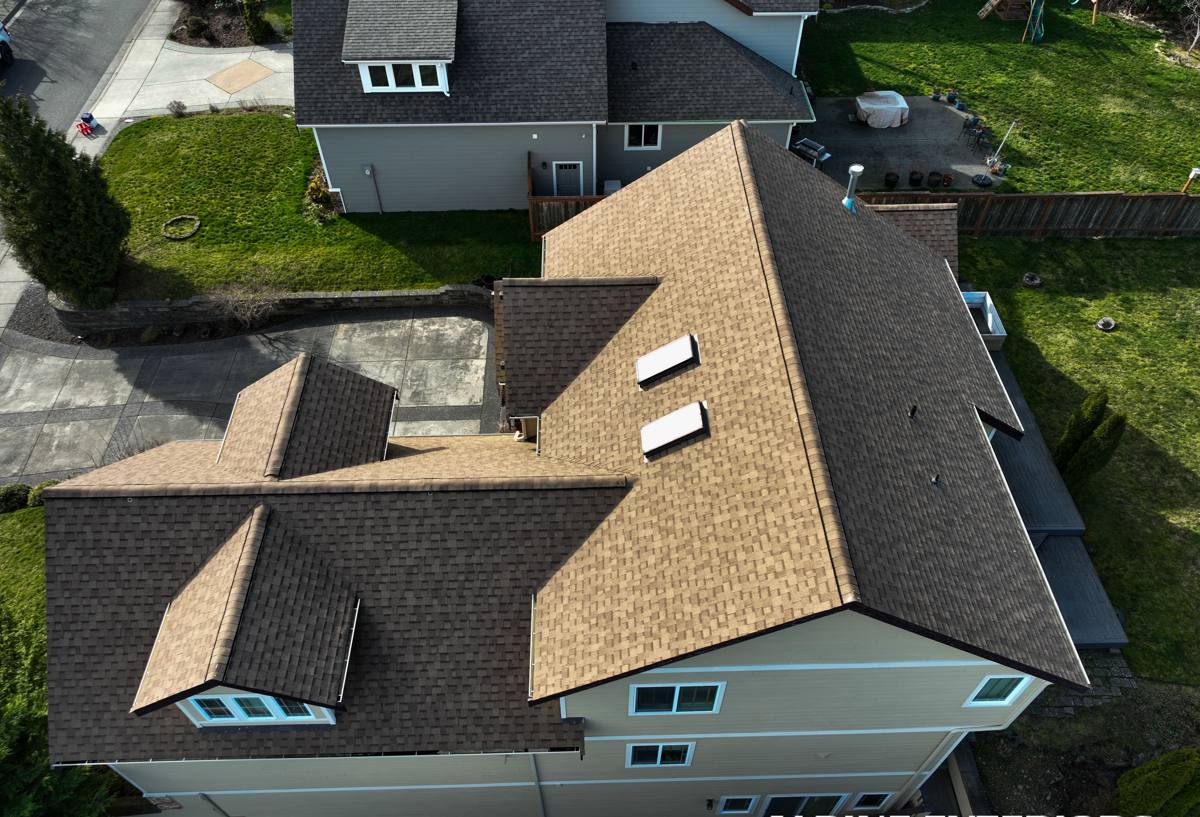
What Salt Air, Rain, and Moss Actually Do to a Window
Each of these three factors attacks a window differently, and a correct installation has to account for all of them at once.
- Salt air accelerates corrosion of exposed metal hardware, fasteners, and certain frame finishes — pitting and discoloration show up years before they would inland.
- Driving rain tests the window's air and water sealing under real wind pressure, not just still-air lab conditions. A window that "looks" sealed can still leak when rain is being pushed horizontally against the wall.
- Moss and constant dampness hold moisture against sills, trim, and cladding longer than a drier climate would, which raises the risk of rot around a poorly flashed opening even if the window unit itself is fine.
None of these are dramatic, sudden failures. They're slow, cumulative problems — which is exactly why they're easy to underestimate until a homeowner is dealing with a soft sill or a fogged unit that shouldn't have failed for another decade.
Choosing the Right Frame Material
Frame material is the single biggest decision in a Drayton Harbor window project, because it determines how the window handles salt exposure and moisture over the long haul. There's no single "best" material for every house — it depends on exposure, budget, and how the home is used.
| Frame Material | Salt Air Performance | Maintenance | Best Fit |
|---|---|---|---|
| Vinyl | Good — won't corrode, some color fade risk over time near water | Low | Budget-conscious replacements, most exposures |
| Fiberglass | Very good — dimensionally stable, resists pitting and salt damage | Low | Direct water-facing exposures, long-term durability priority |
| Wood-Clad | Fair to good — depends heavily on cladding quality and joint sealing | Moderate to high | Homes prioritizing interior wood appearance, sheltered exposures |
| Aluminum | Poor to fair near saltwater without marine-grade finish | Moderate | Limited use; needs careful spec if used at all here |
For homes with a direct sightline to the harbor, we typically steer clients toward vinyl or fiberglass because both resist corrosion without ongoing upkeep. Aluminum-framed units, unless specifically rated and finished for coastal use, tend to show pitting and hardware corrosion faster in this kind of exposure — that's a maintenance and longevity trade-off we're upfront about, not a knock on any one manufacturer. Wood-clad windows can look excellent and work well, but they demand more attention to joint sealing and periodic inspection given how much moisture sits in the air here.
Glass and Glazing for Wind-Driven Rain
The glazing package matters as much as the frame. In Drayton Harbor, we generally recommend:
- Dual-pane, argon-filled units with Low-E coating as the baseline for most homes — good thermal performance and moisture resistance at a reasonable cost.
- Triple-pane options for rooms with heavy wind exposure or where a homeowner wants extra sound dampening from harbor-side weather.
- Warm-edge spacer systems rather than older aluminum spacers, since they resist condensation buildup at the glass edge — a common complaint in consistently humid coastal air.
Glazing choice also affects how a window handles the pressure differential from driving rain. A well-built insulated glass unit with a quality spacer and correct seal depth will hold up to wind-driven moisture far better than a lower-grade unit, regardless of frame material.
Installation Detail: Where Most Window Failures Actually Start
In our experience, more window problems in this area trace back to installation than to the product itself. A high-end window installed with careless flashing will leak. A mid-range window installed correctly, with proper flashing and sealant sequencing, will often outperform it.
What a correct installation includes
- Removal of the old unit with inspection of the rough opening for hidden rot or moisture damage before anything new goes in
- Proper flashing tape and sill pan installation so any water that gets past the window sheds outward, not into the wall cavity
- Correct shimming and squaring so the window operates smoothly and seals evenly under wind pressure
- Low-expansion foam or backer rod and sealant at the perimeter — sized correctly, not overfilled or underfilled
- Exterior trim and caulking detail that accounts for this area's rain exposure, sealed with a product rated for marine/coastal UV and moisture conditions
Skipping or rushing any one of these steps is how a homeowner ends up with a window that looks fine for a season or two and then starts showing staining, soft trim, or interior condensation.
Moss, Trim, and Long-Term Maintenance
Whatcom County's moss season is long, and it doesn't just affect roofs — it affects anything horizontal or shaded near a window: sills, trim boards, and the tops of window headers. Moss and algae growth holds moisture against wood and composite trim longer than most homeowners expect, which is why we pay close attention to drainage detail and trim material selection during a window project, not just the glass and frame.
A few practical habits extend the life of new windows here:
- Rinse sills and trim periodically to clear moss and organic buildup before it holds moisture
- Keep gutters clear so overflow doesn't run directly down window walls
- Check exterior caulking annually, since UV and moisture cycling will eventually break down even good sealant
- Trim back vegetation that shades window walls and slows drying time
Our Process for a Drayton Harbor Window Project
- On-site assessment — we look at exposure direction, existing frame condition, and any signs of past water intrusion around each opening.
- Custom measurement — many homes in this area have settled or non-standard openings, so we measure and order to the actual opening rather than assuming a standard size.
- Material and glazing selection — matched to that specific wall's exposure, not a one-size answer for the whole house.
- Installation — including rough opening inspection, flashing, and sealing as outlined above.
- Final walkthrough — checking operation, seal, and exterior trim finish before we consider the job done.
What Affects the Cost of a Custom Window Project Here
| Factor | Why It Matters in Drayton Harbor |
|---|---|
| Frame material | Fiberglass and quality vinyl cost more upfront but reduce corrosion and maintenance costs over time near saltwater |
| Number of direct water-facing openings | Harbor-facing windows may warrant a higher-spec glazing or frame than sheltered sides of the same house |
| Rough opening condition | Hidden rot or past water damage found during removal adds repair scope before the new window goes in |
| Window size and configuration | Larger units and multi-panel or custom shapes require more structural and flashing work |
| Trim and exterior finish | Coastal-rated caulking and trim materials cost more but last significantly longer in this climate |
We give straightforward, itemized estimates so you can see exactly where the cost is going and where there's room to adjust scope without cutting corners on the parts that actually protect the house.
Why Local Experience in This Neighborhood Matters
Any licensed contractor can install a window. Fewer have spent real time working specifically in Drayton Harbor and along Semiahmoo's shoreline, seeing firsthand which frame materials hold up, which flashing details actually stop wind-driven rain, and how fast moss and salt exposure can wear down a corner that was cut during installation. That kind of specific, repeated exposure to this exact climate is what separates a window job that looks good at handoff from one that's still performing correctly ten years later.
We're not guessing at what Whatcom County's coastal conditions do to a house — we see it on every job in this area, and we build our material choices and installation standards around it.
If you're weighing window replacement for a Drayton Harbor home, we're happy to take a look and walk you through what we'd recommend for your specific exposure and budget. Use the form below to request a free, no-pressure estimate.