 Semiahmoo Exterior
 Decks in Custer Take a Different Kind of Beating
Custer sits close enough to the water that salt-laden air reaches decks year-round, even on properties that aren't waterfront. Add Whatcom County's long wet season and the shade many lots get from mature trees, and you get a climate that's genuinely hard on exterior wood and hardware. A deck that would last two decades in a dry inland climate can start showing real problems in half that time here if it wasn't built or maintained with this specific combination of moisture, salt, and shade in mind.
We repair decks in Custer and the surrounding Semiahmoo area regularly enough to know the failure patterns before we even climb the stairs. This page is about what actually goes wrong with decks out here, what a correct repair looks like, and how we approach the job.
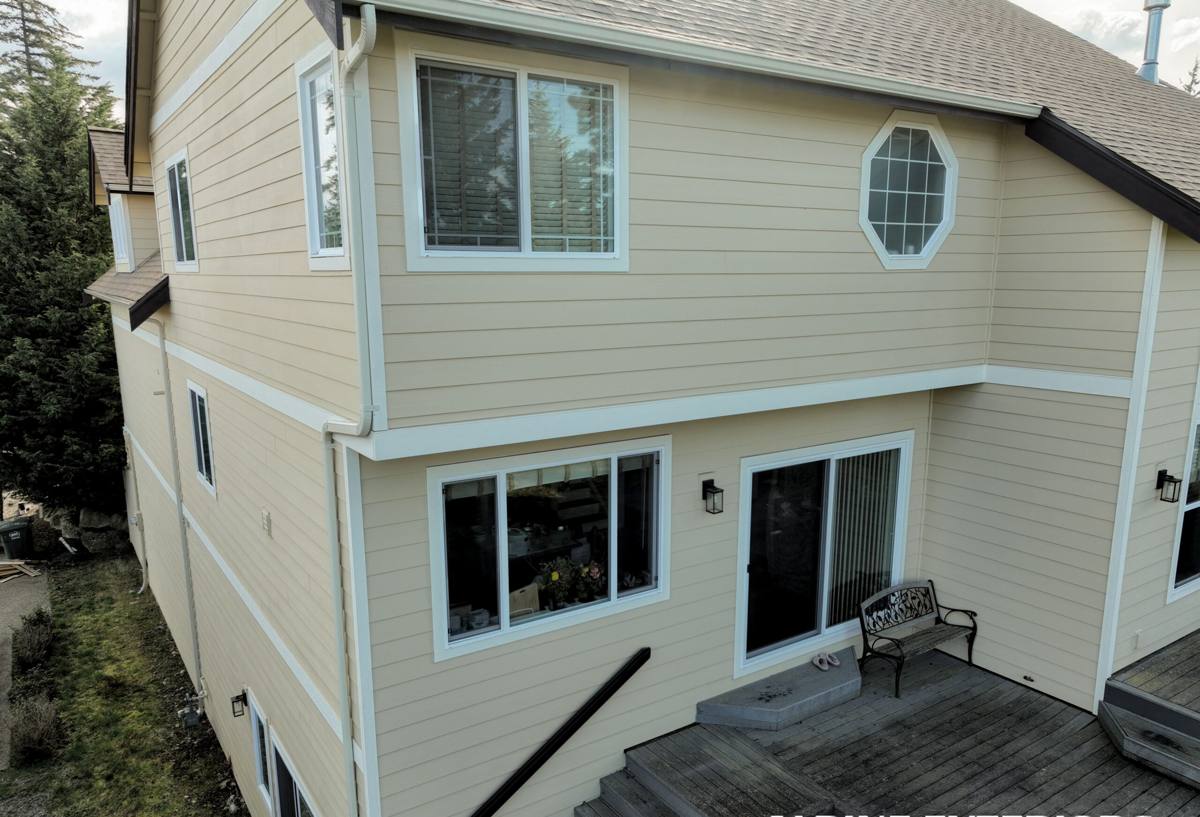
What the Local Climate Does to a Deck
Salt Air and Fasteners
Salt in the air accelerates corrosion on any exposed metal — nails, screws, joist hangers, bolts. Corroding fasteners don't just look bad; they lose holding strength. A ledger bolt or joist hanger nail that's rusted through is a structural problem, not a cosmetic one. We see this most on decks that were built with standard (non-stainless, non-coated) hardware, or where hardware was never upgraded during a prior repair.
Driving Rain and Trapped Moisture
Whatcom County rain doesn't just fall straight down — wind-driven rain gets under railings, behind fascia boards, and into any gap where two pieces of wood meet without proper flashing. Once moisture gets trapped between boards, or between a ledger board and the house, it has nowhere to dry out between storms. That's where rot starts, almost always from the inside of a joint outward, so it's often further along than it looks from the surface.
Moss and the Slip Hazard It Creates
Shaded decks, or decks near trees, grow moss on decking boards, stair treads, and railings for much of the year. Moss isn't just unsightly — it holds moisture against the wood surface and turns a dry-looking board into a damp one, and it makes stairs and walking surfaces genuinely slippery. A deck repair in this area has to account for drainage and airflow, not just replace what's damaged, or the same spots will grow moss back and rot again on the same schedule.
How to Tell If Your Deck Needs Repair — Not Just Cleaning
Homeowners often assume a deck that looks weathered just needs a cleaning and a new coat of stain. Sometimes that's true. Sometimes it's covering up something more serious. A few checks that separate cosmetic wear from a real problem:
- Press a screwdriver or awl into the wood at the ledger board, around post bases, and near stair stringers — if it sinks in easily, that wood is soft and likely rotted underneath the surface.
- Check for bounce or give when you walk across the deck, especially near the middle of the span — this can point to a failing or undersized joist.
- Look underneath (if accessible) for daylight gaps at the ledger board connection to the house — a sign flashing has failed and water has been getting behind the deck for some time.
- Wiggle the railing posts by hand — if they move at the base, the post-to-frame connection has likely weakened.
- Check stair stringers for cracking or splitting, which is common where stairs get the most foot traffic and the most standing water.
- Note any green or black staining on the underside of boards — that's active moisture and often moss or mildew getting an early foothold.
None of these checks require tools you don't already have, and doing them once a year takes fifteen minutes. Catching a problem at this stage is a repair; catching it two years later is often a rebuild.
What a Correct Deck Repair Involves
Structural First, Cosmetic Second
The right order for any deck repair is to address structure before appearance. That means confirming the ledger connection to the house is solid and properly flashed, checking that posts, beams, and joists are sized and spaced correctly for the deck's load, and making sure hardware is rated for exterior and, where salt exposure is a factor, coastal use. Replacing surface boards on a deck with a compromised structure underneath just delays the real fix and wastes the cost of new decking.
Matching or Upgrading Materials
When we replace boards, we look at what's already on the deck — cedar, pressure-treated fir, or composite — and either match it or talk through whether an upgrade makes sense for that specific spot. A shaded, moss-prone section of decking is a reasonable place to consider composite even if the rest of the deck is wood, since composite doesn't absorb moisture into the board itself the way real wood does. That said, composite isn't automatically the right call everywhere — it has its own considerations, covered below.
Fastener and Hardware Upgrades
Any repair we do near the water or in an exposed location gets stainless steel or coated exterior-rated fasteners and joist hardware, even if the original build used standard hardware. It costs a bit more up front and saves a repeat repair down the line.
Drainage and Airflow
Where moss and moisture are the underlying cause of a repair, we look at whether boards are spaced properly for drainage, whether nearby vegetation is keeping the deck shaded and damp longer than it needs to be, and whether ground-level airflow underneath the deck is restricted. A repair that ignores these factors is a repair you'll be paying for again.
Wood vs. Composite for Repaired Sections
This comes up on almost every deck repair in this area, so it's worth laying out plainly rather than pushing one answer.
| Factor | Wood (Cedar / Pressure-Treated) | Composite |
|---|---|---|
| Upfront cost | Lower | Higher |
| Moisture behavior | Absorbs and releases moisture; needs sealing/staining to manage this | Doesn't absorb moisture into the board; surface moss/algae can still grow and needs cleaning |
| Maintenance | Periodic cleaning, sealing or staining, moss treatment | Periodic cleaning; no sealing or staining required |
| Appearance over time | Natural look, will gray or weather without upkeep | Consistent color, doesn't gray, but color is fixed |
| Repair-ability | Individual boards easy to replace and blend | Individual boards replaceable; exact color match can be harder on older composite |
| Best fit | Full-sun decks, owners who don't mind maintenance | Shaded, moss-prone areas, owners who want lower upkeep |
Our standard is to recommend based on the specific spot and how the homeowner actually uses and maintains the deck — not to push composite as a universal upgrade or dismiss it as unnecessary. Both materials are legitimate choices; the failure mode is picking the wrong one for a given deck's sun and moisture exposure.
Our Repair Process
1. On-Site Assessment
We walk the whole deck, check the ledger, posts, joists, and stair connections, and identify which problems are structural and which are cosmetic. We'll show you what we find and explain why it matters, not just hand you a list.
2. Straightforward Scope and Estimate
You get a written scope covering what's being repaired, what materials and hardware we're using, and a real cost range — not a vague number. If we find something worse once we open things up (which happens with hidden rot), we tell you before doing extra work, not after.
3. The Repair Itself
Structural work happens first. Damaged framing, ledger connections, or posts get addressed before any new decking goes down. We use fasteners and hardware suited to the exposure the deck actually sees, not just whatever's standard.
4. Final Check and Cleanup
We walk the deck with you when it's done, point out anything you should keep an eye on going forward, and clean up the site — no leftover fasteners or scrap wood left behind.
What Drives the Cost of a Deck Repair
Deck repair costs vary a lot based on scope, so a single number isn't useful. What actually moves the price:
| Factor | Why It Matters |
|---|---|
| Extent of hidden rot | Rot found once boards come up often extends further than what's visible from the surface |
| Structural vs. surface repair | Ledger, post, or joist work costs more than swapping decking boards |
| Accessibility | Decks over grade, near slopes, or hard to access add labor time |
| Material choice | Composite and cedar cost more than pressure-treated fir per board |
| Hardware upgrades | Stainless or coated fasteners cost more than standard, and are worth it near salt air |
| Code/permit requirements | Structural repairs involving the ledger or main framing may require permitting, which adds time |
We'll always tell you honestly if a repair is close in cost to a partial rebuild, so you can make that call with real numbers instead of guessing.
Permits and Structural Work
Not every deck repair needs a permit — replacing a few decking boards typically doesn't. But work on the ledger board connection, structural framing, or railings often falls under Whatcom County building code requirements, especially on elevated decks. We'll tell you upfront if your repair is likely to need a permit so there are no surprises, and we handle that process rather than leaving it on you.
Why a Local Crew Matters for This Job
Deck repair isn't a one-size-fits-all trade. A crew that mostly works drier, inland climates will often under-spec hardware or skip moisture-management details that matter here, because they don't need them where they usually work. A crew that works Custer and the wider Semiahmoo area regularly has seen how salt air actually ages fasteners over a few winters, knows which shaded lots tend to grow moss fast, and builds repairs around that instead of a generic playbook.
There's also a practical side: knowing the area means realistic scheduling around Whatcom County's wet months, understanding what local building code requires for permitted work, and being available if a repair needs a follow-up visit rather than being a one-time crew passing through.
Maintaining a Deck After Repair
A repaired deck lasts longer with a small amount of regular upkeep. This is especially true in a climate that gives wood and hardware no real off-season to dry out.
- Sweep or clean off moss and debris from decking boards and stairs at least twice a year, more often on shaded sections.
- Re-seal or re-stain wood decking on the schedule the product calls for — don't wait until it visibly needs it, since damage starts before it's visible.
- Keep nearby vegetation trimmed back so sun and air can reach the deck surface and dry it out between rains.
- Check railings and stair connections by hand once a year for looseness.
- Clear gutters and downspouts near the deck so runoff isn't draining directly onto or under it.
If you've got soft boards, a wobbly railing, or moss that keeps coming back no matter what you do, we're happy to take a look and give you a straightforward, no-pressure estimate on what it would take to fix it right. Use the form below to get in touch.