 Semiahmoo Exterior
 Blaine's Waterfront Exposure Is Harder on Siding Than Most Homeowners Realize
Blaine sits right where Semiahmoo Bay meets the open water of the Strait of Georgia, and that location shapes everything about how exterior materials age here. Salt-laden air moves off the water and settles on siding, trim, and fasteners day after day. Add Whatcom County's driving winter rain, which tends to come in sideways off the water rather than straight down, and you have two forces working against a home's exterior at the same time: corrosion and moisture intrusion.
Then there's the moss. Blaine's long, mild, wet season gives moss and algae months to establish themselves on any surface that stays damp — north-facing walls, areas shaded by trees, and low sections near grade are usually the first to show it. On the wrong siding material, moss isn't just a cosmetic problem. It holds moisture against the surface, which accelerates rot, paint failure, and, on wood-based products, structural breakdown.
None of this means siding in Blaine is doomed to fail. It means the material and the installation both have to be chosen with this specific combination of salt, rain, and moss in mind — not a generic set of national building practices.
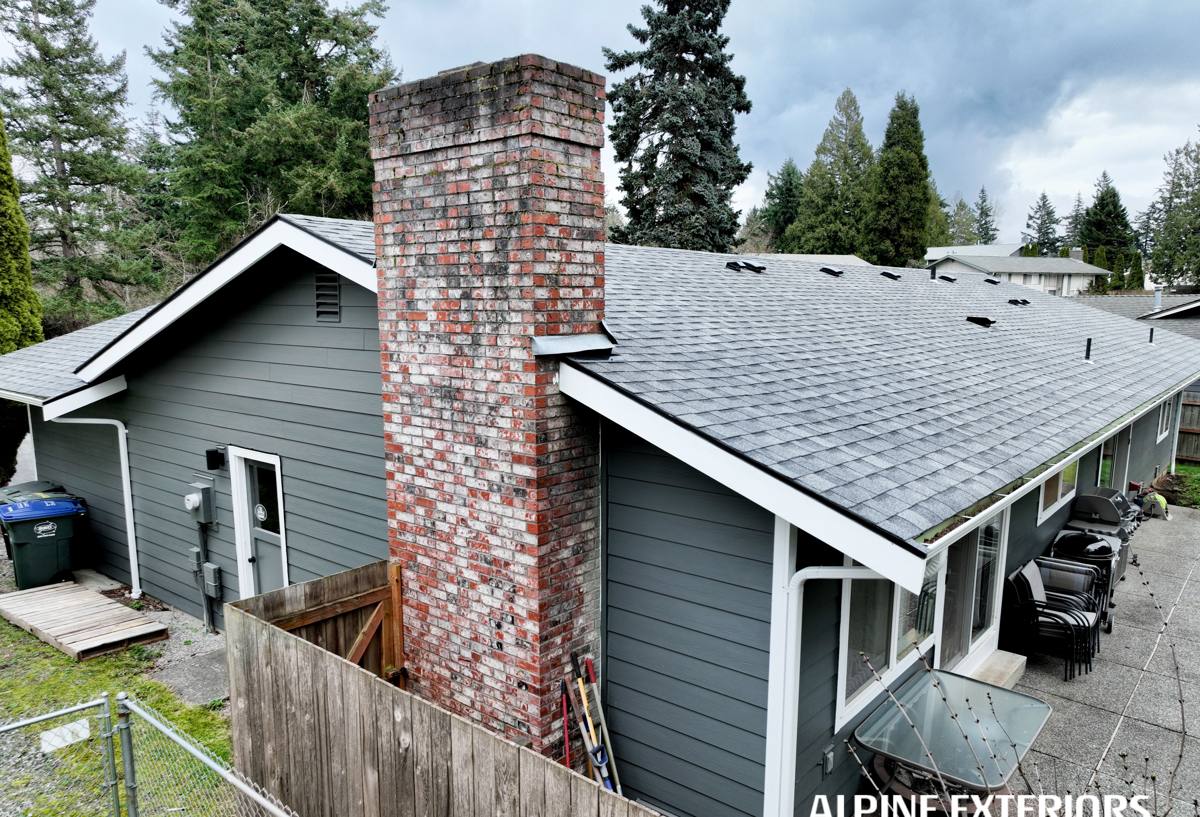
Why We Install James Hardie Fiber Cement and Nothing Else
We made a decision as a company to install James Hardie fiber cement siding exclusively. We don't install vinyl, LP SmartSide, Cemplank, Allura, primed spruce, or cedar. That's not a marketing position — it's a reflection of what holds up on homes like the ones in Blaine.
Fiber cement is not organic. It's made from cement, sand, and cellulose fibers, which means it doesn't feed mold or moss the way wood-based products do, and it doesn't corrode the way metal siding can in a salt air environment. James Hardie backs its boards with a factory-applied ColorPlus finish, which is baked on under controlled conditions rather than field-applied — a real advantage in a climate where paint has a narrow weather window to cure properly outdoors. And Hardie engineers its HZ5 product formulation specifically for regions with sustained high moisture exposure, which describes Blaine about as well as any place in Washington.
We're not going to tell you every alternative product is worthless — vinyl is inexpensive and low-maintenance in mild climates, and cedar has real curb appeal. But vinyl can warp and discolor with UV and temperature swings, and it relies on caulked seams that are only as good as the installer. Wood and wood-composite products need consistent painting and moisture management to survive a climate this wet, and that upkeep is a real, recurring cost most homeowners underestimate when they're comparing sticker prices. We'd rather install one product correctly than install several products with asterisks.
What a Correct James Hardie Installation Actually Involves
The Details That Don't Show Up in a Quote
The material is only half the equation. Fiber cement siding fails prematurely almost exclusively because of installation mistakes, not the product itself. In a climate like Blaine's, the margin for error on water management is smaller than in drier parts of the state.
- Proper starter strip and rain-screen gap so water that gets behind the siding can drain and dry instead of sitting against the sheathing
- Correct fastener type and spacing — stainless or hot-dip galvanized fasteners matter more here than almost anywhere else in the state because of salt air corrosion
- Flashing at every horizontal joint, window, door, and roofline intersection, not just where it's visible
- Kick-out flashing at roof-to-wall intersections so water is directed into the gutter instead of down behind the siding
- Minimum clearance from grade, decks, and roof lines so the bottom edge of the siding isn't sitting in standing moisture
- Factory-cut edges primed or field-sealed at every cut, since an unsealed cut edge is the single most common point of moisture entry on fiber cement
- Caulking used only where Hardie's install specs call for it — over-caulking traps moisture just as often as under-caulking lets it in
Any one of these done wrong won't necessarily show up in year one. It shows up in year five or seven, as soft spots, streaking, or paint failure that looks like a product problem but is actually an installation problem.
How We Approach a Blaine Siding Project
We keep our process straightforward because the details above are where the real work happens, not the sales pitch.
1. Walk-Through and Assessment
We look at the home's exposure — which walls face the water, where moss has already established, where past moisture damage shows up around trim, windows, and the foundation line — before we talk about siding at all.
2. Scope and Estimate
We put together a clear, itemized estimate that separates material, tear-off, and any sheathing or trim repair that's needed. If we find rot or water damage once the old siding comes off, we tell you before we cover it up, not after.
3. Installation to Spec
We install to James Hardie's published fastening, flashing, and clearance specifications — the same specifications that keep the manufacturer's warranty intact. This is also the step where a crew's actual experience matters most, since these are the details that separate a siding job that lasts fifteen years from one that lasts forty.
4. Final Walkthrough
We go over the finished job with you, including caulking lines, trim details, and any touch-up needed, before we consider the project done.
Why It Matters That We Already Work in This Area
Semiahmoo and Blaine have their own microclimate within Whatcom County — closer to open salt water, more exposed to wind-driven rain than inland communities, and prone to moss buildup on shaded and north-facing walls for a larger part of the year than towns further from the water. A crew that hasn't worked this stretch of coastline doesn't always know that going in.
Working in this area regularly means we've already seen how James Hardie siding performs on homes with direct bay exposure versus homes set back from the water, which walls tend to develop moss first, and where past installations — regardless of who did them — tend to show wear first. That local pattern recognition shapes small decisions on every project: where we add extra flashing attention, which fastener spec we don't cut corners on, and where we tell a homeowner it's worth spending a little more up front.
Maintaining James Hardie Siding in a Salt Air, High-Moss Climate
Fiber cement is genuinely low-maintenance compared to wood, but "low-maintenance" doesn't mean "no maintenance" in a climate like Blaine's. A little routine care goes a long way toward protecting the investment.
- Rinse the siding with a garden hose once or twice a year to clear salt residue and organic buildup, especially on water-facing walls
- Keep gutters clear so overflow doesn't run down the face of the siding and feed moss growth
- Trim back vegetation and tree cover that keeps any wall shaded and damp longer than it needs to be
- Have caulking and trim joints checked every few years — caulk is the one component that ages faster than the siding itself
- Address any moss with a soft wash rather than high-pressure washing, which can force water behind the panels
None of this is heavy work, but skipping it in a climate this wet shortens the life of even a well-installed system.
What Drives the Cost of a Blaine Siding Project
Every home is different, but the same handful of factors move the price up or down on most projects in this area.
| Factor | Why It Matters Here |
|---|---|
| Home size and wall complexity | More corners, gables, and dormers mean more cuts, flashing points, and labor hours |
| Existing siding removal | Tear-off and disposal of old siding, especially wood or vinyl over old sheathing, adds time |
| Sheathing or framing repair | Water-damaged sheathing found underneath old siding is common near the water and must be replaced before new siding goes on |
| Product line and profile | Lap siding, panel siding, and shingle-style Hardie products carry different material and labor costs |
| Trim and detail work | Corner boards, window trim, and fascia detailing affect both material use and install time |
| Site access | Waterfront lots, steep grades, or tight setbacks can add scaffolding or staging time |
Signs a Blaine Home's Siding Needs a Closer Look
- Persistent moss or algae staining that returns within months of cleaning
- Soft or spongy spots when you press on the siding, especially near the bottom courses or under windows
- Paint that's bubbling, peeling, or chalking faster than expected for its age
- Visible gaps, warping, or separation at seams and corners
- Rust streaking near fasteners or trim, a sign of corroding hardware underneath
- Musty smell or visible staining on interior walls that back up to exterior siding
If you're noticing any of these on a home in Blaine or elsewhere around Semiahmoo, it's worth a look before the underlying sheathing is affected, not after.
If you'd like a straightforward, no-pressure look at what correct James Hardie siding would involve for your Blaine home, use the form below to request a free estimate. We'll walk the property, answer your questions honestly, and give you a clear scope — no obligation either way.