 Semiahmoo Exterior
 Blaine Harbor's Climate Is Rough on Roofs — Here's Why
Blaine Harbor sits right where the marine layer off Semiahmoo Bay meets the everyday wind and rain of Whatcom County. That combination is harder on a roof than most homeowners realize. Salt-laden air corrodes exposed metal fasteners, flashing, and vents faster than it would a few miles inland. Driving rain, pushed sideways by wind off the water, finds every weak seam, nail pop, and gap in flashing that a calmer climate would never expose. And the long, damp shoulder seasons here — wet fall through wet spring, with plenty of overcast days in between — give moss, algae, and lichen months to take hold on north-facing slopes and shaded valleys.
None of that means a roof in Blaine Harbor is doomed to fail early. It means the materials, fasteners, underlayment, and installation details have to be chosen and installed with this specific exposure in mind. A roof that would perform fine in a dry inland town can underperform here if it's installed the same generic way.
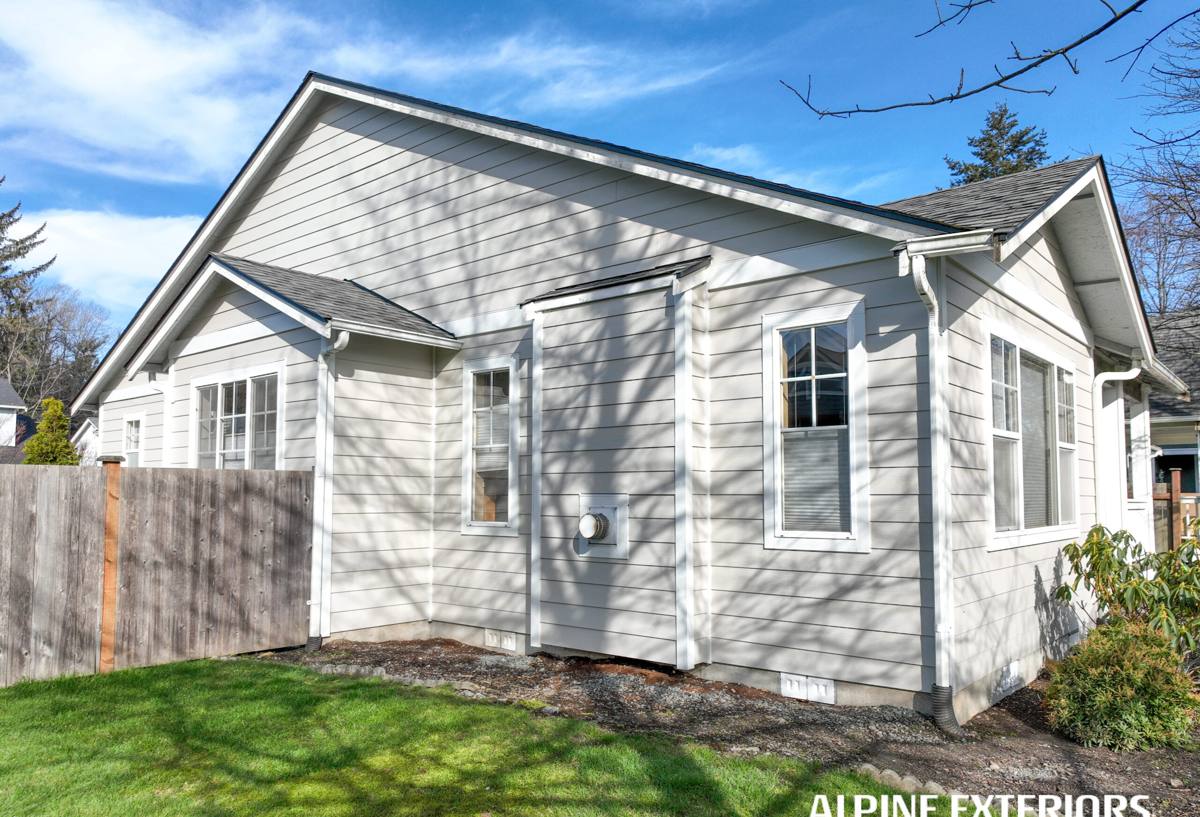
Signs a Blaine Harbor Roof Needs Replacement, Not Repair
Not every roof problem calls for a full replacement, and we won't tell you it does. But certain signs mean patching is throwing money at a roof that's past the point of spot repair:
- Shingles that are cupping, curling, or losing granules across large sections rather than one isolated area
- Soft or spongy decking felt underfoot in the attic or from the roof surface, a sign moisture has reached the sheathing
- Repeated leaks in different spots each winter, rather than one recurring leak you can pinpoint
- Heavy, persistent moss growth that keeps returning within a season or two of cleaning
- Rusted or failing flashing around chimneys, vents, and valleys — common where salt air accelerates metal corrosion
- A roof approaching or past the manufacturer's expected service life for its material and this climate
If your roof shows one or two of these, a targeted repair may still make sense. If it shows several at once, replacement is usually the more honest recommendation, and we'll tell you which situation you're in rather than defaulting to the bigger job.
What a Correct Roof Replacement Involves in This Location
Tear-Off and Deck Inspection
We don't install new roofing over old. A full tear-off lets us see the actual condition of the roof deck — something that matters a lot here, because a slow leak under old shingles can quietly rot sheathing for years before it shows up as a stain on the ceiling. Any soft, delaminated, or water-damaged decking gets replaced before anything new goes down. Skipping this step is the single most common shortcut that leads to early roof failure.
Underlayment Built for Wind-Driven Rain
In a coastal wind-and-rain exposure like Blaine Harbor, the underlayment is doing more work than in a calmer climate. We use synthetic underlayment rated for this kind of exposure, and we install self-adhered ice-and-water membrane at the vulnerable points — eaves, valleys, around penetrations, and along rake edges — where wind-driven rain is most likely to force water backward under the shingles.
Flashing That Won't Corrode Prematurely
Flashing failure is one of the most common causes of roof leaks near the water, and it's almost always a materials or installation problem, not a roofing-material problem. We use corrosion-resistant flashing at chimneys, skylights, sidewalls, and valleys, properly stepped and sealed rather than caulked-and-hoped. Cheap, thin flashing or reused old flashing is a false economy in salt air.
Ventilation That Matches the House
A roof that isn't ventilated correctly traps moisture in the attic, which in this climate means condensation, mold risk, and premature decking rot — even with a brand-new roof surface. We balance intake and exhaust ventilation to the specific attic, not a one-size-fits-all vent count.
Comparing Roofing Materials for a Blaine Harbor Home
Every material has real trade-offs here. We'll walk through what fits your home, budget, and how long you plan to stay in it — this table is a starting point, not a sales pitch for one product.
| Material | Coastal Performance | Maintenance | Typical Lifespan |
|---|---|---|---|
| Architectural asphalt shingle | Good with proper flashing and underlayment; algae-resistant granules help with moss/algae staining | Periodic moss/debris removal, especially on shaded slopes | 25–30 years |
| Standing seam metal | Excellent wind and rain shedding; needs marine-grade fasteners and coatings to resist salt corrosion | Low; occasional fastener and sealant check | 40–50+ years |
| Cedar shake | Traditional look, but higher moisture-retention risk in a damp, shaded coastal climate | Higher — regular treatment and moss control needed to avoid premature rot | 20–30 years with diligent upkeep |
We're upfront that cedar shake asks the most of a homeowner in a climate this damp. It can look great and hold up well, but only with consistent maintenance — if that's not realistic for your household, we'll say so rather than sell you a product that needs more attention than you want to give it.
Our Replacement Process, Step by Step
- On-site inspection and honest assessment — we look at the whole roof system, not just the surface, and tell you plainly whether you need a repair or a replacement
- Written estimate — clear scope, material options, and pricing before any work starts
- Material selection — we walk through the trade-offs above based on your home, budget, and how long you're planning to stay
- Scheduling around weather — we plan tear-off days around forecasts to keep the deck protected from rain during the exposed period
- Tear-off and deck repair — full removal of old roofing, replacement of any compromised decking
- Underlayment, flashing, and ventilation installation — the details covered above, done to spec, not shortcut
- New roofing installation — installed to manufacturer specifications, which is what keeps material warranties valid
- Cleanup and final walkthrough — magnetic sweep for nails, debris removal, and a walkthrough so you can see the finished work and ask questions
What Drives the Cost of a Roof Replacement Here
Every roof is different, so we won't quote a number without seeing yours — but these are the factors that move a Blaine Harbor estimate up or down:
| Factor | Why It Matters |
|---|---|
| Roof size and pitch | Steeper roofs take longer and require more safety equipment and labor |
| Number of layers to remove | Multiple old layers mean more tear-off labor and disposal |
| Decking condition | Rot or soft spots found during tear-off add material and labor to replace |
| Material chosen | Asphalt, metal, and cedar have significantly different material and installation costs |
| Roof complexity | Valleys, dormers, chimneys, and skylights each add flashing work and time |
| Access | Waterfront and tight-lot properties can require different staging and equipment |
Living With Moss and Algae Between Roof Cycles
Even a correctly installed roof in this climate will see some moss and algae pressure — it's a function of how much shade, moisture, and mild temperature the area gets for months at a stretch, not a sign of a bad roof. What matters is keeping it from becoming a maintenance problem:
- Have shaded, north-facing slopes checked and cleared more often than sun-exposed slopes
- Keep gutters clear so trapped moisture doesn't sit against the roof edge
- Trim back overhanging branches that keep sections of roof damp and shaded
- Address moss while it's a light growth — letting it build up makes removal harder on the roofing material
- Choose algae-resistant shingle products if asphalt is your material of choice
Permits and Local Considerations
A full roof replacement in Blaine or unincorporated Whatcom County typically requires a building permit, and if your property falls under an HOA or waterfront overlay, there may be additional design or material review. We handle the permit process as part of the job so you're not chasing paperwork, and we build code and any applicable local requirements into the estimate up front rather than as a surprise later.
What to Ask Before Hiring a Roofing Crew in Blaine Harbor
Not every contractor who works in Whatcom County has real experience with coastal exposure. A short checklist worth going through before you sign anything:
- Are they licensed and insured to do roofing work in Washington State?
- Do they have recent work in Blaine, Semiahmoo, or comparable coastal-exposure areas?
- Will they put material and labor warranty terms in writing?
- Do they inspect and address the decking, not just the surface layer?
- Can they explain, specifically, what flashing and underlayment they use and why?
- Do they pull permits themselves, or leave that to you?
A crew that's spent real time on roofs in this specific climate will have straightforward answers to all of these without hesitation.
Why Local Experience Matters for This Job
A roof replacement is a system, not a single product. The right shingle or metal panel installed with the wrong underlayment, flashing, or ventilation for this climate will still fail early. Crews who work Blaine Harbor and the surrounding Semiahmoo area regularly know which slopes hold moss longest, which flashing details actually hold up against wind-driven rain off the bay, and which shortcuts show up as callbacks two winters later. That local pattern recognition is hard to substitute with a generic, one-size-fits-all installation approach from a crew that doesn't normally work this coastline.
If your roof is showing its age or you just want a straight answer on whether repair or replacement makes sense for your home, we're happy to take a look. Reach out for a free, no-pressure estimate using the form below.