 Semiahmoo Exterior
 Why Blaine Harbor Roofs Wear Differently Than Roofs Inland
Blaine Harbor sits close enough to the water that salt-laden air, near-constant wind-driven rain, and a moss season that can run eight months or longer all combine to age a roof faster than the same roof would age fifteen or twenty miles inland. Homes here aren't dealing with one hard climate stress — they're dealing with three at once, and each one attacks a roof in a different way.
Salt air corrodes exposed metal faster than fresh inland air does. Fasteners, flashing, and drip edge that would last decades in a dry climate can start showing rust streaks and pitting years ahead of schedule if the wrong metal or coating was used. Driving rain doesn't just fall straight down here — wind pushes it sideways and up under shingle tabs, ridge caps, and any flashing detail that isn't sealed and lapped correctly. And moss doesn't wait for a roof to get old before it moves in; on a north-facing slope shaded by trees, moss can establish itself within a couple of years on a roof that never gets enough sun or airflow to dry out between rain events.
None of this means a roof in Blaine Harbor is doomed — it means the installation has to account for these conditions from the start, not just patch around them later.
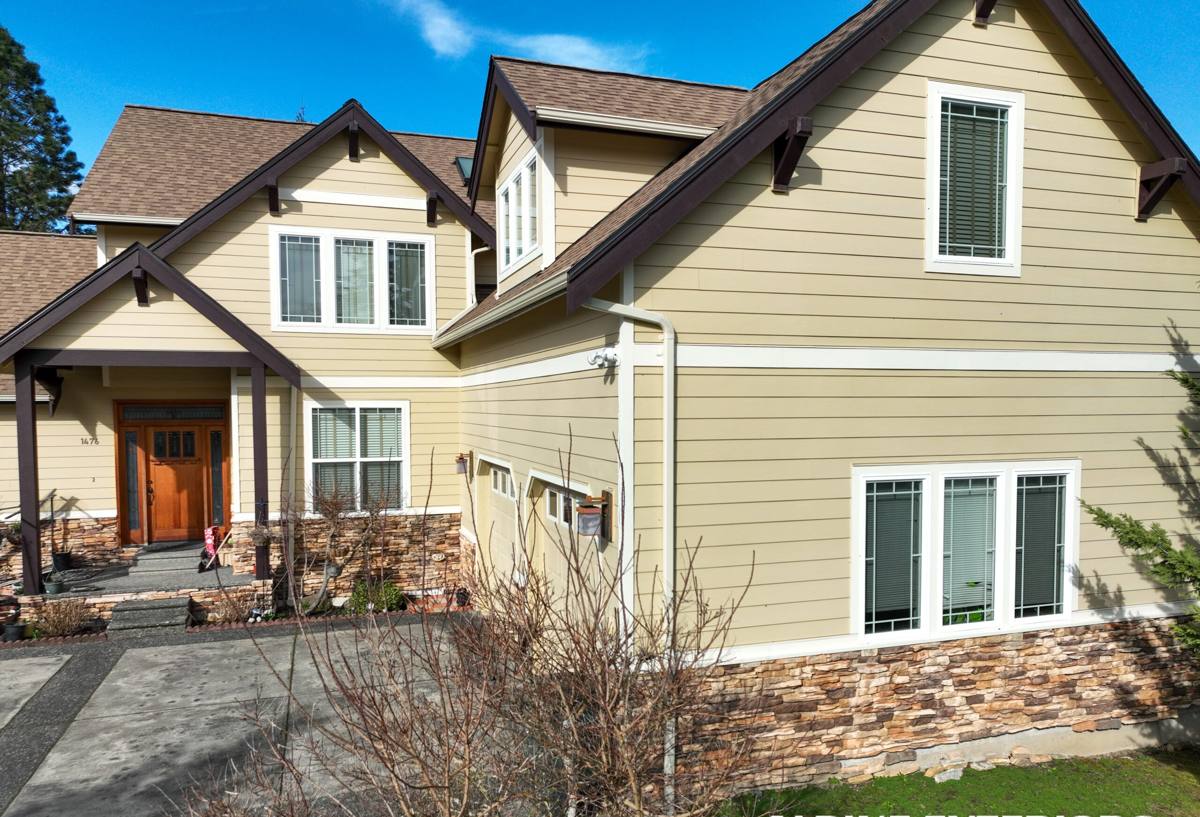
Signs a Blaine Harbor Roof Needs Replacement, Not Another Repair
Not every roofing problem calls for a full tear-off. But in a climate this demanding, repairs eventually stop being cost-effective. Here's how we tell the difference when we're out looking at a roof in this area.
- Granule loss heavy enough that you can see bare asphalt on multiple slopes, not just one worn spot
- Moss or algae staining that keeps coming back within a season of cleaning, especially on shaded or north-facing sections
- Soft or spongy decking felt underfoot during inspection, a sign moisture has already gotten past the roofing surface
- Curling, cupping, or cracked shingles across a large portion of the roof rather than isolated storm damage
- Rust bleeding from flashing, vents, or fasteners, which tells us the metal is failing and won't be stopped by a spot repair
- Daylight visible through the roof deck from the attic, or consistent water staining on ceilings below multiple points
- A roof already past 20-25 years old with asphalt shingles, which is a realistic ceiling for that material in this climate even with good maintenance
If a roof is showing two or three of these signs at once, patching one area usually just delays the same conversation by a year or two while the rest of the roof keeps aging under the same salt air and rain exposure.
What a Correct New Roof Installation Actually Involves
It Starts Below the Shingles
The roofing material homeowners see is only part of the system. In a wind-driven-rain environment like Blaine Harbor, what's underneath the shingles matters as much as the shingles themselves. A correct installation includes a synthetic or self-adhered underlayment rated for the exposure, ice-and-water shield style membrane at eaves, valleys, and any low-slope transitions where water tends to back up, and properly lapped seams that shed water downhill at every layer, not just the top one.
Flashing Is Where Most Roof Failures Actually Start
Chimneys, skylights, sidewalls, and roof-to-wall transitions are the most common places we find leaks on older Blaine Harbor homes — almost never in the open field of shingles. Flashing has to be formed and installed to shed water in the direction it actually flows, sealed at the right laps, and made of a metal that will hold up to salt exposure rather than just whatever was cheapest to source. We treat flashing details as the part of the job that determines whether a roof stays dry for 20-30 years or starts leaking in year five.
Ventilation Isn't Optional Here
A roof that can't breathe traps moisture underneath it, and trapped moisture is exactly what invites rot, mold, and accelerated moss growth. Balanced intake at the eaves and exhaust at the ridge keeps air moving through the attic space, which helps the roof deck dry out between the region's frequent rain events instead of staying damp for days.
Roofing Material Comparison for This Climate
| Material | Typical Lifespan Here | Coastal Performance | Maintenance |
|---|---|---|---|
| Architectural asphalt shingle | 20-30 years | Good with proper underlayment and flashing; wind-rated products hold up well | Periodic moss treatment on shaded slopes |
| Standing seam metal | 40-50+ years | Excellent water-shedding on steep slopes; needs marine-grade fasteners and coatings near salt air | Low; occasional fastener and seam check |
| Synthetic/composite shake | 30-50 years | Very good; resists moisture absorption better than wood shake | Low to moderate |
| Cedar shake | 20-30 years with upkeep | Attractive but absorbs moisture and needs consistent maintenance in a wet, mossy climate | High; regular treatment and inspection |
We don't push one material on every home. The right choice depends on roof pitch, how much shade the property gets, budget, and how much ongoing maintenance a homeowner actually wants to take on. We'll walk through the honest trade-offs for your specific roof rather than defaulting to whatever's easiest for us to install.
Our Installation Process
- On-site inspection and estimate — we look at the existing roof, decking condition, ventilation, and any problem areas like valleys or chimney flashing before quoting anything.
- Tear-off and deck inspection — old roofing comes off down to the deck, and we check the sheathing itself for soft spots or rot that need to be addressed before new material goes on. Covering up bad decking is one of the most common shortcuts we refuse to take.
- Deck repair as needed — any compromised sheathing gets replaced, not just covered.
- Underlayment and ice/water membrane — installed at eaves, valleys, and vulnerable transitions first.
- Flashing installation — new flashing at all penetrations, walls, and valleys, formed and lapped for this region's wind and rain direction.
- Roofing material installation — installed to manufacturer spec and wind-rating requirements, which matters for both performance and warranty coverage.
- Ventilation check and correction — intake and exhaust balanced so the finished attic space can actually dry out.
- Final walkthrough and cleanup — magnetic sweep for debris, gutters checked, and a final inspection with the homeowner before we consider the job done.
Moss Prevention Starts During Installation, Not After
A lot of moss treatment on the market is reactive — clean it off, wait for it to come back, clean it off again. We'd rather reduce the conditions that let moss take hold in the first place. That means correct ventilation so the roof deck dries between rains, shingles or metal chosen with algae and moss resistance in mind where appropriate, and keeping roof valleys and gutters clear so water isn't sitting against the roofing surface longer than it needs to. None of this eliminates moss risk entirely in a climate this wet — nothing does — but it meaningfully extends the time between treatments and slows the underlying damage moss causes to the roofing surface itself.
Permits, Timeline, and What to Expect During the Job
Roofing work in Whatcom County typically requires a permit, and we handle that process as part of the job rather than leaving it for the homeowner to sort out. A straightforward tear-off and replacement on an average-size home usually takes a few days from start to finish, weather permitting — and weather is the real variable in Blaine Harbor, since we won't install roofing material in active rain or high wind, both of which show up regularly in this area. We build a small amount of schedule flexibility into every roofing project here for exactly that reason, rather than promising a fixed date we can't control.
What to Ask Before Hiring Anyone for a Roof in This Area
- Do they carry current Washington contractor licensing and adequate liability insurance?
- Will they put the manufacturer's wind rating and warranty terms in writing before work starts?
- Do they inspect and address deck condition, or just install over whatever's underneath?
- Can they explain their flashing approach for your specific roof's valleys, walls, and penetrations?
- Do they have recent experience working on homes in Blaine Harbor or similarly exposed coastal areas, not just general regional experience?
- Is the estimate itemized, or a single vague number with no breakdown of materials and labor?
Why Local Experience in Blaine Harbor Specifically Matters
A roofing crew that works this specific stretch of coastline regularly knows things a crew from further inland simply doesn't encounter as often — which slopes in this neighborhood tend to hold moss longest, how far wind-driven rain can push water up under a poorly lapped flashing detail, and which fastener and flashing materials actually hold up to years of salt air instead of just looking fine on installation day. That kind of pattern recognition doesn't come from a manual — it comes from doing the work here, on this coastline, repeatedly. It's the difference between a roof that's installed to code and a roof that's installed for these exact conditions.
If you're weighing a roof replacement in Blaine Harbor or anywhere else around Semiahmoo, we're happy to take a look and give you a straightforward, no-pressure estimate — what your roof needs, what it doesn't, and why. Reach out using the form below to get started.