 Semiahmoo Exterior
 Building a Deck That Actually Belongs in Blaine Harbor
Blaine Harbor sits right where Whatcom County's marine climate does its worst work on outdoor structures. You're close enough to Drayton Harbor and the Semiahmoo Spit that salt-laden air is a daily fact of life, not an occasional nuisance. Add the region's long stretch of driving rain from fall through spring, plus a moss season that can run several months in shaded, damp corners of a yard, and you have a set of conditions that punishes decks built to a generic spec. A deck designed for a dry inland lot doesn't hold up the same way here — the metal corrodes faster, the wood grays and softens faster, and the surfaces that don't drain well grow slick with moss faster.
This page is about one job, done right, for this one neighborhood: custom deck design and installation for Blaine Harbor homes. Not a general overview of decking — the specific decisions that matter when the deck you're building has to survive salt air, sustained rain, and moss pressure year after year.
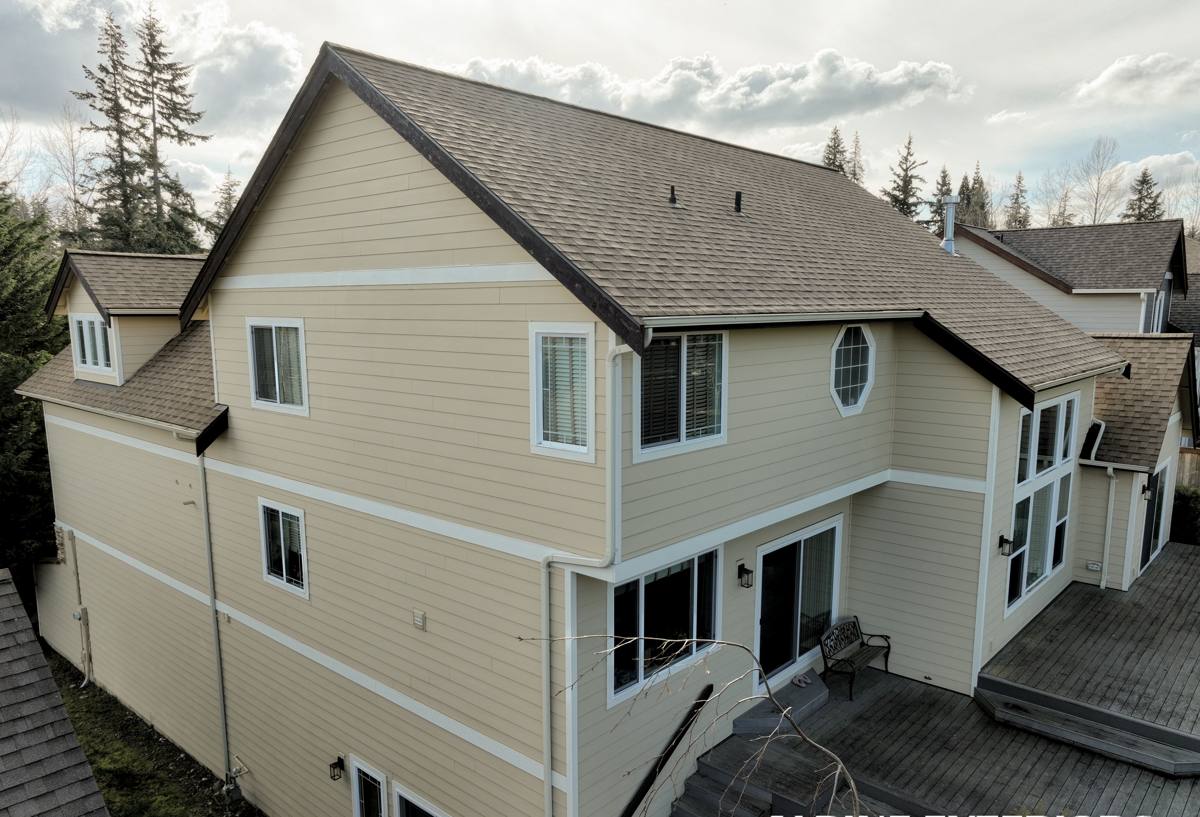
What Blaine Harbor's Climate Actually Does to a Deck
Salt Air
Airborne salt from the harbor settles on every exposed surface — decking, railings, fasteners, and structural hardware alike. It accelerates corrosion on anything that isn't rated for coastal exposure, and it can leave a dull film on finishes that aren't built to shed it. Homes closer to the water see this faster and more visibly, but even a few blocks inland, salt exposure is part of the equation.
Driving Rain
Whatcom County doesn't just get rain — it gets sustained, wind-driven rain that finds its way into joints, ledger connections, and any spot where water can pool instead of run off. A deck that isn't pitched and flashed correctly will hold water in places you can't see until rot or hardware failure shows up years later.
Moss Season
Shaded decks, north-facing exposures, and anything under tree cover in this area will grow moss if the surface stays damp and the design doesn't account for airflow and drainage. Moss isn't just cosmetic — it holds moisture against the decking material and makes surfaces genuinely slippery underfoot, which matters a lot on stairs and near water.
What a Correctly Built Deck Needs Here
None of this means Blaine Harbor homeowners need to over-build or over-spend. It means the details that don't matter much in a dry climate matter a great deal here. A correct job accounts for:
- Framing and fasteners rated for coastal/marine exposure, not standard exterior-grade hardware
- Ledger board attachment and flashing that keeps water out of the house structure, not just off the deck surface
- Decking material chosen for how it actually behaves wet and salt-exposed over years, not just how it looks on day one
- Drainage and slope built into the frame so water sheds instead of pooling under boards
- Airflow underneath and between boards to slow moss and mildew growth in shaded areas
- Railing and post hardware that won't corrode and loosen ahead of the decking itself
Decking Material: What Holds Up and What Doesn't
| Material | How it handles salt air & rain | Moss/mildew resistance | Long-term maintenance |
|---|---|---|---|
| Pressure-treated wood | Affordable, but needs consistent sealing to resist moisture cycling | Lower — porous surface holds moisture unless treated regularly | Annual cleaning and re-sealing recommended |
| Cedar | Naturally rot-resistant, ages gracefully, but softer in constant wet exposure | Moderate — better than treated pine, still needs upkeep in shaded spots | Periodic cleaning and oiling to hold color and resist softening |
| Composite decking | Handles moisture and salt exposure well; won't rot or splinter | Better than wood, though surface texture affects how easily it sheds moss | Occasional washing; no sealing or staining needed |
| PVC/capped polymer | Fully sealed surface, strong resistance to moisture and salt | Best of the group — low porosity limits moss and mildew grip | Lowest ongoing maintenance of the common options |
We don't push one product line over another as a rule — we walk through this table with you against your budget and how the deck will actually be used. A shaded, north-facing deck near the water is a very different call than a sunny, open deck on the same street.
Framing, Fasteners, and Hardware That Won't Fail Early
The framing underneath a deck does the real structural work, and it's also the part homeowners can't inspect easily once the decking is down. In a salt-air environment, standard galvanized fasteners and connectors corrode faster than most people expect — sometimes visibly staining the decking above them within a few seasons. Our standard for coastal-exposed builds is stainless steel or heavy-duty coated fasteners and structural connectors rated for the exposure, even where it costs more up front than a standard hardware package. It's a smaller line item than most homeowners assume relative to the total project, and it's the difference between hardware that outlasts the decking and hardware that becomes the first thing to need replacement.
| Hardware type | Typical use | Why it matters in Blaine Harbor |
|---|---|---|
| Stainless steel fasteners | Deck boards, ledger bolts, railing hardware | Resists salt-driven corrosion far longer than standard coated screws |
| Coated structural connectors | Joist hangers, post bases, beam connections | Rated coatings hold up to marine air better than uncoated or standard-grade steel |
| Corrosion-resistant post bases | Ground-contact posts and footings | Keeps moisture and salt from wicking into the post end grain |
Drainage, Ledger Attachment, and Moisture Management
Where a deck attaches to the house is the single spot most likely to cause expensive damage if it's done wrong — water intrusion at the ledger board can rot framing and siding out of sight for years before it's noticed. We flash ledger connections properly and make sure the deck's slope carries water away from the house rather than toward it. On the deck surface itself, correct board spacing and joist layout let water drain through instead of sitting on top, which matters directly for how much moss and algae growth you'll see in shaded sections.
For any deck built over living space, a patio, or near ground level, drainage detailing gets even more important — trapped moisture underneath a low deck is exactly the kind of condition that grows moss and breeds rot in this climate.
Railings, Fascia, and Finish Details for Harbor Exposure
Railings and fascia boards take direct weather exposure and are often the first thing to show wear, since they're rarely shaded by the deck surface itself. We match railing material and hardware to the same coastal-exposure standard as the structural fasteners, and we pay attention to how fascia boards are fastened and vented so they don't trap moisture behind them. Small details — like leaving a gap for airflow behind fascia, or using post caps that shed water instead of collecting it — are the kind of thing that separates a deck that looks good for one season from one that looks good for fifteen.
Design Considerations Specific to Waterfront and Near-Water Lots
Homes closer to the harbor often deal with more direct wind and salt spray, which affects everything from railing style (more open designs reduce wind load) to which side of the house gets more moss pressure from shade and moisture. We look at your specific lot — sun exposure, tree cover, proximity to the water, and how the deck will be used — before recommending a material and layout, rather than defaulting to one standard build across every job.
Our Process for Blaine Harbor Deck Projects
- Site visit and assessment — we look at sun exposure, drainage, existing structure (if replacing a deck), and how the space will be used.
- Design and material walkthrough — we go through decking and hardware options against your budget and the specific exposure your lot gets.
- Permitting — deck projects in Whatcom County typically require permitting; we handle that process rather than leaving it to you.
- Framing and structural work — ledger attachment, footings, joists, and connectors built to coastal-exposure standards.
- Decking, railing, and finish work — installed with attention to drainage, airflow, and fastener placement.
- Final walkthrough — we cover basic maintenance expectations specific to the material you chose.
Maintenance That Actually Matters in This Climate
Every deck needs some upkeep, but what matters most in Blaine Harbor is different from what matters in a drier, inland climate. Here's what we recommend homeowners actually stay on top of:
- Rinse or sweep debris and organic buildup off the surface regularly, especially in shaded areas prone to moss
- Check fastener heads and railing connections annually for early signs of corrosion or loosening
- Keep gutters and downspouts near the deck clear so runoff isn't adding extra moisture load to the structure
- Reseal or restain wood decking on the schedule appropriate to the product — don't wait until graying or checking is already visible
- Trim back overhanging vegetation that keeps sections of the deck shaded and damp longer than the rest
- Address any standing water or slow-draining sections promptly rather than assuming it'll dry out on its own
Why Hiring a Crew That Already Works Blaine Harbor Matters
A lot of deck problems in this area don't show up because a contractor did bad work in an obvious way — they show up because the job was built to a generic standard that doesn't account for salt air, sustained rain, and moss pressure. Hardware that's fine in a dry climate corrodes here. Drainage that's adequate inland isn't adequate on a shaded, water-adjacent lot. A crew that's already worked this stretch of Whatcom County has already seen which shortcuts fail first, and builds around that from the start instead of learning it on your project.
That's the difference we bring to a Blaine Harbor deck project: not a different set of materials for the sake of upselling you, but a build standard that matches what this specific climate actually does to outdoor structures over time.
If you're planning a new deck or replacing one that's showing its age, we're happy to walk your property and talk through what makes sense for your specific lot and budget. Use the form below to request a free, no-pressure estimate.