 Semiahmoo Exterior
 Building a Deck That Actually Holds Up in Birch Bay
Birch Bay sits close enough to the water that every deck we build here has to answer to conditions a lot of general contractors don't think about until something starts rotting. Salt-laden air corrodes metal fasteners faster than it does even a few miles inland. Driving rain off the Strait finds its way into every gap in poorly flashed ledger boards. And the long, wet moss season here in Whatcom County turns any deck surface that doesn't shed water well into a green, slippery mess by late fall. A deck built to a generic spec sheet will look fine the first summer and start showing problems by year three. A deck built for Birch Bay specifically is a different animal, and that difference shows up in the materials, the fasteners, the framing details, and the way the whole structure is designed to dry out between storms.
This page is about that one job — custom deck construction for homes in and around Birch Bay — and what we think a correct build actually requires in this environment.
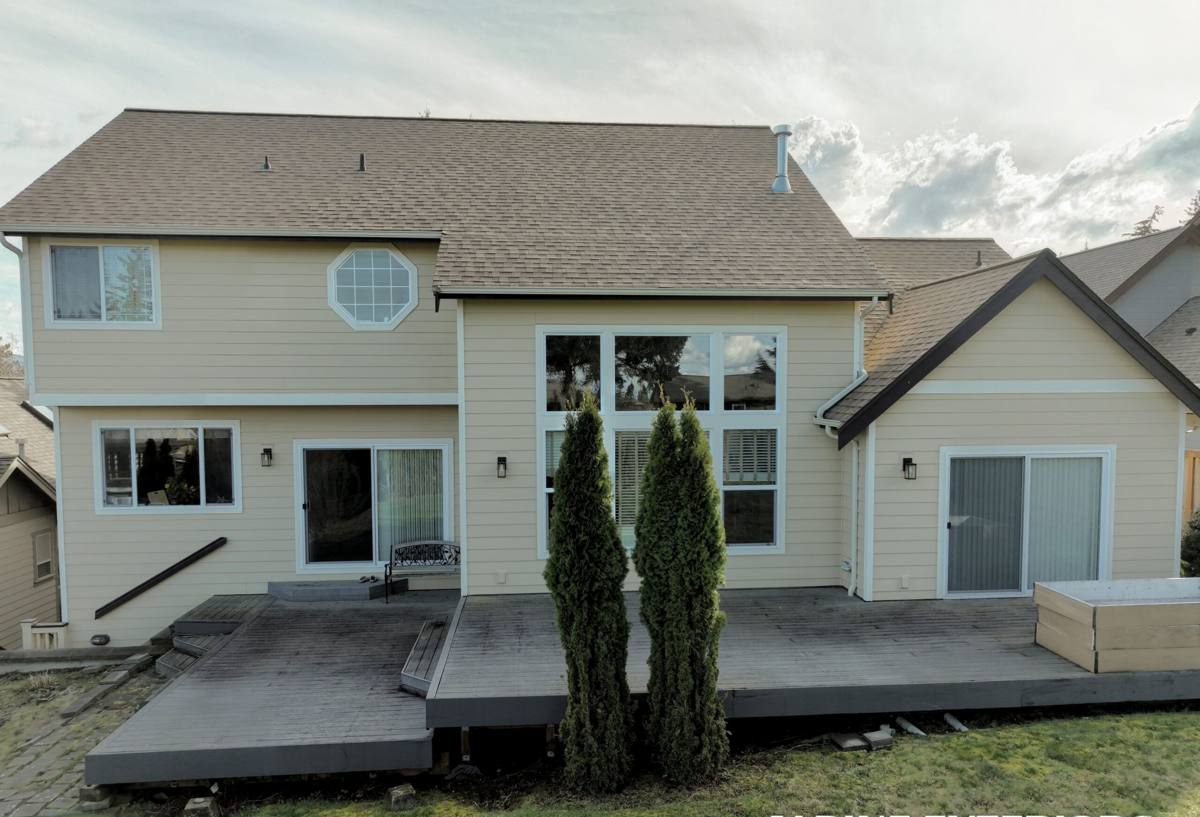
What Birch Bay's Climate Actually Does to a Deck
Three things drive almost every deck problem we see in this area:
- Salt air corrosion — airborne salt accelerates rust on fasteners, brackets, and hardware, especially anything not rated for coastal exposure.
- Sustained rain and wind-driven moisture — water doesn't just fall straight down here; it gets pushed sideways into ledger connections, stair stringers, and any horizontal surface that isn't sloped to shed it.
- Extended moss and algae growth — shaded, north-facing, or tree-covered decks stay damp for months at a time, which is exactly the environment moss needs to take hold on wood and even on some composite surfaces.
None of these are exotic problems. They're just persistent, and a deck that isn't specifically designed around them will show wear faster than the same deck built somewhere drier.
Why This Matters More Than It Sounds
The failures we get called out to fix are rarely dramatic. They're a ledger board that's been slowly wicking moisture into the house framing behind it, joist hangers that have rusted enough to lose grip strength, or decking boards that trap water at the fastener holes and rot from the inside out. By the time it's visible, the damage has usually been building for a couple of seasons. Building correctly the first time costs less than fixing this kind of slow damage later.
What a Correct Deck Build Involves Here
A deck is really three systems stacked on top of each other: the connection to the house, the structural frame, and the surface you walk on. Each one needs its own set of decisions for a coastal Whatcom County property.
The Ledger Connection
Where the deck attaches to the house is the single most important — and most commonly under-built — part of the whole structure. It needs proper flashing that directs water away from the house sheathing, not just a bead of caulk behind the board. On a lot of older Birch Bay homes we've worked on, the original ledger flashing was minimal or missing entirely, and that's usually the first thing we correct.
Framing and Fasteners
Given the salt air, we treat fastener selection as a real decision, not an afterthought. Stainless steel or heavy hot-dip galvanized hardware rated for coastal or treated-lumber exposure lasts meaningfully longer than standard interior-grade coated screws and brackets. The same goes for joist hangers and structural connectors — the wrong grade of hardware is the most common hidden weak point we find on decks that are otherwise in decent shape.
Drainage and Slope
Every deck surface should have a slight slope built in so water runs off rather than pooling. On a covered or partially covered deck — common on homes oriented to catch a water view but still get some protection from the weather — this matters even more, since that section dries out slower to begin with.
Choosing the Right Decking Material for This Environment
There's no single "best" decking material — there's a best fit for your budget, your maintenance appetite, and how exposed your specific site is to sun, shade, and moisture. Here's how the common options actually compare for a Birch Bay property:
| Material | Coastal / Moisture Performance | Maintenance | Typical Lifespan |
|---|---|---|---|
| Pressure-treated wood | Good if properly sealed and re-sealed on schedule; prone to moss in shaded areas | Annual cleaning and periodic sealing | 10-15 years with upkeep |
| Cedar | Naturally rot-resistant, ages well in coastal air, still needs sealing to hold color and resist moss | Sealing every 1-2 years | 15-20 years with upkeep |
| Composite decking | Very good moisture resistance; some boards are more slip-resistant than others when mossy | Occasional washing, no sealing | 25-30 years |
| PVC decking | Excellent moisture and salt resistance; fully synthetic, doesn't absorb water | Lowest maintenance of the group | 25-30+ years |
We don't push one product line over another as a matter of course. What we do is talk through how much sun or shade your specific deck site gets, how much upkeep you actually want to do, and what budget makes sense — then match the material to that, honestly, including the trade-offs.
A Note on Composite and PVC Installation
These materials perform well, but they're less forgiving of sloppy installation than solid wood. Fastener spacing, gap allowances for thermal expansion, and hidden fastening systems all have to follow the manufacturer's specifications closely, or you end up with buckling, squeaking, or voided warranty coverage. This is a case where installation quality matters as much as the product itself.
Railings, Stairs, and Finish Details
Railings and stair components take a disproportionate amount of weather exposure because they're vertical and fully exposed on all sides. Metal railing systems near the water need coastal-rated hardware and finishes, or they'll show surface rust well before the rest of the deck shows any wear. Wood railings need the same sealing discipline as wood decking — arguably more, since end grain on balusters and posts absorbs water faster than a flat board surface.
Stair stringers and treads deserve particular attention in this climate. They're often shaded by the house itself, which means they stay damp longer and are usually the first place moss appears. Choosing a decking or stair-tread product with better slip resistance, or building in a slight extra slope on treads, is a small decision at build time that matters a lot in December and January.
Our Process, Start to Finish
- On-site walkthrough — we look at sun exposure, drainage, tree cover, and how the deck ties into the existing house before recommending anything.
- Honest material conversation — we lay out the real trade-offs between wood and composite/PVC options for your specific site, not a one-size-fits-all pitch.
- Design and permitting — layout, railing style, and structural plan, handled with Whatcom County permitting requirements in mind from the start.
- Ledger and framing work — proper flashing and coastal-rated fasteners installed correctly the first time, since this is the part that's hardest to fix later.
- Decking, railing, and finish installation — following manufacturer specs closely for expansion gaps and fastening.
- Final walkthrough — we go over care and maintenance specific to the material you chose before we consider the job done.
Maintaining a Deck Through a Birch Bay Winter
Whatever material you choose, a little seasonal maintenance goes a long way toward keeping a coastal deck looking and performing well:
- Clear leaves and debris from between boards regularly in fall — trapped organic matter is what feeds moss growth.
- Rinse or scrub shaded and north-facing sections more often than sun-exposed areas, since they dry out slower.
- Check metal hardware and railing brackets yearly for early surface rust, especially anything installed before coastal-rated fasteners became standard practice.
- Re-seal wood decking and railings on the schedule appropriate to the product — don't wait until graying or cracking is already visible.
- Confirm gutters and downspouts near the deck are directing roof runoff away from the structure, not onto it.
- Address any soft spots, discoloration, or persistent damp areas promptly rather than waiting for a full season to pass.
Signs an Existing Deck Needs Attention
If you're not building new but wondering whether an existing Birch Bay deck needs work, a few signs are worth taking seriously: persistent moss that comes back within weeks of cleaning, visible rust staining around fastener heads, any give or softness underfoot, or gaps opening up between the ledger board and the house. Any of these is worth a professional look before it turns into a larger repair.
Why Local Experience in Birch Bay Matters
A crew that's built decks up and down the Whatcom County coastline already knows which fastener grades hold up here, which decking products handle the moss season without turning slick, and how to detail a ledger connection so it doesn't quietly rot the wall behind it. That's the kind of knowledge that's hard to get from a spec sheet — it comes from having stood on these sites, in this weather, enough times to know what actually lasts and what just looks good on day one. As Semiahmoo Exterior Contractor, that's the perspective we bring to every deck project in Birch Bay, whether it's new construction or a rebuild of something that wasn't built for the coast to begin with.
If you're planning a new deck or thinking through options for your Birch Bay property, we're happy to walk the site with you and talk honestly about what makes sense. Fill out the form below for a free, no-pressure estimate.