 Semiahmoo Exterior
 Siding Installation for Wiser Lake Homes
Wiser Lake is one of the quieter residential pockets in the Semiahmoo area of Whatcom County, and homes here face a specific combination of weather that most siding products simply weren't built to handle over the long haul. The regional marine climate pushes salt-laden air well inland from the coast, storms move through with real wind behind the rain, and the moss season around lake-adjacent, tree-shaded lots runs longer than it does on open, sun-exposed properties. Siding installation done right here isn't just about covering the walls — it's about choosing a material and installation method that can shed that moisture load year after year without becoming a maintenance burden.
This page focuses on one thing: installing siding correctly on a Wiser Lake home. Not roofing, not windows, not decks — just what a proper siding job looks like in this specific setting, what it should cost to think about, and why the installer you choose matters as much as the material.
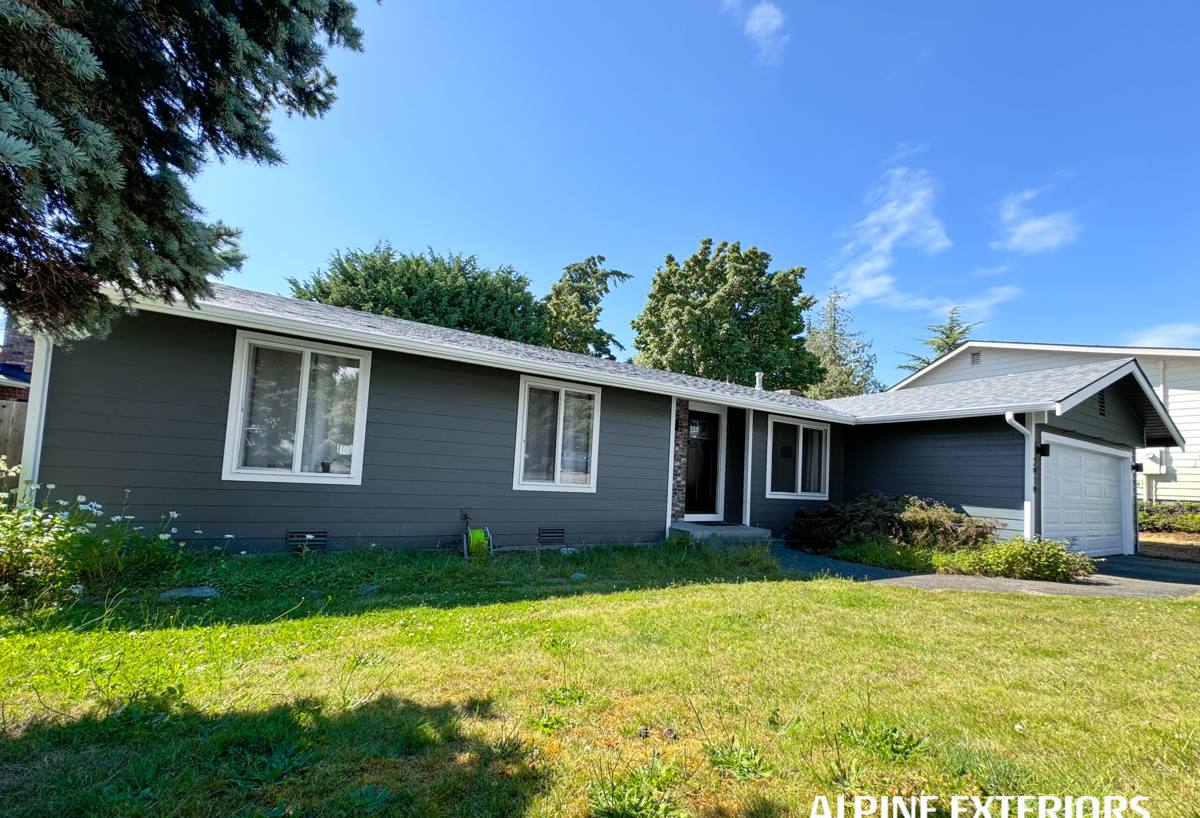
What This Climate Does to Siding Around Wiser Lake
Salt Air Doesn't Stop at the Coastline
Whatcom County's marine air carries salt further inland than most homeowners assume, and it doesn't need direct waterfront exposure to do its damage. Salt in the air accelerates corrosion in fasteners, trim, and lower-grade metal flashing, and it breaks down cheap paint and factory finishes faster than a dry inland climate would. Any siding installed around Wiser Lake needs hardware and finish quality that accounts for that corrosion risk from day one, not as a repair after rust or fading shows up.
Driving Rain Finds the Weak Points
Storms in this part of Whatcom County regularly bring wind-driven rain rather than straight-down rainfall, and wind-driven rain behaves differently against a wall. It gets pushed sideways into laps, joints, and butt seams that a calmer climate would never test. Siding that's cut and fastened loosely, or installed without proper overlap and clearance, will let that water in eventually — usually behind the wall where you can't see it until the damage is already done.
A Long Moss and Mildew Season Near the Lake
Proximity to the lake adds humidity to the air, and mature tree cover common around lake lots keeps north-facing and shaded walls damp for longer stretches than a fully open lot would see. That combination stretches out the moss and mildew season well beyond what homeowners a few miles away, in more open terrain, might deal with. Porous or moisture-absorbent siding materials show it first — usually as green or black staining that keeps coming back no matter how many times it's washed off.
What Correct Siding Installation Actually Involves
A siding job is only as good as what's underneath it. The visible panels or planks get most of the attention, but the water management system behind them is what actually determines whether a house stays dry for thirty years or starts showing problems in five. On a Wiser Lake property, that system needs to include several things working together, not just one.
- A continuous weather-resistive barrier installed and lapped correctly behind the siding, so any water that gets past the surface has a plane to drain down rather than a path into the sheathing.
- Properly integrated flashing at every window, door, and roof-to-wall transition, since these are the highest-risk points for wind-driven rain to find a way in.
- Correct fastener type, spacing, and depth — over-driven or under-driven fasteners are one of the most common causes of early siding failure, and they're invisible once the job is finished unless you know what to check for.
- Proper clearance from grade, decks, and roof lines so the bottom edge of the siding isn't sitting in standing water or trapped moisture.
- Drainage or rain-screen detailing behind the panels where the assembly calls for it, giving any trapped moisture somewhere to go instead of sitting against the wall.
Skip any one of those and the siding itself can be a premium product and still fail early. This is why we treat installation quality as inseparable from material choice — one doesn't work without the other.
Why We Install Only James Hardie Fiber Cement
We install one siding system: James Hardie fiber cement. We don't install vinyl, LP SmartSide, Cemplank, Allura, primed spruce, or cedar. That's a professional standard, not a limitation we're apologizing for, and it's worth explaining why we landed there.
Each of the products we don't install has legitimate uses and plenty of satisfied owners in the right setting. Vinyl is inexpensive and low-maintenance up front, but it can warp or distort with heat and its seams and fastener points remain long-term exposure points. Engineered wood products like LP SmartSide perform well when kept dry, but their wood-based core is sensitive at cut edges and joints, which matters in a climate with this much sustained moisture. Cedar and primed wood siding look great when new, but they absorb and release moisture readily and need consistent refinishing to hold up in a wet, salt-influenced climate — skip a maintenance cycle or two and they fall behind fast.
James Hardie fiber cement addresses the specific problems this climate creates:
- Non-combustible core — it doesn't feed a fire the way wood-based siding can, which matters for both safety and, often, insurance underwriting.
- Factory-applied ColorPlus finish — baked on under controlled conditions rather than brushed on in the field, holding up far longer against fading, chalking, and moisture intrusion than site-applied paint.
- Climate-engineered HZ5 formulation — Hardie's HZ product lines are built for specific climate zones, and HZ5 is engineered for regions with heavy moisture exposure and freeze-thaw cycling, which describes this part of Whatcom County well.
- Dimensional stability — fiber cement doesn't swell, cup, or warp the way engineered wood can after repeated wetting over a long wet season.
- A strong transferable warranty — meaningful as long as the installation itself follows Hardie's published specifications, which is a standard we build into every job.
James Hardie Siding: The Options That Fit This Setting
Hardie makes several product lines, and the right one depends on the look a homeowner wants as much as performance, since HZ5 formulation and ColorPlus finish quality carry across the line.
| Product | Look | Best Fit |
|---|---|---|
| HardiePlank lap siding | Traditional horizontal lap, several texture options | Most common choice; works with nearly any home style around the lake |
| HardiePanel vertical siding | Vertical panel with visible or concealed seams | Board-and-batten or modern accents, often mixed with lap siding |
| HardieShingle | Staggered or straight-edge shingle profile | Craftsman or cottage-style homes wanting more texture |
| HardieTrim | Fascia, corner boards, and window trim | Finishing detail work; pairs with any of the above |
Color selection through ColorPlus comes pre-finished from the factory, which matters more here than in a drier climate — it means the finish isn't relying on field conditions or a painter's timing to cure correctly before the next rain comes through.
Our Installation Process
We walk every Wiser Lake property in person before quoting anything. That means checking the existing siding and wall assembly for how it's handled moisture so far, looking at shaded and lake-facing walls specifically for moss and staining patterns, and identifying any areas where trees or landscaping are keeping a wall damp longer than it should be.
- On-site assessment — full walk-around, checking existing siding, trim, flashing, and any visible moisture or moss patterns.
- Written scope and product selection — a clear, itemized proposal covering Hardie product line, color, trim details, and total scope before any work begins.
- Tear-off and wall preparation — removing old siding, inspecting the sheathing underneath for hidden rot or moisture damage, and repairing anything found before covering it back up.
- Weather-resistive barrier installation — installed and lapped correctly, shingle-style, so water drains down and out rather than in.
- Flashing at every penetration — windows, doors, and roof-to-wall transitions get flashed to shed wind-driven rain, not just block straight-down rain.
- Siding installation to Hardie spec — correct fastener type and spacing, proper clearances from grade and roofline, and factory-mitered or properly caulked joints.
- Final walkthrough — reviewing the completed job with the homeowner and covering basic care going forward.
Signs Your Current Siding Is Already Failing
Homeowners around Wiser Lake often call us after noticing one of these signs, not because they were planning a replacement. Catching them early can mean the difference between a straightforward siding job and a project that also has to address rotted sheathing underneath.
- Moss or dark staining on shaded walls that returns within weeks of being cleaned
- Visible cupping, warping, or buckling in individual boards or panels
- Soft spots when you press on the siding, especially near the bottom edge or below windows
- Paint that's peeling, chalking heavily, or fading unevenly across a single wall
- Gaps opening up at seams, corners, or trim boards that weren't there when the siding was new
- Interior signs — musty smell, soft drywall, or staining near exterior walls
What Siding Installation Costs Depend On
We don't quote a job without seeing the property, but the main variables that move the price are consistent from house to house.
| Factor | Why It Matters |
|---|---|
| Home size and wall complexity | More square footage and more corners, gables, or dormers means more cutting, fitting, and trim work |
| Condition of the existing wall assembly | Rotted sheathing or damaged framing found during tear-off adds repair scope before new siding can go on |
| Product line and profile chosen | Lap siding, panel siding, and shingle profiles carry different material and labor costs |
| Trim and detail work | Corner boards, window trim, and transitions add labor time beyond the flat wall area |
| Site access | Tree cover, tight lot lines, and lake-adjacent terrain common around Wiser Lake can affect staging and scaffolding |
Why Hiring a Crew That Already Works Wiser Lake Matters
A contractor who regularly works this part of Whatcom County already knows how salt air, wind-driven rain, and a long shaded-lot moss season behave differently here than in a drier or more open setting. That familiarity shows up in small decisions that don't get discussed in a sales pitch — how much overlap to build into a lap joint, which fastener grade to use given the salt exposure, where to add extra drainage detailing on a shaded, tree-covered wall. Those details are exactly what separates siding that lasts one or two wet seasons from siding that lasts three decades.
It also matters for something more basic: accountability. A crew that installs only one product, and installs it the same way every time, has no incentive to cut corners on flashing or fastening to hit a lower price point on a cheaper material. We stand behind one system because we control every variable in how it goes on the wall.
Questions Worth Asking Before You Hire
- What siding material do they install, and why — can they explain the trade-offs, not just the sales pitch?
- Do they carry current Washington contractor licensing and active liability insurance?
- How do they detail flashing at windows, doors, and roof-to-wall transitions?
- Will they inspect the existing wall sheathing during tear-off, and what happens if they find hidden damage?
- Does the manufacturer's warranty stay valid based on how they install it, or does it depend on registration and inspection steps they'll walk you through?
- Can they give you a clear, written scope of work before any contract is signed?
Caring for New Siding Around the Lake
Correctly installed James Hardie siding is low-maintenance, but low-maintenance isn't no-maintenance, especially with the shade and humidity common around Wiser Lake. A few simple habits keep it performing the way it's designed to for decades.
- Rinse siding down once or twice a year, focusing on shaded, moss-prone walls
- Keep landscaping and tree branches trimmed back from the wall to let air circulate and walls dry out between storms
- Check caulking at trim, corners, and penetrations annually and re-caulk any spots that have opened up
- Watch gutters and downspouts for clogs that can send overflow water down the siding face
- Address any soft spots, gaps, or staining early rather than waiting for the next scheduled inspection
If you're weighing a siding replacement for a home around Wiser Lake, we're happy to walk the property with you and give an honest read on what it actually needs. Reach out below for a free, no-pressure estimate.