 Semiahmoo Exterior
 Window Replacement Built for Marietta's Marine Climate
Marietta sits low along the water near Semiahmoo, in a stretch of Whatcom County where the weather off the Salish Sea is part of daily life. Homes here take a steady beating from salt-laden air, wind-driven rain that hits windows sideways instead of straight down, and a moss season that stretches from fall through spring. Windows that were fine when a house was built thirty or forty years ago are often the weakest point in the building envelope today. Replacing them correctly, with materials and installation methods matched to this specific environment, is one of the highest-value projects a Marietta homeowner can do.
This page covers what window replacement actually involves in this part of Whatcom County — not a generic overview, but the specifics that matter when a house sits close to Semiahmoo Bay and Drayton Harbor.
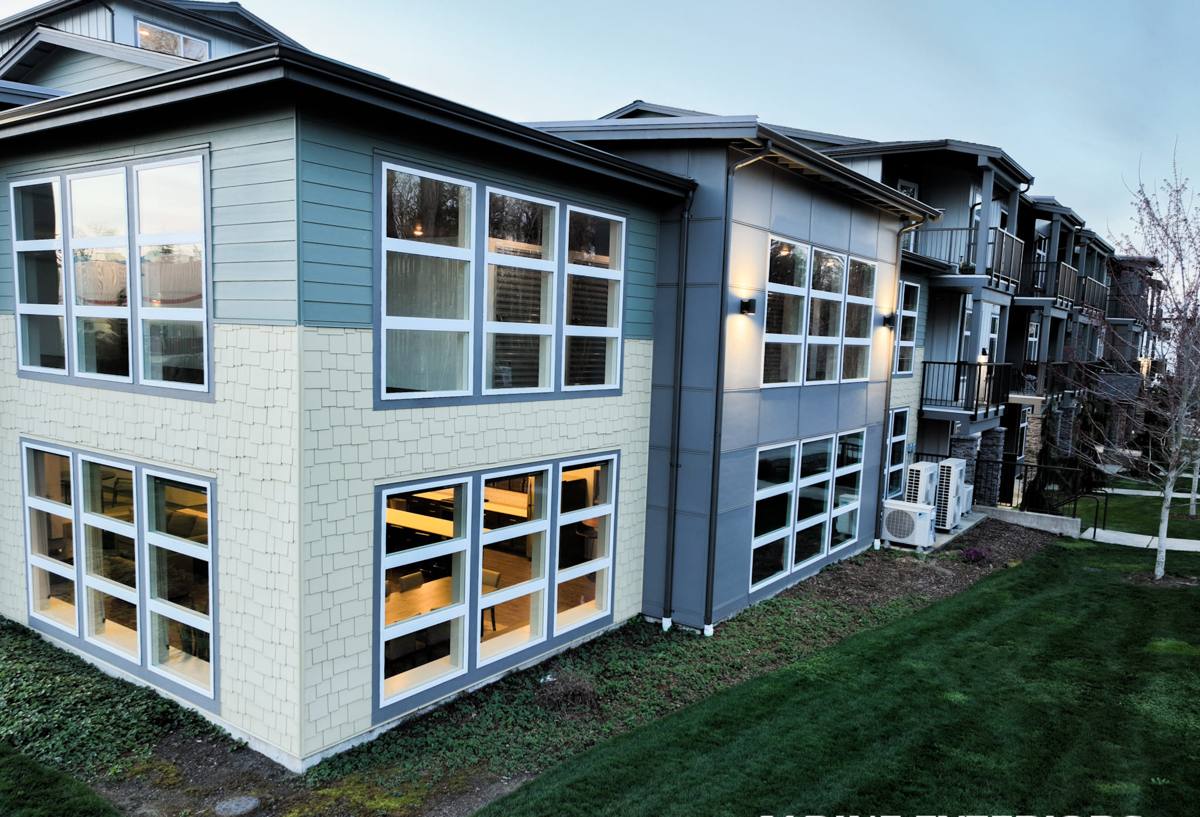
How the Local Climate Wears Down Windows
Salt Air and Metal Corrosion
Airborne salt from the bay settles on everything, including window frames, hardware, and fasteners. Aluminum frames and lower-grade hardware corrode faster here than they would twenty miles inland. Screws and cranks seize up, finishes chalk and pit, and once corrosion starts on a frame it doesn't stop — it just gets replaced by rot or leaks a few years later.
Driving Rain and Water Intrusion
Whatcom County's storms often come with real wind behind them, which pushes rain into gaps that a calmer climate would never test. A window that's watertight in a light drizzle can still leak under wind-driven rain if the flashing, sill pan, or sealant details aren't right. Most of the water damage we find around old windows didn't come from a single storm — it came from years of small amounts of moisture getting behind the trim, unnoticed, until the sheathing or framing underneath started to soften.
Moss, Mildew, and Shaded Lots
Many Marietta properties have mature trees and damp, shaded north sides that stay wet for long stretches of the year. Moss and algae build up on sills, tracks, and exterior trim, holding moisture against the frame and finish. On wood-clad windows this accelerates rot at the sill — usually the first place a window fails.
Signs a Marietta Home Needs Window Replacement
Not every issue calls for full replacement — some can be repaired or re-sealed. But certain signs mean the window and its opening are past the point of a simple fix:
- Soft, spongy, or discolored wood at the sill or lower corners of the frame
- Fogging or a permanent haze between panes, meaning the seal on a double-pane unit has failed
- Visible daylight, drafts, or whistling around the sash when it's windy
- Difficulty opening, closing, or locking the window, especially after damp weather
- Paint that keeps bubbling or peeling on the frame no matter how often it's redone
- Corroded or frozen hardware — cranks, locks, or hinges that no longer move freely
- Visible mold or a musty smell in the wall or trim near the window
- Noticeably higher heating bills in a home with original single or early double-pane windows
What a Correct Window Replacement Job Involves
Removal and a Real Look at What's Behind the Old Unit
Every job starts with removing the old window and actually inspecting the rough opening — the framing, sheathing, and sill — before anything new goes in. In coastal areas like Marietta, this step matters more than it does elsewhere, because hidden rot from years of slow water intrusion is common even when the interior trim looks fine. Any soft or damaged wood gets addressed before a new window goes in; installing a new window over compromised framing just hides the problem for a few more years.
Flashing and Water Management
This is the single most important part of the job in a wind-driven-rain climate. A properly installed window needs a sloped sill pan, correctly lapped flashing tape, and a drainage path so any water that does get past the exterior cladding has somewhere to go besides into the wall. Skipping or rushing this step is the most common cause of the "new window that still leaks" complaints we hear about from other installs.
Insulation, Air Sealing, and Fastening
The gap between the window frame and the rough opening needs to be insulated and air-sealed correctly — not overpacked with expanding foam, which can bow a frame out of square, and not left with gaps that let wind and moisture track in around the edges. Windows are shimmed level and square, then fastened per the manufacturer's specifications so the unit performs the way it's rated to, especially important for wind exposure this close to open water.
Choosing Materials for a Salt-Air Environment
Frame material matters more here than in a drier, inland climate. The table below reflects how common window frame options generally hold up under salt air, moisture, and coastal wind — useful context before deciding what's right for a specific home and budget.
| Frame Material | Salt Air / Moisture Behavior | Maintenance |
|---|---|---|
| Vinyl | Doesn't corrode or rot; performs well in coastal settings | Low — occasional cleaning |
| Fiberglass | Very stable in moisture and temperature swings; strong long-term option | Low |
| Aluminum-clad wood | Exterior holds up well if properly sealed; wood interior still needs protection from any leaks | Moderate |
| Bare wood | Attractive but most vulnerable to rot and moss buildup in this climate | High — regular painting/sealing |
| Bare aluminum | Prone to pitting and corrosion from salt exposure over time | Moderate to high |
We're upfront about these trade-offs. A bare wood or bare aluminum window isn't a bad product, but it asks more of a homeowner in a Semiahmoo-area climate than a vinyl or fiberglass unit does, and that maintenance burden is worth knowing about before, not after, the install.
Glass and Performance Options Worth Considering
For a house exposed to bay winds and gray winters, the glass package matters as much as the frame:
- Low-E coatings reduce heat loss in winter and cut glare and heat gain in summer
- Argon gas fill between panes improves insulation value at modest added cost
- Dual-pane units are the standard baseline for this climate and cover most homes well
- Triple-pane is worth considering for rooms that take direct wind exposure off the water, or where noise and draft have been a persistent complaint
- Impact-resistant or laminated glass can be a reasonable upgrade for homes with a lot of open exposure to wind-driven debris
Our Window Replacement Process
- On-site assessment of existing windows, framing condition, and exposure — front, back, and water-facing walls often need different solutions
- Honest recommendation on frame material and glass package based on the home's exposure and budget, not a one-size-fits-all pitch
- Written estimate with clear scope — number of windows, materials, and any framing repair anticipated
- Careful removal, with framing and sheathing inspected and repaired as needed before new units go in
- Proper flashing, sill pan, and air-sealing detail on every opening — no shortcuts on the water-management step
- Final check of operation, seals, and trim, and a walkthrough so the homeowner knows what to expect
What Affects Cost
Every home is different, so we don't quote firm numbers without seeing the job, but the main cost drivers on a Marietta window replacement are consistent:
- Number of windows and whether they're standard sizes or custom-order
- Frame material chosen (vinyl and fiberglass are typically more budget-friendly than clad-wood)
- Condition of the existing framing — hidden rot repair adds labor and materials
- Glass package — Low-E, argon, triple-pane, or impact-resistant options all add cost
- Access and window height, especially on upper stories or tight coastal lots
Most full-home window replacement projects land somewhere in the low-to-mid five figures, with single-window or partial-home jobs scaled down accordingly. An on-site estimate is the only accurate way to price a specific home.
Why Hire a Crew That Already Works This Area
Whatcom County's building requirements, the wind exposure common to properties near Semiahmoo Bay, and the moisture behavior of a shaded, salt-air lot aren't things you learn from a manual — they're things you learn from doing the work here repeatedly. A crew that already understands how Marietta homes are built and how they age knows where to look for hidden rot, which flashing details actually hold up to driving rain off the water, and which materials are worth the extra cost versus which ones just add maintenance. That local pattern-recognition is the difference between a window job that looks fine at handoff and one that still performs correctly ten winters later.
Caring for New Windows in a Coastal Climate
New windows still need some upkeep in this environment. Rinsing salt residue off frames and glass periodically, keeping gutters and nearby foliage clear so water and debris don't sit against the sill, and checking weep holes and drainage tracks for moss or debris buildup will all extend the life of a new install. Vinyl and fiberglass frames need very little beyond this; clad-wood units benefit from an annual look at the exterior finish.
If your Marietta home has original or aging windows, we're happy to take a look and give you a straightforward, no-pressure estimate — no obligation, just an honest read on what your home actually needs. Use the form below to get started.