 Semiahmoo Exterior
 Windows on the Semiahmoo Peninsula Take More Abuse Than Windows Inland
Semiahmoo Resort sits out on the water, and that location is exactly what makes it a beautiful place to live and exactly what shortens the life of a poorly installed window. Homes here deal with a combination that inland Whatcom County properties don't see nearly as much: salt-laden air moving off the bay, wind-driven rain that hits siding and window openings sideways instead of straight down, and a long, damp moss season that keeps everything at or near saturation for months at a time. None of that is a problem for a window that was installed correctly. All of it is a problem for one that wasn't.
We work on homes around Semiahmoo Resort regularly, and the failures we get called out for almost never start with the window unit itself. They start with the installation details around it — flashing, sealant, and drainage decisions that don't hold up once salt air and constant moisture get involved.
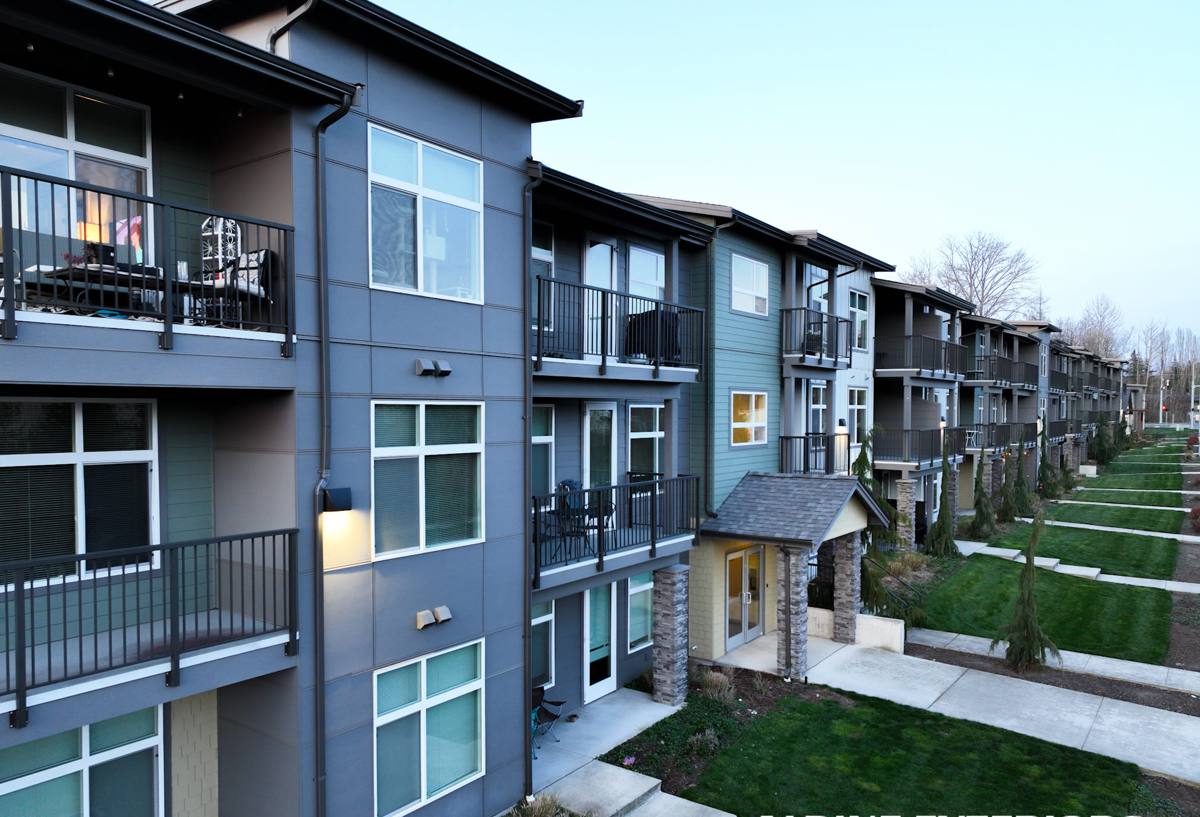
What Salt Air, Driving Rain, and Moss Actually Do to a Window Opening
Understanding the failure pattern helps explain why we install the way we do out here.
Salt Air
Airborne salt accelerates corrosion on fasteners, hinges, balance systems, and cheaper cladding finishes. A screw or flashing tape that would last decades in a dry inland climate can start breaking down years sooner this close to the water. This is a materials and hardware decision, not just a caulking decision.
Driving Rain
Wind off the water doesn't just fall on a window — it pushes against it. That means water gets driven into gaps that would stay dry in a calmer setting. If the flashing and sill pan underneath the window aren't built to shed water that's actively being pushed sideways and upward, it will eventually find the sheathing.
Moss Season
Western Washington's long wet stretch keeps exterior surfaces damp for extended periods. Any trim, sealant gap, or cladding seam near a window that stays wet longer than it should becomes a place where moss, algae, and eventually rot get a foothold. Once moisture is trapped behind trim or under a window flange, it does its damage quietly, out of sight, until the drywall or trim shows staining.
Signs a Semiahmoo Resort Home's Windows Need Attention
Most window problems out here show up gradually. Homeowners often notice one or two of these signs long before a window actually fails outright:
- Soft or discolored trim or drywall below or beside a window
- Fogging or a persistent haze between panes (a sign the seal on an insulated glass unit has failed)
- Windows that are noticeably harder to open, close, or lock than they used to be
- Visible gaps, cracked caulk, or daylight showing around the frame
- A musty smell near a window that shows up after storms specifically
- Noticeable drafts or a cold spot near the window even when it's fully closed
- Paint or finish bubbling on interior trim near the glass
If you're seeing more than one of these, it's worth having the opening inspected before deciding whether the fix is a new window, new flashing, or both.
What a Correct Window Installation Involves
The window itself is often the easy part. The installation is where a job holds up for 20+ years near the water or fails in five. A correct installation includes:
Sill Pan Flashing
A sloped, sealed pan at the bottom of the rough opening gives any water that does get past the window a controlled path back outside, instead of letting it sit on bare wood.
Proper Integration with the Weather-Resistive Barrier
Flashing tape and building paper or house wrap need to be layered correctly — like shingles — so water is always directed outward and downward, never into a seam that traps it.
Head Flashing Sized for Wind-Driven Rain
On a site exposed to water like Semiahmoo Resort, the flashing above a window needs enough of a drip edge and end-dam detail to handle rain that's being pushed at an angle, not just falling straight down.
Corrosion-Appropriate Fasteners and Hardware
We use fasteners and flashing rated for coastal exposure rather than standard-grade hardware, since the salt air here will find the weak link over time.
Sealant as a Backup, Not a Primary Defense
Caulk should be the last line of defense, sealing gaps after the flashing and drainage plane are already doing the real work — not the only thing standing between the house and the weather.
Choosing Materials for a Salt-Air, High-Rain Environment
There's no single "best" window material for every home — the right choice depends on exposure, budget, and how the home is used. Here's how the common options compare for a property in this environment:
| Material | How It Handles Salt Air & Moisture | Maintenance | Typical Fit |
|---|---|---|---|
| Vinyl | Good corrosion resistance; won't rot | Low | Cost-conscious replacements, rental or second homes |
| Fiberglass | Excellent; very stable in temperature and moisture swings | Low | Full-time waterfront exposure, long-term ownership |
| Aluminum-clad wood | Good exterior protection, but performance depends heavily on installation quality at joints and corners | Moderate | Homeowners wanting a wood interior look with an exterior shell |
| Bare wood | Weakest in this environment without diligent upkeep | High | We generally steer clients away from this for direct coastal exposure unless upkeep is a firm commitment |
We're upfront when a material isn't a good match for a specific exposure. It's not that any of these products are bad — it's that some require a maintenance commitment that doesn't make sense for a second home or a busy household, and we'd rather say that up front than sell a product that becomes a headache in year three.
Glass Package Matters Too
Beyond the frame material, double-pane vs. triple-pane, low-E coatings, and gas fill all affect comfort and condensation resistance. In a marine climate like Semiahmoo's, a good low-E coating and properly sealed insulated glass unit does more for comfort and reduced interior condensation than most homeowners expect.
Our Installation Process
- On-site assessment — we inspect existing openings, look for hidden water damage, and measure for accurate, custom-fit units rather than assuming stock sizes will work.
- Material and glass selection — we walk through frame material and glass package options based on the specific exposure of each opening (waterside vs. more sheltered walls often get different recommendations on the same house).
- Removal and opening inspection — once the old window is out, we check the sheathing and framing underneath for rot or prior water intrusion before anything new goes in.
- Flashing and drainage plane rebuild — sill pan, flashing tape, and WRB integration are done correctly regardless of what shortcuts may have been taken originally.
- Window installation and shimming — set level, plumb, and square, with fasteners appropriate for coastal exposure.
- Sealant and finish work — exterior sealant, interior trim, and a final function check on every window (open, close, lock).
- Walkthrough — we show you what was done and what to watch for going forward.
What Affects the Cost of a Window Project Here
Every home is different, but these are the main factors that move a project's price up or down:
| Factor | Why It Matters |
|---|---|
| Number of openings | Whole-home replacements have a lower per-window cost than scattered one-off replacements |
| Frame material chosen | Vinyl, fiberglass, and clad-wood carry different material costs |
| Condition of existing framing | Hidden rot found during removal adds repair scope before the new window goes in |
| Exposure of the opening | Waterfacing walls may warrant upgraded flashing details vs. more sheltered elevations |
| Glass package | Triple-pane and specialty coatings cost more than standard double-pane low-E |
| Access and site conditions | Second-story or hard-to-reach openings take more labor time |
We give straightforward, itemized estimates so you can see where the money is going rather than a single lump number.
Why It Matters That We Already Work in Semiahmoo Resort
A contractor who mostly works inland can still do a technically fine window install and still get it wrong here, simply because they're not used to designing for wind-driven rain and salt exposure by default. Working this specific stretch of Whatcom County regularly means we already know which elevations of a Semiahmoo Resort home tend to take the worst weather, we're not guessing at flashing details for the first time on your house, and we're already familiar with the kind of moisture and rot patterns that show up in this particular setting. That local pattern-recognition is the difference between an installation that's technically correct on paper and one that actually holds up through years of salt air and storms off the water.
After Installation: Keeping Windows Performing in This Climate
- Rinse accumulated salt film off frames and glass periodically, especially on water-facing sides of the home
- Check exterior sealant lines once a year for cracking or separation and have any gaps addressed before the wet season sets in
- Keep gutters and downspouts clear so roof water isn't dumping directly onto window heads below
- Operate hardware (locks, cranks, balances) periodically even on windows you don't open often, so moving parts don't seize
- Have a professional look at any window showing fogging, staining, or new drafts sooner rather than later — small flashing or seal problems are far cheaper to fix than the rot that follows if they're ignored
If you're weighing whether your current windows need repair, replacement, or just better flashing detail, we're happy to take a look. Reach out for a free, no-pressure estimate using the form below — we'll give you an honest assessment of what your home actually needs.