 Semiahmoo Exterior
 Why Window Installation Is Different for Bellingham Homes
Bellingham sits in a stretch of Whatcom County where the weather does more than just get wet. Homes here deal with salt-laden air off the water, wind-driven rain that comes at windows sideways instead of straight down, and a long stretch of the year where moss, algae, and general dampness sit against every exterior surface that doesn't drain or dry properly. Windows are one of the most tested parts of a house in this environment. They're penetrations in the wall system, they have moving parts and hardware, and they're expected to keep water out under conditions that a lot of window products and installation methods simply weren't designed for.
A window that's a good fit for a dry inland climate can underperform here if it's installed the same way. Salt air accelerates corrosion on hardware and fasteners that aren't rated for it. Driving rain finds gaps that would never leak in a calmer climate. And extended damp periods mean any trapped moisture behind a window has more time to do damage before things dry out again. None of this means Bellingham homeowners need exotic products — it means the installation details matter more here than they do in most places, and cutting corners shows up faster.
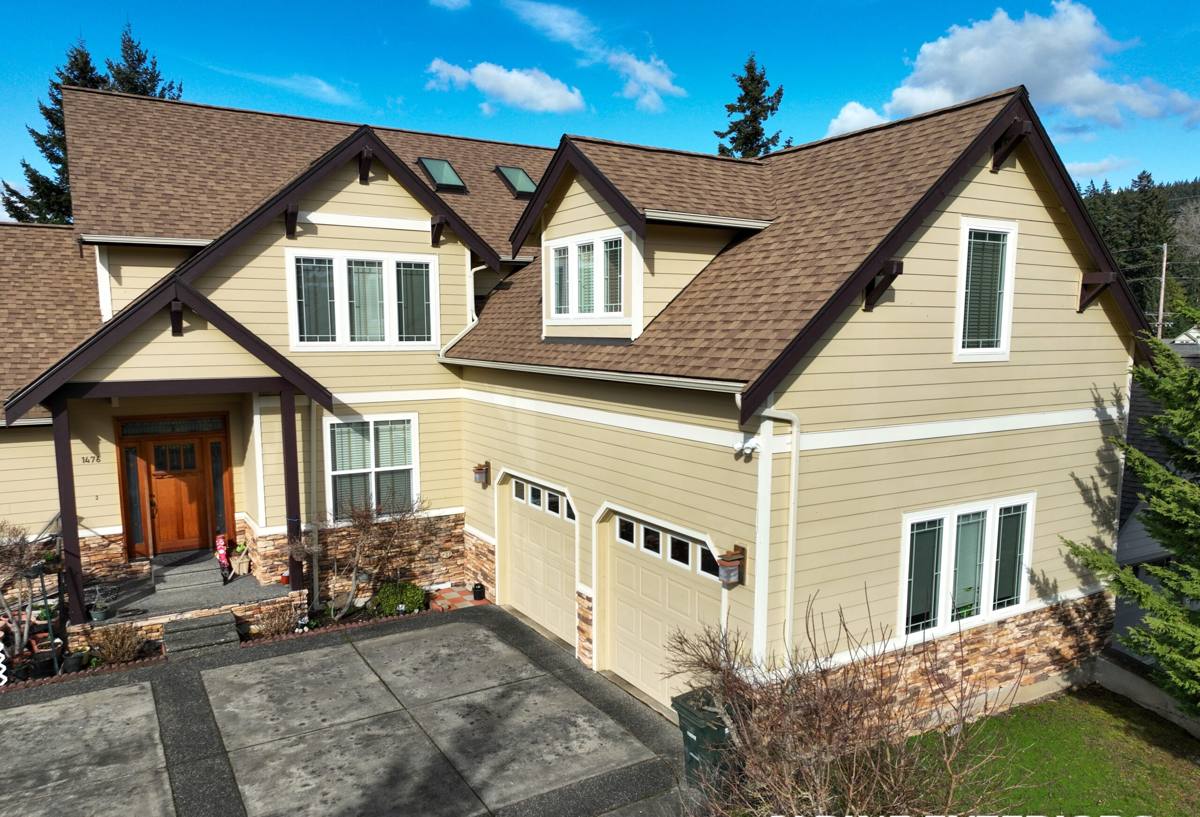
What a Correct Window Installation Actually Involves
Window installation looks simple from the outside — old window out, new window in — but the work that determines whether a window performs for twenty-plus years happens in the details most homeowners never see once the trim goes back on.
Removing the Old Window Without Damaging the Opening
The old sash and frame come out carefully so the rough opening, sheathing, and existing weather barrier stay intact. This is also the point where hidden problems show up — soft framing, old flashing that failed years ago, or moisture staining that tells you water has been getting in longer than anyone realized. A rushed tear-out misses this. A careful one catches it before a new window gets installed over a problem instead of a fix.
Flashing and Water Management
This is the step that matters most in a climate with driving rain. Proper flashing directs any water that gets past the window itself back out of the wall instead of down into the framing. That means a sloped sill pan at the bottom of the opening, side flashing that laps correctly with the weather-resistive barrier, and head flashing that sheds water over the top of the window rather than trapping it. Done in the wrong order, or with the wrong laps, flashing can actually funnel water into the wall instead of away from it — which is worse than having none at all.
Insulation and Air Sealing
The gap between the window frame and the rough opening needs to be filled with an insulating material that stays flexible and doesn't restrict the window's ability to expand and contract with temperature changes. Overfilling with rigid foam can bow the frame and cause the window to bind or fail to seal properly. Underfilling leaves a cold, drafty gap and a path for moist air to condense inside the wall.
Finish Work Inside and Out
Interior and exterior trim, caulking, and sealant are the last line of defense and the most visible part of the job. Sealant choice matters here too — some products don't hold up well against sustained UV and salt exposure and become brittle or lose adhesion faster than others, which is why we're selective about what we use on the exterior side.
Choosing a Frame and Glass Package for Coastal Whatcom County
There's no single "best" window material — the right choice depends on budget, maintenance appetite, and how exposed a particular wall of the house is to weather. Here's how the common options compare for this specific climate:
| Frame Material | Salt Air / Moisture Behavior | Maintenance | Typical Lifespan |
|---|---|---|---|
| Vinyl | Won't corrode or rot; performs well in coastal air | Low — occasional cleaning | 20-30 years |
| Fiberglass | Very stable, minimal expansion/contraction, strong moisture resistance | Low | 30-40+ years |
| Wood-clad | Good if cladding and flashing details are correct; exposed wood needs protection | Moderate to higher — finish and seals need periodic attention | 20-30 years with upkeep |
| Aluminum | Prone to corrosion in salt air unless properly coated; conducts cold | Moderate | Varies widely by coating quality |
On the glass side, a dual-pane unit with a low-E coating and argon gas fill is the standard for this region and handles Bellingham's mix of cool, wet winters and mild summers well. Triple-pane glass adds another layer of insulation and sound dampening, which is worth considering on homes closer to water or road noise, but it adds weight and cost, so it's not automatically the right call for every window in a house.
Signs a Bellingham Home's Windows Need Replacing
Not every window problem means a full replacement, but these are the signs worth taking seriously in a climate like this:
- Fogging or haze between the panes of a double-pane window — the seal has failed and the insulating gas is gone
- Persistent drafts even with the window fully closed and locked
- Soft, discolored, or visibly rotting wood at the sill or lower frame
- Windows that are difficult to open, close, or lock, or that have swollen shut
- Visible mold, mildew, or staining on the interior frame or nearby wall or trim
- Condensation forming on the interior glass regularly, especially in winter
- Moss or algae buildup collecting in the window tracks or exterior sill that doesn't clear even with cleaning
- Noticeably higher heating bills without another clear explanation
Our Window Installation Process
The process is straightforward, but each step exists for a reason specific to this climate:
- Assessment and measurement — we look at each opening individually, since older Bellingham homes often have openings that aren't perfectly square or standard-sized
- Product selection — matched to the wall's exposure, the home's style, and the homeowner's budget and maintenance preferences
- Careful tear-out — removing the old window and inspecting the framing and sheathing underneath before anything new goes in
- Flashing and installation — sill pan, side and head flashing integrated with the existing weather barrier, then the window set, leveled, and shimmed
- Insulation and air sealing — filling the gap correctly without restricting the frame
- Interior and exterior finish work — trim, caulking, and sealant appropriate for sustained moisture and salt exposure
- Final walkthrough — operating every window with the homeowner and confirming it locks, seals, and operates the way it should
Cost Factors for Window Installation in Bellingham
Every home is different, so exact pricing comes from a walkthrough, but these are the factors that typically move the number:
| Factor | How It Affects Cost |
|---|---|
| Frame material | Vinyl is generally the most affordable; fiberglass and wood-clad run higher |
| Window size and number of panes | Larger openings and multi-pane units cost more per window |
| Glass package | Triple-pane and specialty coatings add cost over standard dual-pane low-E |
| Existing damage | Rotted framing or sheathing discovered during tear-out adds repair time before the new window goes in |
| Access and window count | Second-story or hard-to-reach windows, and larger total job size, affect labor |
As a broad range, homeowners in this area typically see standard vinyl replacement windows fall somewhere in the low-to-mid four figures per window installed, with fiberglass, wood-clad, or larger custom units running higher. We give a firm number after seeing the actual openings, not a phone estimate.
Why Local Experience in Bellingham Matters
A crew that works this area regularly knows things a traveling or out-of-region contractor doesn't. We know which walls of a house tend to take the worst of the driving rain based on typical orientation and exposure in this part of Whatcom County. We know how long moss and damp conditions can sit against a sill before it becomes a real problem. And we schedule tear-outs and installations around actual weather windows, because an open wall cavity sitting exposed during a rain event is how small problems become expensive ones. Local experience also means we're familiar with the permitting and code requirements that apply to window replacement in the area, including egress requirements for bedroom windows and energy code minimums for new glazing.
Keeping New Windows Performing After Installation
A correctly installed window still benefits from some basic upkeep in this climate. Clear window tracks and sills of moss and debris before it builds up, especially heading into the wetter months. Rinse salt residue off exterior frames periodically if the home is closer to open water. Check exterior caulking annually for cracking or separation, since sealant is the first thing to wear from sustained UV and moisture exposure and is easy to touch up before it becomes a leak path. None of this is heavy maintenance — it's the kind of thing that takes a window from a good installation to one that still looks and performs the same way a decade in.
If you're dealing with drafty, foggy, or failing windows, or you're planning ahead for a full replacement, we're happy to walk your home, look at each opening, and give you a straightforward, no-pressure estimate. Use the form below to get started.