 Semiahmoo Exterior
 Why Siding Wears Differently in Sumas
Sumas sits in a corner of Whatcom County where marine air off the Salish Sea meets a low-lying inland valley, and that combination is hard on exterior siding. Homes here deal with long stretches of driving rain, heavy seasonal humidity, and a moss season that can stretch from fall through spring. Add in the salt-tinged air that moves through the broader Semiahmoo service area, and you get a climate that pushes moisture into every seam, joint, and fastener hole a siding system has.
Most siding failures we see in this area aren't dramatic. They're slow: a corner board that stays damp two extra days after every storm, a north wall that never quite dries out, moss creeping into a seam and holding water against the wall sheathing. Over years, that slow moisture cycle is what causes rot, delamination, and paint failure — not any single storm.
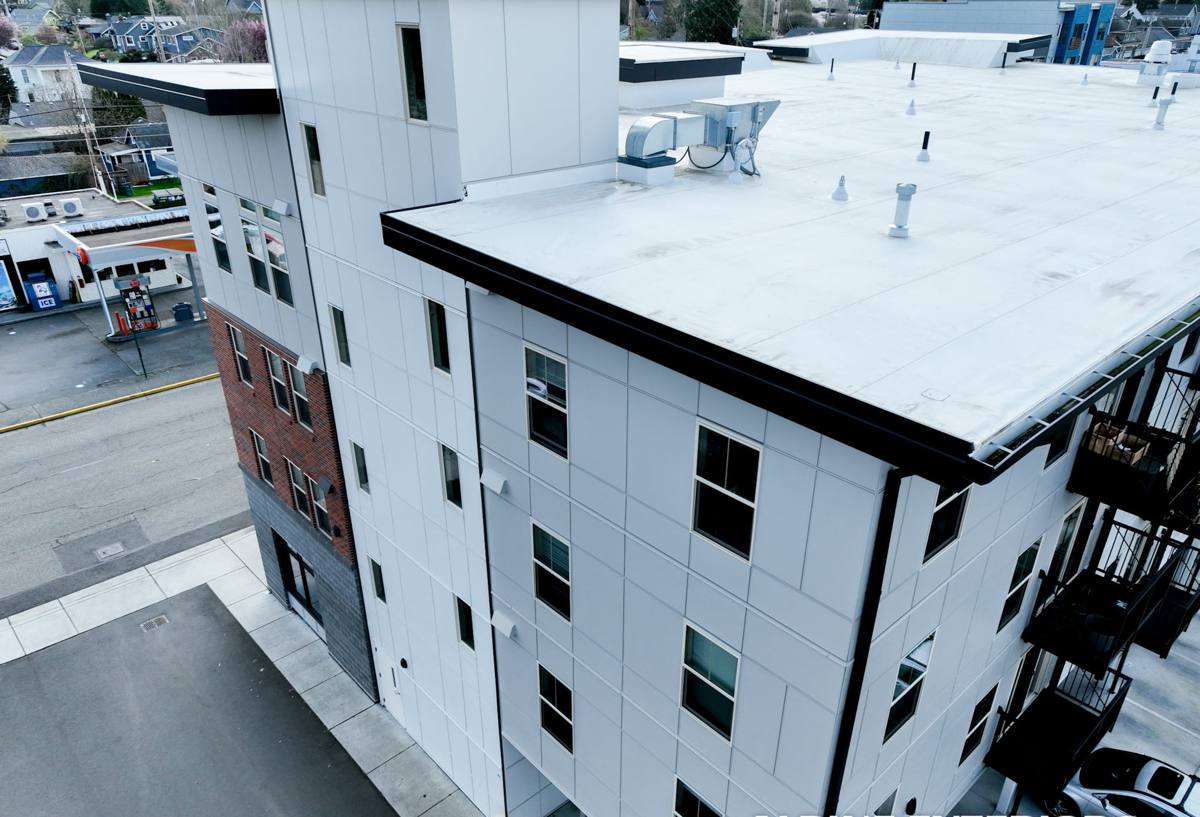
Signs a Sumas Home Needs Siding Replacement, Not Just Repair
Repair makes sense when damage is isolated and the underlying wall assembly is still dry and sound. Replacement becomes the right call once the damage is systemic — meaning the same problems show up in multiple places, or the siding material itself has reached the end of what it can reasonably protect the house from.
- Soft or spongy spots when you press on the siding, especially near the bottom courses or window trim
- Persistent moss or algae growth that comes back within weeks of cleaning
- Visible cracking, warping, or buckling across more than one wall
- Paint that won't hold — peeling, bubbling, or chalking within a year or two of a fresh coat
- Gaps opening up at seams, corners, or where siding meets trim, windows, or the foundation
- A musty smell or visible staining on interior walls that back up to exterior siding
- Siding that's original to a home built more than 20-25 years ago with a lower-end material
If you're seeing two or more of these, it's worth having a crew look at the wall assembly itself, not just the surface. Surface symptoms are usually the last thing to show up after moisture has already been working on the sheathing underneath.
Why Age Alone Doesn't Tell the Whole Story
We get calls where the siding "looks fine" from the street but is 25+ years old and made of a material that was never rated for this level of sustained moisture exposure. Age combined with material type matters more than age alone. A well-installed fiber cement wall can look good at 20 years; a lower-grade composite or untreated wood product in the same spot may already be compromised.
What a Correct Siding Replacement Actually Involves
Replacing siding is not just swapping old boards for new ones. Done right, it's an opportunity to fix the water management system behind the siding — the part homeowners never see but that determines how the house performs for the next 20-30 years.
Tear-Off and Inspection
Full removal of the old siding, then an inspection of the sheathing underneath for rot, soft spots, or existing moisture damage. This is the step that gets skipped by crews trying to move fast, and it's the one that matters most in a wet climate like this one.
Repair Before Cover-Up
Any damaged sheathing gets replaced before new siding goes on. Covering rot with new siding just hides the problem for a few more years — it doesn't solve it.
Water-Resistive Barrier
A properly lapped and sealed weather-resistive barrier goes over the sheathing, with attention to how it integrates with window and door flashing. This barrier is the actual first line of defense against wind-driven rain — the siding itself is the second line.
Flashing at Every Penetration
Windows, doors, vents, hose bibs, light fixtures — anywhere something penetrates the wall is a place water can get behind the siding if it's not flashed correctly. This is the detail work that separates a durable install from one that fails early.
Correct Fastening and Clearances
Fiber cement and other siding materials each have manufacturer-specified nailing patterns, clearances from grade, roof lines, and decks, and gapping requirements at butt joints. Skipping these specs is one of the most common causes of premature failure — and it's usually invisible until something goes wrong.
Material Options and Why We Standardized on One
Homeowners in Sumas typically compare a handful of siding materials. Here's an honest look at how they hold up under sustained regional moisture and moss exposure.
| Material | Moisture Behavior | Maintenance Burden | Typical Longevity Here |
|---|---|---|---|
| Vinyl | Doesn't rot, but seams and J-channels can trap moisture; warps in temperature swings | Low, but cracks/fades and can't be repainted easily | 15-25 years before fading/cracking becomes visible |
| LP SmartSide (engineered wood) | Wood-based core is vulnerable at cut edges and seams if caulking/paint isn't maintained | Moderate-high; edge sealing and repainting are non-negotiable | Highly dependent on maintenance discipline |
| Cedar / primed spruce | Natural wood absorbs moisture; needs a sound paint film at all times | High; regular repainting and moss/algae treatment | Shorter without diligent upkeep |
| James Hardie fiber cement | Non-combustible, dimensionally stable, engineered for wet climates | Low; factory finish resists fading and moss adhesion | Long service life when installed to spec |
We install James Hardie exclusively. Vinyl, LP SmartSide, cedar, and primed spruce all have legitimate uses and loyal customers elsewhere — but in a climate defined by driving rain, salt air, and a moss season that doesn't really end, we've made the call that fiber cement, installed correctly, gives Sumas homeowners the best long-term return and the fewest surprises.
Why James Hardie Fits This Climate Specifically
James Hardie engineers its HZ5 product line specifically for climates with high moisture exposure, which covers this part of Washington. The material itself is non-combustible fiber cement, meaning it doesn't absorb and hold water the way wood-based products can, and it doesn't provide the organic material that moss and algae feed on the way untreated or lightly primed wood products do.
The ColorPlus factory finish is baked on under controlled conditions before the boards ever reach the jobsite, which gives a more consistent, fade- and moisture-resistant finish than field-applied paint — the kind of finish that's doing real work during a wet Whatcom County winter, not just looking good on install day. It also carries a strong transferable warranty, which matters to homeowners who may sell within the product's service life.
What Correct Hardie Installation Requires
- Manufacturer-specified nail spacing and fastener type — not a generic nailing pattern
- Proper gapping at butt joints to allow for expansion
- Correct clearance from grade, roof surfaces, and decks to keep the bottom edge out of standing water and splash-back
- Sealed and caulked joints only where the manufacturer specifies — over-caulking can trap moisture instead of shedding it
- Careful integration with the water-resistive barrier and flashing, not just face-nailing over existing details
Hardie siding installed loosely to these specs can still underperform. The product is only as good as the crew putting it on the wall.
Our Process for a Sumas Siding Replacement
We start with an on-site walkthrough to look at the current siding, check for soft spots or hidden moisture, and talk through what we're seeing with the homeowner directly — no pressure, no scare tactics. From there we put together a scope that covers tear-off, any sheathing repair, the water-resistive barrier and flashing detail, and the Hardie product line and color that fits the home.
Because we work in Whatcom County regularly, we're not learning the local permitting process or figuring out how this climate behaves on the fly. That familiarity shows up in small ways that add up: knowing which details tend to fail first on homes exposed to this level of driving rain, scheduling around the wetter stretches of the year when possible, and not cutting corners on flashing because "it probably won't rain that hard."
Why a Crew That Already Works Sumas Matters
Siding replacement is a job where local experience shows up in the details you can't see once the wall is closed up. A crew that's worked other homes in this same stretch of Whatcom County has already seen how moss establishes itself on north-facing walls here, how wind-driven rain finds its way behind poorly flashed trim, and which install shortcuts cause callbacks two winters later instead of two weeks later.
That's different from hiring a crew that mainly works drier inland regions and treats this as a standard job. The building code minimums are the same everywhere, but the margin for error is smaller in a climate that stays wet this long, this often.
What to Expect After Replacement
A correctly installed Hardie siding job is genuinely low-maintenance, but "low-maintenance" doesn't mean "zero-maintenance." A periodic rinse to knock off surface dirt and moss spores, a yearly walk-around to check caulking at penetrations, and prompt attention if a gutter starts overflowing onto a wall will keep the system performing the way it's designed to. None of that compares to the repainting, edge-sealing, or plank replacement cycles that come with wood-based or vinyl systems in this climate.
If your Sumas home is showing signs of moisture damage, tired siding, or you're just planning ahead before a small problem becomes a big one, we're happy to take a look. A no-pressure estimate gives you a clear, honest picture of what your home actually needs — fill out the form below to get started.