 Semiahmoo Exterior
 Storm Damage Roof Repair for Sumas Homes
Sumas sits out at the far edge of Whatcom County, where the Nooksack River valley opens up against the Canadian border. When a storm comes through this corridor, it doesn't arrive gently. Wind funnels down from the Fraser Valley to the north, rain gets pushed sideways instead of falling straight down, and a roof that took a hit during the night doesn't always show it clearly from the ground the next morning. Storm damage repair here isn't just patching a hole — it's finding what a wind and rain event actually did to a roof system, including the parts you can't see from the yard, and fixing it in a way that holds up through the next storm rather than just the next dry week.
We work storm damage calls in Sumas regularly, and the approach we bring reflects what actually happens to roofs in this specific corner of the county: sustained wind-driven rain, a moss season that runs most of the year, and cold snaps that can follow a storm and turn standing water into a second problem.
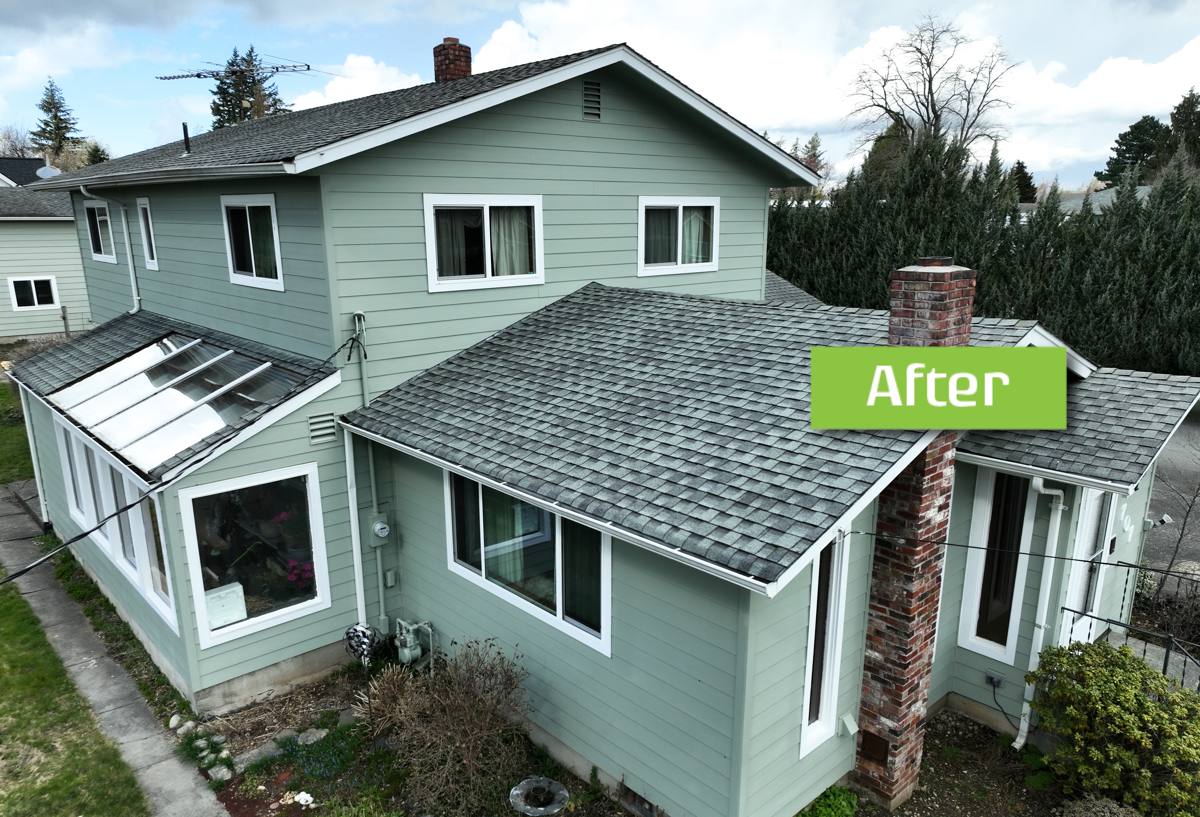
What Sumas Storms Do to a Roof
Wind-Driven Rain
Storms moving through the Nooksack valley rarely drop rain straight down. Wind pushes it sideways into laps, seams, and flashing details that were only ever designed to shed water falling from above. A roof that looks fine from a distance can have shingles lifted just enough at the tab to let wind-driven rain track underneath, especially on the windward slope, and that kind of intrusion often shows up as a ceiling stain days or weeks after the storm has passed, not during it.
Wind Load and Gusts
Because of its position near the mouth of the Fraser Valley wind corridor, Sumas sees stronger and more frequent wind events than towns closer to Bellingham Bay. Gusts strong enough to lift shingle edges, crack ridge caps, or drive debris into a roof surface aren't rare here — they're a normal part of the fall and winter storm pattern. That means storm damage repair in this area has to account for wind exposure that a milder inland site simply doesn't see as often.
A Long Moss Season Compounding Storm Damage
Valley humidity, tree cover, and mild temperatures add up to a moss and mildew season that runs across most of the year in this part of the county. Moss doesn't cause storm damage on its own, but it makes storm damage worse: growth that's already lifted a shingle edge or held moisture against a roof surface gives wind and rain an easier path in when a storm hits. A roof going into storm season with active moss growth is starting from a weaker position than a clean one.
Cold Snaps Right Behind a Storm
Sumas gets colder, harder frosts than towns nearer the water, and a storm is sometimes followed within days by a hard freeze. Water that got into a roof assembly during the storm and hasn't fully dried out can freeze, expand, and turn a minor intrusion into a larger crack or split in flashing, sheathing, or shingle material. That's part of why we don't treat storm damage repair as something that can wait for a convenient week — the freeze-thaw window can make a fixable problem worse fast.
Signs Your Sumas Roof Has Storm Damage
Some storm damage is obvious. A lot of it isn't, especially from ground level. These are the signs worth checking for after any significant wind or rain event:
- Shingles that are missing, cracked, or visibly lifted, particularly on the side of the roof that faced the wind
- Granules collecting in gutters or at downspout outlets in noticeably larger amounts than normal shedding
- Dented, bent, or torn flashing at chimneys, vents, valleys, or roof-to-wall transitions
- New or worsening ceiling stains, especially ones that appear a few days after a storm rather than during it
- Debris, branches, or impact marks on the roof surface after high wind
- Soft spots or slight sagging felt underfoot in the attic near roof edges or valleys
- Gutters pulled loose or sections of ridge cap missing or shifted
- A sudden increase in attic moisture, musty smell, or visible daylight through the roof deck
None of these alone always means a major repair, but any of them is a reason to have the roof looked at rather than wait and see what the next storm does to the same weak spot.
What a Correct Storm Damage Repair Involves
Stopping Further Water Intrusion First
If a roof has active or likely leaking after a storm, the first priority is temporary protection — tarping exposed areas or securing loose material — so the home isn't taking on more water while a full repair gets scheduled and materials are sourced. Skipping this step to wait for a "proper" fix usually just turns a roof repair into a roof-and-ceiling repair.
A Full Damage Assessment, Not a Spot Check
Wind damage rarely stays confined to the one obvious spot a homeowner noticed from the ground. We check the whole roof surface, not just the area that looks damaged, because a gust strong enough to lift one section of shingles was usually strong enough to stress fasteners and seams elsewhere too. That includes checking the attic side for water tracking, which often reveals a different entry point than where the leak shows up on the ceiling below.
Flashing and Underlayment, Not Just Shingles
Replacing a few damaged shingles without checking the underlayment and flashing beneath them is a common shortcut, and it's why some storm repairs fail again in the next big rain. If wind-driven water got past the shingle layer, the underlayment and flashing underneath may need attention too, even if the shingles themselves can be salvaged or matched.
Matching Materials Honestly
Exact color and lot matches on shingles aren't always possible, especially on an older roof where the original product has weathered or is no longer made. We're upfront about that before the work starts rather than promising an invisible repair we can't deliver, and we'll talk through options — blending repairs into a less visible slope, or replacing a full section rather than patching, if that gets a better result.
Repair or Full Replacement?
Storm damage doesn't always mean a full new roof, but sometimes it's the more honest answer than a patch. These are the factors that typically drive that call:
| Factor | Leans Toward Repair | Leans Toward Replacement |
|---|---|---|
| Extent of damage | Damage limited to one section or slope | Damage spread across multiple slopes or large areas |
| Roof age | Roof is well within its rated service life | Roof was already approaching the end of its expected life |
| Deck condition | Sheathing underneath is sound once exposed | Soft, rotted, or repeatedly damaged decking found during inspection |
| Material availability | Matching material is available or the mismatch is on a low-visibility slope | Original material is discontinued and mismatch would be visible from the street |
| Storm history | First significant damage event on this roof | Repeated storm damage claims on the same aging roof |
We'll walk the roof and give a straight answer on which side of that line a given repair falls on, including if a repair is the right call even though a replacement would be more profitable for us. A roof that just needs a section repaired doesn't need to be sold a whole new roof.
Our Storm Damage Repair Process
- Initial call and temporary protection. If water is actively getting in, we prioritize tarping or securing the roof before anything else.
- Full roof inspection. We check the entire roof surface, flashing points, and attic for damage and water tracking, not just the spot that prompted the call.
- Photo documentation. We document damage clearly, which supports both our repair plan and any insurance claim the homeowner chooses to file.
- Written scope and estimate. A clear explanation of what's damaged, what needs to happen, and what it costs, before any work starts.
- Repair or replacement work. Shingles, flashing, underlayment, or decking are repaired or replaced to match the actual scope of damage found, not just the visible symptom.
- Final inspection and walk-through. We check the completed repair and go over what was done and why with the homeowner.
Documenting Damage for Insurance
Many storm repairs in Sumas go through a homeowner's insurance policy, and how the damage gets documented matters for that process. We take clear photos of the damage before any repair work covers it up, note the likely cause and approximate timing where we can, and provide a written scope that an adjuster can review against. We're not a public adjuster and don't negotiate the claim on a homeowner's behalf, but a clear, well-documented repair estimate makes that conversation with the insurance company go a lot smoother than a vague verbal description after the fact.
Why Hire a Crew That Already Works Sumas
A roofer who mainly works closer to Bellingham or the coast isn't wrong about roofing in general, but they're working from a different set of defaults. Wind load, valley humidity, and the moss-and-freeze combination that shows up out here change what "correct" flashing, fastening, and underlayment actually look like on a given job. A crew that's already repaired storm damage in Sumas has seen which details fail first in this specific corridor — not just which ones fail in general — and that shapes real decisions on repair day: how far past the visible damage to check, which flashing points get extra attention, and whether a quick patch will actually hold through the next wind event or just buy a season.
There's also a timing reality with storm work. The window between a damaging storm and the next one isn't always generous here, and a repair that gets pushed back on scheduling has a real chance of taking on more damage before it's fixed. Local availability and familiarity with the area's storm patterns both matter more for this kind of work than for a routine, planned re-roof.
Reducing Storm Risk Before the Next One
A correctly repaired roof still benefits from some basic attention heading into storm season:
- Have moss addressed before it lifts shingle edges, not after a storm finds the weak spot it created
- Keep gutters and downspouts clear so wind-driven rain has somewhere to go instead of backing up under roof edges
- Trim back branches that could come down on the roof during high wind
- Have flashing points checked periodically, especially at chimneys and valleys, since that's where most leaks start
- Get any small leak or missing shingle looked at right away rather than waiting for it to become a bigger repair after the next storm
If a recent storm left your Sumas roof with visible damage, or you just want an honest opinion on whether what you're seeing needs attention, we're glad to take a look. Reach out using the form below for a free, no-pressure estimate.