 Semiahmoo Exterior
 Storm Damage Roof Repair Built for California Creek Conditions
California Creek homes sit close enough to the water that the roof over your head is doing a different job than a roof forty miles inland. Between salt-laden air off Semiahmoo Bay, wind-driven rain that comes in sideways during winter storms, and a moss season that barely lets up, roofs here take on damage in ways that are easy to miss until a leak shows up in the ceiling. Storm damage repair in this area isn't just patching a hole — it's understanding how wind, water, and organic growth interact on a Whatcom County roof and fixing the problem so it doesn't come back with the next front that rolls through.
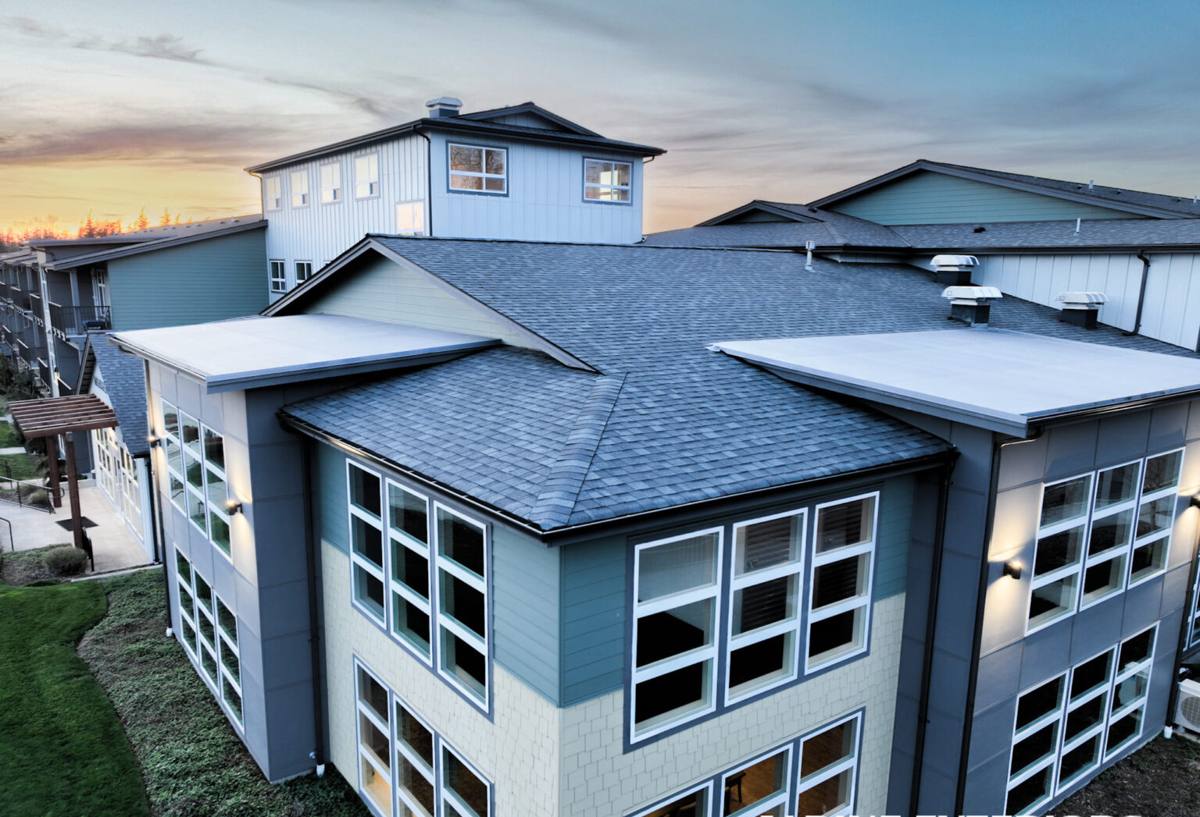
Why California Creek Roofs Take a Different Kind of Beating
Three things stack on top of each other here, and each one makes the others worse.
Salt Air
Proximity to the water means a fine mist of salt settles on roofing metal, fasteners, and flashing year-round. Salt accelerates corrosion on exposed nail heads, drip edge, and flashing seams. A fastener that would last decades inland can start showing rust streaks and losing grip years sooner this close to Semiahmoo Bay.
Driving Rain
Storms coming off the water don't fall straight down — they get pushed sideways by wind, which means water finds its way under shingle edges, around chimney flashing, and into any gap that a calmer rain would never reach. This is why storm damage here often shows up as an interior leak in a spot that looks fine from the ground.
A Long Moss Season
Shaded roof sections and the region's extended wet stretch give moss and algae a long runway to establish themselves. Moss holds moisture against the roof surface, lifts shingle edges as it grows, and turns a small storm-caused gap into a spot where water sits instead of shedding off.
Individually, any one of these is manageable. Together, they mean storm damage on a California Creek roof rarely stays "minor" for long if it's ignored.
What Storm Damage Actually Looks Like Up Here
Homeowners often expect storm damage to be obvious — a missing shingle, a hole. In practice, most of what we find is quieter:
- Wind-lifted or creased shingle tabs that still look mostly intact from the ground but no longer seal properly
- Flashing around chimneys, skylights, and roof-to-wall transitions pulled loose or bent by wind gusts
- Granule loss on shingles from wind-blown debris, thinning the layer that protects against UV and moisture
- Gutter and downspout damage that redirects water back under the roof edge instead of away from the house
- Moss colonies that expanded after a storm knocked debris into shaded valleys, giving it more to grow on
- Soft or discolored decking felt through the attic where wind-driven rain has been getting past the surface layer for a while
Some of this is visible from the ground with binoculars. Most of it isn't — which is why a proper storm damage assessment means getting on the roof, not just looking up at it.
What a Correct Storm Damage Repair Involves
A repair that actually holds up through the next storm season covers more ground than just replacing what's visibly broken.
Full Assessment, Not Just the Reported Spot
If you noticed a leak in one room, we check the whole roof plane and adjacent slopes. Wind damage rarely stays confined to one shingle, and water that enters at one point can travel along the decking before it shows up somewhere else inside the house.
Decking Check
Once the damaged roofing material is pulled back, we look at the sheathing underneath. Rot or soft spots from prolonged moisture exposure get replaced — patching over compromised decking just hides the problem for another season.
Flashing and Underlayment
Given how much of our storm damage traces back to driving rain finding a way past flashing, we treat flashing repair as seriously as the shingle repair itself. Underlayment gets inspected and replaced where it's been compromised, not just tucked back into place.
Matching Materials
We match shingle color, profile, and where possible manufacturer to keep the repair from standing out as a patch job, and we use corrosion-resistant fasteners and flashing metal suited to this area's salt exposure rather than standard-grade hardware.
Our Process, Start to Finish
- Contact and initial description. Tell us what you're seeing — a leak, missing shingles, debris on the roof — and roughly when the storm hit.
- On-site inspection. We get on the roof and in the attic if needed, documenting damage with photos.
- Temporary protection, if needed. If there's an active leak or exposed decking, we tarp or dry-in the area first so the damage doesn't worsen while repair materials are sourced.
- Written scope and estimate. You get a clear explanation of what's damaged, what needs to be repaired versus replaced, and what it will cost — no pressure to upgrade beyond what the storm actually damaged.
- Repair. We complete the work, including flashing and decking as needed, not just the visible shingle layer.
- Cleanup and final check. Debris is cleared, gutters are checked for blockage from the storm, and we walk the repair with you before calling it done.
Repair vs. Replace: How We Help You Decide
Not every storm-damaged roof needs a full replacement, and not every repair is worth doing if the roof is already near the end of its life. We walk through this honestly rather than defaulting to whichever option is more profitable for us.
| Factor | Leans Toward Repair | Leans Toward Replacement |
|---|---|---|
| Roof age | Under roughly 15 years old | Already near or past expected lifespan |
| Extent of damage | Isolated to one slope or section | Spread across multiple slopes |
| Decking condition | Sound, dry sheathing under damaged area | Widespread soft or rotted decking found |
| Moss/algae history | Recently treated or minimal buildup | Long-term moss damage across large areas |
| Insurance scope | Claim covers a defined repair area | Adjuster's scope already points to full replacement |
When the honest answer is "repair," we repair. When the damage or the roof's overall condition makes replacement the better long-term value, we'll tell you that directly and explain why.
Insurance Claims: What We Do and Don't Do
Most storm damage repairs at this stage of a roof's life get run through homeowners insurance. We document damage thoroughly with photos and a written scope so you have what you need for your claim, and we're glad to walk an adjuster through what we found on the roof. What we won't do is inflate a scope of work to pad a claim or list damage that isn't actually storm-related — that's not a service to you, and it's the kind of thing that causes problems with your policy down the line. Our job is an accurate assessment; the claim decision is between you and your insurer.
Materials and Workmanship Standards for This Area
Given the salt exposure and moisture load California Creek roofs deal with, we hold to a few standards on storm repairs specifically:
- Corrosion-resistant fasteners and flashing metal rather than standard-grade hardware, given the salt air off the bay
- Self-adhering membrane at flashing details and vulnerable transitions, since wind-driven rain finds gaps that a standard felt underlayment can miss
- Attention to moss-prone valleys and shaded slopes during repair, since a section that grew moss once will grow it again without some consideration during the fix
- Matching shingle products where possible so a repair doesn't compromise the roof's overall appearance or leave a mismatched patch
These aren't upsells — they're the difference between a repair that lasts through a normal Whatcom County storm season and one that needs revisiting in a year or two.
After a Storm: A Quick Homeowner Checklist
- Check the attic (if accessible) for water stains, damp insulation, or daylight coming through the decking
- Look at ceilings and upper-floor walls for new discoloration or soft spots after heavy wind and rain
- Check gutters and downspouts for debris, dents, or sections pulled away from the fascia
- Note the date and rough conditions of the storm for your records and any insurance claim
- Avoid getting on the roof yourself after a storm — wet, wind-loosened shingles are not a safe place to be walking
- Call for an inspection promptly if you suspect damage; a small gap left through another rain event gets worse fast
Why Local Experience in California Creek Matters
A crew that already works in and around Semiahmoo knows what a normal amount of moss growth looks like here versus what signals a bigger problem, knows which roof orientations catch the worst of the wind off the water, and doesn't need to relearn the local climate on your dime. That familiarity shows up in faster, more accurate assessments and repairs that account for conditions specific to this stretch of Whatcom County rather than a generic storm-repair checklist built for a drier climate.
If a recent storm has you wondering whether your roof took damage, we're happy to take a look and give you a straightforward, no-pressure estimate — just fill out the form below.