 Semiahmoo Exterior
 Why Wiser Lake Siding Wears Differently Than Siding Inland
Homes around Wiser Lake sit in a part of Whatcom County that takes a heavier environmental beating than most people realize until they're the ones re-caulking trim every spring. You've got salt-laden air drifting in off the Semiahmoo area, driving rain that comes in sideways during fall and winter storms, and a moss season that, depending on how much tree cover and shade a lot has, can run nine or ten months out of the year. None of those things alone is unusual for Western Washington. Together, on a lake-adjacent lot with mature trees and persistent shade, they add up to siding conditions that are genuinely tougher than a typical suburban lot thirty minutes south.
Salt air accelerates corrosion on fasteners, flashing, and any exposed metal trim. Driving rain finds every gap in a house's water management system — not just the siding itself, but the flashing behind it, the caulking around penetrations, and the drainage plane underneath. And moss doesn't just look bad; it holds moisture against the siding surface for weeks at a time, which is exactly the condition that rots wood-based products and delaminates poorly-sealed composites. A siding system that's marginal in a dry, sunny climate can fail years early out here.
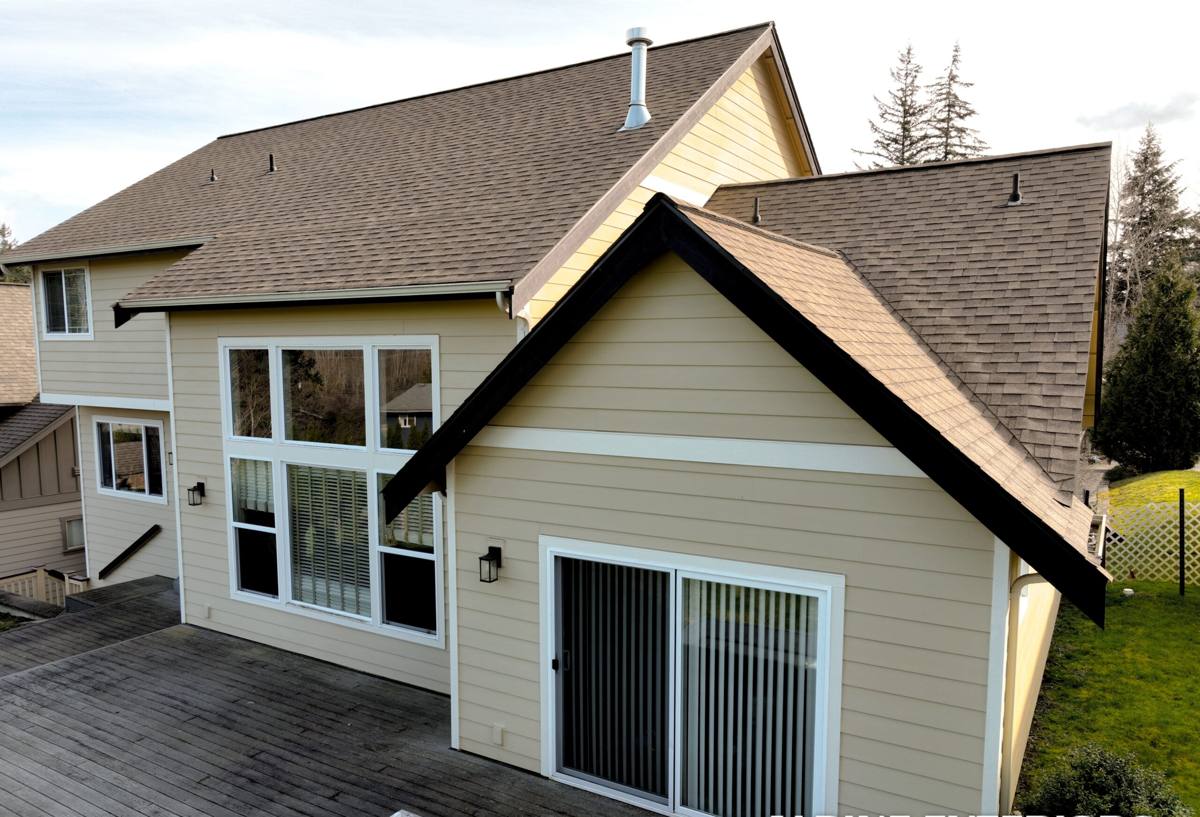
Signs Wiser Lake Homes Show Before Siding Fails Completely
Siding rarely fails all at once. It gives you warning signs first, and knowing what to look for can save you from a much bigger repair bill later.
- Soft or spongy spots when you press on siding near the bottom courses, around windows, or at corner trim
- Persistent moss or algae growth that comes back within weeks of cleaning, especially on north-facing or shaded walls
- Visible cracking, bubbling, or peeling paint that keeps recurring in the same spots year after year
- Gaps opening up at seams, corner boards, or where siding meets window and door trim
- Rust streaks below nail heads or metal flashing, a sign salt air is attacking fasteners
- A musty smell in an interior wall, which usually means moisture has already worked its way past the siding
If you're seeing two or more of these on a Wiser Lake home, it's worth having someone look at the whole wall assembly, not just patch the visible spot. Surface symptoms out here are often a sign of what's happening underneath.
Why We Only Install James Hardie Fiber Cement
We don't install vinyl, LP SmartSide, cedar, primed spruce, or composite panel products like Cemplank or Allura. That's not a marketing line — it's a standard we hold because of what we've seen these products do in exactly the kind of climate Wiser Lake sits in.
Vinyl expands and contracts with temperature swings and can warp or crack under impact in cold snaps; it also has no real fire resistance and its color is baked into a thin surface layer that fades unevenly over time. Wood-based products, including engineered wood siding and cedar, are organic material — no matter how well they're primed or treated, sustained moisture exposure eventually leads to swelling, delamination at cut edges, or rot, and a shaded, moss-prone lot near a lake is about the worst-case environment for that. Other fiber cement brands may look similar on a spec sheet, but manufacturing consistency, factory finish quality, and warranty terms vary a lot between brands, and we've standardized on the one we trust to perform over decades, not just years.
James Hardie fiber cement is non-combustible, doesn't support moss growth the way wood fiber can, and holds its factory-applied ColorPlus finish far longer than field-painted alternatives. It's engineered in regional product lines (HZ5 for harsher, wetter climates like ours) specifically to resist moisture intrusion and freeze-thaw stress. That combination — durability, low maintenance, and a strong transferable warranty — is why it's the only product we put on a house.
What Hardie Gets Right for This Climate Specifically
Fiber cement is dense and inorganic, so it doesn't feed moss or algae the way wood fiber does, and it doesn't absorb water the way engineered wood substrates can at cut edges and seams. It holds paint and factory finish far longer than wood because the material itself is dimensionally stable — it doesn't swell and shrink with every rain-to-sun cycle the way untreated or under-sealed wood products do. That stability matters enormously on a lake lot where humidity swings are constant.
What a Correct Siding Replacement Actually Involves
Siding replacement is not just stripping old material and nailing up new boards. Done right, it's a full water-management upgrade, and skipping steps is exactly how a brand-new siding job ends up with the same rot problem five years later.
Tear-Off and Inspection
We remove the old siding down to the sheathing and inspect for hidden damage. This is often the first time a homeowner sees the actual condition behind their walls — soft sheathing, rusted fasteners, or old flashing that was never sealed properly. Any damaged sheathing gets replaced before anything new goes up; installing new siding over compromised sheathing just hides the problem again.
Weather-Resistive Barrier and Flashing
A correctly installed drainage plane and weather-resistive barrier is what actually keeps water out — the siding itself is the first line of defense, but the barrier behind it is what protects the structure if water gets past that first line. Flashing gets installed and lapped correctly around every window, door, and penetration, with special attention to trim details that trap water if they're done wrong.
Fastening and Fit
Hardie siding has specific fastening patterns, nail spacing, and clearance requirements from grade and roof lines that are engineered into the manufacturer's installation instructions. Fastening it like a generic lap siding product voids the warranty and creates the exact gaps that let driving rain in. Corrosion-resistant fasteners matter more here than in a drier inland climate, given the salt air.
Finish Work
Caulking, trim, and touch-up paint at cut edges (factory ColorPlus finish is engineered to resist fading, but any field-cut edge needs to be properly sealed) round out the job. This is the detail work that separates a siding job that looks good on install day from one that still looks good in year fifteen.
Our Process for a Wiser Lake Project
- On-site assessment — we walk the property, check current siding condition, moisture exposure by wall orientation, and existing trim and flashing details.
- Scope and estimate — a clear, written breakdown of what needs replacing, what Hardie product line and profile fits the home, and a realistic cost range.
- Material order and staging — we coordinate delivery and staging in a way that keeps the property accessible and minimizes disruption, particularly important on lake-adjacent lots with tighter access or landscaping to protect.
- Tear-off and sheathing inspection — old siding comes off, sheathing gets checked, and any needed repairs happen before new material goes up.
- Weather barrier, flashing, and install — installed to manufacturer spec, with fastening and clearances done correctly the first time.
- Final walkthrough — we go over the finished work with you directly so you know exactly what was done and why.
Cost Factors for Siding Replacement
Every home is different, but the same handful of factors drive cost up or down on most siding replacement projects in this area.
| Factor | Why It Matters Here |
|---|---|
| Extent of hidden sheathing damage | Moss season and driving rain mean more homes need sheathing repair than owners expect before tear-off |
| Home size and wall complexity | More corners, dormers, and trim details mean more labor and material waste |
| Siding profile and color | Different Hardie profiles (lap, shingle, panel) and ColorPlus color options carry different material costs |
| Access and lot conditions | Lake-adjacent lots, tree cover, and tighter driveways can affect staging and disposal logistics |
| Trim and flashing scope | Full trim and flashing replacement costs more upfront but prevents the leaks that cause callbacks |
What to Ask Before Hiring a Siding Contractor
Not every contractor working in Whatcom County has real experience with the specific conditions around a lake and coastal air. A few questions separate a crew that knows this environment from one that's guessing.
- Have you worked on homes in this specific area before, and can you speak to what you saw when you opened up the walls?
- What fastener and flashing details do you use to account for salt air and driving rain?
- Is your manufacturer warranty backed by proper certified installation, or does incorrect installation void it?
- Will you show me the sheathing condition before closing the walls back up?
- What's your plan if you find rot or moisture damage once tear-off starts?
Why a Crew That Already Works Wiser Lake Matters
Climate knowledge shows up in the small decisions on a siding job — which flashing detail to use around a window on a shaded, moss-prone wall, how much fastener corrosion resistance actually makes a difference near salt air, where water tends to collect on lake-adjacent lots after a hard rain. A crew that's done this work in this specific area isn't learning those lessons on your house. That familiarity, paired with a single product standard we trust and install to spec every time, is what keeps a siding job performing for decades instead of needing attention again in year six or seven.
If your Wiser Lake home is showing early signs of siding wear, or you're planning ahead before a small problem becomes an expensive one, we're glad to take a look. Reach out for a free, no-pressure estimate using the form below — we'll walk the property, give you a straight assessment, and let you decide from there.