 Semiahmoo Exterior
 Why Siding Wears Faster in Semiahmoo Resort
Homes in Semiahmoo Resort sit about as close to the elements as a Whatcom County property can get. The combination of salt-laden marine air, wind-driven rain coming straight off the water, and a long stretch of the year spent damp and shaded is a tougher environment for exterior cladding than most inland neighborhoods ever see. Siding that would hold up fine twenty miles inland can start showing real problems here in half the time if it wasn't built or installed for this exposure.
That doesn't mean every home needs new siding on a fixed schedule — but it does mean siding replacement decisions in Semiahmoo Resort should be made with the local climate in mind, not with a generic national playbook. This page walks through what's actually happening to siding out here, what a correct replacement job looks like, and why we standardized on one product for coastal Whatcom County work.
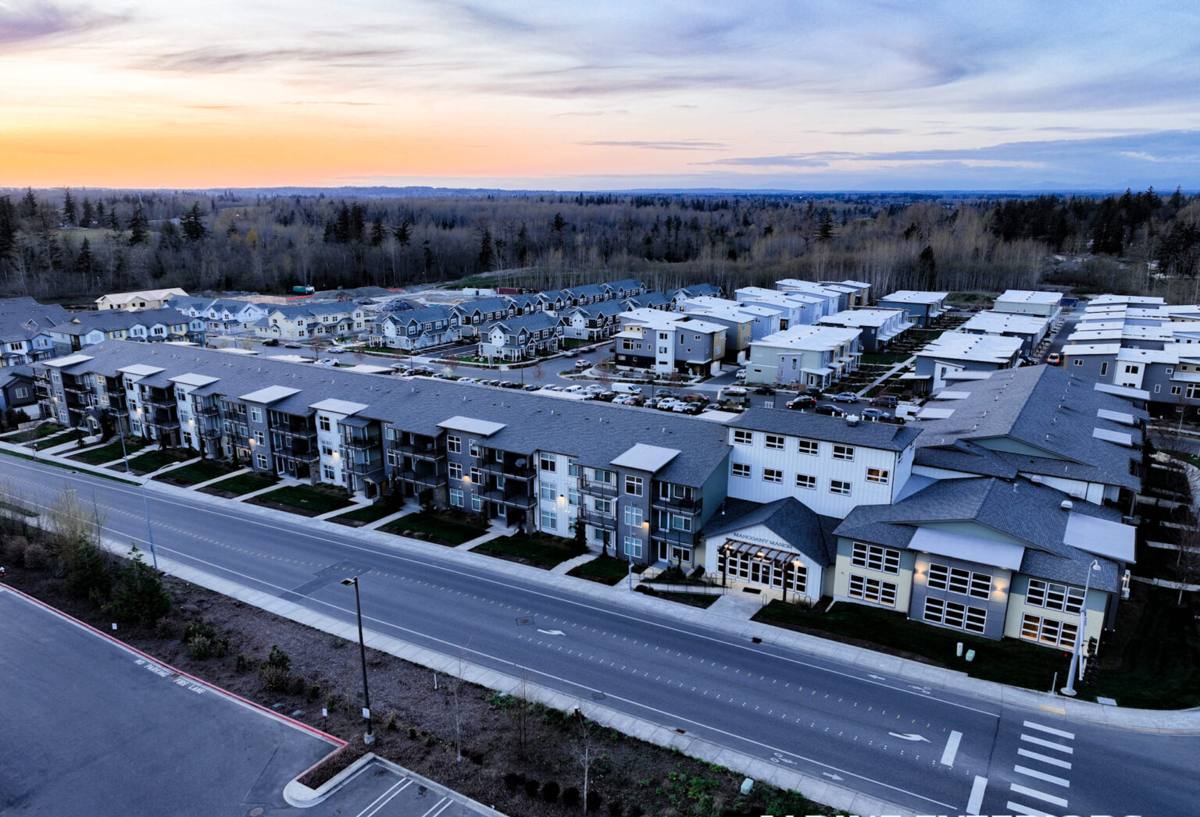
What Salt Air, Driving Rain, and Moss Actually Do
Salt Air and Surface Breakdown
Airborne salt is corrosive to metal fasteners, trim flashings, and painted finishes. On siding materials with a factory finish that isn't formulated for coastal exposure, salt air accelerates fading, chalking, and finish breakdown — which then exposes the substrate underneath to moisture it was never meant to face directly. On lower-quality fasteners or flashing, salt exposure speeds up corrosion and staining, which shows up as rust streaks running down the face of the siding.
Driving Rain and Water Intrusion
Semiahmoo's exposure to wind off the water means rain doesn't just fall — it's driven sideways into wall assemblies, seams, and butt joints. Siding systems depend on lapped joints, flashing, and a water-resistive barrier working together to shed that water back out. When any one piece of that system is undersized, poorly detailed, or installed out of sequence, wind-driven rain finds the gap. That's a different (and more demanding) load than what siding manufacturers test for in calmer, drier climates.
Moss, Algae, and Prolonged Dampness
Whatcom County's long wet season, combined with the shade many Semiahmoo Resort lots get from mature trees and marine layer cloud cover, keeps siding damp for extended stretches. That's exactly the condition moss and algae need to take hold. On wood-based products, sustained dampness under a moss or algae layer also softens and eventually rots the substrate. On a properly finished fiber cement product, surface growth is a cosmetic issue you can wash off — not a structural one.
Signs a Semiahmoo Resort Home May Need Siding Replacement
Some of these show up clearly from the ground; others take a closer inspection to catch before they become expensive.
- Soft, spongy, or visibly swollen spots when you press on the siding
- Persistent moss or algae staining that returns quickly after cleaning
- Paint that's peeling, bubbling, or chalking well ahead of its expected repaint interval
- Visible gaps, warping, or cupping at panel joints and butt seams
- Rust streaking below fasteners or trim pieces
- Rot or discoloration around window and door trim, especially on wind-exposed walls
- Musty smells or damp drywall on interior walls that back up to exterior siding
- Siding that's original to a home built more than 20-25 years ago, especially wood-based products
How Common Siding Materials Hold Up to This Exposure
Not every siding material is engineered for salt air and sustained moisture the same way. Here's an honest look at how the main categories behave in a climate like Semiahmoo Resort's.
| Material | Salt Air Resistance | Moisture/Rot Resistance | Moss & Algae Behavior | Long-Term Maintenance |
|---|---|---|---|---|
| Vinyl | Doesn't corrode, but can become brittle and fade unevenly in coastal UV/salt exposure | Sheds water on the surface but seams and J-channels can trap moisture behind the panel | Growth sits on the surface; cleanable, but joints can hold moisture longer | Low, but panels can crack or blow off in high wind and are hard to color-match when replaced |
| Cedar / Wood | Finish breaks down faster in salt air, exposing raw wood | Absorbs moisture; prone to rot without diligent, frequent refinishing | Moss and algae actively feed on damp wood fiber | High — regular refinishing, caulking, and repair are ongoing costs |
| Engineered Wood (LP-type) | Moderate; factory treatment helps but edge-sealing is critical | Vulnerable at cut edges and fastener points if not sealed correctly | Moss/algae growth can accelerate substrate breakdown if not addressed | Moderate to high — installation quality and maintenance matter a great deal |
| James Hardie Fiber Cement | Non-combustible, engineered cement composition resists salt-driven finish breakdown | Doesn't absorb and swell like wood-based products; dimensionally stable when wet | Growth stays on the surface; cleans off without damaging the substrate | Low — factory ColorPlus finish is designed to hold up for years without repainting |
What a Correct Siding Replacement Actually Involves
Tear-Off and Sheathing Inspection
Replacement starts with removing the old siding down to the sheathing — not installing over it. This is the point where hidden rot, soft spots, or prior water damage around windows and penetrations gets found and repaired. Skipping this step and re-siding over existing damage is one of the most common shortcuts that leads to problems resurfacing within a few years.
Water-Resistive Barrier and Flashing
A correctly lapped water-resistive barrier, paired with properly integrated flashing at windows, doors, and every penetration, is what actually stops wind-driven rain from reaching the sheathing. This detailing matters more in a driving-rain environment like Semiahmoo Resort than almost anywhere else in the county — it's the difference between siding that sheds water and siding that just looks like it does.
Fastening and Factory-Finished Cladding
Fastener type, spacing, and placement are specified by the manufacturer for a reason — correct fastening keeps panels secure in wind and prevents the small gaps where moisture and salt intrusion start. A factory-applied finish, rather than field-applied paint, gives more even, longer-lasting protection against UV and salt exposure.
Why We Install Only James Hardie Fiber Cement
We don't install vinyl, LP SmartSide, Cemplank, Allura, primed spruce, or cedar. That's a deliberate standard, not a limitation of what we're capable of installing. Vinyl and wood-based products can perform reasonably well in the right conditions, but in a coastal, wet, moss-prone climate like Semiahmoo Resort's, they ask homeowners to accept trade-offs we're not willing to install and stand behind: more frequent maintenance, more sensitivity to installation quality, and less predictable long-term performance in salt air.
James Hardie fiber cement is non-combustible, dimensionally stable in wet conditions, and available in HZ5 formulations engineered specifically for climates like ours in the Pacific Northwest. The factory ColorPlus finish process is built to resist fading and wear better than field-applied paint, and the product carries a strong transferable warranty. We install it because, installed to spec, it's the product we've found holds up best against exactly what Semiahmoo Resort throws at a home's exterior.
Cost Factors for a Semiahmoo Resort Siding Replacement
Every home is different, but the same variables tend to drive cost up or down on projects in this area.
| Factor | Why It Matters Here |
|---|---|
| Home size and number of stories | More wall area and taller walls mean more material and labor, plus more staging for wind-exposed upper stories |
| Condition of existing sheathing | Rot or water damage found during tear-off requires repair before new siding goes on |
| Trim, window, and detail complexity | More corners, penetrations, and trim details mean more flashing and finish work |
| Existing siding removal difficulty | Some materials and layers are more labor-intensive to strip off than others |
| Wind and rain exposure of the specific lot | More exposed elevations may warrant additional flashing detail and fastening attention |
| Siding profile and color selection | Certain Hardie profiles and ColorPlus color options carry different material costs |
We provide a written, itemized estimate before any work starts, so you know exactly what's driving the number for your specific home.
Our Process for Semiahmoo Resort Projects
- On-site inspection of current siding, trim, and any visible moisture or rot issues
- Written estimate covering material, labor, and any anticipated sheathing repair allowance
- Full tear-off to sheathing, with photos of any hidden damage found before repair
- Sheathing repair and correct installation of water-resistive barrier and flashing at every penetration
- James Hardie fiber cement installation to manufacturer fastening and clearance specifications
- Final walkthrough with the homeowner before the job is considered complete
Why Local Experience in This Area Matters
A crew that regularly works in Semiahmoo Resort already understands how wind orientation, rain exposure, and shade patterns vary lot to lot in this stretch of Whatcom County — and details flashing and fastening accordingly, instead of applying a one-size-fits-all approach. That local familiarity, combined with sticking to a single product system we know well, is what lets us install consistently rather than adapting on the fly to whatever material a homeowner happened to pick.
If your Semiahmoo Resort home is showing signs of wear, or you're just planning ahead, we're happy to take a look and give you a straightforward, no-pressure assessment. Use the form below to request a free estimate — there's no obligation, and no sales pressure attached to it.