 Semiahmoo Exterior
 Why Semiahmoo Resort Roofs Wear Differently
Homes around Semiahmoo Resort sit on a spit of land surrounded on three sides by water, right at the edge of Semiahmoo Bay and Drayton Harbor. That location is what makes the neighborhood beautiful, and it's also what makes roofing here harder than roofing a few miles inland. Salt-laden air moves off the water constantly, driving rain comes in sideways during winter storms, and the combination of shade, moisture, and mild temperatures gives moss a long season to establish itself on north-facing slopes and shaded valleys.
None of that means a roof here is destined to fail early. It means the roof has to be built and maintained with those conditions in mind from day one. A roofing system that would hold up fine in a dry inland Whatcom County subdivision can underperform on the spit if the fastener spec, underlayment, and ventilation weren't chosen with salt exposure and near-constant moisture in mind.
The Three Forces at Work
- Salt air corrosion — accelerates rust on exposed fasteners, flashing, and metal roofing components that aren't rated for coastal exposure.
- Driving, wind-blown rain — pushes water sideways and upward under shingle tabs and flashing edges that would stay dry in a straight-down rain.
- Extended moss season — the Pacific Northwest's mild, wet fall-through-spring window lets moss and algae colonize shaded roof areas for months longer than in drier climates, and moss holds moisture against the roof deck.
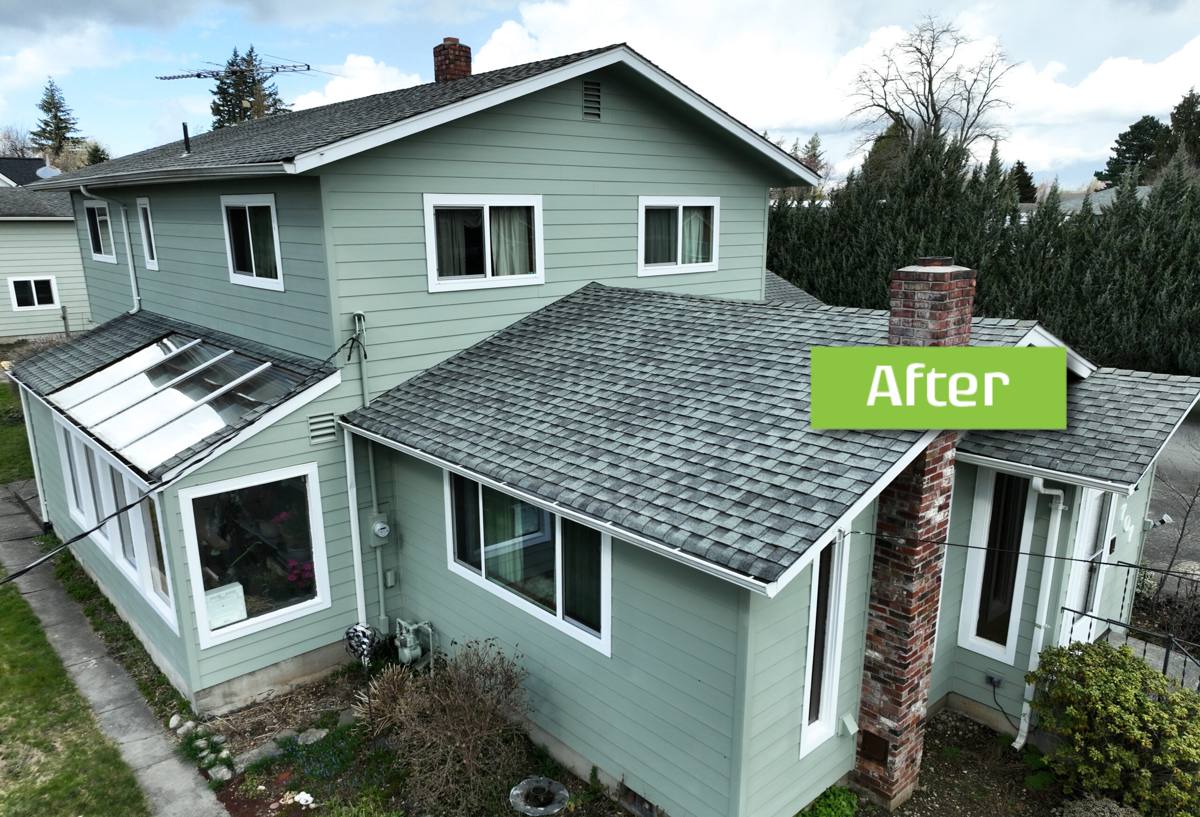
Signs a Semiahmoo Resort Roof Needs Replacement, Not Another Repair
Not every problem calls for a full tear-off. But there's a point where patching individual leaks costs more over time than doing the job right once. Here's what we look for when we're deciding which side of that line a roof is on.
| Sign | What It Usually Means |
|---|---|
| Granule loss showing bare asphalt on multiple slopes | Shingles are past their protective life; patching won't stop continued wear |
| Moss mats thick enough to lift shingle edges | Deck moisture exposure likely, not just a surface issue |
| Rust streaking from nail heads or flashing | Fasteners or flashing weren't coastal-rated, or coating has failed |
| Soft or spongy decking felt when walked | Water has reached the sheathing — repair alone won't fix this |
| Leaks in more than one location after storms | Underlayment or flashing system is failing broadly, not at one spot |
| Roof age 20+ years (asphalt) in this climate | Coastal exposure typically shortens usable life versus inland installs |
If you're only seeing one or two of these, a repair may still make sense. If you're seeing several at once, or the roof is old enough that repairs are becoming frequent, replacement is usually the more honest recommendation — and we'll tell you that directly instead of stringing out patch jobs.
What a Correctly Built Roof Replacement Looks Like Here
A roof replacement done for this location isn't just "same as inland, but closer to the water." Several specific choices matter more here than they would a few miles east.
Fasteners and Metal Components
We use corrosion-resistant fasteners and flashing rated for coastal or marine exposure rather than standard-grade hardware. Standard galvanized fasteners can start showing rust streaks within a few years this close to salt water; stainless or higher-grade coated fasteners cost more up front but avoid that early failure pattern.
Underlayment as a Backup System, Not an Afterthought
Because wind-driven rain can push water further up under the roof covering than in calmer inland conditions, we treat the underlayment layer as a real second line of defense — not just a code-minimum layer under the shingles. Self-adhered underlayment at eaves, valleys, and penetrations gives the roof a sealed backup if wind-driven water gets past the primary surface.
Ventilation Sized for a Wet Climate
Proper intake and exhaust ventilation matters everywhere, but in a climate where the roof deck rarely gets a long dry stretch, balanced ventilation is what keeps moisture from being trapped against the sheathing from the inside as well as the outside. We check attic ventilation as part of every replacement rather than assuming the existing setup is adequate.
Flashing Details at Valleys, Walls, and Penetrations
Most roof leaks trace back to flashing, not the field of the roof. Chimneys, skylights, dormers, and wall intersections all need flashing that's installed in the correct layered order with the underlayment and roof covering — not just caulked over. We rebuild flashing as part of a replacement rather than reusing old pieces.
Choosing the Right Roofing Material for Coastal Exposure
There's no single "best" roofing material for every home — the right choice depends on the home's structure, budget, and how much long-term maintenance the owner wants to take on. Here's how the common options weigh out specifically for a salt-air, high-moss environment.
| Material | Coastal Considerations |
|---|---|
| Architectural asphalt shingles | Cost-effective, wide color range; look for algae-resistant granules given the moss/algae season here |
| Standing seam metal | Excellent water shedding for driving rain; requires coastal-rated fasteners and coatings to manage salt exposure long-term |
| Composite/synthetic shingles | Resist moisture absorption well; a reasonable middle ground on cost and maintenance |
| Cedar shake | Traditional look that fits some Semiahmoo homes, but needs more active maintenance in a moss-prone, damp climate |
We'll walk through the honest tradeoffs of each for your specific roof — pitch, structure, HOA guidelines if applicable, and budget all factor in. We're not going to steer you toward whatever's easiest for us to install; we're going to tell you what will actually hold up where your house sits.
Our Replacement Process
- On-site inspection. We look at the current roof, the decking underneath where accessible, attic ventilation, and any problem areas before quoting anything.
- Written estimate. Material options, scope, and price laid out plainly — no vague allowances that turn into surprise add-ons later.
- Tear-off and deck inspection. Old roofing comes off down to the deck, and we check the sheathing for soft spots or rot before anything new goes down.
- Deck repair as needed. Any damaged sheathing gets replaced before underlayment goes on — this is not an area to cut corners on a coastal property.
- Underlayment and flashing installation. Self-adhered underlayment at vulnerable areas, new flashing at all penetrations and transitions.
- Roof covering installation. Installed to manufacturer spec with fastening appropriate for coastal wind exposure.
- Final walkthrough. We review the finished roof with you and confirm ventilation and drainage are working as intended.
Why Local Experience on the Spit Matters
A crew that's worked roofs around Semiahmoo Resort knows which slopes tend to hold moss longest, how far wind-driven rain can travel under a poorly detailed flashing edge, and which fastener grades hold up versus which start rusting within a few seasons. That's not something you get from a spec sheet — it's from having done the work here repeatedly and seen what lasts and what doesn't.
It also matters for scheduling and logistics. Coastal wind patterns affect what days are safe for tear-off work, and a crew that works this area regularly plans around that instead of getting caught mid-project when weather turns.
Maintaining a New Roof in This Climate
A correctly installed roof still benefits from basic upkeep given the local conditions:
- Keep gutters clear of debris so water isn't backing up under eave edges during heavy rain
- Have moss growth treated or gently removed before it mats thick enough to hold moisture against shingles
- Trim back overhanging branches that keep shaded roof sections damp longer than necessary
- Have flashing and fasteners visually checked every couple of years given ongoing salt exposure
- Address any small leak signs promptly rather than waiting — coastal moisture finds its way into small gaps quickly
None of this is difficult, but it does need to actually happen on a schedule rather than getting overlooked, which is common with waterfront and near-waterfront homes that see a lot of weather.
What Affects the Cost of a Roof Replacement Here
Every roof is different, but a few factors consistently move the price on Semiahmoo Resort homes: roof size and pitch, the number of valleys and penetrations (chimneys, skylights, vents), whether the decking needs repair once the old roofing comes off, and which material you choose. Coastal-rated fasteners and flashing add some cost over standard-grade hardware, but that cost is minor compared to redoing flashing or fastener work a few years early because it wasn't spec'd for salt exposure in the first place. We'll give you a clear, itemized estimate before any work starts so there are no surprises.
If your roof is showing wear, or you just want an honest read on how much life it has left, we're happy to take a look. The estimate is free, there's no pressure, and you'll get a straight answer either way — use the form below to get started.