 Semiahmoo Exterior
 Fiber Cement Siding on the Semiahmoo Spit
Semiahmoo Resort sits at the outer end of the Semiahmoo Spit, a narrow stretch of land reaching out between Semiahmoo Bay and Drayton Harbor at the edge of Blaine, near the Canadian border. It's a resort-style waterfront community — golf course frontage, a marina, and a mix of condos and single-family homes built to take advantage of the water views on more than one side. That same setting is what makes siding material and installation quality matter more here than they do on a typical inland Whatcom County lot, because there's very little standing between an exterior wall and whatever the weather is doing that day.
We install James Hardie fiber cement siding exclusively, and Semiahmoo Resort is one of the places where that standard earns its keep fastest. This page is focused specifically on fiber cement siding for homes and condos in this community — what the climate does to siding out here, what a correct installation actually involves, and why both the material and the crew installing it matter more on a property like this than they would a few miles inland.
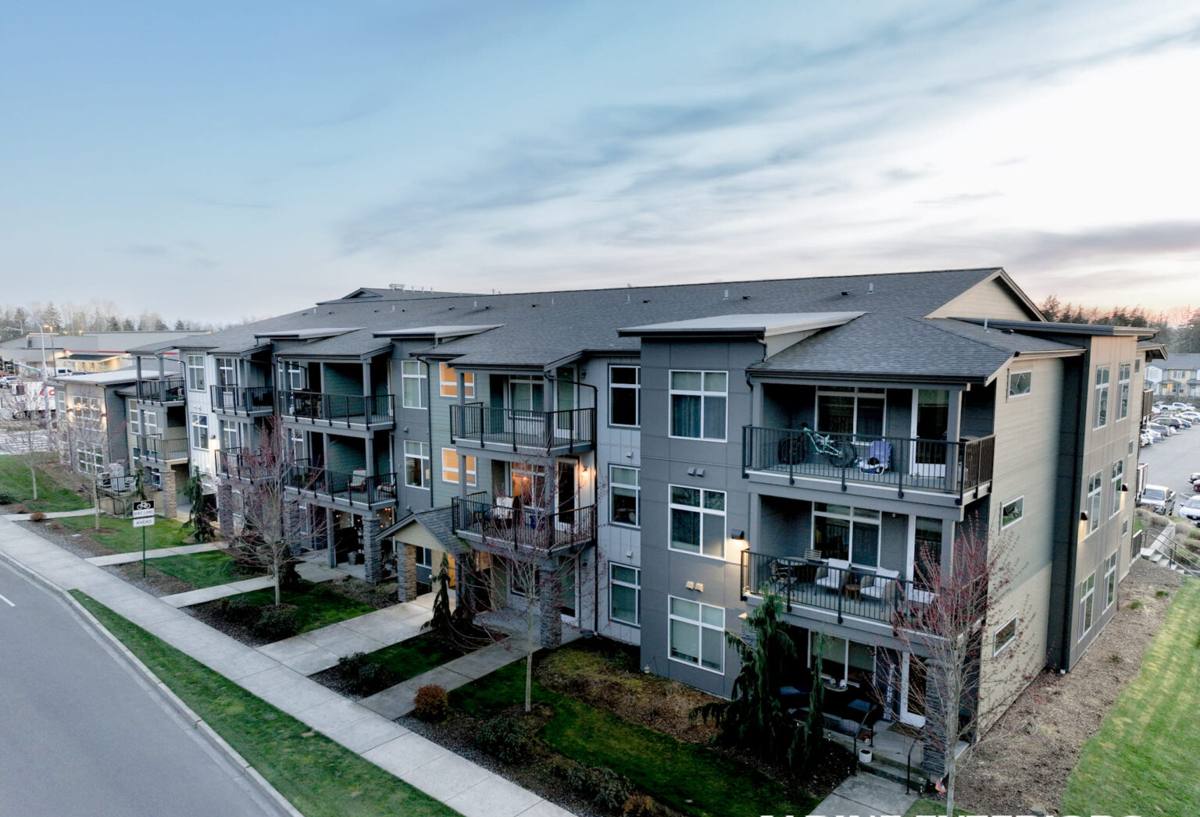
What This Stretch of Coastline Does to Siding
Salt Air From More Than One Direction
Because Semiahmoo Resort has water on multiple sides, siding here takes salt-laden air from more than one prevailing direction, unlike most inland properties that only deal with one dominant wind pattern. Salt accelerates corrosion in fasteners and lower-grade trim, and it breaks down cheap paint and coatings faster than a sheltered site ever would. On fiber cement specifically, that means fastener grade and factory finish matter as much as the board itself — a good panel installed with the wrong fasteners will still show rust streaking and staining within a few years, regardless of how good the siding is.
Wind-Driven Rain Testing Every Lap and Joint
With open water on more than one side and little to break the wind, rain on the spit rarely falls straight down. It gets pushed sideways into lap joints, panel seams, and trim intersections with more force than a typical inland installation is ever tested against. Siding that performs fine a few miles into Blaine can fail here specifically because water finds its way in sideways, through a lap or joint that was never built to handle that kind of pressure. This is exactly the exposure Hardie's climate-engineered product lines are designed for — but only when lap spacing, fastening, and joint treatment follow the manufacturer's specification instead of a shortcut version of it.
A Long Moss and Mildew Season
Mild temperatures, near-constant humidity, and shaded north-facing walls add up to a moss and mildew season that runs most of the year across this part of Whatcom County, and a waterfront resort setting doesn't shorten it. Porous, moisture-holding siding materials show it first — cedar and primed wood in particular. Fiber cement doesn't feed moss growth the way organic materials do, but surface buildup can still collect on shaded elevations facing mature landscaping or the golf course, especially where a wall doesn't get much direct sun through the wet months.
Why Fiber Cement Outperforms the Alternatives Here
Every siding material has a legitimate place in the broader market, and plenty of homeowners elsewhere are happy with vinyl, engineered wood, or cedar. On an exposed, resort-style waterfront property like this one, though, the trade-offs stack up differently. Vinyl can distort or warp under sustained heat and settle over years of temperature swings, and its seams and fastener points become exposure points in high-wind coastal settings. Engineered wood siding has a wood-based core that's moisture-sensitive at cut edges and joints — exactly the kind of detail that gets tested hardest by wind-driven rain. Cedar and primed wood absorb and release moisture readily, which means more frequent refinishing to keep ahead of a moss and mildew season that barely lets up.
Fiber cement doesn't share those failure points. It's dimensionally stable, so it doesn't swell, cup, or warp the way wood-based products can after repeated wetting. It carries a factory-applied finish that resists fading and chalking far longer than field-applied paint. And it's non-combustible, which matters both for wildfire-adjacent risk and, in many cases, for insurance underwriting on higher-value waterfront properties.
| Material | Moisture Behavior | Salt Air Durability | Typical Upkeep |
|---|---|---|---|
| James Hardie fiber cement | Dimensionally stable; resists swelling and warping | Strong with correct fasteners and factory finish | Low — occasional wash, no refinishing |
| Vinyl siding | Can distort or warp with sustained heat and settling | Seams and fasteners are weak points in open wind | Low upfront, but limited repair options if damaged |
| Engineered wood (LP SmartSide) | Wood-based core sensitive at cut edges and joints | Moderate; edge sealing needs regular attention | Moderate — caulk and touch-up maintenance |
| Cedar / primed wood | Absorbs and releases moisture readily | Weak without frequent refinishing | High — regular refinishing in wet, salty air |
The James Hardie Product Lines We Use
Not every Hardie product fits every part of a Semiahmoo Resort home, and part of doing this right is matching the product line to the wall and the exposure.
- HardiePlank lap siding — the standard horizontal siding for most walls, available in several exposure widths and textures, and the workhorse product for most of the homes and condos in this neighborhood.
- HardiePanel vertical siding — used for board-and-batten looks or accent sections, common on resort-style architecture that mixes horizontal and vertical siding for visual interest.
- HardieTrim — fascia, corner boards, and window and door trim built from the same fiber cement system, so trim doesn't become the weak point in an otherwise correct installation.
- HardieShingle — used selectively for gable accents or a shingle-style look where the architecture calls for it, without the moisture sensitivity of real wood shingle.
All of it comes with Hardie's factory-applied ColorPlus finish, and for this climate specifically we spec the HZ5 formulation — engineered for regions with sustained moisture exposure and freeze-thaw cycling, which describes waterfront Whatcom County accurately. HZ10, by contrast, is built for hot, humid climates and isn't the right match for a property on this spit.
What a Correct Installation Actually Involves
Clearance and Drainage Plane
Fiber cement needs the manufacturer-specified clearance from grade, roof lines, and horizontal surfaces like decks and patios, which are common features on resort-style homes with outdoor living space. Behind the siding, a proper drainage plane or rain-screen detail gives any moisture that does get past the surface a way out instead of trapping it against the sheathing. Skipping this step is invisible on install day and shows up years later as hidden rot behind siding that still looks fine from the curb.
Fastening for Salt Air
Fastener type and spacing follow Hardie's published specification, but on a property with multi-directional salt exposure like Semiahmoo Resort, we don't cut corners toward the cheaper end of that spec. Corrosion-resistant fasteners cost more per box and take no longer to install correctly — the difference shows up as rust streaking on cheap fasteners within a handful of wet seasons, long before the siding itself would ever need attention.
Lap Spacing and Joint Treatment
Every horizontal lap is a potential entry point for wind-driven rain pushed sideways instead of falling straight down. Correct lap spacing, factory-mitered or properly caulked butt joints, and consistent nailing patterns are what keep those laps sealed under the kind of pressure this location sees regularly. A rushed installation crew can make lap siding look identical to a correctly installed job from ten feet away — the difference only shows up after the first real storm off the water.
Trim and Corner Detailing
Corners, window and door surrounds, and roof-to-wall transitions are where most siding failures actually start, not in the field of the wall itself. We treat those transitions as their own detail, not an afterthought once the flat panels are up, with flashing that ties correctly into the surrounding wall assembly at every penetration.
Practical Checklist Before Siding Work Starts
- Confirm the installer is quoting James Hardie specifically, by product line, not a generic "fiber cement" allowance
- Ask what fastener grade they use and whether it's rated for coastal or marine exposure
- Ask how they detail lap joints and corners for wind-driven rain, not just standard installation
- Confirm a drainage plane or rain-screen detail is included where the wall assembly calls for it
- Get the manufacturer's clearance requirements from grade and horizontal surfaces in writing
- Confirm what's covered under Hardie's product warranty versus the installer's labor warranty
Our Process, Start to Finish
- On-site assessment — we walk the exterior, check the condition of the existing siding and any underlying sheathing, and note exposure differences between elevations facing open water versus more sheltered walls.
- Product and color selection — matching HardiePlank, HardiePanel, or a mix, along with the correct HZ formulation and a ColorPlus finish that fits the home and the neighborhood.
- Written scope and timeline — a clear plan before any material is ordered or any siding comes off the house.
- Tear-off and sheathing check — removing existing siding gives us a direct look at the wall assembly underneath, which is often the first real evidence of how the old material actually performed here.
- Installation to spec — clearances, fastening, lap spacing, and joint treatment built around this specific exposure, not a generic inland install.
- Trim, caulking, and final detailing — the transition points that determine whether the job holds up through the next several wet seasons.
Cost Factors for a Fiber Cement Job at Semiahmoo Resort
| Factor | What Drives the Cost |
|---|---|
| Wall square footage and complexity | More elevations, dormers, and cutouts mean more labor and trim work per square foot |
| Existing wall condition | Rot or moisture damage found at tear-off adds repair scope before new siding goes up |
| Product line and texture | HardiePlank, HardiePanel, and HardieShingle carry different material costs and install time |
| Trim and detail work | Corner boards, window surrounds, and accent trim add labor beyond flat wall panels |
| Access and site conditions | Waterfront lots, condos, and multi-story elevations can affect staging and equipment needs |
| Color and finish selection | Standard ColorPlus colors versus specialty selections can shift material pricing |
We won't quote a number without walking the actual exterior — every one of those factors plays out differently on a golf-course-facing wall than it does on a wall that takes the brunt of the open water. What we will do is walk through which factors apply to your specific home or unit before you commit to anything.
Why a Crew That Already Works Semiahmoo Resort Matters
Manufacturer installation guidance is written for average conditions in a moderate climate, and Semiahmoo Resort's exposure rarely matches that description. A crew that has actually installed fiber cement on this stretch of the spit knows which parts of Hardie's published spec are non-negotiable here — fastener grade, lap sealing, drainage detailing — and where it's worth spending extra time even when a generic installation guide wouldn't require it. That experience also matters for the look of the finished job: homes and condos in a resort-style community like this one tend to sit close enough together that siding profile, color, and trim detailing read as part of a shared streetscape, not just one house in isolation.
Those are decisions that rarely come up in a sales conversation but decide whether a siding job is still performing cleanly in twenty or thirty years or showing lifted laps and rust streaks in five. A crew unfamiliar with multi-directional salt exposure is more likely to install to a generic spec that would hold up fine in Bellingham but falls short right on the water.
What to Ask Before Hiring for Siding Work Here
- Ask how many fiber cement projects they've completed specifically on waterfront or spit properties in this area
- Confirm current Washington contractor licensing and active liability insurance
- Ask to see their approach to lap and joint detailing for wind-driven rain, not a generic answer
- Get a written scope of work and a realistic project timeline before signing anything
- Ask how the product warranty and the installation labor warranty are each structured
Maintaining Fiber Cement Siding in This Climate
Correctly installed Hardie siding is genuinely low-maintenance, but "low" isn't "none" on an exposed waterfront property. An occasional gentle wash removes surface salt residue and any moss or mildew film before it has a chance to take hold, particularly on shaded, north-facing elevations. It's worth checking caulked joints and trim intersections periodically, since caulk has a shorter service life than the fiber cement itself and is the one component that does need occasional attention. Beyond that, correctly installed fiber cement with the right factory finish shouldn't need repainting on anything close to the schedule that wood or primed siding would require in this environment.
If you're weighing a siding project for a home or condo at Semiahmoo Resort, it's worth having someone look at the actual walls before you start pricing materials. We offer free, no-pressure estimates for James Hardie fiber cement siding in Semiahmoo Resort and the surrounding Blaine area — use the form below to get a time on the schedule.