 Semiahmoo Exterior
 Roof Repair Built for Drayton Harbor's Marine Climate
Homes around Drayton Harbor sit close enough to the water that the roof takes a different kind of punishment than a house ten miles inland in Whatcom County. Salt-laden air off the harbor works on exposed metal year-round, wind-driven rain off the Strait of Georgia finds every gap in flashing and underlayment, and the shade and dampness that come with a marine climate keep moss active for most of the year. A roof repair in this neighborhood has to account for all three, not just patch the spot that happens to be leaking.
Salt Air and Metal Components
Roof vents, flashing, fasteners, and gutter hardware near Drayton Harbor corrode faster than the same materials would a short drive inland. Bare or lightly coated steel is the first thing to show it — you'll see rust streaks below vent stacks or valley flashing well before the shingles themselves show their age. When we repair a roof out here, we pay close attention to what the flashing and fasteners are made of, because using standard-grade hardware on a harbor-facing roof is a repair that fails again in a few years.
Wind-Driven Rain
Rain that comes in sideways behaves differently than rain that falls straight down. It gets pushed under shingle tabs, along ridge caps, and into any flashing lap that isn't sealed and shingled correctly. A lot of the leaks we find near Drayton Harbor aren't from a single obvious hole — they're from wind-driven moisture working its way in through connections that were fine for years until age, granule loss, or a storm opened them up just enough.
A Long Moss Season
Shaded roof sections, especially north-facing slopes and areas under overhanging trees, stay damp longer here than they would in a drier part of the state. That moisture supports moss and algae growth for most of the year, not just a few winter months. Moss doesn't just look bad — it lifts shingle edges, holds water against the roof deck, and accelerates the exact kind of wear that eventually turns into a repair call.
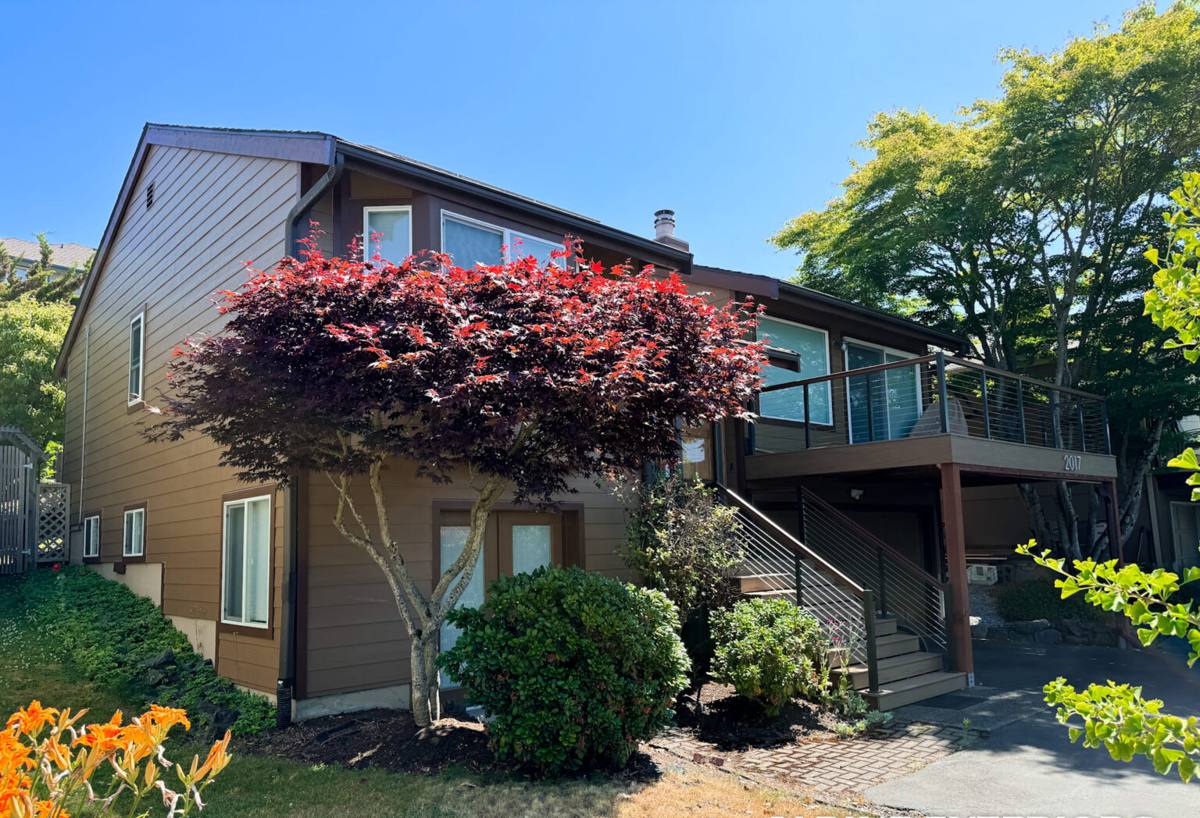
Common Roof Repair Needs We See in Drayton Harbor
Every roof is different, but certain problems show up repeatedly on homes in this area because of the shared climate and building stock. Knowing what to watch for helps you catch a small issue before it becomes water damage inside the house.
- Lifted or cupped shingles along the roof edges and rakes, where wind exposure is highest
- Rusted or failing flashing around chimneys, skylights, and roof-to-wall transitions
- Moss buildup in valleys and on shaded slopes, holding moisture against the roofing material
- Clogged or sagging gutters that back water up under the lowest course of shingles
- Nail pops and cracked sealant at penetrations (vent pipes, exhaust fans, satellite mounts)
- Granule loss and thinning on older asphalt roofs exposed to years of salt air and rain
- Soft or discolored roof decking visible from the attic, a sign a small leak has been active for a while
What a Correct Roof Repair Actually Involves
Diagnosis Before Patching
A repair that only addresses the spot where water is showing up inside the house often misses the actual entry point, which can be several feet away depending on the roof pitch and how the water traveled across the decking. We start every repair with a full look at the affected slope — flashing, fasteners, shingle condition, and the underlayment where it's exposed — so the fix addresses the cause, not just the symptom.
Matching Materials and Techniques
Roofing materials age and weather at different rates, so a repair patch that doesn't match the surrounding material in type, color, and exposure history tends to stand out and can behave differently in the next storm. Where a full match isn't practical, we explain the trade-off up front rather than let you find out later. The goal is a repair that performs the same as the roof around it, not one that just covers the hole.
Rebuilding the Water Path, Not Just the Surface
Shingles are only one layer of a roof's defense against water. Underlayment, flashing, and proper shingle overlap are what actually direct water off the structure. A repair that replaces shingles but ignores damaged underlayment or flashing underneath them is a repair that will need to be done again.
Repair or Replace? How We Help You Decide
Not every roof problem calls for a full replacement, and not every leak can be permanently solved with a patch. The right call depends on the roof's age, how widespread the damage is, and what's happening underneath the surface layer.
| Factor | Leans Toward Repair | Leans Toward Replacement |
|---|---|---|
| Roof age | Under 15-20 years, or recently replaced | Near or past the material's typical service life |
| Extent of damage | Isolated to one area or penetration | Spread across multiple slopes or the whole roof |
| Decking condition | Solid, dry, no soft spots | Soft, discolored, or rotted in multiple areas |
| Moss and granule loss | Surface-level, removable | Widespread granule loss exposing the mat underneath |
| Repair history | First or second repair on this roof | Repeated repairs to the same areas over recent years |
We'll walk you through where your roof falls on each of these before recommending anything. If a repair is the honest answer, that's what we'll propose — we don't push replacements on roofs that still have useful life left.
Our Roof Repair Process
- Inspection. We get on the roof (weather permitting) and check it from the attic side too, looking at decking, insulation, and any staining that points to where water is actually entering.
- Written assessment. You get a clear explanation of what's wrong, what caused it, and what a proper fix involves — in plain language, not a sales pitch.
- Repair plan and estimate. We outline the materials, scope, and timeline before any work starts, including honest notes on material matching where relevant.
- The repair itself. We remove and replace only what needs replacing, rebuild flashing and underlayment where it's failed, and reseal penetrations properly rather than relying on caulk alone.
- Final check. Before we leave, we walk the roof and the affected interior area to confirm the fix holds and nothing was missed.
Materials and Methods That Hold Up Near the Harbor
For repair work in a salt-air, high-moisture environment like Drayton Harbor, we lean toward corrosion-resistant flashing and fasteners over standard-grade hardware, even when it costs a little more up front. The same goes for sealants — a product rated for continuous moisture exposure holds up longer than a general-purpose caulk that's fine for a drier climate but breaks down faster here. We also pay close attention to how new material ties into existing shingles and underlayment, since a repair that isn't properly woven into the surrounding roof system is one of the most common causes of a leak coming back in the same spot within a year or two.
Maintenance That Extends the Life of a Repair
A repair holds up longer when the rest of the roof is kept in reasonable shape around it. A few habits make a real difference for homes in this area:
- Clear gutters and downspouts at least twice a year, more often if you're near overhanging trees
- Have moss treated or removed before it spreads across a full slope, rather than after
- Trim back branches that keep sections of the roof shaded and damp
- Check the attic occasionally for staining, damp insulation, or daylight where there shouldn't be any
- Address small issues (a lifted shingle, a cracked pipe boot) before the next wind-driven rain event, not after
Why Hiring a Crew That Already Works Drayton Harbor Matters
A roof repair contractor who works this stretch of Whatcom County regularly already knows how the local climate treats different materials, which flashing details tend to fail first on harbor-facing homes, and how aggressively moss grows on shaded slopes in this specific area. That's not something you can fully substitute with general roofing experience from a drier or more inland market. It also means faster response — someone who's already familiar with the area's building stock and weather patterns doesn't need to relearn the local conditions on your roof before they can give you an accurate diagnosis.
We also stand behind our repair work because we're not passing through. If something about a repair doesn't hold up the way it should, we're a local call away, not a company that did one job in the area and moved on.
If you've got a leak, missing shingles, or a roof that's overdue for a look near Drayton Harbor or elsewhere around Semiahmoo, we're happy to come take a look and give you a straight answer. Fill out the form below for a free, no-pressure estimate.