 Semiahmoo Exterior
 The Climate Point Roberts Windows Are Actually Fighting
Point Roberts sits out on the end of a peninsula, exposed to the Strait of Georgia and Boundary Bay in a way most of Whatcom County simply isn't. That location means more wind-driven salt spray reaching siding and window frames, more days of sideways rain, and a damp shoulder season that runs longer than it does even a few miles inland. Windows here are doing more work than a spec sheet written for a generic Pacific Northwest climate accounts for.
Salt in the air is hard on exposed hardware and finishes — it accelerates corrosion on unprotected metal, pits weaker coatings, and slowly degrades sealants that would otherwise last a decade or more. Driving rain, pushed by wind off the water, doesn't just hit windows head-on; it gets forced sideways and upward into gaps that would stay dry in a calmer climate. And the long moss season that comes with all that moisture keeps shaded, north- and west-facing walls damp for months, which is exactly the environment that lets rot and failed seals get a foothold behind trim and casing.
None of this means Point Roberts needs unusual windows. It means the installation — the flashing, the sealants, the fasteners, the sequencing — has to be done for this exposure, not a generic one.
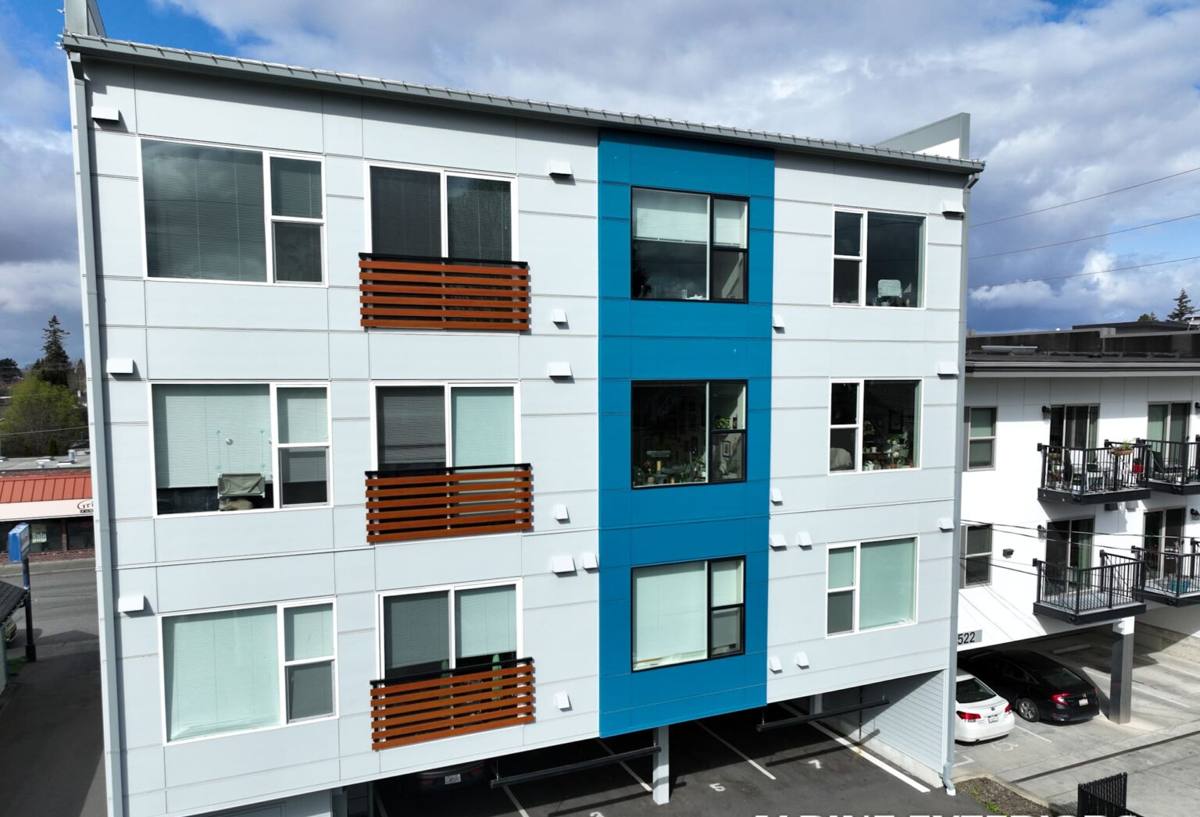
What a Correct Window Installation Actually Involves
Swapping an old window for a new one is the easy part. What separates a window that lasts twenty-plus years from one that fails in five is almost entirely in the details most homeowners never see once the trim goes back on.
Flashing and Water Management
Every window opening needs a water management plan, not just caulk around the edges. That means flashing tape or a rigid flashing system at the sill that directs any water that does get past the window back outside the wall assembly, a sloped sill pan so water can't pool against the frame, and head flashing that sheds water over the top of the window rather than letting it wick down behind the siding. On a home taking direct wind and rain off the water, skipping or shortcutting this step is the single most common reason a "new" window ends up with rot inside the wall a few years later.
Sealants, Fasteners, and Finish Details
Fasteners and hardware exposed to salt air need corrosion-resistant coatings — standard hardware that's fine forty miles inland can start showing rust streaks within a couple of seasons out here. Sealants need to be rated for the temperature swings and UV exposure this climate produces, and applied in the right order relative to the flashing, not just smeared over gaps at the end. Getting this sequence wrong is invisible on install day and expensive to fix later.
Choosing a Frame Material for This Exposure
There's no single "best" window material for every home — it depends on your budget, how exposed the wall is, and how much upkeep you want to take on. Here's how the common options hold up specifically against salt air, wind-driven rain, and a long damp season.
| Material | Salt Air / Corrosion | Moisture Behavior | Maintenance |
|---|---|---|---|
| Vinyl | Doesn't corrode; good default for exposed walls | Won't rot; performs well if installed with proper flashing | Low — occasional cleaning |
| Fiberglass | Excellent resistance; dimensionally stable in temperature swings | Won't rot; handles moisture well | Low |
| Wood / wood-clad | Cladding protects the frame, but any exposed or damaged wood is vulnerable | Needs intact finish and flashing to avoid rot in a wet climate | Higher — finish upkeep matters here more than inland |
| Aluminum (uncoated or thin coating) | Prone to pitting and corrosion in direct salt exposure over time | Conducts moisture and cold; condensation risk | Moderate to high depending on coating quality |
We don't push one brand or material on every job. On walls that take direct exposure off the water, we'll steer you toward vinyl or fiberglass or a well-clad wood window with a proven finish warranty — and we'll say so plainly if a product you're considering is going to mean more upkeep than you're expecting in this climate.
Signs Your Current Windows Are Already Losing the Battle
Salt air and driving rain don't announce window failure with a dramatic leak most of the time — it shows up as small signs first. Worth checking for:
- Soft or discolored wood at the sill or bottom corners of the frame, inside or out
- Fogging or moisture trapped between panes on double-glazed units
- Visible corrosion or rust streaking on hinges, locks, or cranks
- Drafts you can feel with a hand near the frame on a windy day
- Paint or finish that's bubbling, peeling, or chalking faster than the rest of the exterior
- Moss or dark staining building up in the corners of the frame or on the sill
- Difficulty opening, closing, or latching a window that used to work fine
Any one of these is worth a look. Two or three together usually mean water has already gotten behind the frame, and it's a question of replacement timing rather than repair.
How We Approach a Point Roberts Installation
- Assess the opening — not just the window itself, but the sheathing, sill, and framing behind it, since that's where salt-air and moisture damage actually lives.
- Remove the old unit carefully so we can inspect the framing for rot or corrosion before anything new goes in — this is often where hidden problems get caught early instead of after the fact.
- Repair and prep the opening, replacing any compromised framing and setting up the sill pan and flashing sequence for this climate's wind and rain patterns.
- Install and level the new window, using corrosion-resistant fasteners and shimming correctly so the unit operates smoothly for the long run.
- Complete the flashing and sealant sequence in the correct order — this is the step that determines whether the install holds up in a coastal storm five years from now.
- Insulate and finish the interior and exterior trim, checking operation and seal before we call the job done.
Permits and Whatcom County Requirements
Window replacement in Whatcom County can require a permit depending on the scope of the work — particularly if the opening is being resized, structural framing is involved, or it's part of a larger exterior project. We handle that determination and the paperwork as part of the job rather than leaving it for the homeowner to sort out, and we build code-compliant flashing and water management into every install whether or not a permit is required for that particular job.
Why Hiring a Crew That Already Works Point Roberts Matters
Point Roberts' geography is genuinely unusual — it's a U.S. exclave, reachable by land only through Canada. That affects real, practical things: scheduling, coordinating material deliveries, and timing a job so it isn't held up by logistics that a crew based purely on the mainland side hasn't had to think through. A contractor who already works this area has that figured out before your job ever starts.
Beyond logistics, there's the exposure itself. A crew that's installed windows across Point Roberts and the surrounding Whatcom County coastline knows which walls take the worst of the wind and salt, which corners tend to hold moss and moisture longest, and which shortcuts in flashing or fastener choice show up as callbacks a few years down the road. That's the kind of judgment that only comes from doing this specific work in this specific climate, repeatedly.
What Drives the Cost
Window installation pricing varies a fair amount based on a few honest factors, and we'd rather explain them than throw out a number that doesn't hold up once we're actually at your house.
| Factor | Why It Matters |
|---|---|
| Frame material chosen | Vinyl, fiberglass, and wood-clad options carry different material costs and long-term maintenance trade-offs |
| Condition of the existing opening | Rot or corrosion damage found behind the old window adds repair work before the new one goes in |
| Number and size of openings | Larger or custom-sized windows and multi-window jobs affect both material and labor |
| Wall exposure | Walls taking direct wind and salt spray may warrant upgraded flashing or sealant systems |
| Access and site conditions | Second-story openings or tight access add time to the job |
We give a real, itemized number after we've actually looked at the opening — not a phone-quote guess that changes once work starts.
If your windows are showing wear, or you're planning ahead before the next storm season rolls in, we're glad to come take a look. The estimate is free, there's no pressure, and you'll get a straight answer about what your home actually needs — just fill out the form below to get started.