 Semiahmoo Exterior
 Point Roberts: One of the Toughest Places in Whatcom County to Keep Siding Sound
Point Roberts sits at the very tip of a small peninsula, cut off from the rest of Washington State by the Canadian border — the only way to drive there is through Canada, out to the end of the Tsawwassen Peninsula, and back across the line into the U.S. That geography makes it part of Whatcom County in every legal and practical sense, but it also means the community lives on a spot of land with water pressing in from more than one direction: Boundary Bay on one side, the Strait of Georgia on the other. There's very little land mass around Point Roberts to slow down wind, rain, or salt spray before it reaches a house.
That exposure is the reason siding wears out faster here than it does on a similar home set back a few miles inland. Salt-laden air, wind-driven rain, and a moss season that runs most of the year all load extra stress onto exterior walls, and a siding replacement done without accounting for those conditions tends to show problems again within just a few years. This page focuses specifically on what a siding replacement needs to get right for a Point Roberts home — not siding in general, but siding built for this particular stretch of coastline.
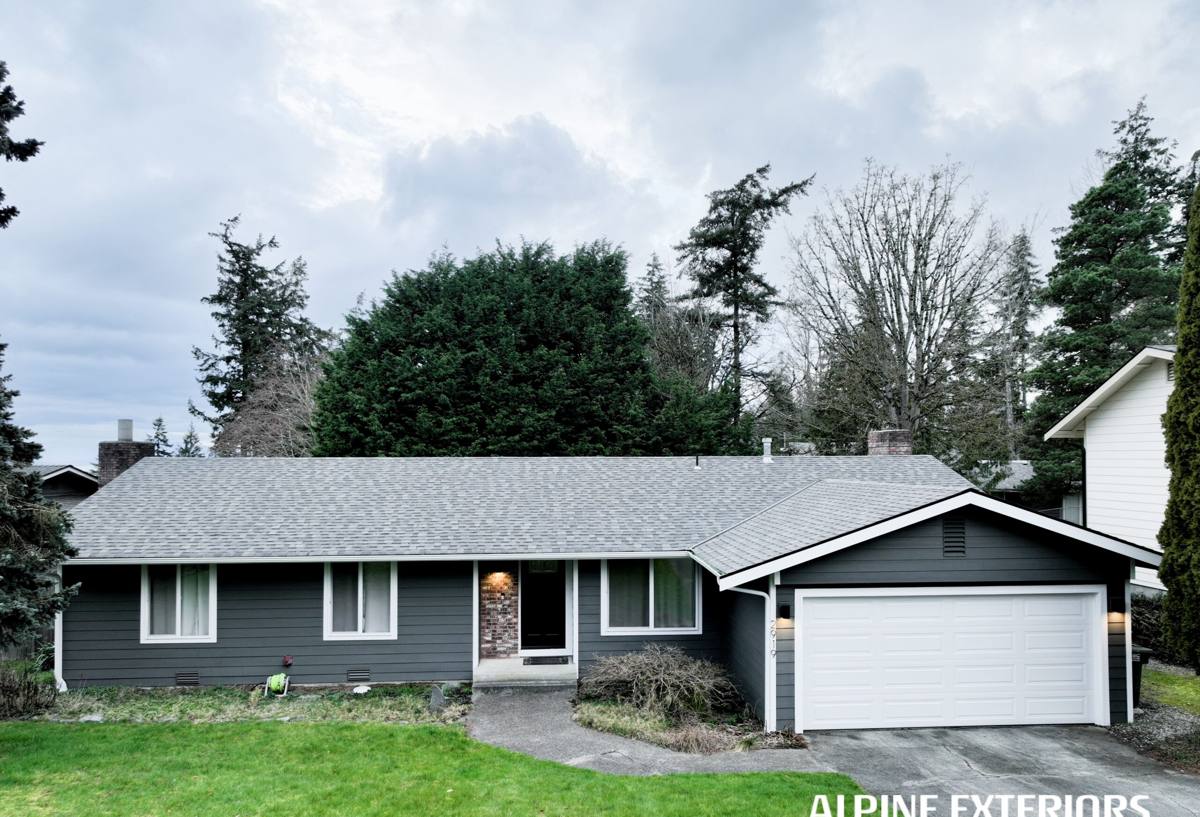
What Salt Air, Driving Rain, and Moss Actually Do to a Wall
Salt Air From More Than One Direction
Because Point Roberts has open water on multiple sides rather than one prevailing shoreline, salt-laden air reaches houses from more than a single exposure. Salt accelerates corrosion in fasteners, flashing, and any exposed metal trim, and it breaks down lower-grade paints and finishes faster than a drier, more sheltered site ever would. Siding materials and hardware that hold up fine forty minutes inland can start showing rust streaks, chalking, or finish failure years earlier out here.
Wind-Driven, Driving Rain
With little to block the wind, rain on this peninsula often doesn't fall straight down — it gets pushed sideways into wall assemblies, window flashing, and siding laps with more force than the region's average rainfall numbers would suggest. That matters because most siding systems are only tested and rated against rain falling vertically. Joints, laps, and flashing details that perform fine in a calmer inland setting can leak specifically because water is finding its way in horizontally, under pressure, instead of running down and off.
A Long Moss and Algae Season
Mild temperatures, near-constant humidity, and shaded north-facing walls add up to a moss and algae season that runs through most of the year in this part of Whatcom County. Point Roberts' waterfront exposure keeps humidity levels high even between storms, so porous or moisture-holding siding surfaces stay damp longer than they would somewhere drier. Homes with mature trees or tight spacing between structures tend to see the heaviest buildup on whichever walls get the least direct sun.
Signs a Point Roberts Home Needs Replacement, Not Just Repair
Not every siding problem calls for a full replacement — sometimes a section of trim or a few damaged boards is genuinely all that's needed. But on an exposed peninsula property, it's worth knowing the difference between a localized repair and signs that the whole system has reached the end of its useful life.
- Persistent moss or algae staining that returns within weeks of cleaning, especially on shaded or bay-facing walls
- Soft, spongy, or delaminating siding panels, which usually means moisture has already reached the substrate
- Visible cupping, warping, or bowing along multiple courses of siding
- Paint or finish that keeps failing in the same spots no matter how often it's redone
- Gaps opening up at seams, corners, or trim joints that weren't there a few years ago
- Rust streaking below fasteners or metal flashing
- Interior signs — musty smell, soft drywall, or visible staining near exterior walls, particularly on the sides that face open water
What a Correct Siding Replacement Involves Here
A siding replacement on a peninsula property like this is a chance to fix what's underneath the old siding, not just swap the visible surface. A correct job includes a few things that matter more here than they would on a sheltered inland lot:
- Full tear-off, not an overlay: Installing new siding over old material traps whatever moisture damage is already there and hides it from view. On an exposed property, that's a real risk worth avoiding.
- Sheathing inspection and repair: Once the old siding is off, the sheathing underneath gets checked for rot, delamination, or soft spots — especially on walls that have taken the worst of the wind-driven rain over the years — and any damaged sections get replaced before new siding goes on.
- A properly lapped water-resistive barrier: The house wrap or building paper behind the siding is the wall's real defense against wind-driven rain; it needs to be lapped correctly, sealed at penetrations, and tied properly into window and door flashing.
- Flashing at every opening: Windows, doors, and any roof-to-wall transitions need flashing that's integrated with the water-resistive barrier, not just caulked over the top of it.
- Drainage detailing behind the panels: A rain-screen or drainage gap lets any moisture that does get past the siding drain and dry out, rather than sitting against the wall.
- Correct fastener type and spacing: Fasteners rated for the material and climate, placed to the manufacturer's spec, so the panels stay put and don't work loose under sustained wind loading.
Why We Install Only James Hardie Fiber Cement
We install James Hardie fiber cement siding and nothing else. That's not a brand preference we picked off a supplier catalog — it's a standard we settled on after seeing which materials actually hold up on exposed, salt-air properties, and which ones start showing problems within a handful of years.
- Non-combustible core: Fiber cement doesn't feed a fire the way wood-based siding products can, which matters for both safety and, in many cases, homeowner's insurance.
- Factory-applied ColorPlus finish: The color is baked on under controlled factory conditions rather than brushed on in the field, and it holds up far longer against fading, chalking, and moisture intrusion than site-applied paint.
- Climate-engineered HZ5 formulation: Hardie's HZ5 product line is engineered for regions with heavy moisture exposure and freeze-thaw cycling, which describes waterfront Whatcom County well.
- Dimensional stability: Fiber cement doesn't swell, cup, or warp the way engineered wood products can after repeated wetting over a long wet season.
- Strong transferable warranty: Hardie backs its product with a substantial warranty structure, provided installation follows their published specification.
We won't install LP SmartSide, vinyl siding, Cemplank, Allura, primed spruce, or cedar. Each of those products has a legitimate place in the market, and plenty of homeowners are satisfied with them in more sheltered settings. But on a peninsula property with this much water exposure, we've made a professional call that we'd rather stand fully behind one system than offer a cheaper option that quietly shifts long-term maintenance risk back onto the homeowner.
Comparing Siding Options for an Exposed Peninsula Property
| Material | Moisture Behavior | Maintenance in Salt Air | Typical Longevity Here |
|---|---|---|---|
| James Hardie fiber cement | Dimensionally stable, resists swelling and cupping | Low; factory finish resists fading and chalking | 30+ years with correct installation |
| Vinyl siding | Can distort or warp under heat and settle over time | Low upfront cost, but seams and fasteners are ongoing exposure points | Variable; shorter on open, wind-exposed lots |
| LP SmartSide / engineered wood | Wood-based core is moisture-sensitive at cut edges and joints | Moderate; edge sealing and caulk upkeep matter a great deal | Depends heavily on installation quality and upkeep |
| Cedar / primed wood | Absorbs and releases moisture readily | High; regular refinishing needed in wet, salty air | Shorter without consistent, ongoing maintenance |
Cost Factors for a Point Roberts Siding Replacement
Every siding replacement is priced around the specifics of the house, and a handful of factors move the number more than others on a property in this location:
| Factor | Why It Matters Here |
|---|---|
| Which walls face open water | Bay- or strait-facing elevations take more direct wind-driven rain and salt exposure, which can affect detailing and material choices on those sides |
| Condition of the existing sheathing | Hidden rot or moisture damage found during tear-off adds repair work before new siding can go on |
| Home size and number of stories | More wall area and taller elevations mean more material, more staging, and more labor |
| Trim and architectural detail | Corners, dormers, and multiple roof-to-wall transitions all add flashing and finishing time |
| Existing siding layers | A full tear-off of multiple old layers takes longer than removing a single layer |
| Material staging and delivery logistics | Getting materials onto the peninsula on schedule takes more lead time than a mainland Whatcom County job |
Our Process
We start with an on-site assessment that looks specifically at how the existing siding has handled moisture and salt exposure over time — not just what's visible, but what the wall assembly behind it is likely to look like once the old material comes off. From there we put together a clear, written scope and timeline before any work begins, including realistic lead time for getting materials and crew onto the peninsula. During the job, tear-off, sheathing repair, correct water-resistive barrier installation, flashing, and drainage detailing are treated as standard practice on a property like this — not optional upgrades billed separately. We finish with a walk-through so you know exactly what was found, what was replaced, and what the new system needs going forward.
Why Hiring a Crew That Already Works Point Roberts Matters
Point Roberts' status as a U.S. exclave isn't just a geographic curiosity — it changes the practical side of a construction project. Materials, equipment, and crews all have to route through the border crossing, and that adds planning that a contractor unfamiliar with the area may not budget for correctly, leading to schedule slips or rushed work to make up time. A crew that already works this peninsula regularly builds that logistics reality into the schedule from the start, so it doesn't turn into delays or corners cut once the job is underway.
Beyond logistics, there's the climate familiarity itself. A contractor who regularly works Point Roberts and the surrounding Semiahmoo-area coastline already knows how salt air, open wind, and prolonged moisture behave differently here than they do even a few miles inland. That shows up in small decisions — how flashing gets lapped, which fastener grade gets used, where extra drainage detailing gets added — and those details are exactly what determines whether a new siding system lasts a decade or three.
A Simple Checklist Before Hiring for Siding Work on Point Roberts
- Ask what siding material they install and why, and whether it's backed by a written manufacturer warranty
- Confirm they carry current Washington contractor licensing and active liability insurance
- Ask how they handle scheduling and material delivery given the border crossing, and what lead time they build in
- Ask specifically how they detail flashing and drainage for wind-driven rain, not just standard vertical rainfall
- Get a clear, written scope of work — including what happens if sheathing damage is found during tear-off — before signing anything
Living With New Siding Through Moss Season
Even the right siding installed correctly still benefits from a little seasonal attention on a property this exposed. A gentle rinse of shaded, moss-prone walls once or twice a year keeps buildup from taking hold, and it's worth avoiding high-pressure washing, which can force water behind panels and joints rather than just cleaning the surface. Keeping gutters and downspouts clear prevents overflow from running down siding repeatedly in the same spot, and trimming back vegetation that shades north-facing walls helps those areas dry out between wet spells instead of staying damp for weeks at a time. An annual look at caulking and joints — especially around windows and trim — catches small gaps before they turn into moisture problems.
If you're weighing a siding replacement for a home on Point Roberts, we're happy to walk the exterior with you and give an honest read on what it actually needs — no pressure, no upsell. Reach out below for a free estimate.