 Semiahmoo Exterior
 Roofing Point Roberts: A Different Set of Conditions
Point Roberts sits in a strange spot geographically — a five-mile peninsula cut off from the rest of Washington by the international border, surrounded on three sides by the Strait of Georgia and Boundary Bay. That location matters for roofs. Homes here take on salt-laden air off the water almost year-round, get hit with driving rain that comes in sideways off the strait, and sit under enough shade and moisture for moss to establish itself faster than most inland Whatcom County properties. A roof that would hold up fine twenty miles inland can wear out noticeably sooner out here.
We're based in Semiahmoo and work Point Roberts regularly, which means we're not guessing at what the local exposure does to shingles, flashing, and fasteners — we see it on tear-offs. This page covers what a correct roof replacement looks like for this specific area, not a generic overview.
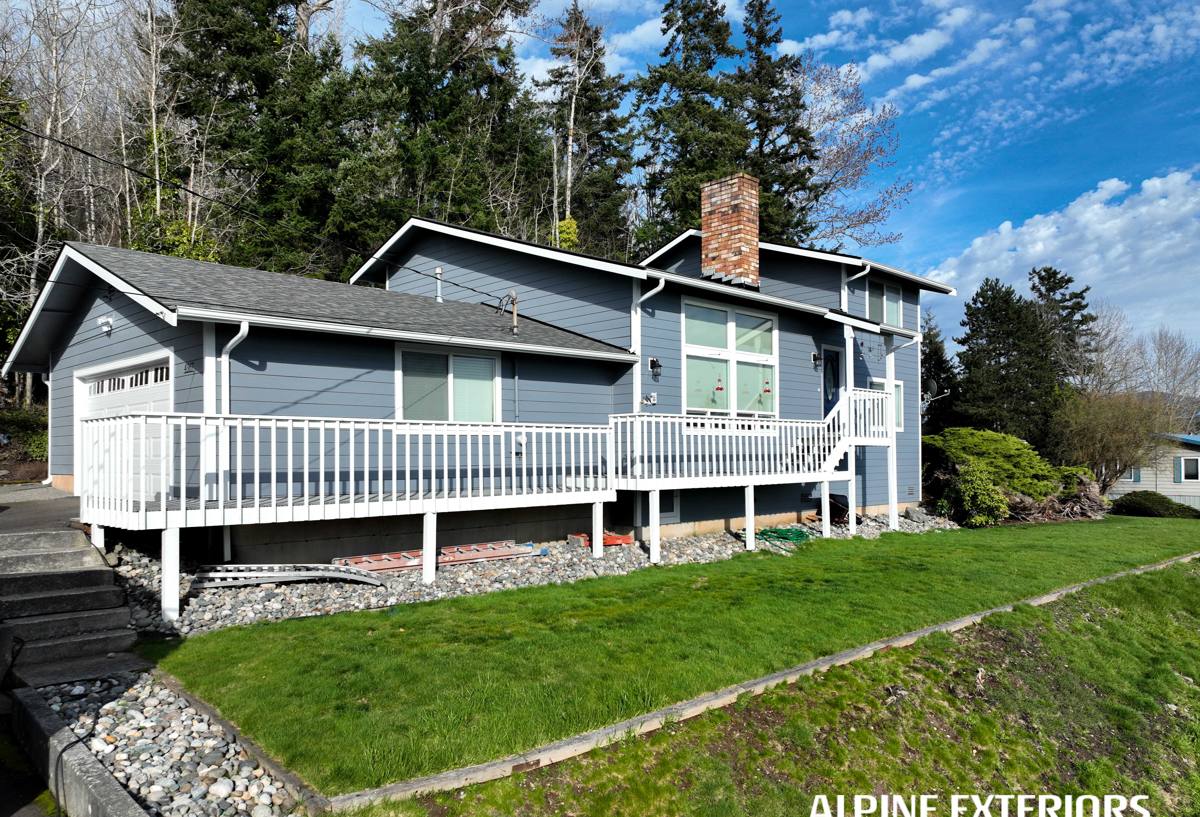
What Salt Air and Coastal Exposure Do to a Roof
Salt air is corrosive to exposed metal. On a roof, that means flashing, nail heads, vent caps, and any exposed fastener are at higher risk of premature corrosion than the same materials would face in a drier, inland location. It's not that coastal roofs are unbuildable — it's that material choices and installation details need to account for the exposure instead of ignoring it.
Where This Shows Up First
- Exposed fastener heads on older metal roofing or flashing, especially anything not hot-dip galvanized or otherwise rated for coastal use
- Valley flashing and step flashing at chimneys and walls, where water concentrates and metal stays wet longer
- Gutter systems and drip edge, particularly on the water-facing sides of the home
- Any galvanized-only hardware that wasn't upgraded to a coastal-rated or stainless option
None of this means every part needs to be exotic or expensive. It means the fastener and flashing spec should be chosen deliberately for a Point Roberts property, not defaulted to whatever's standard for a Bellingham job 25 miles inland.
Driving Rain and Wind-Driven Water Intrusion
Point Roberts gets exposed to wind coming off open water with little to break it up before it reaches the roof. Driving rain — rain pushed sideways under pressure rather than falling straight down — finds weaknesses that a straight-down rain never would. It gets up under shingle tabs with marginal sealant bond, through nail penetrations that weren't sealed correctly, and around penetrations like vent pipes and skylights where the flashing detail was rushed.
A roof replacement done for this kind of exposure needs attention to a few things a lower-exposure job might skip:
- Ice-and-water shield or equivalent self-adhering underlayment at eaves, valleys, and around all penetrations — not just where code requires it as a minimum
- Proper shingle sealant activation, which depends on installing in the right temperature window and not rushing the job in cold, wet conditions
- Correctly lapped and sealed step flashing at every wall intersection, not just caulked over
- Ridge and hip caps installed with the same wind exposure in mind, since these are the first shingles to lift in sustained wind
Moss and the Long Wet Season
Whatcom County's wet season runs long, and Point Roberts' tree cover and marine humidity extend the window when moss and algae can establish on a roof. Moss isn't just cosmetic. As it grows, it holds moisture against the roofing material, and on organic-mat asphalt shingles that constant moisture accelerates granule loss and can work its way under tabs over time. On wood-based roofing it's worse, since moss roots can physically lift and separate the material.
A roof replacement is the right time to address moss proactively:
- Zinc or copper strips at the ridge, which release trace metal ions with rain runoff that inhibit moss regrowth over the field of the roof
- Choosing a shingle product with algae-resistant granules where moss and algae pressure is high
- Trimming back overhanging limbs where practical, since shade and leaf litter are the biggest drivers of moss growth
- Setting a realistic inspection and gentle-cleaning schedule so moss doesn't get the chance to establish in the first place
None of this eliminates moss forever — it's a long-term maintenance item, not a one-time fix — but it meaningfully slows it down and protects the investment in the new roof.
What a Correct Replacement Includes
A roof replacement is more than swapping old shingles for new ones. On a coastal Point Roberts property, the details below are where a roof either performs for its expected lifespan or starts showing problems years early.
Tear-Off and Deck Inspection
Full tear-off to the deck lets us actually see what's underneath — trapped moisture, soft or delaminated sheathing, and any prior repair shortcuts. Roofing over an existing layer hides these problems and traps moisture against the new material, which is a particularly bad idea in a marine climate.
Underlayment Selection
Given the rain and wind exposure here, we lean toward synthetic or self-adhering underlayment systems over older felt products, with extra coverage at eaves, valleys, and penetrations as noted above.
Flashing Detail
Every valley, chimney, sidewall, and penetration gets flashing sized and lapped correctly for water to shed downhill at every layer — not caulk used as a substitute for proper flashing geometry.
Ventilation
Balanced intake and exhaust ventilation keeps the attic dry and temperature-regulated, which matters for both moisture control in a humid coastal climate and for shingle warranty compliance — most manufacturers require adequate ventilation for their warranty to remain valid.
Fastener and Hardware Spec
Corrosion-resistant fasteners and flashing hardware suited to coastal exposure, not standard-grade galvanized defaults.
Material Options for Coastal Whatcom County Homes
| Material | How It Handles This Climate | Trade-Offs to Know |
|---|---|---|
| Architectural asphalt shingle | Good performance when installed with coastal-appropriate underlayment and flashing; algae-resistant options address moss/algae pressure | Shorter expected lifespan than metal; sealant strip performance depends on correct install temperature |
| Standing seam metal | Excellent water-shedding on driving rain; minimal exposed fasteners reduces corrosion risk points | Higher upfront cost; needs a qualified installer, since seam and flashing work is less forgiving of mistakes |
| Exposed-fastener metal panel | More affordable than standing seam; still sheds wind-driven rain well | Exposed fasteners need coastal-rated hardware and periodic inspection, since these are the first failure point near salt air |
| Cedar shake | Traditional look that fits the Pacific Northwest aesthetic | Highest maintenance burden in a moss-prone, high-moisture environment; requires the most disciplined upkeep to avoid moisture and moss-related deterioration |
We'll walk through which of these fits your home, your budget, and how much ongoing maintenance you actually want to take on — there's no single right answer for every property.
Our Process for a Point Roberts Roof Replacement
- On-site inspection. We look at the current roof, attic ventilation, decking condition where visible, and note the home's specific wind and moisture exposure.
- Written estimate. Clear scope, material options, and pricing — no vague allowances or surprise add-ons discovered mid-project.
- Scheduling around weather. Roofing in a wet climate means watching forecasts closely; we plan tear-off and dry-in around realistic weather windows rather than rushing into rain.
- Tear-off, deck repair as needed, and underlayment. Full removal, any necessary sheathing repair, and correct underlayment coverage before a single shingle or panel goes down.
- Installation. Flashing, ventilation, and fastening done to the coastal-appropriate spec discussed at estimate time.
- Final walkthrough. We go over the finished roof with you, including what routine maintenance — gutter clearing, moss monitoring — will help it last.
What to Check Before Hiring for a Point Roberts Job
- Do they have current experience with coastal Whatcom County roofs, or only inland projects?
- Will they specify corrosion-resistant fasteners and flashing, or default to standard hardware?
- Do they include moss-mitigation options (zinc/copper strips, algae-resistant shingles) as part of the conversation, or only if you ask?
- Is the underlayment and ventilation plan spelled out in the written estimate, or left vague?
- Are they licensed and insured to work in Washington, with proof available on request?
Why a Crew That Already Works This Area Matters
Point Roberts' access — through Canada to reach the rest of Whatcom County by land, or by water — means not every contractor treats it as a routine service area. Some quote it reluctantly or pad the price for the logistics. We work Semiahmoo and the surrounding coastal communities regularly, so a Point Roberts job is a normal part of our schedule, not a special trip. That also means we're not learning the local exposure conditions on your roof — we've already accounted for them on other jobs in the same weather system.
If you're weighing a roof replacement for a Point Roberts property, we're happy to take a look and put together a straightforward, no-pressure estimate. Use the form below to get started — there's no obligation, just a clear look at what your roof actually needs.