 Semiahmoo Exterior
 Why Point Roberts Roofs Wear Out Faster Than You'd Expect
Point Roberts sits on its own peninsula, exposed to open water on three sides, which means every roof out here takes a harder hit than one just a few miles inland. Salt-laden air corrodes exposed metal fasteners, flashing, and vent caps years before it would in a sheltered neighborhood. Driving rain off the water finds every weak seam and undersized flashing detail. And the same marine humidity that keeps lawns green year-round also keeps roof decks and shaded slopes damp long enough for moss and algae to take hold and spread.
None of that means a roof here is doomed — it means the installation has to account for those conditions from the start. A roof built the same way you'd build one in a dry inland town will fail early on a Point Roberts lot. A roof built for this specific exposure will hold up the way it's supposed to.
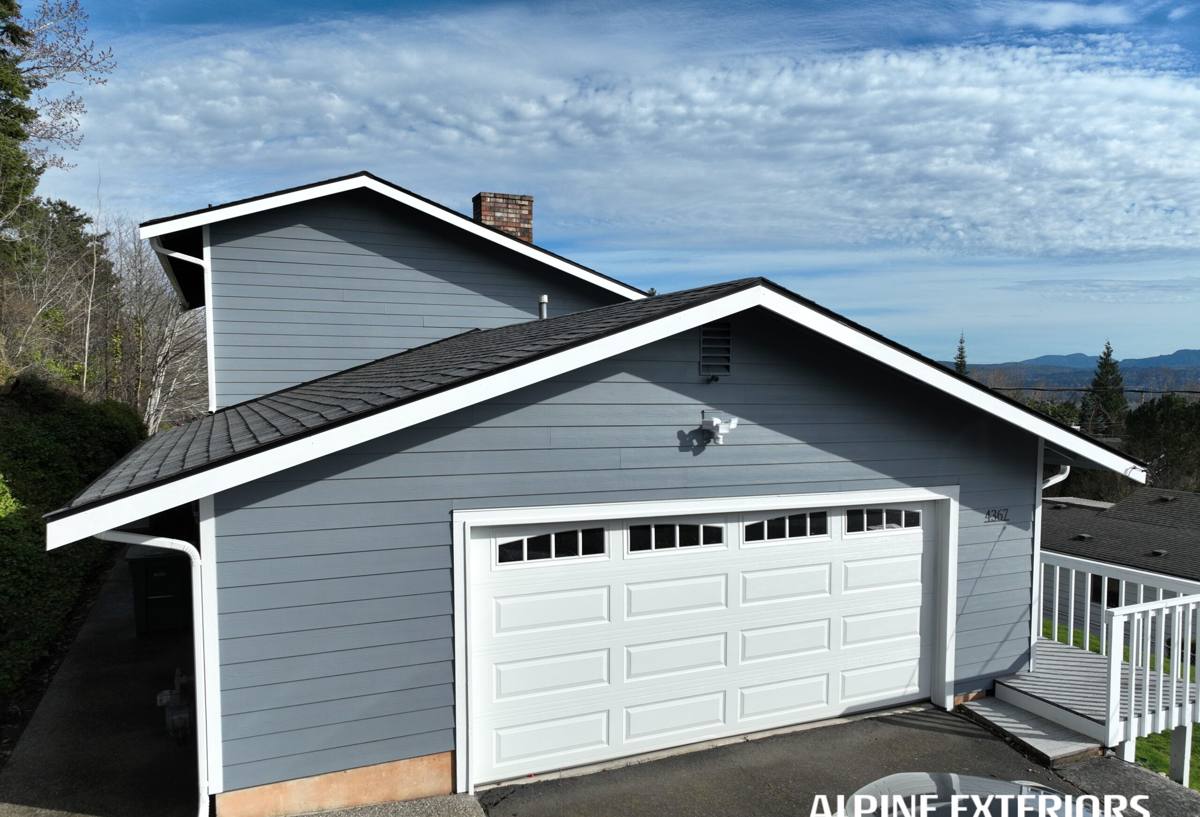
What Actually Goes Wrong on Roofs Out Here
Before we talk about installation, it helps to know what we're actually replacing when we tear off an old roof in this area. The recurring patterns we see:
- Corroded or rusted-through nail heads, flashing, and vent boots from years of salt air exposure
- Moss mats holding moisture against shaded, north-facing, or low-slope sections long-term
- Wind-lifted or cracked shingle tabs along roof edges and ridges, where wind off the water hits hardest
- Soft or delaminated decking under valleys and eaves where water has been sitting or wicking in
- Undersized or missing ice-and-water membrane at eaves and valleys, common on older roofs never built for this exposure
- Ventilation that's inadequate for the humidity load, trapping moisture in the attic space
A tear-off is the only honest way to find these issues. Anything installed over an existing layer just buries the same problems under new shingles.
What a Correct New Roof Installation Involves
A proper roof replacement is a sequence of details, and skipping any one of them is where premature failures start. Here's what we treat as non-negotiable on every job:
Tear-Off and Deck Inspection
Full removal down to the deck, not an overlay. Every sheet of decking gets inspected for soft spots, delamination, or rot — especially at valleys, eaves, and around any roof penetration — and anything compromised gets replaced before anything else goes down.
Underlayment and Ice-and-Water Protection
Synthetic underlayment across the full roof, with self-adhering ice-and-water membrane at eaves, valleys, and around penetrations — the spots where wind-driven rain off the water is most likely to force its way under the shingle line. This is the detail that matters most in a driving-rain climate, and it's the one corner-cutters skip most often because it doesn't show once the roof is finished.
Flashing
New flashing at every chimney, skylight, sidewall, and valley — never reused. Old flashing that's been through years of salt exposure is usually thinned or perforated in ways that aren't obvious from the ground.
Ventilation
Balanced intake and exhaust ventilation sized for the roof, not just whatever was there before. Correct airflow reduces moisture buildup in the attic, which is directly connected to how fast moss and algae recur on the surface above.
Fasteners and Metal Components
Corrosion-resistant fasteners and flashing metals appropriate for salt air exposure, not standard-grade hardware that's fine sixty miles inland but starts rusting here within a few seasons.
Material Options for This Exposure
There's no single "best" roofing material for every home — the right choice depends on the roof's pitch, the home's exposure to wind and salt spray, and how much long-term maintenance you want to take on. Here's how the common options actually perform under Point Roberts conditions:
| Material | Salt Air / Corrosion Behavior | Moss & Algae Resistance | Typical Lifespan |
|---|---|---|---|
| Architectural asphalt shingle | Good — fiberglass mat doesn't corrode; exposed metal components still need corrosion-resistant hardware | Better with algae-resistant granules; still needs periodic cleaning on shaded slopes | 25–30 years, often less if ventilation or flashing is substandard |
| Standing seam metal | Excellent when properly coated and fastened; a weak point if fasteners or coating are undersized for the exposure | Very good — smooth surface sheds moss more easily than shingles | 40–50+ years |
| 3-tab asphalt shingle | Adequate but thinner and less wind-resistant at roof edges | Fair — more prone to moss anchoring in the thinner tab profile | 15–20 years |
| Wood shake | Requires ongoing maintenance in this humidity; higher moisture retention | Poor without regular treatment — highest moss/algae risk of the common options | Varies widely with maintenance |
We're straightforward with homeowners about wood shake in this climate: it can look great, but the maintenance commitment to keep moss and rot at bay in a marine environment is real and ongoing. For most Point Roberts homes, an algae-resistant architectural shingle or a standing seam metal roof gives the best balance of upfront cost, appearance, and long-term performance without demanding constant upkeep.
Dealing With Moss Before It Starts
Moss doesn't just sit on top of a roof — it holds water against the shingle surface and works its way under tabs and around fasteners over time, which is how a moss problem eventually becomes a leak problem. On a new install, we build in moss prevention rather than leaving it as an afterthought:
- Zinc or copper strips near the ridge on shaded or north-facing slopes, which release trace metals in rainwater that inhibit moss growth down the roof plane
- Algae-resistant shingle granules on the sections most prone to shade and moisture retention
- Correct ventilation so the underside of the deck isn't adding to the moisture load from below
- Trim recommendations where overhanging branches keep a section of roof shaded and damp longer than the rest
None of this makes a roof moss-proof forever — this is Whatcom County, and moss is part of living near the water — but it substantially slows how fast it comes back and how much cleaning the roof needs in between.
Our Installation Process
- Site walk and inspection — we look at the current roof, decking condition, ventilation, and any problem areas specific to your home's exposure and pitch
- Written estimate — clear scope, material options, and what's included, with no vague allowances or surprise add-ons discovered mid-job
- Scheduling around weather — we plan tear-off days around dry weather windows so the deck isn't exposed to rain any longer than necessary
- Tear-off and deck repair — full removal, deck inspection, and replacement of any compromised sheathing before anything new goes down
- Underlayment, flashing, and material installation — installed to manufacturer specification, not shortcuts
- Final walkthrough — we go over the finished roof with you, including ventilation, flashing points, and any maintenance notes specific to your property
Why a Crew That Already Works Point Roberts Matters
Point Roberts is physically part of Whatcom County, Washington, but it's only reachable by road through Canada, or by water. That geography isn't a footnote — it directly affects how a roofing job gets scheduled, supplied, and permitted. A crew that doesn't already work here regularly has to solve border logistics for materials and equipment on your job, on your timeline. A crew that already works this area has that solved before your project ever starts, along with a working relationship with the local building department and a real understanding of which sides of a roof take the worst wind and salt exposure on this particular peninsula.
That local familiarity also shows up in smaller, practical ways: knowing which material suppliers can actually get product to Point Roberts on schedule, knowing how weather windows off the water tend to move through the area, and knowing what a roof here actually needs to hold up — not what a generic spec sheet says for an average inland climate.
Signs Your Roof Needs Replacement, Not Just Repair
Not every roof problem means a full replacement — but out here, the line gets crossed faster than homeowners expect because of the added exposure. Signs it's time to talk replacement rather than another round of repairs:
- Granule loss heavy enough that shingles look bald or patchy in sections
- Curling, cracked, or wind-lifted shingle tabs in more than one area of the roof
- Soft spots, sagging, or visible deflection anywhere on the roof deck
- Recurring leaks around the same flashing point despite prior patch repairs
- Heavy, persistent moss coverage across large sections rather than isolated patches
- The roof is at or past the expected lifespan for its material and was never properly ventilated
If you're only seeing one or two of these, a targeted repair may still make sense — and we'll tell you that honestly rather than pushing a full replacement you don't need yet.
Cost Factors Worth Understanding
Every roof is priced individually after a site walk, but the variables that actually move the number are consistent. Knowing them upfront helps you compare estimates apples-to-apples:
| Factor | Why It Matters |
|---|---|
| Roof size and number of layers to remove | More tear-off labor and disposal, especially on older homes with multiple layers |
| Pitch and roof complexity | Steeper or more cut-up roofs (valleys, dormers, multiple planes) take longer and need more flashing detail |
| Material choice | Standing seam metal costs more upfront than architectural shingle but needs less long-term maintenance |
| Deck repair needed | Rotten or soft sheathing found during tear-off adds material and labor not visible from the ground |
| Ventilation upgrades | Bringing older, undersized ventilation up to a correct balanced system is a worthwhile add, not a corner to cut |
| Access and logistics | Point Roberts' location can affect material delivery timing, which a local crew already plans around |
If your roof out here is showing its age — heavy moss, granule loss, recurring leaks around the same spot — we're happy to take a look and give you a straightforward, no-pressure estimate. Use the form below to get in touch and we'll schedule a site walk.