 Semiahmoo Exterior
 Why Point Roberts Windows Take More Punishment Than Most
Point Roberts sits on its own peninsula, cut off from the rest of Washington State by the international border and surrounded on three sides by Boundary Bay and the Strait of Georgia. That geography is charming, but it also means every window on the point is doing double duty: keeping out wind-driven rain off open water and standing up to a steady dose of salt air that doesn't let up for long. Homes just a mile or two inland in Whatcom County don't see the same combination of exposure and moisture load that a house on the point does, especially on west- and south-facing walls that catch weather coming straight off the water.
We work windows in this specific corner of the county regularly, and the pattern is consistent: it's rarely the glass that fails first. It's the hardware corroding, the sealants breaking down faster than they would fifteen miles inland, and frames that were never detailed for this level of moisture starting to show rot or swelling within a handful of years. Custom windows done right for Point Roberts aren't just about fitting an odd-sized opening — they're about specifying and installing for a coastal microclimate that's harder on materials than the regional average.
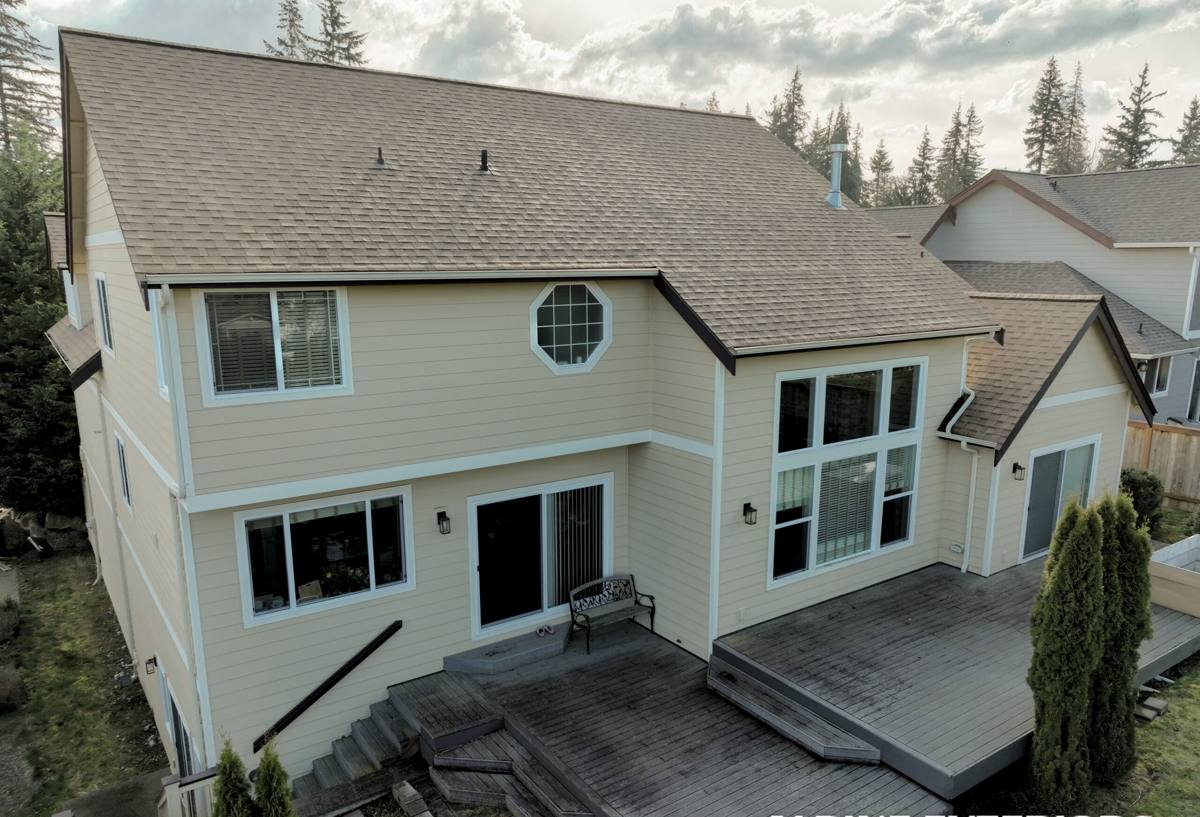
What "Custom" Actually Means Here
Custom windows get lumped in with "premium" or "expensive," but the real reason to go custom on a Point Roberts home usually has nothing to do with luxury. It's fit and performance.
Non-Standard Openings
Many homes on the point were built or added onto in phases over the decades, and older construction plus additions often means openings that don't match today's standard window sizes. Custom units let us match the actual rough opening instead of forcing a stock size and packing the gaps with trim and caulk — which is exactly the kind of shortcut that lets moisture find its way behind the frame.
Performance Matched to Exposure
A window on a sheltered inland wall and a window facing open water don't need the same spec. Custom ordering lets us upgrade glazing, weatherstripping, and hardware selectively on the exposed elevations without paying for that upgrade on every window in the house.
Matching Existing Character
On older coastal homes, especially ones with a defined architectural style, custom sightlines, grille patterns, and trim profiles keep new windows from looking like an obvious patch job.
The Climate Factors That Drive Every Decision
A window that performs well in Bellingham or Ferndale won't automatically hold up on the point. Here's what we're actually designing around.
Salt Air and Corrosion
Airborne salt attacks unprotected metal steadily over time — hinges, cranks, locks, and screws are usually the first casualties. Standard-grade hardware finishes that are fine a few miles inland can start pitting or seizing up noticeably sooner out here.
Driving, Wind-Blown Rain
Rain that comes in sideways off the water tests window details that don't matter much in calmer conditions — the quality of the sill pan, the flashing integration with the wall assembly, and how well the weep system actually drains rather than trapping water.
Moss and Prolonged Dampness
Whatcom County's long wet season lets moss and algae establish on anything that stays damp and shaded — sills, exterior trim, and low-slope sash surfaces included. Beyond the cosmetic issue, sustained dampness against wood trim or a poorly sealed frame is what eventually leads to soft spots and rot.
Temperature Swings and Condensation
Marine air keeps things milder than inland Whatcom County, but damp cold plus a warm interior still produces interior condensation on underperforming glass — something we watch for on north-facing rooms and bathrooms in particular.
Getting the Materials Right for This Location
| Component | What we specify for Point Roberts | Why it matters here |
|---|---|---|
| Frame material | Vinyl or fiberglass with proven coastal warranty coverage; clad-wood where character matters and detailing is solid | Resists moisture absorption and doesn't require the maintenance cycle bare wood does in salt air |
| Hardware finish | Corrosion-resistant coatings rated for coastal or marine exposure | Standard interior-grade hardware corrodes and seizes noticeably faster near open water |
| Glazing | Dual-pane, low-E, argon-filled as a baseline; upgraded spacer systems on exposed elevations | Cuts condensation risk and holds seal integrity longer under repeated damp-dry cycling |
| Flashing and sill pan | Fully integrated sill pan flashing tied into the wall's water-resistive barrier | This is the single biggest factor in whether wind-driven rain stays out |
| Sealants | Marine-grade, UV- and salt-stable sealant, not standard exterior caulk | Standard caulk breaks down faster under this level of salt and moisture exposure |
What Correct Installation Looks Like
The window unit itself is maybe half the job. The other half is how it gets integrated into the wall, and that's where most long-term failures on coastal homes actually start.
- Rough opening is inspected for existing rot or moisture damage before anything new goes in — installing a good window into a compromised opening just hides the problem
- Sill pan flashing is installed and tied into the building's water-resistive barrier, not just caulked at the surface
- Head flashing sheds water out and away from the wall, not just down the face of it
- Window is shimmed and squared correctly so the sash operates smoothly and seals evenly for years, not just on install day
- Insulation between the frame and rough opening is continuous, without gaps that create cold spots or air leaks
- Interior and exterior sealant joints are tooled properly, not just laid down as a bead
- Weep holes and drainage paths are confirmed clear and functional before the job is called done
Skip any one of these steps and you can end up with a genuinely well-made window that still leaks or fails early — because the failure point was the installation detailing, not the product.
Our Process for a Point Roberts Window Project
1. On-Site Assessment
We look at existing window condition, framing and sill health, exposure on each elevation, and any signs of past moisture intrusion before we talk products.
2. Product and Spec Selection
We walk through frame material, glazing package, and hardware options based on which walls take the most weather, and we're straightforward about where you can save money on sheltered elevations versus where it's worth spending more.
3. Precise Measurement and Ordering
Custom units are made to the actual opening. We double-check measurements before ordering — remakes on custom windows cost real time, and on the point that often means longer lead times to get materials out here.
4. Removal and Opening Prep
Old units come out carefully, and we address any rot, damaged sheathing, or compromised flashing we find before the new window goes anywhere near the opening.
5. Installation and Flashing Integration
New windows go in plumb, level, and fully integrated with proper flashing — this is the step that determines whether the job holds up through a decade of Whatcom County winters.
6. Final Sealing and Walkthrough
We finish sealant work, confirm smooth operation on every unit, and walk the job with you so you know what to expect from the new windows and how to keep them performing.
Cost Factors Worth Understanding Upfront
We don't quote fixed prices without seeing the job, but the honest cost drivers on a Point Roberts custom window project are consistent:
| Factor | How it affects cost |
|---|---|
| Number of non-standard openings | True custom sizing costs more per unit than stock sizes, but avoids poor-fit compromises |
| Exposure level | Upgraded glazing and hardware on wind- and water-facing elevations adds cost but reduces long-term maintenance and failure risk |
| Existing damage found during removal | Rotted framing or compromised sheathing discovered mid-project adds repair cost before new windows can go in correctly |
| Frame material choice | Vinyl is typically the most economical; fiberglass and clad-wood cost more but bring different durability and appearance trade-offs |
| Access and logistics | Point Roberts' location adds lead time and logistics considerations for material delivery that don't apply to more centrally located jobs |
Why Local Experience on the Point Matters
A contractor who's never worked this stretch of coastline can still install a window competently, but they're guessing at exposure levels and moisture behavior that we've already seen play out on other Point Roberts homes. Knowing which elevations take the worst of the driving rain, how fast moss establishes on shaded sills here versus elsewhere in Whatcom County, and which hardware finishes actually hold up to this salt air isn't something you get from a general product spec sheet — it comes from doing the work here repeatedly and seeing what lasts and what doesn't.
There's also a practical logistics side to it. Point Roberts' geography means material deliveries, scheduling, and lead times need to be planned around the location itself, not assumed to work the same way a mainland Whatcom County job would. A crew that already accounts for that keeps your project moving instead of stalling on preventable delays.
Signs Your Current Windows Are Losing the Battle
- Sashes that stick, feel gritty, or won't latch fully — often a sign of corroded hardware or a frame that's swelled from moisture
- Visible fogging or moisture between panes, meaning the seal has failed
- Soft or discolored trim and sill areas around the window
- Persistent moss or dark staining on sills and lower sash rails that keeps returning after cleaning
- Noticeable drafts or a cold wall feel near the window on windy days
- Paint or finish failing faster on window trim than on the rest of the exterior
Any one of these on its own might just need a repair. Several at once, especially on a west- or south-facing wall, usually means it's time to talk about replacement before hidden damage spreads further into the wall.
If you're weighing a window project for a Point Roberts home, we're happy to take a look and give you a straight read on condition, options, and realistic costs — no pressure, no obligation. Use the form below to request a free estimate.