 Semiahmoo Exterior
 Roofing Around Drayton Harbor Is Not a Generic Job
Homes along Drayton Harbor and the Semiahmoo area sit right at the edge of saltwater, open water winds, and one of the wettest, greyest stretches of Whatcom County's roofing calendar. A roof spec'd for an inland neighborhood twenty miles away often underperforms here within a few years. We install new roofs specifically for this stretch of shoreline, and this page covers what that actually means — not marketing language, just what a correct installation looks like when the job is a harbor-adjacent home in a marine climate.
A new roof is one of the largest investments a homeowner makes in a house, and it's also one of the easiest to get wrong in subtle ways that don't show up for a few winters. Fasteners that seem fine in year one can be compromised by year five. Underlayment that's "good enough" inland can trap moisture here. The goal of this page is to walk through the local conditions, what a properly built roof needs to resist them, and how we approach the work.
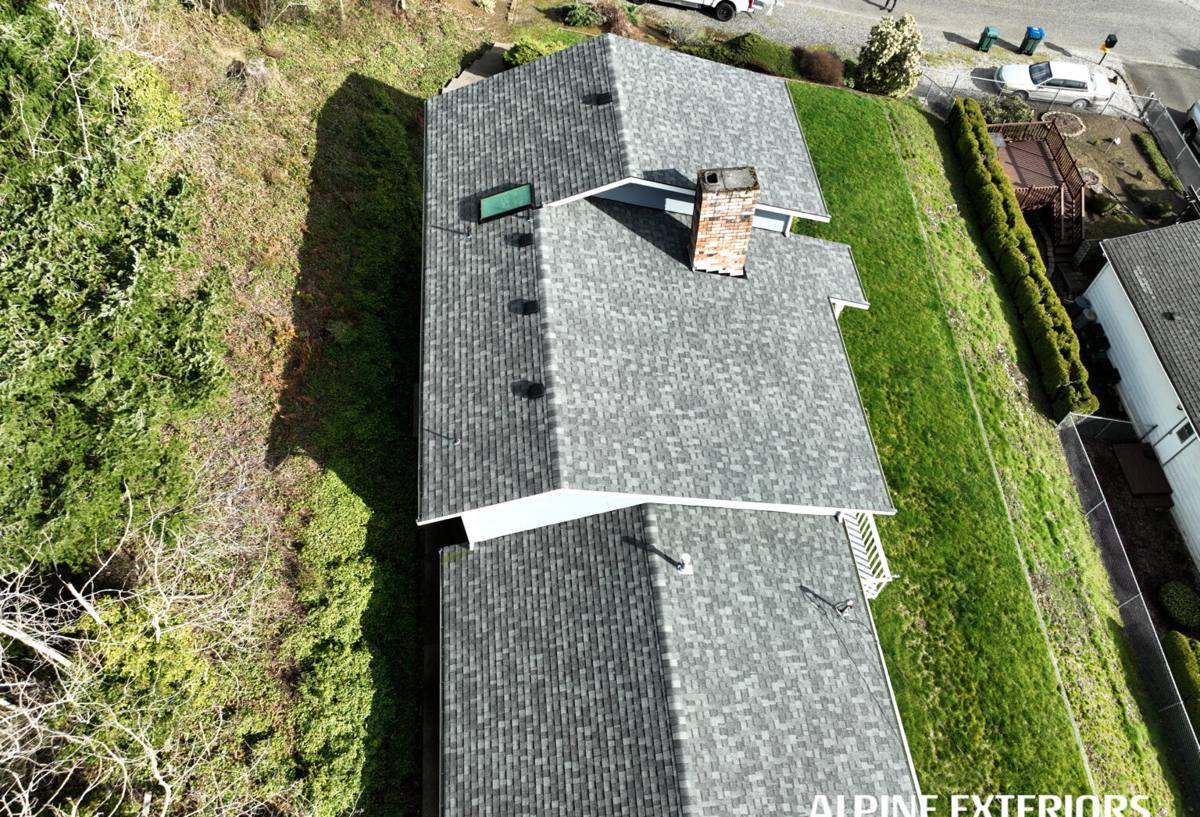
What Salt Air, Driving Rain, and Moss Actually Do to a Roof
Salt Air and Corrosion
Airborne salt from Drayton Harbor and the surrounding waterways settles on every exterior surface, including the roof. Over time it accelerates corrosion on exposed metal — nail heads, flashing seams, valley metal, and any fasteners that aren't rated for coastal exposure. A roof that looks intact from the ground can have flashing or fastener corrosion happening at the details you can't see from the driveway.
Driving, Wind-Driven Rain
Storms coming off the water don't just drop rain straight down — wind pushes it sideways and up under shingle edges, at ridge caps, and around any roof penetration (vents, chimneys, skylights). A roofing system built for calmer inland weather can rely on gravity to shed water. Here, the system has to assume water will be pushed uphill and sideways at some point during the year, and be sealed accordingly.
Moss and Organic Growth
Whatcom County's long, cool, damp stretch from fall through spring is close to ideal growing conditions for moss and algae. On a roof, moss holds moisture against the shingle surface far longer than open air would allow, and as it spreads under shingle tabs and along ridges, it lifts material and creates channels for water to travel where it shouldn't. Left untreated for a few seasons, moss growth measurably shortens the life of an otherwise sound roof.
Signs a Drayton Harbor Home Needs a New Roof (Not Just a Repair)
Not every roofing issue means a full replacement, but in this climate certain signs usually point past the "patch it" stage:
- Moss coverage across more than a third of the roof plane, especially if it's returned after a prior cleaning
- Granule loss heavy enough to see bare fiberglass mat on multiple shingles, not just isolated spots
- Curling, cupping, or cracked shingles concentrated on the sides of the roof that face prevailing wind and weather
- Rusted or visibly deteriorated flashing at valleys, chimneys, and roof-to-wall transitions
- Daylight visible through the roof deck from the attic, or damp insulation after storms
- A roof already past 20-25 years old (asphalt) even if it "looks okay" from the ground
- Repeated interior leaks that keep reappearing in different spots after repairs
If a home is only showing one or two of these and the roof is younger, targeted repair is usually the honest recommendation — we'll tell you that directly rather than push a full tear-off that isn't needed yet.
Choosing a Roofing System for This Climate
Every roofing material trades off differently once you account for salt exposure, wind-driven rain, and moss pressure. Here's how the common options compare for a Drayton Harbor / Semiahmoo home specifically:
| Material | Moss Resistance | Wind/Rain Performance | Maintenance | Typical Lifespan Here |
|---|---|---|---|---|
| Standard 3-tab asphalt | Low — flat profile holds moisture | Fair; lower wind rating | Regular moss treatment needed | 15-20 years |
| Architectural (laminated) asphalt | Moderate, better with algae-resistant granules | Good; higher wind ratings available | Periodic moss treatment | 25-30 years |
| Standing seam metal | High — sheds moisture, little surface for moss to grip | Excellent when properly fastened | Low; watch fastener/coating condition near salt air | 40-50+ years |
| Cedar shake/shingle | Low without regular treatment | Fair; sensitive to sustained moisture | High — regular treatment and inspection | 20-30 years with upkeep |
We don't install every product on this list on every home. Cedar, for example, can look excellent, but in a marine, high-moisture climate it demands a maintenance schedule most homeowners underestimate, and we're upfront that a low-maintenance alternative may serve the same home better long-term. That's a judgment call we'll walk through with you, not a sales pitch for the highest-margin product.
Algae-Resistant Granules
Most quality asphalt shingle lines now offer granules treated to resist algae and moss growth. Given how much moss pressure this area sees, we treat this as close to non-negotiable on asphalt installations here rather than an upgrade option.
What a Correct Installation Involves
Tear-Off and Deck Inspection
A new roof starts with a full tear-off to the deck, not a layover — you can't properly evaluate or waterproof a deck you can't see. We check for soft spots, rot, and any prior water damage before anything new goes down, and any compromised decking gets replaced rather than covered over.
Underlayment Built for Wind-Driven Rain
Given how often storms push rain sideways here, we use synthetic underlayment rated for this exposure, with ice-and-water shield style membrane at the vulnerable spots — eaves, valleys, and around penetrations — rather than only at the code-minimum locations.
Flashing and Fastener Selection
Flashing and fasteners get chosen for salt-air exposure, not generic inland specs. This matters most at valleys, chimney step flashing, and any roof-to-wall intersection, since these are the details that fail first when corrosion-resistant materials weren't used.
Ventilation
Proper intake and exhaust ventilation keeps the attic from trapping moisture that condenses back onto the deck — a bigger risk in a consistently damp climate than in a dry one. We check existing ventilation as part of every new roof rather than assuming it's adequate.
Our Process for a Drayton Harbor Roof Replacement
- On-site inspection and honest assessment — we look at the whole roof system, not just the shingles, and tell you plainly whether you need a replacement or a repair.
- Written estimate — a clear scope and price before any work starts, with material options explained rather than a single default choice.
- Prep and protection — landscaping, siding, and gutters get protected before tear-off begins.
- Tear-off and deck repair — full removal of old roofing, deck inspected and any damaged sections replaced.
- Installation — underlayment, flashing, and roofing material installed to the specs above, built for this specific climate rather than a generic checklist.
- Cleanup and final walkthrough — magnetic sweep for debris, and a walkthrough so you can see the finished work before we consider the job done.
Why Hiring a Crew That Already Works This Area Matters
A roofing crew that mostly works inland neighborhoods may not default to coastal-grade fasteners, may under-spec the ventilation, or may not think to flag moss pressure as a maintenance issue you'll want ahead of, rather than after, it's already spread. A crew that regularly works Semiahmoo and the Drayton Harbor shoreline already accounts for these conditions as a starting point, not an afterthought — because we see what happens to roofs here that weren't built for it, and we see it on a lot of homes over the years.
Local familiarity also matters for permitting and inspection timing in Whatcom County, and for understanding how a given lot's exposure to wind off the water should factor into material and fastening choices. It's the difference between a roof built to a general standard and one built for this specific stretch of coastline.
Maintenance After Your New Roof Goes On
A well-installed roof in this climate still benefits from some upkeep — this isn't a "install and forget" situation anywhere near the water:
- Schedule moss treatment or gentle cleaning on a regular cycle, especially on north-facing or shaded slopes
- Keep gutters clear so wind-driven rain has somewhere to go instead of backing up under the roof edge
- Have flashing and fastener areas checked periodically, since salt-air corrosion is gradual and easy to miss until it's advanced
- Trim back overhanging branches that keep sections of the roof shaded and damp longer than the rest
If you're weighing a roof replacement for a home near Drayton Harbor or elsewhere around Semiahmoo, we're happy to take a look and give you a straight assessment — no pressure, no obligation. Use the form below to request a free estimate and we'll go from there.