 Semiahmoo Exterior
 Why California Creek Homes Need a Roof Built for This Coastline
California Creek sits close enough to Semiahmoo Bay and Drayton Harbor that homes here deal with a different set of conditions than a roof twenty miles inland in Bellingham or Lynden. Salt-laden air moves off the water and settles on every exposed surface, wind-driven rain comes in sideways more often than it falls straight down, and the shaded, damp stretches of the year give moss and algae months to get established before a homeowner even notices. A roofing material that performs fine in a drier part of Whatcom County can struggle here. Metal roofing, installed correctly for this specific environment, holds up to all three of those pressures better than most alternatives — but "installed correctly" is doing a lot of work in that sentence, and it's the part that separates a roof that lasts decades from one that starts causing problems in year five.
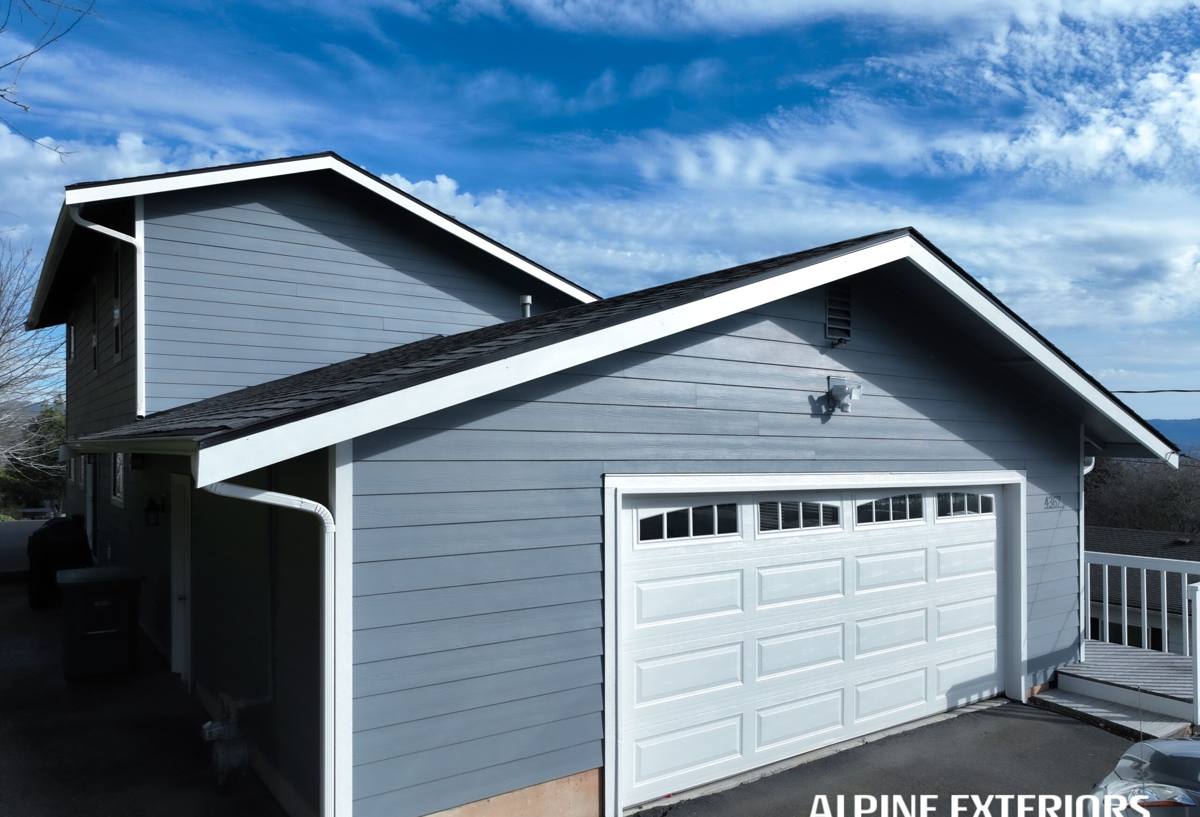
What This Climate Actually Demands From a Metal Roof
Salt Air and Corrosion
Airborne salt is an electrolyte. It accelerates corrosion wherever metal is exposed, and it's especially aggressive at cut edges, fastener heads, and anywhere two dissimilar metals touch each other — a condition called galvanic corrosion. On a property this close to the bay, we pay close attention to panel finish, fastener material, and flashing compatibility in a way that simply doesn't matter as much on a roof further from the water. Skipping that step doesn't show up right away; it shows up as rust streaking and premature fastener failure a few years down the line.
Driving Rain and Water Management
Wind off the water pushes rain uphill under laps, into valleys, and behind flashing that would stay dry in a calmer setting. Metal roofing sheds bulk water extremely well, but the seams, penetrations, and edge details are where a roof either performs or leaks. Underlayment choice, lap direction, and fastener placement all have to account for wind-driven rain specifically, not just gravity.
Moss and Organic Growth
Metal doesn't feed moss the way organic roofing materials do, which is one of its real advantages in this climate. But moss and debris still collect in valleys, at wall-to-roof transitions, and in gutters, holding moisture against the panel edges and fasteners longer than it should sit. In a long moss season like Whatcom County's, roof design that keeps water moving and debris from piling up matters as much as the panel material itself.
Standing Seam vs. Exposed-Fastener Metal Panels
Both systems are legitimate metal roofing products, but they behave differently in a salt-air, high-rain environment, and the right choice depends on the home, the roof geometry, and the budget.
| Factor | Standing Seam | Exposed-Fastener Panel |
|---|---|---|
| Fastener exposure | Concealed under the seam — no fastener heads exposed to weather | Screws penetrate the panel face and are exposed to rain and salt air |
| Long-term maintenance | Minimal — no fastener washers to inspect or replace | Rubber washers under each screw degrade over time and need periodic checking |
| Water performance | Excellent on low-slope and high-wind-driven-rain conditions | Good on typical slopes; more reliant on correct screw torque and washer condition |
| Upfront cost | Higher material and labor cost | Lower upfront cost |
| Best fit | Coastal-exposed roofs, complex rooflines, homeowners planning to stay long-term | Budget-conscious projects, simpler rooflines, secondary structures |
For a property in California Creek with direct salt-air exposure, we generally steer homeowners toward standing seam when the budget allows, specifically because it removes the one component — exposed fastener washers — that ages fastest this close to the water. That said, a well-installed exposed-fastener system with quality fasteners and a realistic maintenance plan is still a sound option, and we'll lay out the honest trade-offs for your specific roof rather than push the more expensive system by default.
What a Correct Metal Roof Installation Actually Involves
The panel itself is only one part of a metal roofing system. Most of the problems we get called out to fix on other people's metal roofs trace back to what's underneath or around the panels, not the panels themselves.
- Solid, properly prepared deck — any rot or soft sheathing gets replaced before a single panel goes on
- High-temp synthetic underlayment rated for the climate, not builder-grade felt
- Ice-and-water shield at eaves, valleys, and penetrations where wind-driven rain is most likely to work its way under laps
- Compatible flashing metal at every wall transition, chimney, and vent to avoid galvanic reaction with the panel material
- Correct fastener type and spacing matched to the panel manufacturer's specs, not generalized
- Proper attic or roof-deck ventilation to prevent condensation from forming on the underside of the panel in our humid marine air
- Clean, sealed penetrations for vents, skylights, and anything else that breaks the roof plane
- Valley and gutter design that keeps debris moving instead of collecting against panel edges
Any one of these done wrong can undercut an otherwise good panel. A metal roof with a premium panel and a rushed underlayment job will still leak; a modest panel installed with full attention to these details will outperform it.
Choosing Gauge, Coating, and Color for a Waterfront-Adjacent Climate
Not every metal roofing product sold in the region is specified the same way, and the differences matter more here than they would inland.
Panel Gauge
Thicker gauge steel or aluminum resists denting from debris and foot traffic during maintenance, and it holds its shape better over time. We'll recommend a gauge based on your roof's exposure and slope rather than defaulting to the thinnest option available.
Coating System
The paint finish on a metal panel is what actually faces the salt air, UV, and rain day to day. Premium PVDF (often sold under the Kynar 500 name) finishes hold color and chalk resistance far longer than standard polyester coatings, which matters most on a coastal-adjacent property where the finish is under more constant stress. It costs more upfront and is worth discussing honestly against your budget and how long you plan to own the home.
Color and Heat
Darker colors show fading and chalking sooner in direct coastal sun and salt exposure than lighter, reflective finishes. We'll walk through real options rather than just handing you a color chart.
Our Process for a California Creek Metal Roofing Project
We approach every metal roofing job on this stretch of coastline the same deliberate way:
- On-site assessment — we look at your roof's exposure to wind and salt air, existing deck condition, ventilation, and any current leak history before recommending anything
- Honest system recommendation — standing seam vs. exposed fastener, gauge, coating, and color, explained in plain terms with real trade-offs
- Written scope and estimate — what's being removed, what's being replaced underneath, and what the finished system includes
- Deck repair and underlayment — done to spec before a panel is ever installed, so nothing is hidden behind finished work
- Panel installation and flashing detail — with attention to every transition, valley, and penetration specific to this climate
- Final walk-through — so you understand what was installed, what maintenance (if any) it needs, and what the warranty actually covers
Maintenance: What Metal Roofing Actually Needs Out Here
One of the genuine advantages of metal roofing in this climate is how little ongoing maintenance it needs compared to organic roofing materials — but "little" isn't "none," especially this close to salt water.
- Clear debris from valleys and gutters at least once or twice a year so water and fine debris don't sit against panel edges
- Check exposed-fastener systems periodically for washer wear, since rubber gaskets degrade with age and UV exposure
- Look at flashing and sealant at penetrations after major storms, since wind-driven rain finds weak points fastest
- Rinse off salt buildup if the home sits in a particularly exposed spot, similar to how you'd rinse patio furniture or a vehicle
Compared to asphalt shingles needing moss treatment and granule loss monitoring, or wood shake needing regular treatment against rot in this rainfall, a correctly installed metal roof is a genuinely lower-maintenance choice for a California Creek property — it's just not a zero-maintenance one.
Why Hiring a Crew That Already Works This Area Matters
Metal roofing installation isn't uniform across Washington. A crew that mostly works drier, inland jobs may not default to the underlayment upgrades, flashing compatibility checks, or ventilation detailing that a California Creek roof actually needs — not because they don't know how, but because it isn't their daily habit. We work exteriors throughout Semiahmoo and the surrounding Whatcom County coastline regularly enough that accounting for salt air, wind-driven rain, and a long moss season isn't an add-on for us — it's just how we spec a roof here by default. That familiarity also means we can talk through your specific roof's exposure honestly, without guessing at conditions we haven't seen firsthand in this area.
If you're weighing a new metal roof, a replacement, or just want a straight answer on whether standing seam is worth it for your California Creek home, we're glad to take a look. Use the form below to request a free, no-pressure estimate.