 Semiahmoo Exterior
 Marietta sits along the Whatcom County coastline in the Semiahmoo service area, and like the rest of this stretch of shoreline, homes here take a steady, year-round beating from the weather. Salt-laden air moves in off the water, rain arrives driven sideways more often than it falls straight down, and the moss season runs longer here than it does even a short drive inland. Siding on a Marietta home isn't just a cosmetic layer — it's the first line of defense against all three of those conditions working on the house at once, day after day, for decades.
We install James Hardie fiber cement siding exclusively. Not because it's the only product on the market, but because after years of exterior work on homes exposed to this specific combination of salt, moisture, and shade, it's the only material we're willing to put our name behind. This page covers what Marietta's climate actually does to siding, what correct Hardie installation involves, and how our process works for a project in this area.
What Marietta's Climate Does to Siding
Salt Air
Homes near Semiahmoo and along this part of the Whatcom County coast sit close enough to open water that salt-laden air is a constant, not an occasional event. Over time, that air accelerates corrosion on exposed fasteners, staples, and metal trim, and it breaks down lower-grade paints and finishes faster than a drier, more sheltered site ever would. A siding material's finish and hardware need to be chosen with that corrosion pressure in mind from day one — retrofitting for it after rust or fading shows up is a much harder and more expensive conversation.
Driving Rain
Wind off the water pushes rain sideways into wall assemblies, not just straight down onto roof planes. That means siding laps, joints, and butt seams take on a heavier moisture load than the region's total rainfall numbers would suggest on their own. Installation details that hold up fine on a calmer, more sheltered inland lot can fail on a Marietta home specifically because water is finding its way in horizontally, through a joint or lap that was never built to handle that kind of pressure.
A Long Moss Season
Mild year-round temperatures, near-constant humidity, and shaded or tree-covered walls add up to a moss and mildew season that runs most of the year across this part of Whatcom County. Marietta's mix of mature landscaping and proximity to the water doesn't shorten that window. Porous or wood-based siding materials are usually the first place moss and mildew take hold, especially on north-facing walls that don't get much direct sun to dry them out between rain events.
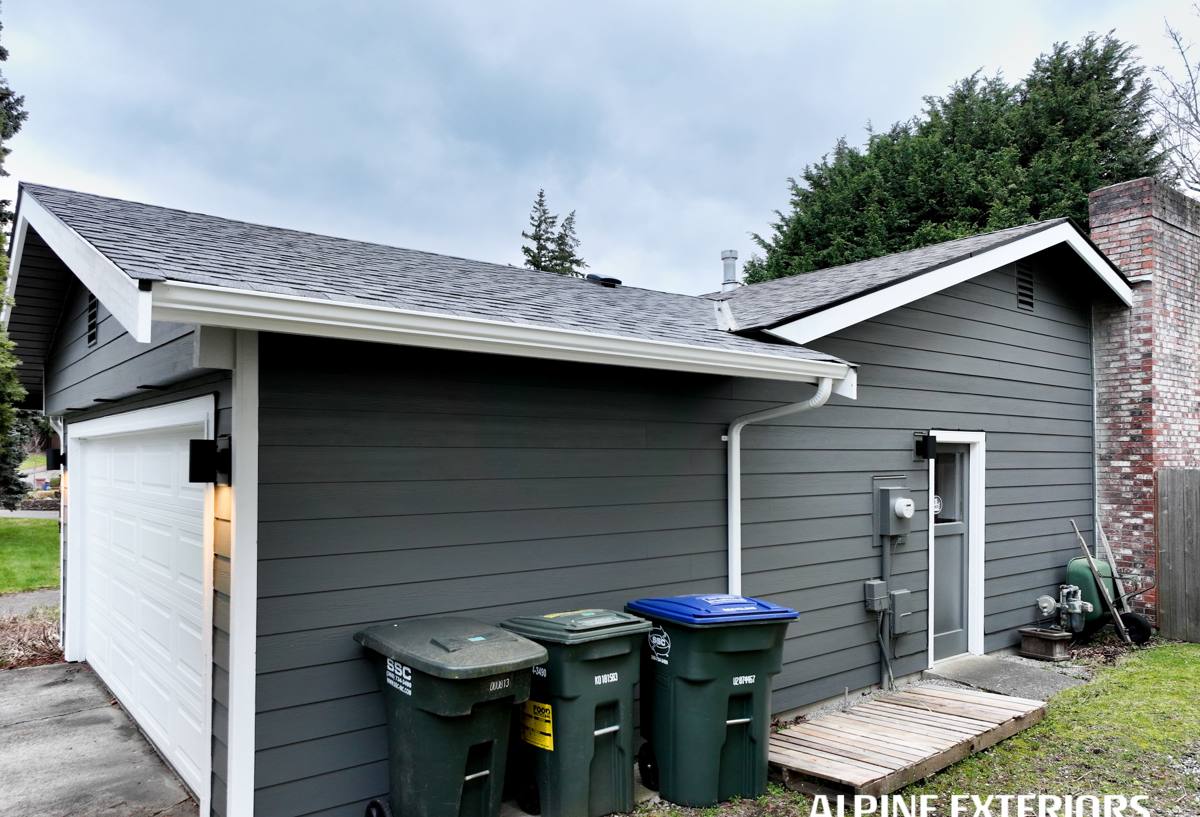
Why We Only Install James Hardie Siding
We used to install a wider range of siding products. We stopped after seeing what actually happened, over years, to different materials on service calls and tear-offs in exposed, moisture-heavy settings like this one — not because of a supplier deal or a sales incentive.
- Non-combustible core: Fiber cement doesn't feed a fire the way wood-based siding products can, which matters for both home safety and, in many cases, insurance underwriting.
- Factory-applied ColorPlus finish: The color is baked on under controlled factory conditions rather than brushed on in the field, and it holds up far longer against fading, chalking, and moisture intrusion than site-applied paint does.
- Climate-engineered HZ5 formulation: James Hardie's HZ5 product line is built specifically for regions with heavy moisture exposure, which describes coastal Whatcom County well.
- Dimensional stability: Fiber cement doesn't swell, cup, or warp the way engineered wood products can after repeated wetting through a long wet season.
- Strong transferable warranty: James Hardie backs its product with one of the more substantial warranty structures in the industry, provided installation follows their published spec.
We don't install LP SmartSide, vinyl siding, Cemplank, Allura, primed spruce, or cedar. Each of those has a legitimate place in the market, and plenty of homeowners elsewhere are satisfied with them. But for a Marietta property dealing with salt air, driving rain, and a long moss season all at once, we've made a professional call to stand fully behind one system rather than offer a cheaper option that quietly shifts long-term maintenance risk onto the homeowner.
What Correct James Hardie Installation Involves
Fiber cement only performs the way it's engineered to when it's installed to James Hardie's published specifications — the material is only as good as the installation behind it. A correct job includes:
- The right fastener type, gauge, and spacing for the specific Hardie product being installed
- Proper clearance from grade, roof lines, decks, and hardscaping so the bottom edge of the siding isn't sitting in standing water
- A properly lapped and sealed weather-resistant barrier behind the panels, not just house wrap stapled up and left alone
- Correct panel gapping at all butt joints and terminations, per manufacturer spec
- Flashing detailed at every window, door, and roof-to-wall transition so wind-driven rain can't track behind the cladding
- Caulking used only where James Hardie specifies it — not as a substitute for proper flashing and gapping elsewhere
A Hardie product installed loosely, with shortcuts on any of those steps, will still develop moisture problems in a climate like Marietta's. None of these details are optional upgrades — they're the baseline for siding that's actually going to perform through repeated wet seasons rather than just look good on installation day.
Signs Marietta Siding Needs Attention
Because of the salt, rain, and moss exposure this area sees, siding problems here tend to show up earlier and more visibly than they would on a drier, more sheltered inland property. Worth checking for:
- Moss or dark streaking that keeps returning on shaded or north-facing walls after cleaning
- Soft spots, bubbling, or visible swelling at seams, corners, or butt joints
- Paint or finish that's chalking, peeling, or fading unevenly, especially on wall faces that catch direct wind off the water
- Gaps opening up at trim, corner boards, or window and door casings
- Rust staining below fasteners or metal trim pieces
- Any soft or spongy feel when pressing on the siding near the base of the wall
Catching these early, before water has tracked behind the cladding and into the wall assembly, is almost always the difference between a straightforward repair and a full re-side.
Comparing Siding Materials for a Marietta Property
| Material | Moisture Behavior | Upkeep in Salt Air | Typical Longevity Here |
|---|---|---|---|
| James Hardie fiber cement | Dimensionally stable, resists swelling | Low; factory finish resists fading and chalking | 30+ years with correct install |
| Vinyl siding | Can warp or distort with sustained heat and wind pressure | Low upfront, but seams and fasteners remain exposure points | Variable; often shorter in high-wind, waterfront settings |
| LP SmartSide / engineered wood | Wood-based core is moisture-sensitive at cut edges and joints | Moderate; edge sealing and caulk maintenance matter | Depends heavily on installation quality and upkeep |
| Cedar / primed wood | Absorbs and releases moisture readily | High; regular refinishing needed in wet, salty air | Shorter without consistent, ongoing maintenance |
Our Process for a Marietta Siding Project
We start with an on-site walk of the existing siding, looking specifically at how it has handled moisture and salt exposure over time — where moss has established itself, where finishes are breaking down, and where fasteners or flashing show early signs of corrosion. From there we put together a clear, written scope and timeline before any work begins, so there are no surprises once the crew is on site.
During installation, flashing, drainage, and correct fastening aren't treated as upgrades — they're standard practice on every job in this area, because the climate doesn't leave room to cut corners on those details. We walk the completed work with the homeowner before calling the job finished, so any questions about maintenance or warranty coverage get answered on the spot.
A Simple Checklist Before Hiring for Siding Work in Marietta
- Ask what siding material they install and why, and whether they back it with a written manufacturer warranty
- Confirm current Washington contractor licensing and active liability insurance
- Ask how they detail flashing at windows, doors, and roof-to-wall transitions for wind-driven rain
- Ask about fastener spacing and clearance from grade — details that matter more here than in a drier climate
- Get a clear, written scope of work before signing anything
Why a Crew That Already Works Marietta Matters
A contractor who regularly works this stretch of the Whatcom County coastline already knows how salt air, wind-driven rain, and prolonged shade behave differently here than they do a few miles inland. That familiarity shows up in decisions a homeowner rarely sees directly — which fastener grade to use, how much clearance to leave at grade, where extra flashing detail earns its keep — and those decisions are exactly what determines whether a siding job lasts one wet season or several decades on a property like this.
If you're weighing a siding project for a Marietta home, we're happy to walk the exterior with you and give an honest read on what it actually needs. Reach out below for a free, no-pressure estimate.