 Semiahmoo Exterior
 Building Decks for Marietta's Coastline Conditions
Marietta sits close enough to the water that every outdoor structure on your property answers to it, whether you notice or not. Salt-laden air moves in off the bay, driving rain comes in sideways for weeks at a stretch in the fall and winter, and the shaded, damp stretches of Whatcom County give moss and algae a long season to take hold. A deck built here isn't just outdoor furniture attached to your house — it's a structure that has to shed water, resist corrosion, and survive being wet more often than it's dry.
We build decks specifically for this stretch of Semiahmoo and the Marietta area, not a generic Pacific Northwest spec pulled off a shelf. That means fastener selection, flashing details, and ventilation choices are all made with your actual exposure in mind — how close you are to the water, how much shade your lot gets, and which direction your prevailing weather comes from.
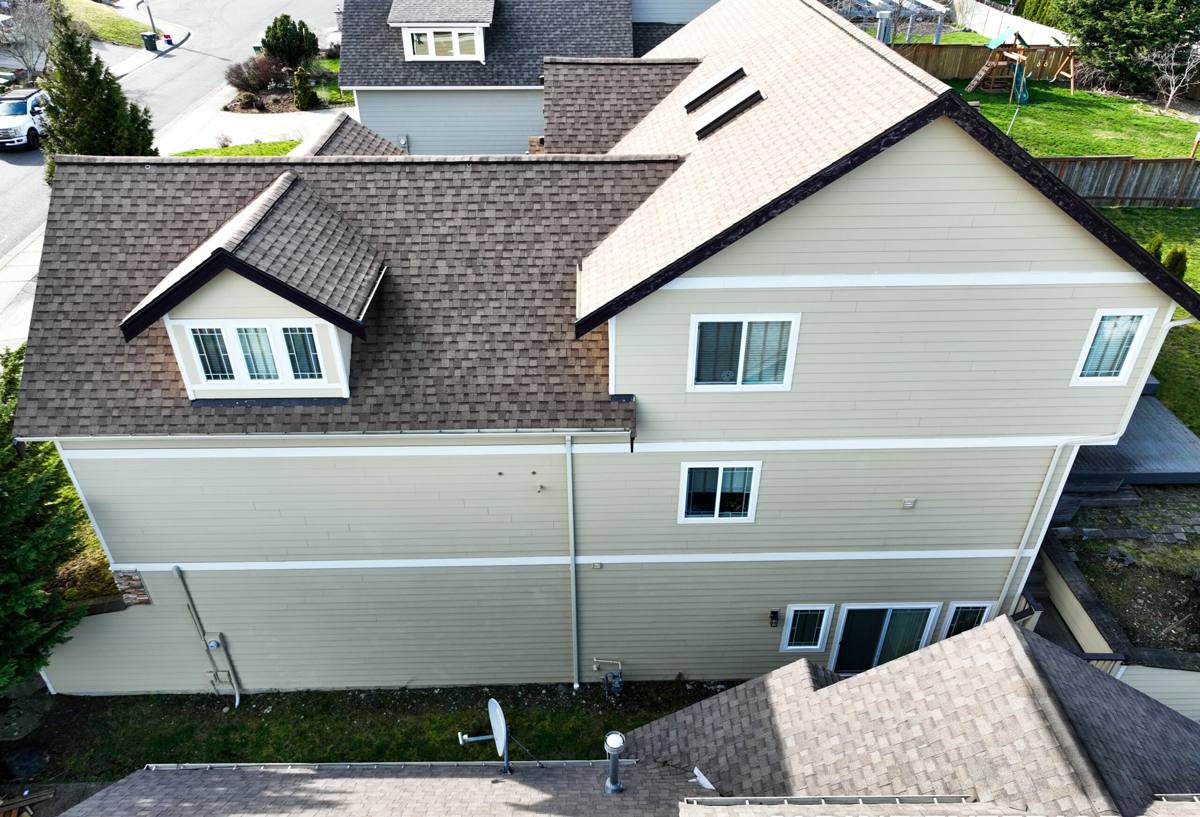
What Salt Air and Driving Rain Do to a Deck Over Time
Homeowners moving to Marietta from inland areas are often surprised at how much faster hardware and finishes break down this close to salt water. It's worth understanding the specific failure points so you know what a properly built deck is actually protecting against.
Corrosion of Fasteners and Connectors
Standard hot-dip galvanized screws and joist hangers can start showing surface corrosion within a few years in a salt-air environment, and once corrosion starts on a structural connector, it doesn't stop on its own. Rust stains bleeding down decking boards are usually the first visible sign — but the real concern is the connector losing holding strength where you can't see it, at the ledger board or the joist hangers.
Moisture Intrusion at the Ledger Board
The ledger board — where the deck attaches to the house — is the single most common point of failure on decks in wet climates. Driving rain pushed sideways by coastal wind finds gaps in flashing that would never be a problem in a drier climate. Water gets behind the ledger, the rim joist behind it stays wet, and rot sets in inside the wall where you won't see it until the deck starts to feel spongy or pulls away from the house.
Moss, Algae, and Surface Degradation
Whatcom County's long damp season, especially on shaded or north-facing decks, gives moss and algae plenty of time to establish. Beyond being slippery underfoot, moss holds moisture against the deck surface far longer than open air would, which accelerates wood decay and can stain or etch composite surfaces if left unaddressed for years.
Choosing the Right Decking Material for This Climate
There's no single "best" decking material — there's a best material for your budget, your maintenance appetite, and how exposed your specific lot is to salt air and standing moisture. Here's how the common options actually perform in Marietta conditions.
| Material | Salt Air / Moisture Performance | Maintenance | Typical Lifespan Here |
|---|---|---|---|
| Pressure-treated fir/hem-fir | Needs sealing to resist moisture uptake; prone to checking and graying without upkeep | Annual cleaning, re-sealing every 2-3 years | 15-20 years with upkeep |
| Cedar | Naturally rot- and insect-resistant, but still needs finish maintenance in this much rain | Cleaning plus finish renewal every 2-3 years | 15-25 years with upkeep |
| Composite decking | Doesn't absorb moisture like wood; performs well against moss staining if capped | Periodic washing, no sealing/staining | 25-30+ years |
| PVC decking | Fully moisture-resistant surface, best option directly exposed to salt spray | Lowest maintenance of the group | 30+ years |
We're upfront about the trade-offs of each. Composite and PVC cost more up front and some homeowners still prefer the look and feel of real wood — that's a legitimate choice as long as you go in knowing the maintenance commitment. What we won't do is install wood without proper ventilation and flashing details and call it "low maintenance," because in this climate that combination fails early and the callback is entirely predictable.
Framing and Structure: What Actually Matters Under the Boards
The decking surface gets all the attention, but the framing underneath is what determines whether your deck is still solid in fifteen years. In a wet, salt-influenced climate like Marietta's, a few structural details matter more than they would elsewhere:
- Ledger flashing: Properly lapped, self-adhering flashing membrane at the ledger board, installed so water sheds outward and never behind the house wrap.
- Fastener grade: Stainless steel or high-corrosion-resistant coated fasteners and joist hangers at any point exposed to direct weather or salt spray, not standard galvanized.
- Joist protection: Joist tape or a moisture barrier on top of framing lumber so standing water under the decking boards doesn't sit directly on end grain.
- Airflow underneath: Adequate clearance and skirting design that still allows air movement, so the underside of the deck can dry out between rain events instead of staying damp for weeks.
- Footings below frost and grade: Concrete footings set to proper depth and slightly crowned or drained so water doesn't pool against posts.
None of this is visible once the deck is finished, which is exactly why it matters — it's the part that either holds up quietly for decades or turns into an expensive surprise.
Our Process for a Marietta Deck Build
We run the same disciplined process on every deck, adjusted for your specific site conditions and how exposed your lot is to wind-driven rain and salt air.
- Site walk and exposure assessment: We look at your lot's orientation, shade, drainage, and proximity to the water to decide on fastener grade, flashing approach, and material recommendations before we talk numbers.
- Design and material selection: We go over the honest trade-offs of each decking material for your situation — budget, maintenance tolerance, and how the deck will actually be used.
- Permitting: Deck permits in Whatcom County depend on size, height, and attachment to the structure — we handle the permit application and inspections as part of the build so you're not chasing paperwork.
- Demolition or footing layout: Existing decks are removed and hauled off; new builds get footings laid out and inspected before framing starts.
- Framing with corrosion-resistant hardware: Ledger flashing, joist hangers, and fasteners installed to the standard the site's exposure calls for.
- Decking, railing, and finish work: Surface material installed per manufacturer spec (critical for composite and PVC warranties), railing set, and any wood surfaces sealed or stained before we consider the job done.
- Final walkthrough: We walk the finished deck with you, point out what maintenance it will need and when, and make sure everything meets code before we call it complete.
Permits and Code Considerations Near Semiahmoo
Most decks attached to a house, or built above a certain height off grade, require a permit in Whatcom County — the exact thresholds depend on your specific project and lot. Guardrail height, stair geometry, and ledger attachment all get checked against current building code during inspection. Skipping the permit process might save time up front, but it creates real problems at resale and can leave you without recourse if a structural issue shows up later. We pull permits as a standard part of the job, not an upsell.
Ongoing Maintenance: What Marietta Decks Actually Need
Whatever material you choose, a little seasonal attention goes a long way in this climate. Here's the realistic maintenance rhythm for a deck near the water in Semiahmoo:
- Sweep and rinse the deck surface regularly through fall and winter to keep moss and algae from establishing.
- Clean gutters and downspouts near the deck so overflow isn't dumping extra water onto the structure.
- Check and clear debris from between deck boards, where trapped organic matter holds moisture against the wood or composite surface.
- Inspect fasteners and hardware annually for early corrosion, especially on decks with direct salt-air exposure.
- For wood decks, plan on cleaning and re-sealing or re-staining every two to three years — more often on south- or west-facing surfaces that take the most weather.
- Walk the underside of the deck once a year if accessible, checking for soft spots, staining, or signs of moisture at the ledger.
Why a Crew That Already Works Marietta Makes a Difference
A lot of deck problems in this area trace back to a crew building to a general Pacific Northwest standard instead of accounting for how much closer to the water — and how much wetter — a Marietta lot really is compared to inland Whatcom County. We work this specific stretch of coastline regularly, which means we already know which fastener grades hold up, which flashing details actually stop wind-driven rain, and where moss becomes a maintenance headache versus a real structural concern. That local knowledge shows up in fewer callbacks and a deck that's still solid well past the point where a corner-cut build starts showing problems.
If you're planning a new deck or need to replace one that's showing its age, we're happy to take a look and give you an honest read on what your specific site needs. Reach out for a free, no-pressure estimate using the form below.