 Semiahmoo Exterior
 Why Marietta's Coastal Position Changes the Window Conversation
Marietta sits close enough to the water that homes here deal with a different set of stresses than houses further inland in Whatcom County. Salt-laden air corrodes hardware and finishes faster than a typical Pacific Northwest climate would on its own. Add in driving rain that comes in sideways during winter storms, and a moss season that runs long thanks to shade, moisture, and mild temperatures, and you have three separate forces working against ordinary windows at the same time. None of these are dramatic on their own. What they do is compound, quietly, over years — a little corrosion here, a little moisture intrusion there, a little algae and moss buildup on sills and tracks that holds water against the frame longer than it should sit.
Custom windows aren't a luxury upsell in this context. They're often the only realistic way to get a proper fit, proper flashing, and hardware that's rated for a salt-air environment, especially in older Marietta homes where openings were never standard sizes to begin with.
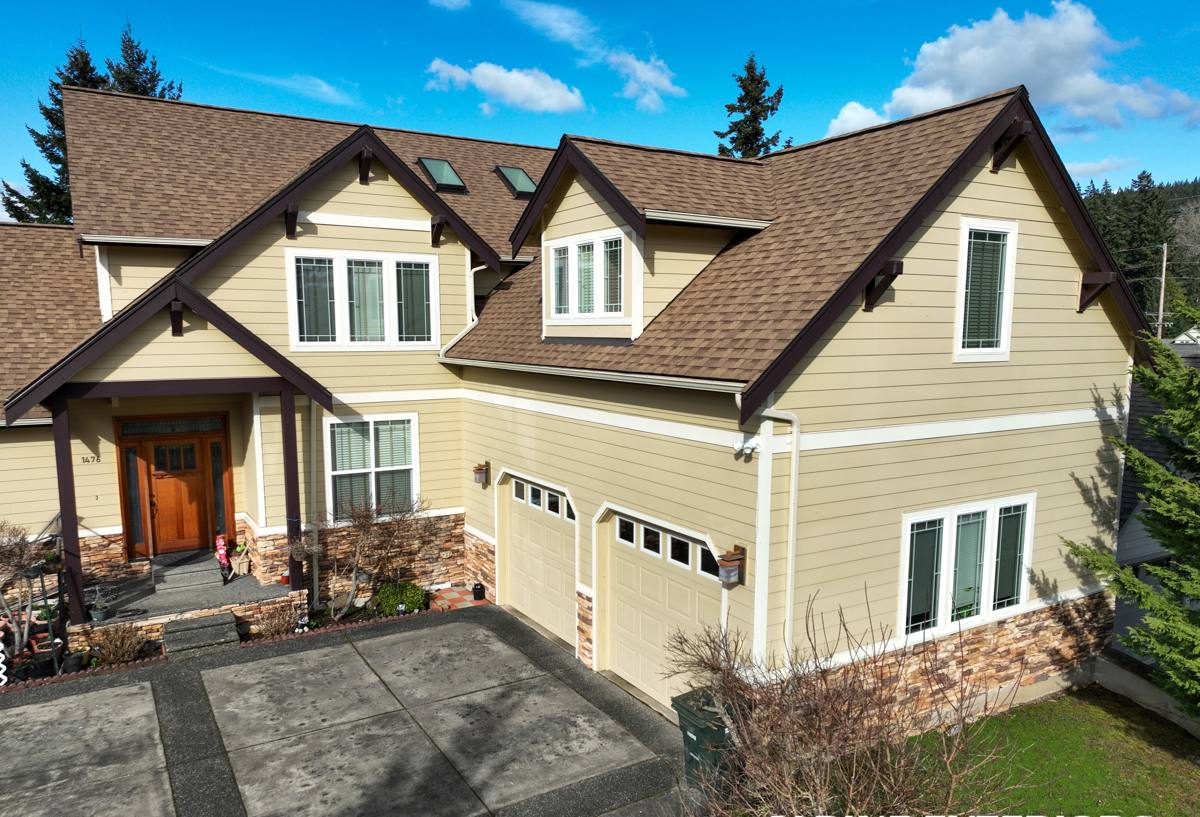
What "Custom" Actually Means for a Window Job
The word gets used loosely in this industry, so it's worth being specific. A custom window job usually involves one or more of the following:
- Openings that are out of square or slightly out of size from decades of settling, common in older homes near the water
- Non-standard dimensions — tall narrow openings, odd bay configurations, or replacement sizes that don't match anything off a factory shelf
- Matching sightlines and grid patterns to the rest of the house so new windows don't look out of place next to original ones
- Frame material and finish choices selected specifically for salt exposure rather than a generic regional spec
"Custom" doesn't automatically mean more expensive across the board — it means the measurements, materials, and installation details are worked out for the actual opening in front of us, not forced to fit a stock size.
Standard Replacement vs. True Custom Fabrication
Standard replacement windows are built to common size increments and trimmed down slightly to fit. That works fine when an opening is close to a standard size. In a lot of Marietta homes, especially anything built before modern framing conventions, openings drift enough that a standard unit either leaves gaps that get packed with shims and sealant, or gets forced in a way that stresses the frame. True custom fabrication is measured to the actual opening, which means fewer field compromises and a tighter seal from day one — which matters more here than in a dry climate, because every gap is a path for wind-driven rain.
Signs Your Current Windows Are Losing the Fight
Homeowners usually notice window failure well after it's started, because the early signs are subtle. Worth checking for:
- Condensation between panes (a failed seal on a double- or triple-pane unit)
- Soft or discolored wood at the sill or bottom corners of the frame
- Hardware — latches, cranks, hinges — that's gone stiff, pitted, or won't hold the sash tight
- A draft you can feel with a hand near the frame on a windy day
- Moss or dark green growth building up in the track or on the exterior sill that never fully dries out
- Paint or finish that's bubbling or peeling specifically around the window, even if the siding nearby looks fine
Any one of these on its own might just need maintenance. Several at once, especially on the same window, usually means the unit is past the point where sealant and touch-ups fix it.
Frame Materials: What Holds Up Near the Water
There's no single "best" frame material for every house — it depends on budget, the home's style, and how much upkeep the owner wants to take on. Here's how the common options actually perform in a Whatcom County coastal setting:
| Material | Salt Air Behavior | Maintenance | Typical Fit |
|---|---|---|---|
| Vinyl | Won't corrode; UV and salt exposure can gradually affect color/finish | Low — occasional cleaning | Budget-conscious replacements, rentals, straightforward openings |
| Fiberglass | Very stable dimensionally, resists corrosion and moisture well | Low to moderate | Homes wanting durability without wood upkeep |
| Wood-clad | Exterior clad protects wood from salt/moisture if the cladding seal is intact | Higher — cladding seams and interior wood need attention | Historic-style homes, custom sightlines, interior wood look |
| Aluminum | Prone to corrosion and pitting in salt air unless properly coated | Moderate — coating needs monitoring | Modern styling, larger openings, commercial-influenced designs |
Our standard recommendation for most Marietta homes leans toward vinyl or fiberglass for straightforward replacements, and wood-clad when the home's character calls for it and the owner is comfortable with the added upkeep. We're generally cautious about uncoated or lower-grade aluminum this close to the water — not because it's a bad product everywhere, but because salt-air corrosion on aluminum hardware and frames is a real maintenance burden we've seen play out over time in this specific environment.
Where Window Jobs Actually Go Wrong: The Installation, Not the Product
Most window failures we get called out to inspect aren't a bad window — they're a window that was installed without the moisture management a coastal climate demands. In driving rain, water finds any gap between the frame and the rough opening. A correct install includes:
- Proper flashing sequenced so water sheds outward and down, never trapped behind the siding
- A continuous weather-resistive barrier tie-in at the window's edges, not just caulk over a gap
- Sill pans or sloped sill details that direct any intruding moisture back out rather than letting it pool
- Backer rod and sealant sized correctly for the joint, not a bead of caulk asked to do a job it can't
- Shimming that supports the frame evenly so it doesn't rack or bow under wind load
Skip any one of these steps and you can end up with a window that looks fine for a year or two before rot shows up inside the wall cavity, invisible from either side until it's a bigger repair.
How We Approach a Custom Window Project in Marietta
1. On-Site Assessment
We look at the actual openings, the condition of the surrounding wall and trim, and any signs of past moisture intrusion before recommending anything. In a lot of cases we're also checking siding and trim condition immediately around the window, since a window replacement is a natural point to catch and fix adjacent problems.
2. Measurement and Material Selection
Openings get measured precisely, including checking for square and level, and we go over frame material trade-offs based on the home's style, budget, and how much maintenance the owner wants going forward.
3. Fabrication and Scheduling
Custom units take longer to arrive than stock sizes — that's the trade-off for a correct fit. We schedule installation around weather windows where possible, since a dry install day matters for getting flashing and sealant right.
4. Installation with Full Moisture Detailing
This is where the flashing, barrier tie-in, and sill detailing described above actually happen. We don't consider a window job finished until the water management around it is complete, not just the window itself set in place.
5. Cleanup and Walkthrough
We walk the finished openings with the homeowner, operate each window, and go over any maintenance specific to the material chosen.
Living With Windows in a Salt Air and Moss Climate
Even a well-installed, well-built window benefits from some seasonal attention in this environment. A short maintenance routine that fits most Marietta homes:
- Rinse salt residue off exterior frames and glass periodically, especially after storms with onshore wind
- Clear tracks and weep holes of moss, debris, and standing water before it sits long enough to stain or soften material
- Check exterior caulking and sealant lines once a year for cracking or separation
- Lubricate hardware — locks, hinges, cranks — with a product rated for exterior/marine-adjacent use
- Look at wood-clad frames for any cladding seam separation, since that's the entry point for moisture into the wood beneath
Why Local Installation Experience Matters Here
Window installation guidelines written for a general climate don't automatically account for what a Whatcom County coastal property actually experiences. A crew that hasn't worked Marietta specifically may install a window correctly by a generic standard and still leave it under-protected against the driving rain and salt exposure this area sees regularly. Working this area consistently means we've already seen how moss builds up on north-facing sills, how salt residue collects on frames facing the water, and where past installations in similar homes have failed — and we build the install to account for it rather than treating it as an afterthought.
Cost Factors to Expect
Custom window pricing varies widely based on size, material, and how much of the surrounding wall or trim needs attention, so we won't quote a number without seeing the openings. In general, the factors that move the price most are: frame material, number and size of openings, whether the existing rough opening needs any repair or resizing, and glass package (standard double-pane versus upgraded coatings or triple-pane options). We'll walk through all of that plainly during the estimate, with no pressure to upgrade beyond what your home actually needs.
If you're dealing with drafts, fogged glass, or windows that just look tired in your Marietta home, we're happy to come take a look and talk through honest options — no pressure, no obligation, just a straight assessment and a free estimate.