 Semiahmoo Exterior
 Windows Built for Lynden's Weather, Not Just Any Weather
Lynden sits inland from the coastline, but that doesn't mean the house is spared from what makes Whatcom County weather hard on windows. The marine air off the Salish Sea still reaches this far in, humidity stays high most of the year, and the rain here isn't the kind that falls straight down and moves on — it's driven sideways by wind, sometimes for days at a stretch. Add a moss season that can run from fall through spring, and you've got conditions that will find every weak point in a window's seal, frame, or flashing detail within a few winters.
That's the backdrop for every window installation we do in Lynden. It's not a coastal town in the postcard sense, but it's squarely inside the same weather system that soaks the rest of Whatcom County, and the windows on a Lynden home are working against that reality every single day, whether the homeowner thinks about it or not.
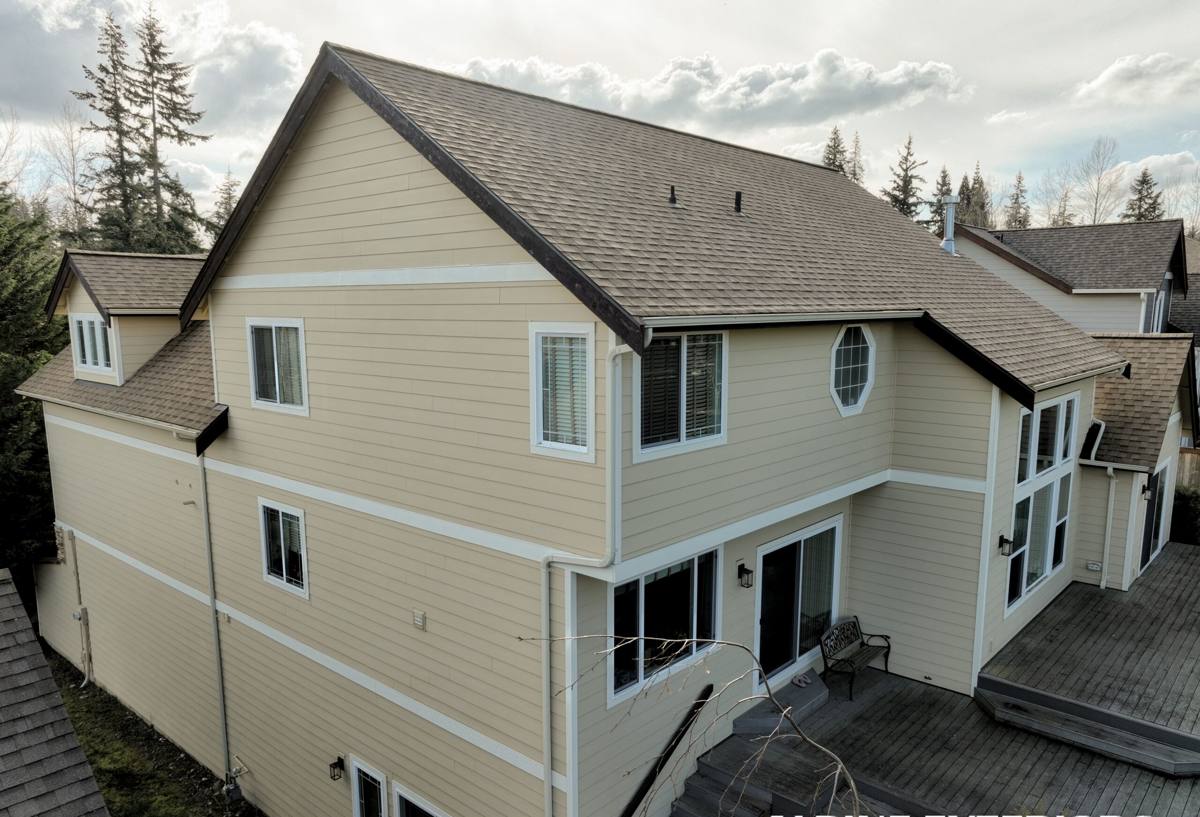
What Lynden Homes Actually Need From a Window Installation
Moisture Management Comes First
More window failures around here trace back to bad flashing and sealing than to the glass or frame material itself. A window can be top-shelf and still leak if the opening wasn't properly wrapped, the sill pan was skipped, or the sealant was applied to a surface that wasnasn't clean and dry. Given how much of the year Lynden spends under cloud cover and rain, we treat water management as the actual job — the window unit is only one part of it.
Wind-Driven Rain Resistance
Storms here don't just drop rain, they push it into vertical surfaces at an angle, which means a window's weatherstripping and frame-to-wall seal have to do real work, not just look finished. We pay attention to sash fit and compression seals for this reason — a window that tests fine on a calm day can still let moisture in during a January windstorm if the seal isn't tight.
Moss, Algae, and Frame Longevity
The same dampness that grows moss on a roof or north-facing siding will sit on window sills and in frame corners if there's nowhere for water to drain. Sills need a slight pitch to shed water, and frame materials need to tolerate being wet more often than they're dry without swelling, rotting, or holding mold.
Efficiency Without Overpaying for It
Whatcom County winters aren't brutally cold, but the damp cold gets into a house differently than dry cold does — drafts feel worse, and single-pane or worn-out windows fog and sweat. A correctly installed, properly sealed double-pane window makes a noticeable difference in comfort and heating bills without needing to go to premium triple-pane glass for most Lynden homes.
What a Correct Window Installation Actually Involves
A lot of window jobs go wrong not because of the window itself but because of shortcuts in the steps around it. Here's what we consider non-negotiable on every install:
- Remove the old window and inspect the rough opening for rot, soft wood, or existing water damage before anything new goes in
- Repair or replace any compromised framing — never install a new window over a damaged opening
- Install a sill pan or sloped sill flashing so any water that gets past the window drains back out, not into the wall
- Wrap the opening with weather-resistant barrier and flashing tape, integrated correctly with the existing house wrap or siding — shingle-lapped so water always moves outward and down
- Set the window level, plumb, and square, and shim it correctly so it operates smoothly for years, not just on day one
- Insulate the gap between the frame and the rough opening properly — not overpacked, not left empty
- Seal the exterior with quality caulk at the right joints, while leaving the bottom weep path clear so water can still escape
- Trim and finish to match the home, inside and out
Skip any one of these and you can end up with a window that looks fine for a year or two and then starts showing water stains, soft trim, or drafts — usually right around the time the manufacturer's installation warranty would have covered it, if it had been installed to spec.
Our Process for a Lynden Window Installation
1. On-Site Assessment
We look at each window opening individually — age of the home, current window condition, siding type, and any signs of past water intrusion. Not every window on a house needs the same approach, especially on older Lynden homes where additions or remodels may have changed how a wall was built over time.
2. Product Selection Based on the Opening, Not Just a Catalog
We walk through vinyl, fiberglass, and wood-clad options with actual trade-offs explained — upfront cost, maintenance, expected lifespan in a wet climate, and how each performs at the seams and joints where moisture actually gets in. We're not going to push a product that looks good on a spec sheet but is finicky to install correctly or hard to service later.
3. Scheduling Around the Weather
We plan installs to minimize how long an opening sits without a window in it, and we watch the forecast. Rushing an install between rain systems is how corners get cut on flashing and sealing — we'd rather adjust the schedule than compromise the water management details.
4. The Installation Itself
Old window out, opening inspected and repaired if needed, flashing and sill pan installed, new window set and sealed, interior and exterior finish work completed, and the site cleaned up. We test operation and check the seal before we consider the job done.
5. Walkthrough
We show the homeowner what was done, point out anything worth knowing for maintenance, and answer questions. No pressure to add on extra work that wasn't part of the original scope.
Comparing Window Frame Materials for This Climate
| Material | Moisture Tolerance | Maintenance | Typical Lifespan Here |
|---|---|---|---|
| Vinyl | Good — won't rot, handles damp well | Low — occasional cleaning | 20-30 years with correct install |
| Fiberglass | Very good — stable in wet/dry cycling | Low | 30+ years |
| Wood (unclad) | Poor unless finished and maintained regularly | High — repainting/sealing needed | Varies widely by upkeep |
| Wood-clad (aluminum or vinyl exterior) | Good on exterior face, wood core still needs a sound seal | Moderate | 25-30+ years |
For most Lynden homes, vinyl or fiberglass gives the best balance of upfront cost and long-term moisture performance. We still install wood-clad windows when a homeowner wants the interior wood look, but we're upfront that the seal quality at installation matters even more with that product, since any breach exposes a wood core to a climate that doesn't dry out quickly.
Cost Factors Homeowners Should Know Going In
Every quote is different, but the same variables move the price on most jobs:
- Number of windows and whether it's a full-home replacement or select units
- Frame material and glass package (standard double-pane vs. upgraded low-E coatings)
- Condition of the existing rough openings — hidden rot or framing repair adds labor
- Whether it's a retrofit into an existing frame or a full-frame replacement (full-frame costs more but is often the right call when there's water damage or an out-of-square opening)
- Trim and interior finish complexity, especially on older homes with custom casing
- Access — second-story or hard-to-reach windows take more time
We'd rather walk a homeowner through these factors on-site than throw out a number that doesn't hold up once we actually see the openings.
Why It Matters That We Already Work in Lynden
A crew that mainly installs windows in dry climates can put in a technically fine window and still get the flashing sequence wrong for a place that sees this much sustained rain. Working regularly in Whatcom County means we've seen how water actually moves on these homes — where it collects, which sill details hold up over a full wet season, and which shortcuts show up as callbacks two winters later. That local pattern recognition is worth more than a generic install checklist.
It also means straightforward logistics — we know the area, we're not adding a long drive premium to your quote, and if a warranty issue or adjustment ever comes up, we're not far away.
Signs Your Lynden Home's Windows Need Attention
- Visible fogging or moisture between glass panes (failed seal)
- Drafts you can feel near the frame on a windy day
- Soft or discolored trim or sill wood
- Windows that are difficult to open, close, or lock
- Visible moss or persistent green staining around the frame or sill
- Noticeably higher heating costs with no other explanation
Any one of these on its own isn't necessarily an emergency, but a few of them together usually mean it's time for an honest assessment rather than waiting for a bigger problem.
If you're weighing whether your windows need replacing, or you already know it's time, we're happy to take a look and give you a straightforward, no-pressure estimate for window installation on your Lynden home — just fill out the form below.