 Semiahmoo Exterior
 Storm Damage Roof Repair Built Around How Lynden Weather Actually Behaves
Lynden sits inland from the water compared to towns like Semiahmoo and Blaine, but that distance doesn't spare local roofs from the same weather system. Whatcom County storms move through as a package: sustained wind, hours of driving rain, and long stretches of damp, low-light weather that never quite lets a roof dry out between fronts. On top of that, Lynden's open farmland and tree-lined properties mean wind has fewer windbreaks to slow it down before it hits a roofline, and moisture that blows in off the Strait still shows up here as prolonged humidity and moss growth, even without direct salt exposure.
That combination is why storm damage repair in this area needs to be handled differently than it would be in a drier climate. A repair that looks fine on a sunny afternoon can fail the next time wind-driven rain gets underneath a shingle edge or a compromised flashing seam. Our approach is built around that reality: find what the storm actually did, fix it so water can't get back in, and account for the moss and moisture pressure that will keep testing the repair long after the storm has passed.
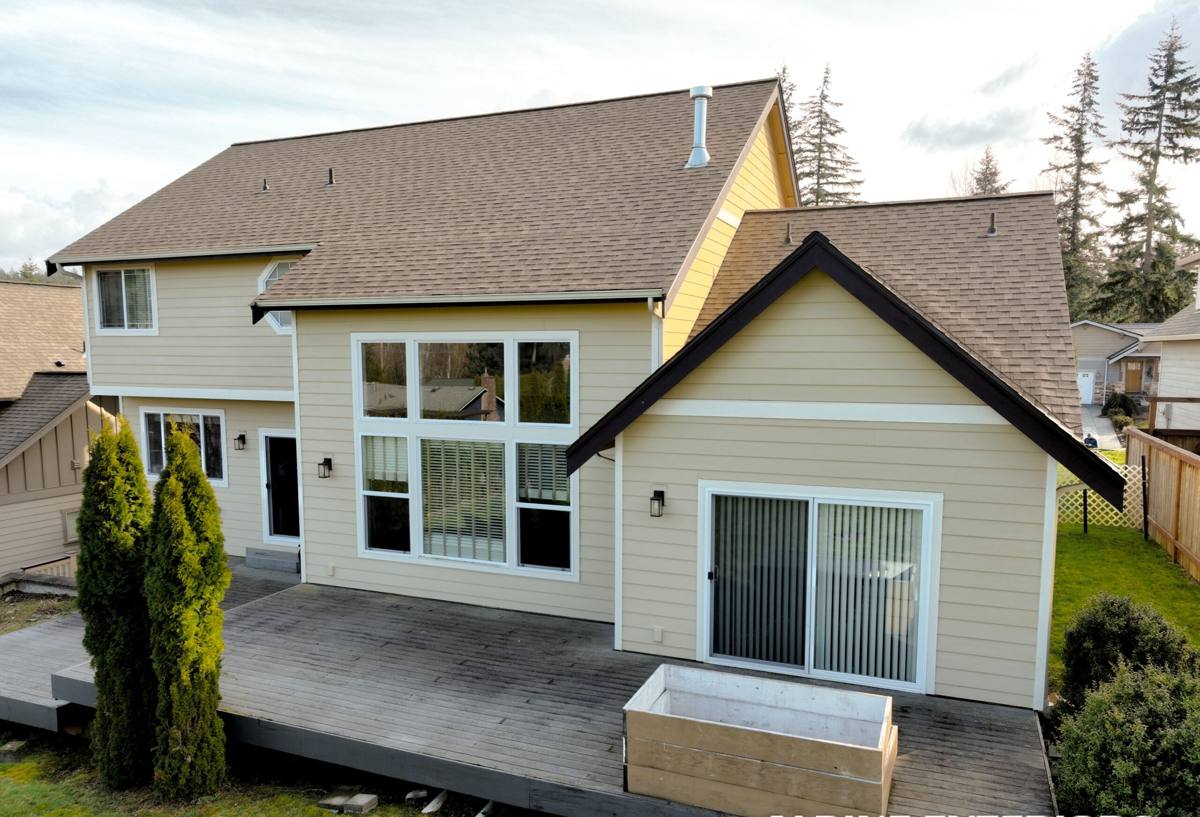
What Storm Damage Actually Looks Like on a Roof
Homeowners often picture storm damage as a roof that's obviously torn up. In practice, most of the storm damage we find in Lynden is quieter than that — the kind that causes a leak weeks later rather than an emergency the night of the storm. Understanding the categories helps explain why a proper inspection matters more than a quick look from the ground.
Wind Damage
High wind lifts shingle tabs, breaks the adhesive seal strip, and can crease or fully tear shingles off. Ridge caps and hip caps take the brunt of it because they sit exposed at the roof's high points. Once a seal is broken, the shingle may still look intact from the ground but will lift again in the next wind event, letting water track underneath.
Wind-Driven Rain
Rain that falls straight down mostly runs off a healthy roof. Rain that's being pushed sideways by wind finds every gap — lifted shingle edges, aging flashing around chimneys and vents, and nail heads that have backed out over time. This is the type of damage that causes interior water stains without any obvious hole in the roof.
Impact Damage
Branches, blown debris, and falling limbs from nearby trees are a real factor on the larger, more treed lots common around Lynden. Impact can crack shingles, dent metal flashing and vents, or in more severe cases puncture roof sheathing.
Flashing and Penetration Failures
Flashing around chimneys, skylights, vent pipes, and roof-to-wall intersections is sealant and metal working together, not shingles. Storms flex these joints, and once flashing pulls loose or a sealant bead cracks, that spot becomes a standing invitation for a leak during the next rain.
Why Moss and Trapped Moisture Make Storm Damage Worse
Whatcom County's long wet season means moss isn't a cosmetic issue here — it's a moisture-management problem. Moss holds water against the shingle surface far longer than open air ever would, and it works its way under tab edges and around fasteners. On a roof that's already storm-stressed, moss-related moisture retention accelerates whatever damage the wind and rain already started. A shingle edge lifted by wind, sitting under a mat of damp moss for weeks at a time, degrades much faster than the same damage would on a drier, sun-exposed roof.
This is why we don't treat storm repair and moss as separate issues on Lynden homes. Any storm repair that ignores existing moss growth or poor drainage is a short-term fix. We look at both together: repair the storm damage, and address the conditions — shaded areas, debris in valleys, clogged gutters — that let moss take hold in the first place.
Signs Your Roof May Have Storm Damage
Most storm damage isn't visible from inside the house until it's already caused a leak. After any significant wind or rain event, it's worth doing a quick check from the ground and inside the attic if you have access.
- Shingles or shingle pieces in the yard, gutters, or against fences after a storm
- Granules collecting in gutters or at downspout outlets, giving shingles a patchy, faded look
- Lifted or curling shingle tabs visible from the ground, especially along ridges and edges
- Water stains or discoloration on interior ceilings, especially near chimneys, skylights, or exterior walls
- A musty smell in the attic, which often shows up before a visible stain does
- Dented or displaced flashing around vents, chimneys, or skylights
- Gutters pulling away from the fascia or sagging after heavy rain
- Visible daylight through the roof deck when viewed from inside the attic
If you notice any of these, the priority is getting a look before the next rain, not after. Damage that sits open for even one more storm cycle usually costs more to fix properly.
What a Correct Storm Damage Repair Involves
A storm repair done right isn't just about replacing what's visibly missing. Wind and rain damage tends to affect a wider area than what's obvious from the ground, so a proper repair starts with confirming the full extent before any material goes back on the roof.
Full-Scope Inspection, Not a Patch Job
We check the damaged area plus the surrounding field — shingles adjacent to a wind-torn section are often partially lifted even if they didn't fully detach. We also check flashing, fasteners, and the roof deck underneath in the affected zone, since a torn-off shingle can expose the deck to water even briefly.
Matching Materials Correctly
Shingle color and profile change over time with sun exposure, so an exact match on an older roof isn't always possible. We're upfront about that before starting rather than after, and we place repairs where the difference will be least noticeable when an exact match isn't available.
Sealing, Not Just Covering
Replacing a shingle without properly re-sealing the tab, resetting fasteners, and checking the underlayment underneath just recreates the same vulnerability. Every repair we do is checked for a proper seal against wind uplift, not just visual coverage.
Addressing the Cause, Not Just the Symptom
If a tree limb overhangs the damaged area, if a valley is collecting debris, or if moss contributed to the failure, we'll point that out. A repair that ignores the underlying cause is likely to need repeating.
Our Storm Damage Repair Process
- Inspection and documentation. We assess the full roof, not just the obviously damaged section, and document what we find with photos.
- Honest assessment. We explain what's storm-related, what's pre-existing wear, and whether the situation calls for a repair or points toward a larger issue.
- Written scope and estimate. You get a clear description of the work and a price before anything starts — no surprise add-ons mid-job.
- Repair work. Damaged shingles, flashing, and fasteners are replaced and sealed to current standards, matched to your existing roofing as closely as materials allow.
- Final check. We verify the repair holds under close inspection and confirm there are no secondary issues — clogged gutters, debris in valleys, or other vulnerable spots nearby.
Repair or Replace: What Actually Drives the Decision
Not every storm-damaged roof needs a full repair — and not every roof that gets a storm inspection needs a repair at all. The right call depends on a few honest factors, not a sales pitch.
| Factor | Leans Toward Repair | Leans Toward Replacement |
|---|---|---|
| Roof age | Under roughly 12-15 years, still within useful life | Near or past the material's expected service life |
| Extent of damage | Isolated to one section or a handful of shingles | Widespread across multiple slopes or repeat storm events |
| Underlying condition | Deck and underlayment sound, moss controlled | Soft deck sections, chronic moss, or prior water intrusion |
| Material availability | Close match available for the existing shingle | Discontinued or badly weathered product, mismatch unavoidable |
| Storm history | First significant damage event | Pattern of repeated storm damage on the same roof |
We'll always start with the repair option if it genuinely solves the problem. Recommending a full replacement only makes sense when the roof's overall condition means a repair would be papering over a bigger issue.
Insurance and Storm Damage
Many storm damage repairs in Whatcom County are covered in part by homeowners insurance, but coverage depends on your specific policy, the cause of damage, and your deductible — that's between you and your insurer, and we won't promise an outcome we don't control. What we can do is provide clear documentation: photos of the damage, a written scope of work, and a straightforward description of cause, which is the kind of information adjusters typically need. If you're planning to file a claim, it's worth having that documentation done before repairs begin.
Why Hiring a Crew That Already Works in Lynden Matters
Storm damage repair rewards local familiarity in a few concrete ways. A crew that regularly works Whatcom County roofs already knows which shingle lines and profiles are common in the area, which speeds up material matching. We also know how this region's wind and rain patterns tend to concentrate damage — ridgelines, roof edges facing open farmland, and valleys that collect blown debris — so an inspection here isn't guesswork.
Response time matters too. After a significant wind event, roofs across the county often need attention at the same time, and a local crew without a long drive to reach you can get a tarp on an exposed section or start repairs sooner. That matters most in the days right after a storm, when an open roof is most vulnerable to the next round of rain.
Get a Free, No-Pressure Estimate
If you've had storm damage — or you're just not sure whether recent wind and rain caused any — we're happy to take a look and give you a straight answer. There's no pressure and no obligation. Use the form below to request a free estimate, and we'll walk you through exactly what we find and what it would take to fix it right.