 Semiahmoo Exterior
 Siding Repair in Lynden: Why Local Knowledge Matters
Lynden homes take a different kind of beating than siding in a dry inland climate ever has to handle. Between the salt-laden air moving in off the water, long stretches of driving rain through fall and winter, and a moss season that can run most of the year in shaded, north-facing areas, siding here ages on a compressed timeline. A repair crew that only occasionally works this corner of Whatcom County will often miss the early warning signs that a local crew catches on sight — because those signs look different here than they do fifty miles inland.
This page is about one thing: getting siding repair right for Lynden homes specifically. Not a generic list of siding problems, but what actually shows up on houses in this climate, what a correct repair looks like, and why the crew doing the work matters as much as the material going back on the wall.
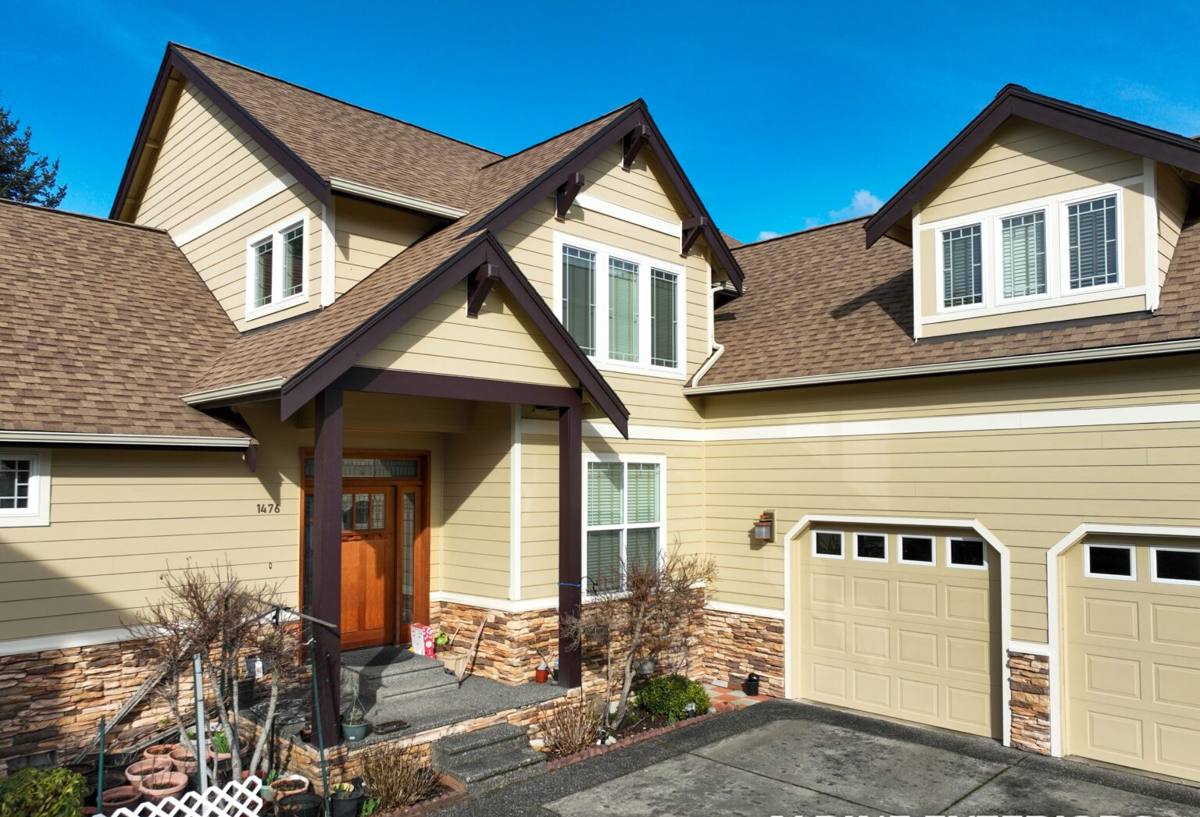
What This Climate Does to Siding
Salt Air
Proximity to Semiahmoo Bay and the broader Puget Sound coastline means airborne salt is a constant, low-grade stressor on exterior materials. Salt air accelerates corrosion on fasteners, flashing, and any exposed metal trim, and it can degrade certain paint and coating systems faster than manufacturers' inland test data would suggest. Siding that looks fine from the street can have fastener corrosion starting underneath, especially at butt joints and corner boards where moisture and salt collect.
Driving Rain
Wind-driven rain doesn't just wet a wall — it forces water sideways and upward into laps, seams, and any gap in the water-resistive barrier behind the siding. Homes here need siding and flashing details that assume rain will hit horizontally, not just fall straight down. A repair that only addresses the visible damage and ignores the water path behind it is a repair that fails again within a season or two.
Moss and Sustained Moisture
Shaded walls, north exposures, and anywhere airflow is restricted (behind shrubs, under eaves with poor ventilation) stay damp long enough for moss and algae to establish. Moss holds moisture against the siding surface far longer than open air would allow, which is exactly the condition that leads to rot in wood-based products and coating breakdown on painted surfaces.
Signs a Lynden Home Needs Siding Repair
- Soft or spongy spots when pressed, especially near the bottom courses and around window and door trim
- Visible moss or dark green-black staining that keeps returning after cleaning
- Cracked, bubbled, or peeling paint concentrated on one side of the house (usually the side facing prevailing wind and rain)
- Gaps opening up at butt joints, corner boards, or where siding meets trim
- Rust streaking below fasteners or flashing
- Boards that have visibly swelled, warped, or separated from the wall
- A musty smell near an exterior wall, which often points to moisture already inside the wall assembly
What a Correct Repair Actually Involves
Siding repair that's done right is not just "cut out the bad board and nail up a new one." A repair that ignores what's happening behind the siding is a repair that's guaranteed to repeat.
Step One: Find the Water Path, Not Just the Damage
Before any board comes off, the actual source of moisture intrusion needs to be identified. Damaged siding is a symptom. The cause is almost always a failure point somewhere in the water management system — a flashing gap, a caulk joint that failed, a penetration (light fixture, hose bib, vent) that was never properly flashed, or grading/landscaping pushing water back at the wall.
Step Two: Assess What's Behind the Siding
Once the damaged material is removed, the sheathing and water-resistive barrier underneath need a real look. If there's rot in the sheathing or framing, patching over it with new siding just seals moisture damage inside the wall. This is the step that separates a repair that lasts from one that becomes a bigger problem in two years.
Step Three: Fix the Underlying Detail
Flashing gets corrected or replaced, housewrap gets repaired and properly lapped, and any penetration is re-flashed before new siding goes back on. This is the part of the job that's invisible once it's finished — and the part that determines whether the repair actually holds up through another wet season.
Step Four: Match and Install the Replacement Siding
New material is cut, fastened, and finished to match the existing siding's reveal, profile, and fastening pattern, with attention to the same rain-screen and flashing principles used in new installations. A patch that doesn't match the original butt joint and fastener spacing will stand out visually and can create a new weak point.
Why We Repair With James Hardie Fiber Cement
Our crews work exclusively with James Hardie fiber cement products, including for repair work. Fiber cement doesn't absorb and swell with moisture the way wood-based sidings can, and it's non-combustible, which matters on a home that's going to face decades of this region's wet winters. When a repair calls for replacing a section of siding, matching into Hardie's ColorPlus factory-finished boards means the patched area holds its color and finish the same way the surrounding siding does, rather than needing a field-painted patch that ages differently.
We don't install LP SmartSide, vinyl, Cemplank, Allura, or primed wood siding, and that includes repair work. It's a deliberate standard, not a sales pitch: a mixed-material repair on a home that wasn't originally sided in Hardie is a conversation we have honestly with the homeowner up front, including what a full match would require versus a repair that uses a compatible material and transition detail.
Repair vs. Full Section Replacement — How We Decide
| Factor | Favors Spot Repair | Favors Section Replacement |
|---|---|---|
| Extent of damage | Isolated to one or two boards | Spread across a wall face or multiple courses |
| Sheathing condition | Dry, sound sheathing found behind damage | Rot or moisture staining found in sheathing |
| Age and fade of existing siding | Recent installation, color still close to new material | Older siding where a patch would visibly mismatch |
| Underlying cause | Single, identifiable flashing or caulk failure | Systemic issue (grading, missing rain-screen, widespread flashing failure) |
| Cost over time | Lower upfront cost | Often lower cost per year of remaining service life |
Cost Factors Homeowners Should Understand
We won't quote a number without seeing the wall, but the honest range depends on a handful of factors that are worth understanding before you call anyone:
- Size of the affected area — a single damaged board is a very different job than an entire wall face
- What's found behind the siding — sound sheathing versus rot changes the scope significantly
- Access — second-story work, tight side yards, or obstacles near the wall add labor time
- Color and profile matching — matching an older siding run may require sourcing specific ColorPlus finishes or accepting a slight variation
- Underlying repairs — flashing, housewrap, or trim work needed to fix the actual cause, not just the symptom
A quote that skips straight to a number without inspecting behind the siding first isn't one we'd trust, and it's not one we give out ourselves.
Our Process for Lynden Repair Calls
- On-site inspection. We look at the damage, the exposure (which direction the wall faces, how much wind-driven rain and moss pressure it sees), and probe for soft spots beyond the visibly damaged area.
- Diagnosis of the cause. We identify the specific water intrusion point rather than assuming it's obvious from the surface.
- Honest scope and options. We explain what we found, what a proper repair requires, and where spot repair versus section replacement makes more sense for that specific wall.
- The repair itself. Removal, sheathing/flashing correction where needed, and reinstallation with matched James Hardie material.
- Final check. We confirm flashing laps, fastener pattern, and caulk joints are correct before calling the job done — these are the details that determine whether it holds up through the next wet season.
Why a Crew That Already Works Lynden Is Worth Choosing
Siding repair is a trade where local pattern recognition matters. A crew that regularly works Whatcom County homes near the water knows which wall orientations tend to show moss first, which flashing details fail most often in driving rain, and how salt air exposure changes the inspection checklist compared to a drier inland job. That's not something a crew visiting from outside the region picks up on the first call — and on a repair, missing the real cause means the same damage comes back.
We also don't disappear after the invoice. A repair crew that's actually local is one you can call again if something doesn't look right six months later, without starting over with a new company that has to relearn your house from scratch.
Maintenance That Extends the Life of a Repair
- Rinse moss and algae growth off siding surfaces before it establishes rather than after it's visibly dark and thick
- Keep gutters clear so overflow isn't running down wall surfaces during heavy rain
- Trim back vegetation touching or shading siding to improve airflow and drying time
- Recaulk trim joints and penetrations on a regular schedule rather than waiting for visible gaps
- Walk the exterior after major storms and note any new staining, soft spots, or lifted boards early
If you're seeing moss buildup, soft spots, cracked paint, or gaps in your siding, we're happy to come take a look and give you a straight answer on what's actually going on behind it. Estimates are free, there's no pressure, and you'll get an honest assessment either way — use the form below to get started.