 Semiahmoo Exterior
 Metal Roofing in Lynden: Built for This Valley's Wet Cycle
Lynden sits inland in the Nooksack River valley in the northern part of Whatcom County, away from the open water but still inside the same marine weather system that shapes exterior work across this whole corner of Washington. Our crew is based near Semiahmoo on the county's coast, where salt air and driving rain off the water set the baseline for how we build, and Lynden is regular territory for us — close enough, and similar enough in year-round moisture, that the same standards apply here even though the exposure isn't identical.
Metal roofing has become a common question from Lynden homeowners looking past a roof's next re-cover toward one that outlasts several rounds of asphalt shingles. It's not the right fit for every home or every budget, but for a house in a climate this consistently wet, it's worth understanding on its own terms rather than as a generic upgrade. This page covers what Lynden's climate actually does to a roof, what separates a correctly installed metal roof from a problem waiting to happen, what drives cost, and why a crew that already works this area matters when the material goes on for good.
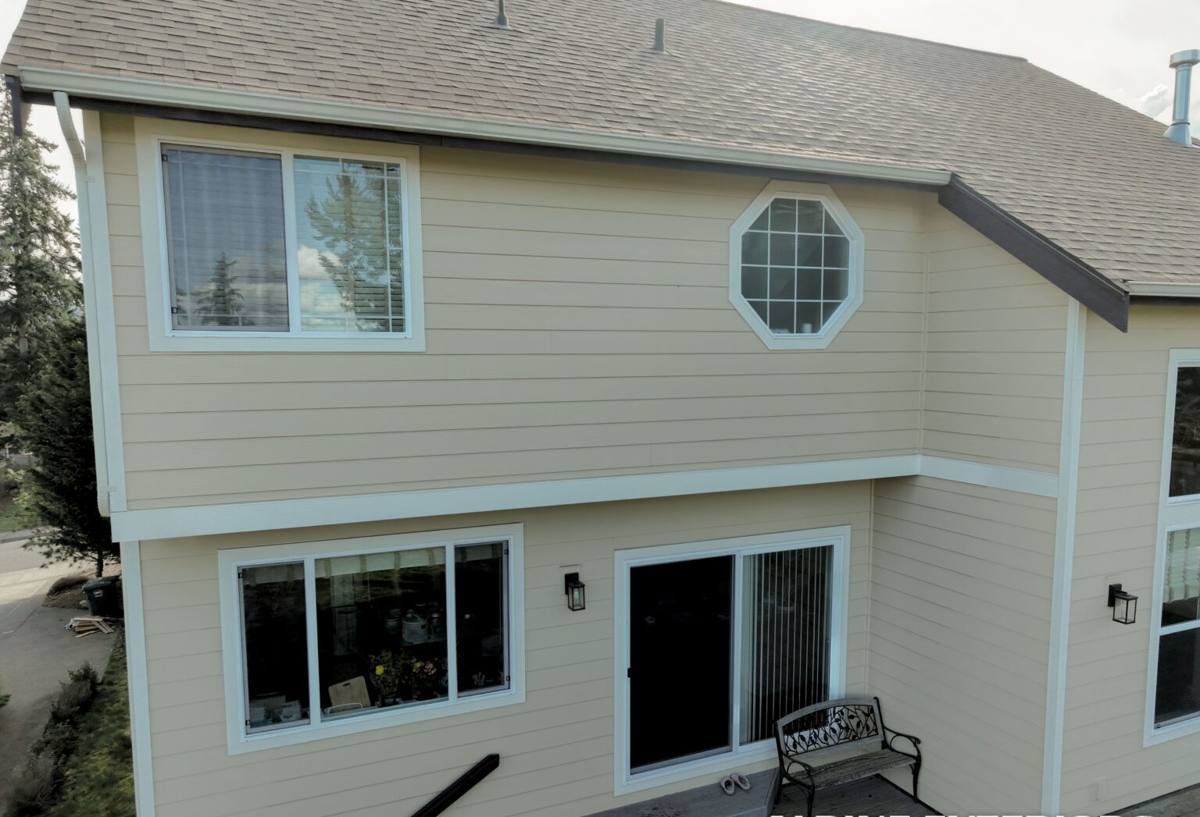
What Lynden's Climate Does to a Roof
Driving Rain Through the Valley
Rain moving up the Nooksack valley doesn't fall straight down as often as people expect. Wind pushes it sideways into roof valleys, around vent pipes and chimneys, and under any flashing that isn't lapped correctly. That sideways load is harder on a roof over time than the same rainfall total would be in a calmer climate, and it's exactly where a poorly detailed roof, metal or otherwise, tends to leak first.
A Long Moss and Algae Season
Mild temperatures and near-constant moisture give moss and algae a growing season that can run most of the year on shaded, north-facing, or tree-covered roof planes. On porous roofing materials, moss takes hold in the surface texture itself and works under the edges of the roofing over time. That's one of the clearest arguments in metal roofing's favor here, and it's worth understanding why later on this page.
Marine Air Reaches Inland Too
Lynden doesn't take the direct salt exposure our coastal service areas near the water do, so corrosion isn't the same daily concern it is right on the water. But Whatcom County's marine air carries some salt content well inland, and combined with sustained damp weather, it's still enough to matter for fastener choice and cut-edge protection on a roof meant to last forty or fifty years. We spec hardware the same way across the county rather than cutting corners on the theory that inland means it doesn't matter.
Why Homeowners in Lynden Look at Metal Roofing
Metal roofing isn't automatically the right answer, but it solves specific problems that show up often in this climate. Its smooth, non-porous surface sheds water and moss buildup far better than a textured shingle surface, it doesn't absorb moisture the way organic roofing materials can, and a correctly installed system routinely outlasts two or three asphalt shingle re-roofs over the life of a house. The trade-offs are real too: higher upfront cost, a different look than a traditional shingle roof, and an installation that punishes shortcuts more than asphalt does, since a poorly detailed metal roof can fail at the seams and fasteners in ways that are more disruptive to fix.
Standing Seam vs. Exposed-Fastener Panels
Not all metal roofing is built the same way, and the difference matters more in a climate like this than the sales material usually lets on.
| Feature | Standing Seam | Exposed-Fastener Panel |
|---|---|---|
| Fastener exposure | Concealed under interlocking seams | Fasteners penetrate the panel face directly |
| Moisture performance | Excellent; no punctures in the weather surface | Good, but each fastener is a potential future leak point |
| Panel movement | Floats on hidden clips, handles expansion well | More restrained, higher risk of oil-canning or fatigue over time |
| Upfront cost | Higher | Lower |
| Long-term maintenance | Minimal | Periodic fastener and washer inspection, typically every several years |
Exposed-fastener panels aren't a bad product — they're a legitimate option for outbuildings, shops, and budget-conscious projects, and we install them where that trade-off makes sense. For a primary residence in a climate that stays wet as long as this one does, we generally steer homeowners toward standing seam, because a concealed-fastener system takes the most common long-term failure point off the table entirely.
What a Correct Metal Roof Installation Involves
A metal roof performs the way it's supposed to only when the details underneath the panels are right. In a valley climate with this much sustained moisture, a few of those details aren't optional:
- High-temperature synthetic underlayment or slip sheet: Metal roofing needs an underlayment rated to handle the heat a metal surface can reach in direct sun, and one that still performs if moisture reaches it before the panels are fully weathered in.
- Floating clip attachment on standing seam systems: Metal panels expand and contract with temperature more than most roofing materials. Clips that let the panel move without tearing loose are what keep seams tight over decades rather than years.
- Compatible fasteners and flashing: Mixing incompatible metals accelerates corrosion at every contact point through galvanic reaction. We match fastener and flashing metal to the panel material rather than grabbing whatever's on the truck.
- Properly lapped flashing at every valley, penetration, and roof-to-wall transition: This is where wind-driven rain finds a way in on any roof, metal included, if it isn't detailed correctly.
- Ice-and-water shield at eaves and valleys: Even in a climate with mild winters, these are the spots where water and debris collect longest, and they get the extra protection regardless of the roofing material going over them.
- Correct seam engagement: Mechanically seamed panels need to be crimped correctly on-site, not just snapped together and left; a seam that isn't fully engaged is a seam that eventually opens.
None of this is exotic or expensive relative to the cost of the panels themselves. It's the difference between a metal roof that earns its long lifespan and one that develops the exact problems metal roofing is supposed to avoid.
Metal Roofing Cost Factors for a Lynden Home
| Factor | What Drives Cost | Whatcom County Consideration |
|---|---|---|
| Panel system | Standing seam vs. exposed-fastener, material (steel vs. aluminum), gauge | Standing seam costs more upfront but removes the recurring fastener-maintenance factor |
| Roof complexity | Number of valleys, penetrations, dormers, and roof planes | Every valley and penetration is a place wind-driven rain tests the flashing detail |
| Tear-off vs. furring | Full tear-off to the deck vs. furring strips over existing shingles | A full tear-off lets us check the deck for hidden moisture damage before it's covered for decades |
| Finish and coating | Paint system quality, color, panel warranty terms | A stronger factory finish holds up better against sustained damp weather and UV over time |
These are general drivers, not a quote. Two Lynden homes with the same square footage can land in very different places once we're actually on the roof and can see the pitch, the deck condition, and how many valleys and penetrations the design actually has. We walk the roof before putting a real number on the work.
Signs a Lynden Metal Roof Needs Attention
- Fasteners on an exposed-fastener panel that have backed out, are missing washers, or show rust streaks below them
- Seams on a standing seam roof that look separated, lifted, or no longer sit flush
- Visible oil-canning (a wavy, rippled look in the panel face) that's worsened over time rather than being purely cosmetic
- Panel edges or ridge caps lifted after a windstorm
- Moss or organic debris accumulating in valleys or at panel overlaps despite the roof's smooth surface
- Water staining on interior ceilings near exterior walls, chimneys, or skylights
- Chalking, fading, or peeling on a painted finish well ahead of its rated coating life
Any of these is worth a professional look before the next wet season, not after it.
Repair, Recoat, or Replace: How We Help You Decide
A metal roof rarely needs the same all-or-nothing decision an aging shingle roof does. Isolated fastener failure on an exposed-fastener panel is usually a straightforward repair — pulling and replacing failed fasteners with correctly gasketed ones. A finish that's chalking or fading on an otherwise sound panel system can sometimes be addressed with a recoat rather than a full tear-off, depending on the coating type and how the manufacturer's warranty is structured. Full replacement typically comes into play when the underlying deck has moisture damage, when seam failure is widespread rather than isolated, or when a homeowner is converting from asphalt shingles and wants the roof rebuilt to metal roofing's specific attachment and ventilation requirements. We'll walk you through what we actually find on your roof and why, rather than defaulting to whichever answer is easiest to sell.
Why a Local Crew That Already Works Lynden Matters
A crew that installs and repairs metal roofing across Whatcom County, in coastal towns near Semiahmoo and inland valley towns like Lynden alike, sees how driving rain, moss, and marine air actually behave on real roofs over years, not just how a panel system performs on a spec sheet. That experience shapes decisions on install day: how much extra flashing attention a given valley needs, which fastener and clip spacing hold up best through this valley's wind patterns, and which finish options are worth the extra cost for a homeowner planning to stay long-term. We also handle siding, windows, and decks, so if a re-roof turns up moisture damage at a wall-to-roof transition, we can address it as part of the same project instead of sending you to find a second contractor.
If you're weighing metal roofing for a Lynden home, or you already have a metal roof that needs a repair, a recoat, or an honest read on its condition, we're glad to take a look. Reach out using the form below to schedule a free, no-pressure estimate.