 Semiahmoo Exterior
 Board & Batten Siding in Lynden: A Look That Has to Work as Hard as It Looks
Board and batten has become one of the most requested siding styles for homes in and around Lynden, and it's easy to see why. The vertical lines read as clean and modern on newer builds, but they also sit comfortably on farmhouses and traditional homes throughout Whatcom County. The problem is that board and batten is also one of the easiest siding styles to get wrong. The visual appeal comes from the reveal between boards and the shadow lines the battens create, and both of those details depend on what's happening behind the surface, not just what's nailed to the front of it.
We install board and batten siding for homes in Lynden and the surrounding Semiahmoo service area regularly, and this page walks through what the style actually requires in this climate, what a correct installation looks like, and why we only do it in James Hardie fiber cement.
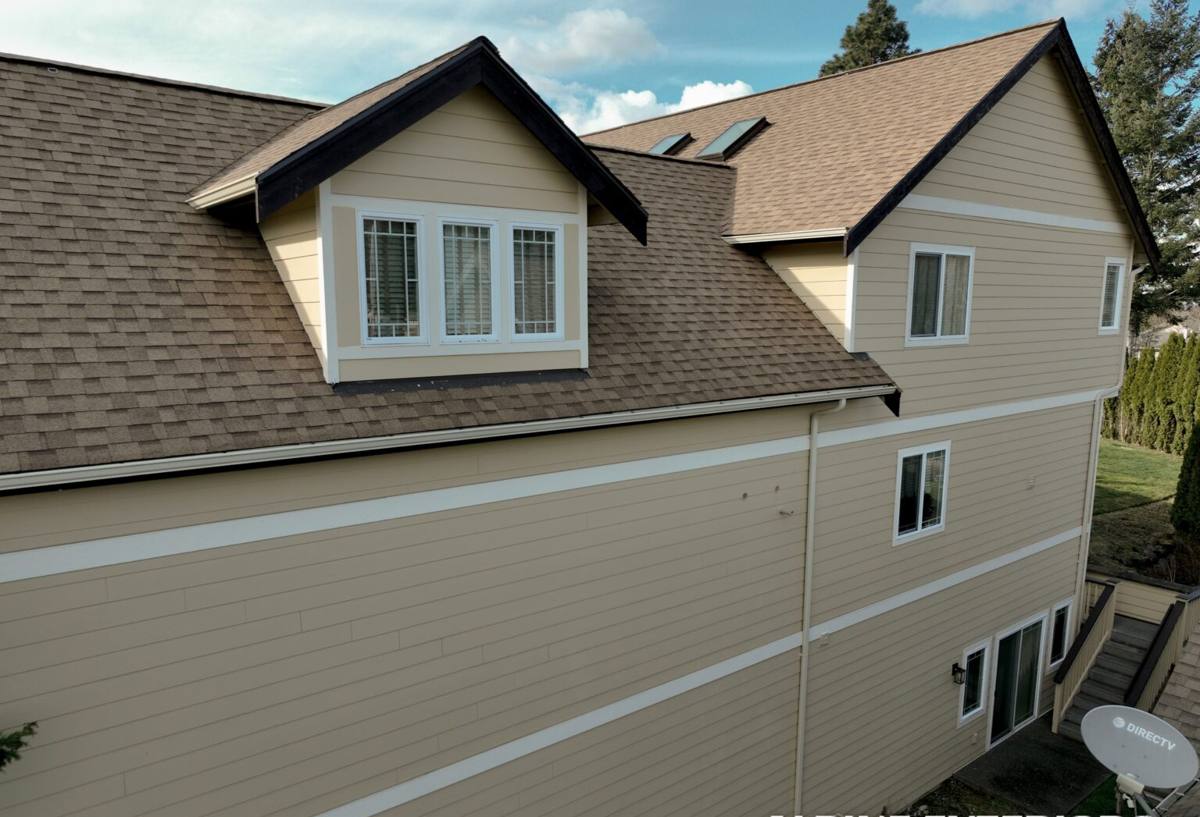
What Whatcom County's Climate Does to Board & Batten Siding
Board and batten's vertical seams and exposed battens create more joints and more edge grain than horizontal lap siding does, which means more places for water to find a way in if the assembly behind it isn't built correctly. In this region, that matters more than most places in the country.
- Driving rain: Storms here don't just fall straight down — wind-driven rain pushes water sideways into vertical seams and batten edges, testing every joint in the assembly rather than just the exposed face.
- Salt air: Proximity to the water means airborne salt settles on siding and trim over time, accelerating the breakdown of fasteners, caulk, and any material that isn't engineered to resist it.
- A long moss season: Cool, damp conditions for much of the year give moss and algae a long runway to establish on shaded walls, north-facing elevations, and anywhere board and batten traps moisture behind a batten strip.
- Freeze-thaw cycling: Even mild winters here bring repeated freeze-thaw swings that stress any material prone to swelling, cracking, or delamination at exposed edges.
None of this means board and batten is a bad choice for a Lynden home. It means the assembly has to be built to handle these conditions, not just painted to look good on installation day.
Why We Only Install James Hardie for Board & Batten
Board and batten is installed with wood, vinyl, LP SmartSide, and a handful of other fiber cement brands, and we get asked why we've standardized on James Hardie for every one of these jobs. It comes down to how the material behaves over years, not how it looks on day one.
Wood board and batten can look excellent, but raw or primed wood is an organic material in a climate that stays damp for long stretches of the year. It needs a real maintenance commitment — repainting, caulk inspection, and prompt repair of any exposed end grain — or it starts absorbing moisture, cupping, and feeding the moss and mildew this region is known for. Vinyl board and batten is low-maintenance but it's a thin, flexible material with visible panel joints and a tendency to warp or fade with UV and temperature swings; it also isn't something we're willing to put our name behind for a Whatcom County exterior. LP SmartSide is engineered wood strand — better moisture resistance than raw wood, but it's still a wood-based product with a treated outer layer, and any breach at a cut edge or fastener point gives moisture a path into the substrate.
James Hardie fiber cement is cement, sand, and cellulose fiber. It doesn't rot, it isn't a food source for moss or mildew, it doesn't feed a fire, and it holds paint and factory finish far longer than wood-based alternatives. Hardie also engineers its HZ5 product line specifically for climates like ours — freeze-thaw cycling, sustained moisture, and coastal exposure — rather than shipping one generic product to every region in the country. For a style like board and batten, where the seams and edges are exposed to the elements, that engineering difference shows up in how the siding performs ten and twenty years out.
What a Correct Board & Batten Installation Involves
A board and batten job that holds up here isn't just panels and strips nailed to the wall. The parts nobody sees are what determine whether the parts everybody sees still look good in a decade.
Behind the Siding
- Weather-resistive barrier: A continuous, properly lapped water and air barrier over the sheathing, with every penetration sealed.
- Rainscreen gap: A drainage channel between the barrier and the siding lets any water that gets past the face drain and dry out instead of sitting against the wall assembly — critical in a climate where walls rarely get a long dry stretch.
- Flashing at every transition: Windows, doors, roof lines, and any horizontal trim need flashing detailed to shed water outward, not trap it behind the panel.
The Board & Batten Assembly Itself
- Panel selection and layout: Panel or board width and batten spacing planned around the wall dimensions so the pattern is even and doesn't end in an awkward sliver at a corner.
- Fastening per manufacturer spec: Correct fastener type, spacing, and penetration depth — under- or overdriven fasteners are one of the most common causes of early failure and visible streaking.
- Gaps and sealant: Manufacturer-specified gaps at butt joints and trim, sealed with a high-quality, paintable sealant rated for the exposure — not caulked tight everywhere, which traps moisture instead of letting it move.
- Factory finish: ColorPlus factory-applied finish on the boards and battens gives more consistent, longer-lasting color than field-painting raw material, and holds up better against the fading and chalking that field paint sees here.
Skip any one of these and the siding can still look right for a season or two. The failures that show up on wrongly installed board and batten in this region — streaking at battens, soft spots at the base, moss colonizing behind battens — usually trace back to a missing rainscreen gap or a flashing detail that was skipped to save time.
Board & Batten Material Comparison
| Material | Moisture Behavior | Maintenance | Typical Lifespan |
|---|---|---|---|
| James Hardie fiber cement | Non-combustible, doesn't rot or swell; engineered for Pacific Northwest exposure | Occasional wash; factory finish resists fading | 30+ years with correct install |
| Raw or primed wood | Absorbs moisture, prone to cupping and rot at edges | Repaint every 3-7 years, ongoing caulk upkeep | 15-25 years with diligent upkeep |
| LP SmartSide (engineered wood) | Treated strand board, vulnerable at cut edges and fastener breaches | Periodic inspection and repaint of exposed cuts | 20-30 years, install-sensitive |
| Vinyl board and batten | Doesn't absorb water but flexes, warps, and fades with UV/temperature | Low, but limited repair options once damaged | 15-25 years |
Our Process for Lynden Homeowners
- On-site assessment: We look at your home's current siding, sheathing condition, and any moisture or moss issues on the existing exterior before quoting anything.
- Layout and design: We plan batten spacing and panel width to fit your home's proportions, working around windows, corners, and trim so the pattern lands cleanly.
- Written estimate: A clear scope covering barrier, flashing, rainscreen, materials, and finish color, with no surprise add-ons once work starts.
- Installation to manufacturer spec: Every layer of the assembly — barrier, rainscreen, flashing, fastening, sealant — installed per James Hardie's published requirements, which is also what keeps the manufacturer's warranty intact.
- Final walkthrough: We go over the finished job with you before we consider it done.
Maintaining Board & Batten Siding in This Climate
- Rinse the exterior once or twice a year to clear pollen, salt residue, and early moss growth before it establishes.
- Check caulked joints at trim and penetrations annually; reseal if you see cracking or gaps.
- Keep gutters clean and downspouts directed away from the wall base — pooling water at the bottom course is one of the most common stress points on any vertical siding style.
- Trim back vegetation and tree cover that keeps a wall shaded and damp, since that's exactly where moss takes hold fastest.
- Have a repair done promptly if a board or batten is ever damaged — an isolated fix is far cheaper than what happens if moisture gets behind the assembly and spreads.
Cost Factors for Board & Batten Projects
| Factor | Why It Affects Price |
|---|---|
| Wall square footage and home height | More surface area and more scaffolding/ladder work for multi-story sections |
| Existing siding removal | Tear-off and disposal adds labor beyond a straightforward re-side |
| Sheathing or moisture repair | Any rot or damage found once old siding comes off needs to be fixed before new siding goes on |
| Trim and corner detail | Board and batten with custom corner boards or window trim takes more layout and labor than a basic pattern |
| Color and finish selection | ColorPlus factory finish options vary slightly in cost versus standard primed panel |
We give exact numbers only after seeing the home in person — anyone quoting a firm price over the phone for a full board and batten install is guessing.
Why Hiring a Crew That Already Works in Lynden Matters
Board and batten installed to spec in a dry climate can tolerate more shortcuts than the same job in Whatcom County. A crew that installs siding across a range of regions may not default to the rainscreen gap, flashing detail, or fastener spacing that this specific climate calls for — because in a lot of the country, those details are optional rather than necessary. A crew that works Lynden and the surrounding Semiahmoo area regularly builds those details in as standard practice, because we've seen what happens on the walls that skipped them.
If you're weighing board and batten for a home in Lynden, we're happy to walk the exterior with you, talk through what the wall assembly needs for this climate, and give you a straightforward, no-pressure estimate using the form below.